NetworkX : Python software package for study of complex networks (original) (raw)
Last Updated : 11 Aug, 2025
NetworkX is a Python library for creating, analyzing and visualizing complex networks. It models real-world systems as graphs, where nodes represent entities and edges represent relationships. The library supports loading, storing and generating various types of graphs, analyzing network structures, designing algorithms and drawing networks with ease and flexibility.
Installation
To install the latest version of NetworkX, simply run:
pip install networkx
Creating Graphs
NetworkX supports several types of graphs:
- Graph(): undirected graph
- DiGraph(): directed graph
- MultiGraph(): undirected graph with parallel edges
- MultiDiGraph(): directed graph with parallel edges
Let’s begin with a basic undirected graph:
Python `
import networkx as nx
Create an empty graph
G = nx.Graph()
`
Adding Nodes
You can add nodes one at a time or in batches:
Python `
Add individual nodes
G.add_node(1) G.add_nodes_from([2, 3, 4, 7, 9])
`
**Output:
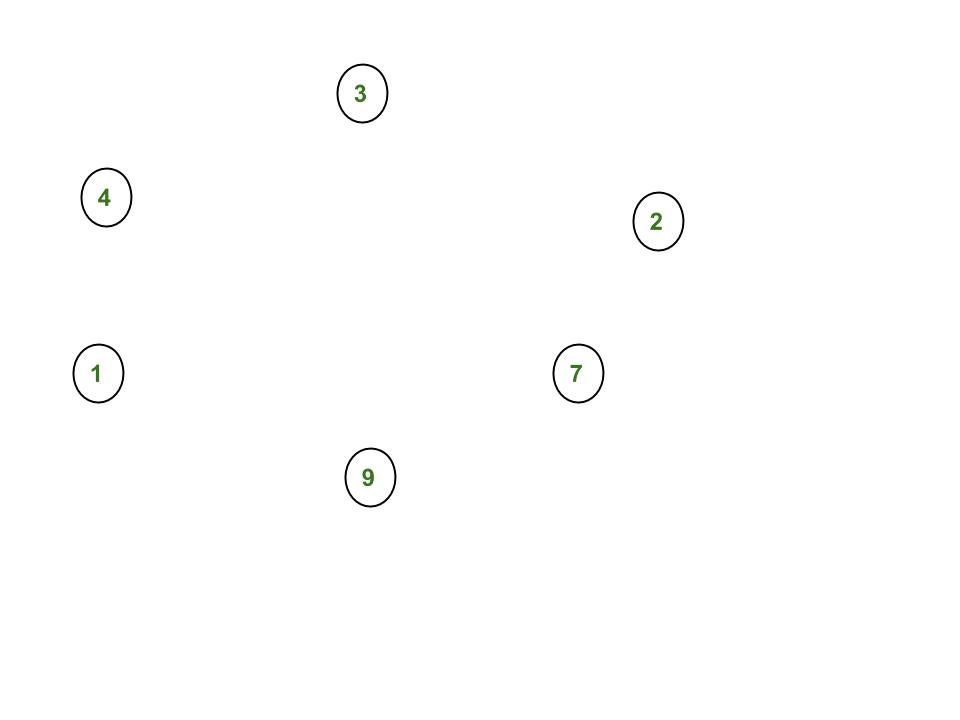
After this step, your graph G has 6 nodes.
Adding Edges
Edges connect the nodes in your graph:
Python `
Add individual edges
G.add_edge(1, 2) G.add_edge(3, 1) G.add_edge(2, 4) G.add_edge(4, 1) G.add_edge(9, 1)
Add multiple edges at once
G.add_edges_from([(1, 7), (2, 9)])
`
**Output:
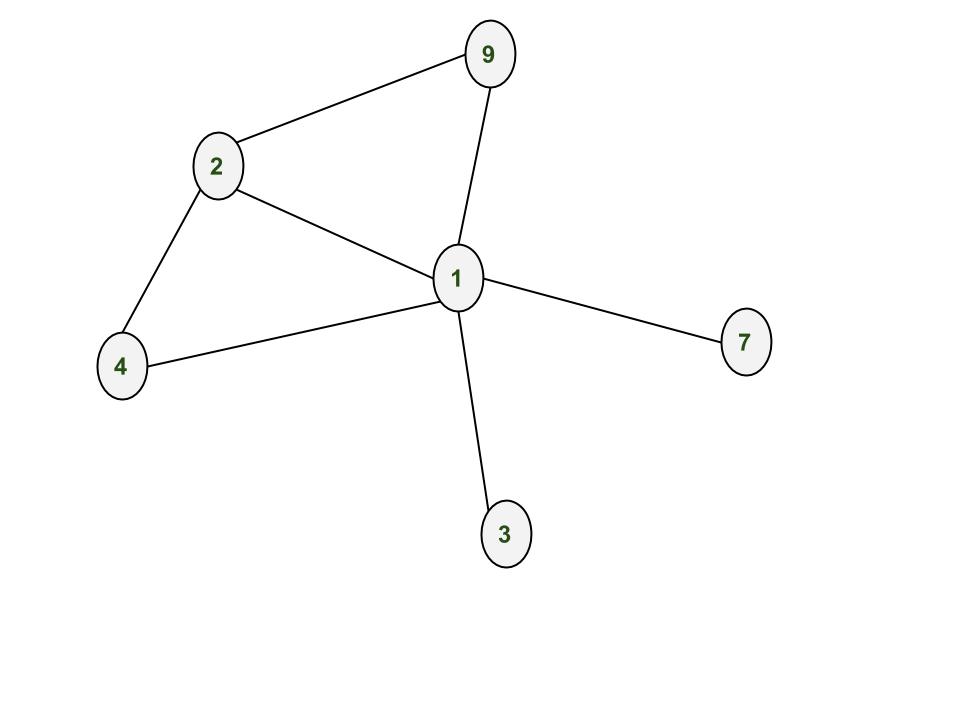
Note: Since it's an undirected graph, the edge (1, 2) is the same as (2, 1).
Removing Nodes and Edges
You can remove nodes and edges just as easily:
Python `
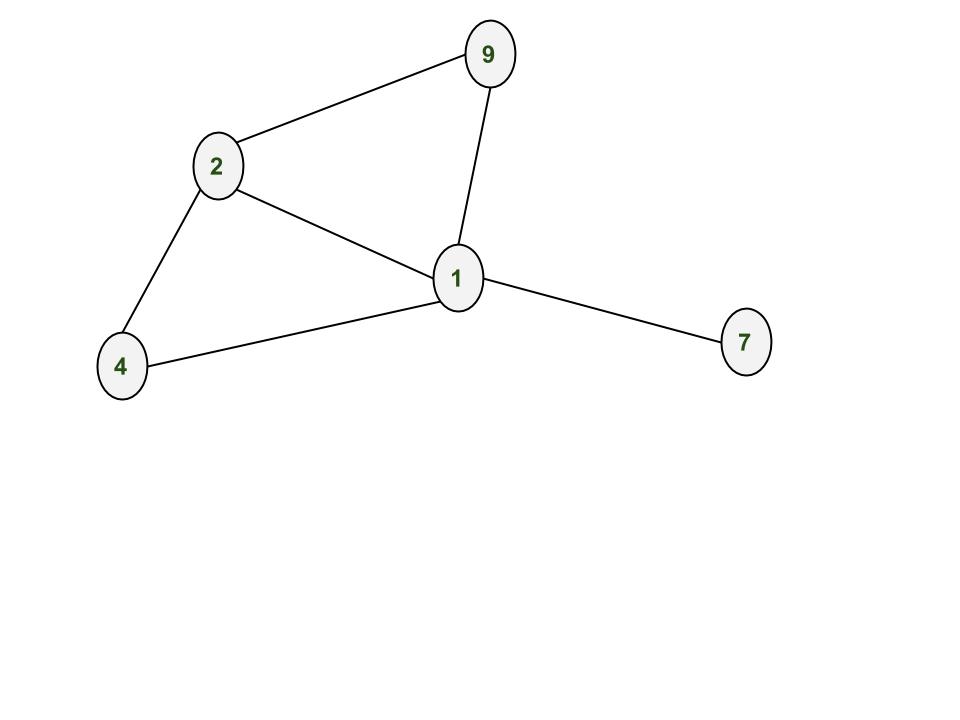
G.remove_node(3) # Removes node 3 G.remove_edge(1, 2) # Removes edge between node 1 and 2
`
**Output:
Network Analysis with NetworkX
NetworkX allows you to perform deep analysis of your graph:
Python `
All nodes
print(G.nodes())
All edges
print(G.edges())
Number of nodes and edges
print(G.number_of_nodes()) print(G.number_of_edges())
Degree of a node (number of connections)
print(G.degree(2))
Neighbors of a node
print(list(G.neighbors(2)))
Clear the graph (remove all nodes and edges)
G.clear()
`
**Output
[1, 2, 4, 7, 9]
[(1, 4), (1, 9), (1, 7), (2, 4), (2, 9)]
5
5
2
[4, 9]
**Explanation:
- **G.nodes() returns a list of all nodes currently in the graph.
- **G.edges() gives a list of all the edges (i.e., node pairs that are connected).
- **G.number_of_nodes() returns the count of total nodes.
- **G.number_of_edges() returns the count of total connections.
- **G.degree(2) gives the number of connections the node 2 has (its degree).
- **list(G.neighbors(2)) lists all nodes that are directly connected to node 2.