Python | Pandas Series.sub() (original) (raw)
Last Updated : 01 Oct, 2018
Python is a great language for doing data analysis, primarily because of the fantastic ecosystem of data-centric Python packages. Pandas is one of those packages and makes importing and analyzing data much easier. Python Series.sub() is used to subtract series or list like objects with same length from the caller series.
Syntax: Series.sub(other, level=None, fill_value=None, axis=0)Parameters: other: other series or list type to be subtracted from caller seriesfill_value: Value to be replaced by NaN in series/list before subtractinglevel: integer value of level in case of multi indexReturn type: Caller series with subtracted values
To download the data set used in following example, click here.In the following examples, the data frame used contains data of some NBA players. The image of data frame before any operations is attached below.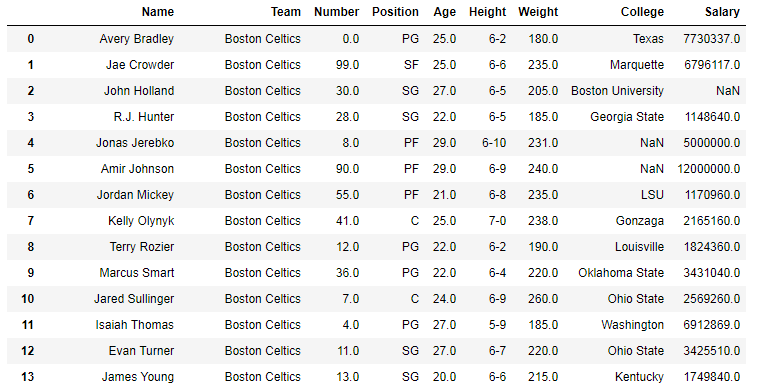 Example #1: Subtracting List In this example, the top 5 rows are stored in new variable using .head() method. After that a list of same length is created and subtracted from the salary column using .sub() method
Python3 1== `
importing pandas module
import pandas as pd
reading csv file from url
data = pd.read_csv("https://media.geeksforgeeks.org/wp-content/uploads/nba.csv")
creating short data of 5 rows
short_data = data.head()
creating list with 5 values
list =[5, 4, 3, 2, 1]
subtracting list data
creating new column
short_data["Subtracted values"]= short_data["Salary"].sub(list)
display
short_data
`
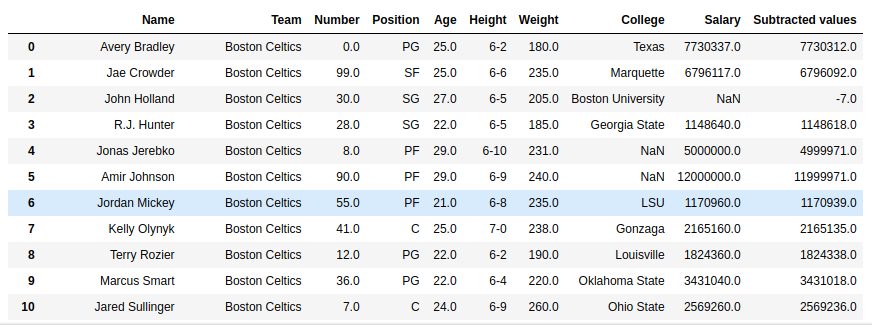
**Output:**As shown in the output image, it can be compared that the Subtracted values column is having the subtracted values of Salary column - list.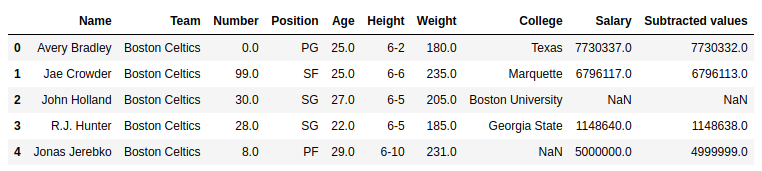 Example #2: Adding series to series with null values In this example, the Age column is subtracted from the Salary column. Since the salary column contains null values too, by default it returns NaN no matter what is subtracted. In this example, 20 is passed to replace null values with 20.
Python3 1== `
importing pandas module
import pandas as pd
reading csv file from url
data = pd.read_csv("https://media.geeksforgeeks.org/wp-content/uploads/nba.csv")
age series
age = data["Age"]
na replacement
na = 20
adding values
storing to new column
data["Subtracted values"]= data["Salary"].sub(other = age, fill_value = na)
display
data
`
**Output:**As shown in the output image, the Subtracted value column has subtracted age column from 20 in case of Null values.