Defect Management Process (original) (raw)
Last Updated : 28 Apr, 2026
The Defect Management Process (DMP) is a structured approach used to identify, track, and resolve defects throughout the software development lifecycle. It helps teams ensure better product quality, reliability, and efficient defect handling.
- Provides a systematic way to manage defects from identification to closure.
- Improves communication and coordination between testing and development teams.
- Enhances software quality by ensuring timely detection and resolution of issues.
**Real-world example: In an e-commerce application, a payment failure bug is reported, assigned to a developer, fixed, retested by QA, and then closed after verification.
Purpose of DMP
The purpose of the Defect Management Process is to establish a clear and organized method for handling defects while improving overall software quality. It also helps teams make informed decisions and continuously improve their processes.
- Enables efficient logging, tracking, and retesting of defects throughout the lifecycle.
- Provides accurate data and insights for defect status, reporting, and release decisions.
- Helps identify root causes and supports continuous improvement through defect analysis.
Types of Defects
Defects can arise at different stages of development and impact functionality, performance, or user experience. Focusing on key defect types helps teams prioritize testing and resolve issues effectively. Some common types include:
1. Functional Defects
These defects occur when the application does not behave according to specified requirements or expected functionality.
- Features fail to perform intended operations or produce incorrect results due to logic or implementation issues.
- Business requirements are either missing, incorrectly implemented, or not validated properly.
**Example: A user enters valid credentials but is still unable to log into the application.
2. Performance Defects
These defects affect the system’s speed, responsiveness, and stability under different conditions.
- Application shows slow response, lag, or delay when handling normal or high user load conditions.
- System crashes, freezes, or fails to handle multiple requests efficiently during execution.
**Example: A website takes more than 10 seconds to load during peak traffic hours.
3. Usability Defects
These defects impact the ease of use, design consistency, and overall user experience of the application.
- Poor interface design, unclear navigation, or inconsistent layouts make the system difficult to use.
- Users face confusion while interacting with features due to lack of clarity or intuitive design.
Example: A submit button is placed in an unclear location making it hard for users to complete a form.
4. Security Defects
These defects expose the application to vulnerabilities, making it prone to unauthorized access or data breaches.
- Weak authentication, improper authorization, or lack of data protection mechanisms compromise security.
- Sensitive information is not encrypted or protected properly during storage or transmission.
Example: A user can access another user’s account data without proper authentication checks.
5. Compatibility Defects
These defects occur when the application fails to perform consistently across different devices, browsers, or environments.
- Features or UI elements behave differently on various browsers, operating systems, or screen sizes.
- Lack of proper testing across platforms leads to inconsistent application behavior.
Example: A webpage layout breaks on mobile devices while working correctly on desktop browsers.
Steps of Defect Management Process
The defect management process follows a structured sequence of steps to ensure defects are identified, tracked, and resolved efficiently. Each step plays a crucial role in maintaining software quality and ensuring smooth collaboration between teams.
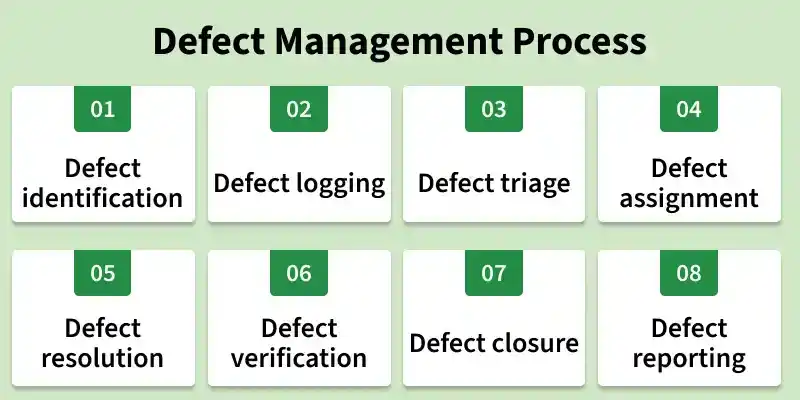
1. Defect Identification
Defects are identified during various testing phases such as unit testing, integration testing, and user acceptance testing.
- Detects issues in functionality, performance, or behavior during test execution.
- Helps uncover defects early to reduce impact on later stages.
2. Defect Logging
Once identified, defects are recorded in a defect tracking system with complete and accurate details.
- Includes information like description, severity, priority, environment, and steps to reproduce.
- Ensures defects are properly documented for analysis and resolution.
3. Defect Triage
Defects are reviewed and analyzed to determine their priority, severity, and impact on the system.
- Helps decide which defects need immediate attention and resource allocation.
- Involves collaboration between testers, developers, and managers.
4. Defect Assignment
Defects are assigned to appropriate team members based on their expertise and availability.
- Ensures accountability and clear ownership of each defect.
- Helps streamline the resolution process by assigning the right resource.
5. Defect Resolution
Assigned team members fix the defects by making necessary changes to code, configuration, or documentation.
- Focuses on resolving the root cause of the defect effectively.
- Ensures proper implementation of the fix without impacting existing features.
6. Defect Verification
After fixing, testers verify whether the defect has been resolved correctly.
- Confirms that the issue is fixed and no new defects are introduced.
- May include regression testing to ensure overall system stability.
7. Defect Closure
Once verified, the defect is marked as closed in the tracking system.
- Updates defect status and ensures proper documentation of resolution.
- Confirms that the defect lifecycle is successfully completed.
8. Defect Reporting
Reports are generated to track defect status, trends, and resolution performance.
- Provides insights into defect density, resolution time, and quality metrics.
- Helps in decision-making and continuous process improvement.
Stages of Defect Management Process
The stages of the Defect Management Process define the systematic flow followed to prevent, identify, resolve, and learn from defects during software development. These stages help reduce defect impact, improve quality, and ensure continuous process improvement.
1. Defect Prevention
Defect prevention focuses on avoiding defects before they are introduced by improving processes and following best practices early in development.
- Prevents defect injection through reviews, standards, and process improvements while improving overall quality.
- Reduces cost and effort since early defect fixing is cheaper and less risky.
- Minimizes the number and severity of defects before they reach testing.
2. Deliverable Baseline
This stage ensures that deliverables are finalized and accepted after meeting predefined milestones, with controlled changes afterward.
- Establishes a stable version of the product and ensures it meets defined objectives.
- Controls and manages changes after baseline to maintain consistency and discipline.
- Helps track progress and ensures structured development flow.
3. Defect Discovery
Defect discovery involves identifying and validating defects during testing, reviews, or user interactions.
- Detects defects early through testing and validation by testers, developers, or users.
- Ensures defects are confirmed and properly validated before logging.
- Helps reduce the overall impact and cost of defects.
4. Defect Resolution
In this stage, defects are analyzed, fixed, and prepared for verification by updating the system components.
- Developers identify root causes and apply fixes through code, configuration, or design changes.
- Fixed defects are deployed back into testing environments for validation.
- Ensures defects are properly resolved before moving to verification.
5. Process Improvement
This stage focuses on analyzing defects and improving processes to prevent recurrence in future releases.
- Identifies root causes and process gaps to suggest preventive measures.
- Improves development, testing, and quality practices for better efficiency.
- Ensures continuous learning and long-term quality improvement.
Advantages of Defect Management Process
The defect management process helps teams handle defects efficiently, improve software quality, and ensure smooth collaboration throughout the development lifecycle.
- Enables efficient defect tracking and management through centralized systems.
- Improves software quality by ensuring defects are properly fixed and verified.
- Provides useful metrics and insights for better decision-making.
- Enhances collaboration and efficiency across development and testing teams.
Metrics & KPIs for Defect Management
Tracking metrics helps evaluate the effectiveness of defect management and identify areas for improvement. These KPIs provide insights into defect trends, team efficiency, and overall product quality.
- Measures open and closed defects along with average resolution time to evaluate workload, team efficiency, and progress of defect handling.
- Analyzes defect density across modules to identify high-risk, complex, or error-prone areas in the application.
- Tracks reopened defects to assess the quality of fixes and effectiveness of testing and verification processes.
- Monitors defect leakage to identify defects missed during testing but found in production, helping improve test effectiveness.