Product Backlog, MVP, and Releases in Project Management (original) (raw)
Last Updated : 23 Apr, 2026
In Agile project management, effective planning and delivery are essential for building successful products. Concepts such as Product Backlog, Releases, and MVP help teams organize work, prioritize features, and deliver value to users in a structured and efficient manner.
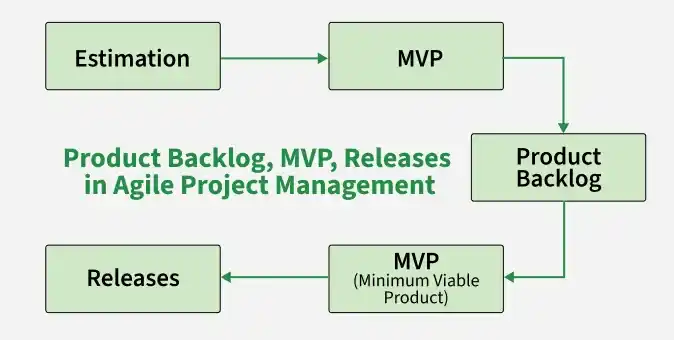
Agile Flow: From Product Backlog to MVP and Releases
Product Backlog
In Agile Scrum, the Product Backlog is a prioritized and well-defined list of features, enhancements, and bug fixes that guide the development process. It serves as the single source of work for the team and helps in planning upcoming sprints effectively. The Product Backlog is continuously refined to align with changing customer needs and business goals. The Features of Product Backlog are:
- **Dynamic and Evolving: Continuously updated based on user needs and market changes
- **Prioritized: Items are arranged based on value, importance, and user requirements
- **User-Centric: Derived from user stories reflecting customer needs and expectations
- **Collaborative and Refined: Maintained and improved through team and stakeholder involvement
Components of Product backlog
The Product Backlog is a living document that continuously evolves based on product vision, requirements, customer feedback, and market changes. It consists of various elements that help in organizing, prioritizing, and delivering product features effectively.
- **Epics/Themes: High-level features or goals that define the overall direction of the product
- **User Stories: Short descriptions of functionality from the user’s perspective
- **Bugs/Issues: Defects or problems that need to be fixed
- **Estimates: Effort required to complete each backlog item
- **Acceptance Criteria: Conditions that define when a task is considered complete
- **Dependencies: Relationships between tasks that affect their execution
- **Definition of Done: Standards that ensure quality and completeness
- **Prioritization: Ranking of items based on value, urgency, or business needs
Product Backlog Management
Product Backlog Management is an ongoing Agile activity that involves creating, updating, and prioritizing backlog items to ensure the team works on the most valuable tasks. It helps keep the backlog refined, clear, and ready for upcoming sprints.
- Managed by the Product Owner in collaboration with the Scrum Team
- Includes refining, estimating, and prioritizing features, enhancements, and fixes
- Ensures backlog items are clear, small, and ready for Sprint Planning
Creating the Product Backlog
Below are the steps in creating the Product backlog:
- Define product vision and goals
- Gather input from stakeholders
- Add epics, user stories, and bug fixes
- Prioritize and estimate backlog items
- Continuously review and refine
Benefits
- Provides clear visibility of work and priorities
- Helps deliver high-value features first
- Supports incremental value delivery in each sprint
- Assists in effective sprint planning
- Ensures user-focused development
- Aids in better resource planning and allocation
Releases
In project management, a release refers to a new version of software made available to users. It includes features, enhancements, updates, and bug fixes that are tested and stable. Releases play an important role in the development cycle by delivering value to users in an incremental manner.
Release Management Process
Release management ensures that software is delivered to the production environment smoothly, on time, and with minimal risk. It involves close collaboration between development, testing, and operations teams to ensure quality and reliability.
- **Release Planning: Define scope, timeline, and deliverables
- **Development & Code Freeze: Complete coding and restrict further changes
- **Testing: Perform unit, integration, and system testing
- **Release Candidate: Prepare a stable version for final validation
- **User Acceptance Testing (UAT): Validate with users and stakeholders
- **Deployment: Release the approved version to production
- **Monitoring & Rollback: Monitor performance and handle issues if needed
Release Notes
After the Release, Release notes are documents shared with users after deployment that describe new features, improvements, bug fixes, and changes made in the current version.
Post-Release Support and Feedback
After deployment, support is provided to address user issues and queries. Feedback from users is collected and analyzed to improve future releases and enhance the overall product.
MVP (Minimum Viable Product)
MVPstands for Minimum Viable Product refers to a basic version of a product with only essential features needed to satisfy early users. It is developed quickly to test the product idea in the market and gather user feedback. MVP helps validate the product concept and supports iterative improvement based on real user experience. Its key features are:
- **Minimal Features: Includes only essential functionalities
- **Quick to Market: Developed and launched in a short time
- **User Feedback: Helps gather early feedback from users
- **Risk Reduction: Minimizes cost and effort by testing ideas early
- **Market Validation: Checks product viability and user demand
- **Supports Agile: Encourages iterative and incremental development
Steps to Plan and Build an MVP
Creating an MVP involves identifying a clear problem, building a basic solution, and improving it based on user feedback. It helps validate ideas quickly and ensures the product meets user needs effectively.
- **Validate the Idea: Identify the problem and confirm it through market research
- **Define Vision and Goals: Clearly outline product purpose and expected outcomes
- **Identify Target Users: Understand user needs, pain points, and create user personas
- **Select Core Features: Focus only on essential features that provide value
- **Build the MVP: Develop a simple and functional version of the product
- **Test with Users: Gather feedback from early adopters
- **Analyze and Improve: Refine the product based on feedback and iterate