What is Iterative Design? (original) (raw)
Last Updated : 23 Jul, 2025
Iterative design is a process where designers continuously improve a product by repeating cycles of testing and refining. This method helps create user-friendly and high-quality products by allowing designers to identify and fix issues early on. By involving users in each step, iterative design ensures that the final product meets their needs and preferences. It's a flexible and efficient way to develop websites, apps, and other digital products.
What is Design Iteration?
Iterative design is a process where designers continuously improve a product through repeated cycles of testing and refining. This method involves creating a basic version of the product, testing it with users, gathering feedback, and making necessary improvements. By repeating this cycle, the design gradually gets better and more effective. Iterative design is essential for creating high-quality, user-friendly products, ensuring they meet user needs and provide an excellent user experience (UX). This approach is widely used in UI design to achieve the best possible results.
Why Do We Need Design Iteration?
Design iteration is crucial for several reasons, especially when aiming for high-quality, user-friendly products. Here’s why it’s important:
**1. User-Centric Design
- **Focus on User Needs: By involving users throughout the design iterations, you ensure that the final product effectively meets their needs and preferences. This user-centric approach leads to better user satisfaction and usability.
**2. Enhancing Functionality
- **Improving Reliability: Iterative design allows teams to identify and fix potential issues early on. By continuously refining the design, you can create a more reliable and functional final product that performs well.
**3. Adaptability to Change
- **Responding to Trends: In fast-changing industries, needs and preferences can shift quickly. Iterative design enables designers to adapt to these changes efficiently, ensuring the product remains relevant and up-to-date.
**4. Risk Mitigation
- **Reducing Errors: Early identification and resolution of problems through iterative testing and refinement reduce the risk of costly errors in the final product. This proactive approach saves time and resources in the long run.
Iterative Design Process Model
The iterative design process is a cycle of steps that are repeated to improve a design or product. Here’s a simple explanation of each step according to the image:
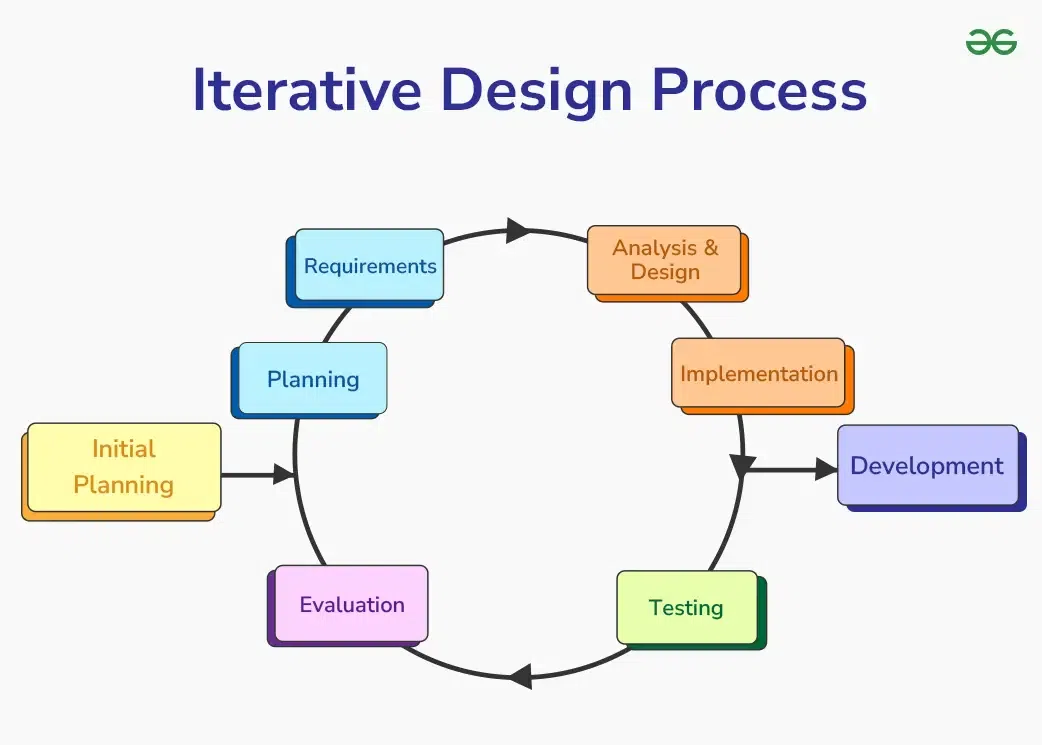
Iterative Design Process Model
**1. Initial Planning
Start by defining the goals and scope of the project. Identify what you want to achieve and outline the basic plan.
**2. Requirements
Gather all the necessary requirements for the project. Understand what needs to be done and what resources are needed.
**3. Analysis & Design
Analyze the requirements and create a design. Plan how the project will look and work, considering both functionality and aesthetics.
**4. Implementation
Develop the design into a working model. This is where the actual building or coding happens.
**5. Development
Further develop and refine the working model. Add more details and improve the functionality.
**6. Testing
Test the design to make sure everything works correctly. Identify any issues or bugs that need to be fixed.
**7. Evaluation
Evaluate the results of the testing. Gather feedback and determine what improvements are needed.
**8. Planning
Plan the next iteration based on the evaluation. Adjust the goals and requirements as needed.
Benefits of Iterative Design
Iterative design offers many advantages, making it a popular approach for creating high-quality products. Here are the key benefits:
**1. Continuous Improvement
- **Ongoing Excellence: Iterative design promotes a culture of continuous improvement, encouraging teams to strive for better results with each version of the product.
**2. Enhanced Customer Satisfaction
- **User-Friendly Designs: By incorporating customer feedback into each design iteration, the final product becomes more user-friendly, leading to higher levels of user satisfaction.
**3. Cost-Efficiency
- **Early Issue Resolution: Addressing problems early in the design phase reduces the likelihood of expensive changes later in the development process, saving time and money.
**4. Faster Time to Market
- **Speed and Quality: Iterative cycles streamline the design process, allowing products to be launched more quickly without compromising on quality.
Examples of Design Iterations
Design iterations are used in many fields to continuously improve products and ensure they meet user needs. Here are some key examples:
**1. Software Development
- **Agile Development: Agile methodologies involve continuous feedback loops and iterative progress to ensure the software meets user needs. Each iteration includes planning, development, testing, and review, making the software better with each cycle.
**Read More: Agile Software Development – Software Engineering
**2. Product Design
- **Mobile Phones: The development of smartphones is a great example of design iteration. Each new model builds on existing features and incorporates user feedback to improve functionality, performance, and user experience.
- **Automobiles: Car manufacturers use iterative design to enhance safety, efficiency, and user comfort. Each new car model benefits from feedback and technological advancements.
**3. Website Design
- **User Interface Optimization: Web designers often use iteration to improve user interfaces, making websites easier to navigate and enhancing the overall user experience. This involves testing different layouts, colors, and elements based on user feedback.
- **E-commerce Platforms: Online stores frequently update their designs to improve the shopping experience, streamline checkout processes, and boost sales.
**4. Video Game Development
- **Gameplay Enhancements: Game developers use iterative design to refine gameplay mechanics, graphics, and user interfaces. Player feedback is crucial in this process to ensure a fun and engaging experience.
- **Beta Testing: Before the final release, games often go through multiple beta testing phases, where player feedback is used to fix bugs and improve the game.
**5. App Development
- **Feature Updates: Mobile app developers release regular updates based on user feedback to add new features, improve performance, and fix issues.
- **User Experience (UX) Design: Iterative design helps in fine-tuning the user experience by continually testing and refining app interfaces and interactions.
Conclusion
In summary, iterative design is a powerful approach that focuses on continuous improvement and user satisfaction. By repeatedly testing and refining designs, this method helps create reliable, functional, and user-friendly products. Whether you are designing a website, an app, or any other digital product, using iterative design ensures that you deliver high-quality results that meet the needs of your users.