Organizational Structure, Master Data and Navigation Basics in SAP MM (original) (raw)
Last Updated : 13 Aug, 2024
Leading organizations use SAP (Systems, Applications, and Products), a prominent **enterprise resource planning (ERP) software, to manage diverse aspects of their business operations. Several key concepts within **SAP MM - organizational structure; master data management; and navigation – are fundamental for comprehending the system's functionality. I present an overview here:
1. Organizational Structure in SAP MM
**SAP uses a hierarchical organizational structure to model an enterprise. The primary components of the organizational structure include:
- **Client - The client stands as the pinnacle organizational unit within SAP; symbolizing a wholly independent business entity or system instance.
- **Company Code - The Company Code represents a legal entity or an independent accounting unit within our client; we utilize it exclusively for financial reporting purposes.
- **Plant - The term "**plant" represents a facility—either for manufacturing or distribution—that serves as the production site or storage location of various goods.
- **Sales Organization - The Sales Organization bears the responsibility of selling products or services to customers.
- **Distribution Channel - The distribution channel defines the pathway through which products or services are delivered to customers; it may encompass direct sales, retail outlets, or online platforms.
- **Division - This term represents the delineation of a company's operations into distinct product lines or business segments.
- **Organizational Units - The company can create organizational units to represent various aspects of its structure, including purchasing organizations, storage locations, or cost centers.
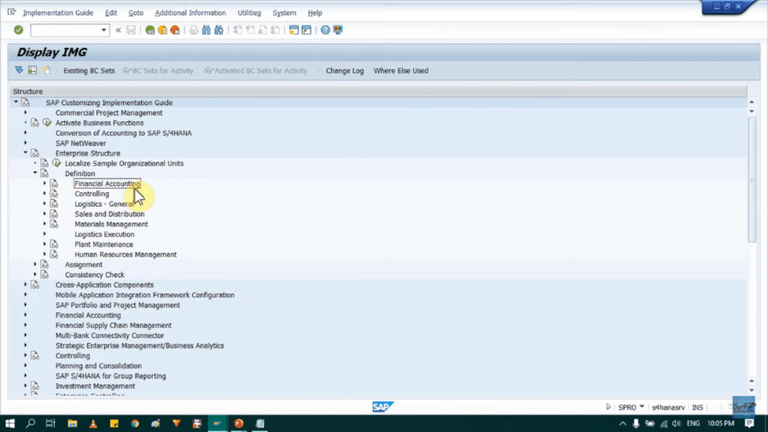
Organizational Structure

Organizational Structure of SAP
2. Master Data in SAP MM
Master data in SAP MM is a critical component that is used as a foundation for various business transactions and processes. Key categories of master data in SAP include:
- **Material Master - This repository holds a company's product or material-specific information; it encompasses essential details such as the type of material, comprehensive descriptions, pricing structures--even stock levels are accounted for.
- **Customer Master - It embodies crucial data concerning customers--specifically, their contact particulars; credit limits and payment stipulations form an integral part of this repository.
- **Vendor Master - It houses essential information pertaining to suppliers or vendors--specifically their contact details and payment terms.
- **Employee Master - These databases holds a wealth of information related to our employees, encompassing their personalized details, job roles and payroll data.
- **Bank Master - It encompasses data concerning the banks and their associated accounts that facilitate financial transactions.

Master Data in SAP
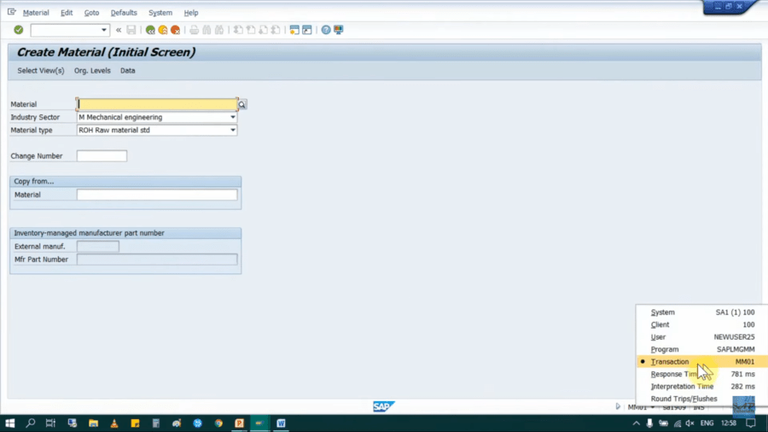
Master Data in SAP
3. Navigation Basics in SAP MM
Navigating in SAP MM can be complex due to its extensive functionality, but here are some fundamental navigation concepts:
- **SAP GUI (Graphical User Interface) - SAP typically employs a Graphical User Interface (GUI) for user interaction: through this interface, users navigate various SAP transactions.
- **SAP Menu - A hierarchical structure meticulously organizing an array of SAP functions and transactions. Accessible to users are diverse modules—Financial Accounting, Materials Management, Sales and Distribution — embedded within this menu.
- **Transaction Codes (T-codes) - Each SAP function or operation associates with a unique alphanumeric code--known as a transaction code (T-code): this is what we call Transaction Codes (T-codes). In the command field, users have the capability to enter these T-codes; thereby, they directly access specific functions.
- **SAP Easy Access Screen - The SAP Easy Access Screen serves as the initial gateway for numerous users: from this point, one can navigate to various modules, transactions, or reports—either through menu navigation; alternatively--by directly entering T-codes.
- **Favorites and Shortcuts - Users have the ability to create favorites and shortcuts for frequently used transactions, thereby simplifying navigation.
- **Search Functionality - Certain SAP systems offer a search function--a tool designed to swiftly locate specific transactions or objects.
conclusion
To effectively utilize the **SAP system for various business processes--procurement, sales, inventory management and financial accounting: one must grasp its organizational structure; master data navigation basics. Typically–users and professionals alike working with this software–require training enriched by experience in SAP usage. Understanding the organizational structure, master data, and journey basics in SAP MM is essential for proper purchasing and inventory management. The organizational structure ensures alignment with company strategy, while comprehensive master data, including product information, supports seamless operations Effective development through SAP MM, using SAP GUI and integration rules apply, increase user productivity. Together, these features enable organizations to optimize resource management, resulting in improved productivity, cost savings, and improved supply chain management.