The 7 Scrum Artifacts (original) (raw)
Last Updated : 23 Apr, 2026
Scrum artifacts are key pieces of information that help teams and stakeholders understand the product, track progress, and manage work effectively throughout the sprint. They provide transparency and ensure alignment across the development process. The Purpose of Scrum Artifacts are:
- Define work and goals for the sprint
- Break down tasks into manageable items
- Track progress and performance during execution
- Enable review and continuous improvement after each sprint
Artifacts of Agile Scrum
In Software Development, Artifacts simply refer to important information that helps guide the creation of the product. These artifacts play an important role in keeping the project on track and verifying that everyone involved is aligned on what needs to be done throughout the process.
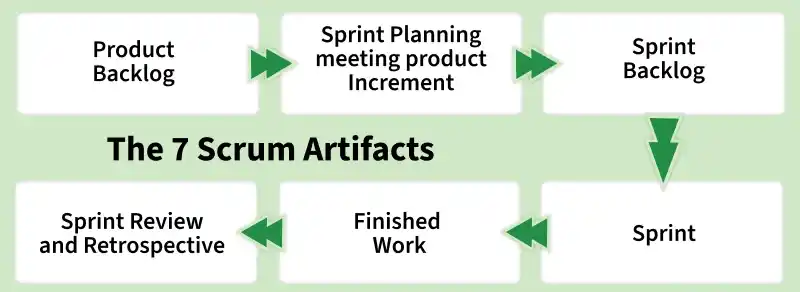
Scrum Artifacts Workflow
1. Product Backlog
All the work required to build and improve a product is organized in a single, evolving list that helps teams stay aligned with priorities and goals. This structured list is known as the Product Backlog, which continuously adapts based on feedback and changing requirements. It
- Provides a clear view of all product requirements
- Ensures prioritization based on business value
- Supports continuous updates and refinement
- Aligns the team on what to build next
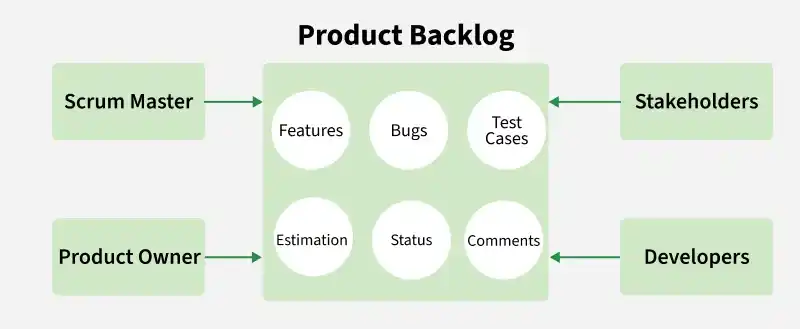
Product Backlog
2. Sprint Backlog
During each sprint, the team selects a set of tasks and breaks them into actionable steps to achieve a specific goal. This collection of selected work items is called the Sprint Backlog, which acts as a short-term execution plan. Its responsibilities include:
- Breaking work into manageable tasks
- Providing daily visibility of progress
- Helping the team stay focused on sprint goals
- Allowing flexibility while executing tasks
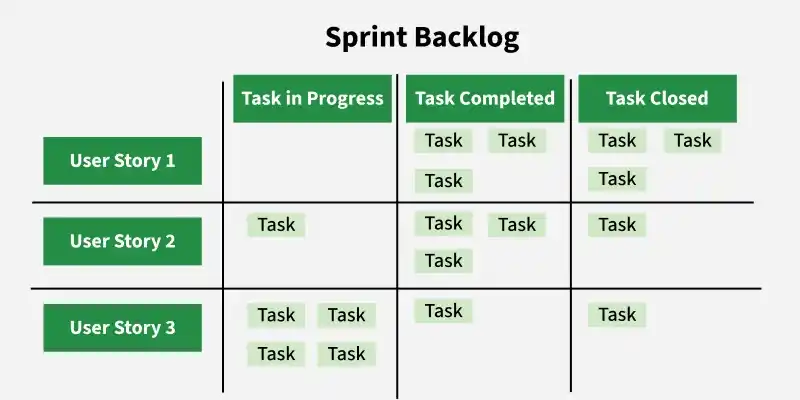
Sprint Backlog
3. Product Vision
A clear direction is essential to guide product development and ensure long-term success. This overarching purpose and goal are defined through the Product Vision, which aligns team efforts with user needs and business objectives. It is important as it:
- Provides strategic direction and clarity
- Aligns stakeholders toward a common goal
- Guides decision-making and prioritization
- Keeps focus on long-term value delivery
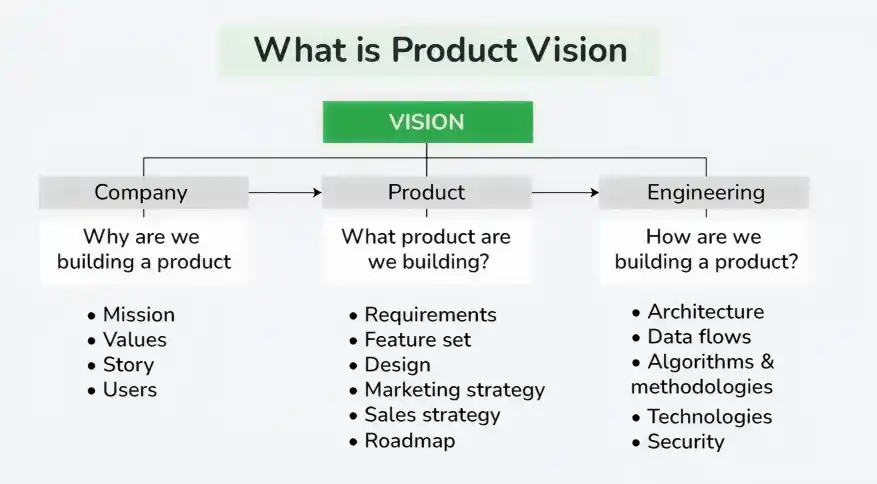
Product Vision
4. Sprint Goal
To ensure focus during a sprint, the team defines a clear objective that guides their work and decision-making. This objective is referred to as the Sprint Goal, which helps maintain alignment throughout the sprint. It ensures:
- Focus on a single objective
- Better team alignment and collaboration
- Clear understanding of expected outcomes
- Flexibility while maintaining direction
5. Definition of Done (DoD)
Consistency in quality is achieved by defining clear completion criteria for tasks and features. This shared understanding is established through the Definition of Done (DoD), which ensures work meets agreed standards. Its role in Scrum are:
- Maintains quality and consistency
- Ensures work is tested and complete
- Creates a shared understanding of completion
- Prevents incomplete or low-quality delivery
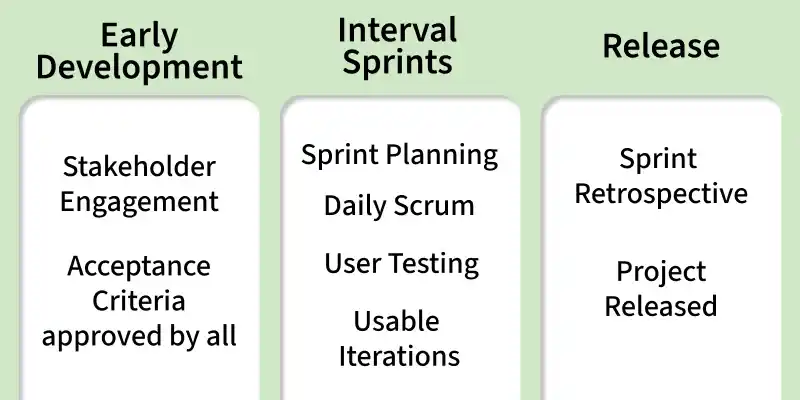
Definition of Done
6. Product Increment
At the end of each sprint, the team delivers a usable outcome that reflects the work completed. This output is known as the Product Increment, representing a functional and potentially releasable version of the product. It adds value as it:
- Delivers working features regularly
- Enables continuous improvement
- Provides tangible progress after each sprint
- Supports early feedback from stakeholders
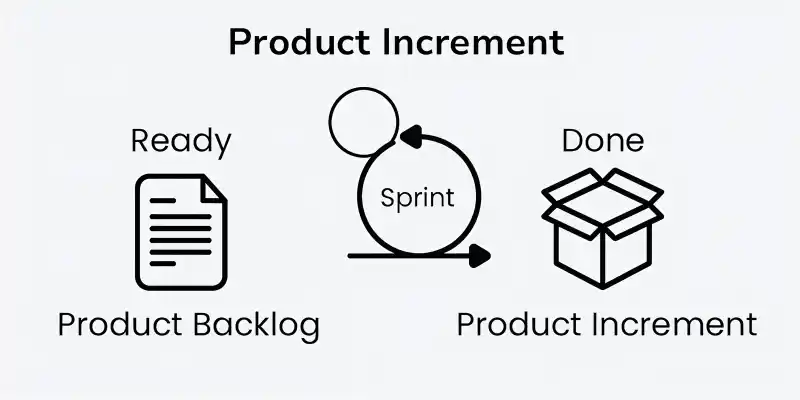
Product Increment
7. Burndown Chart
Tracking progress visually helps teams understand whether they are on schedule during a sprint. This is done using the Burndown Chart, which shows the remaining work over time. Team uses it as it:
- Tracks progress against time
- Highlights delays early
- Improves transparency
- Supports better planning and adjustments

Burndown Chart