Scrum Development Model in SDLC (original) (raw)
Last Updated : 23 Jul, 2025
The Software Development Life Cycle (**SDLC**)** is a structured process that is used to **design, **develop, and **test high-quality software. The SDLC life cycle model aims to deliver high-quality, maintainable software that meets the user’s requirements. In SDLC, there are various models for software development models. The **Waterfall Modelis one of them, but it has some limitations, like difficulty in the changes, less flexibility, and long software development cycles.
To overcome these challenges, the **Agile Methodwas introduced. The Scrum model is also one of the Agile frameworks that has become popular in recent years. In the following article, we will explore the Scrum Development Model in detail.

Scrum Development Model in SDLC
Table of Content
- What is Scrum Model?
- How Scrum Model Works?
- Key components of the Scrum Development Model
- Key Principles of the Scrum Model
- Benefits of Scrum Model in SDLC
- Disadvantages of Scrum Model in SDLC
What is Scrum Model?
**Scrum is a management framework that teams use to self-organize tasks and work towards a common goal. It is a framework within which people can address complex adaptive problems while the productivity and creativity of delivering products are at the highest possible value. Scrum is a management framework that teams use to self-organize and work towards a common goal.
- Scrum allows us to develop products of the highest value while making sure that we maintain creativity and productivity.
- The iterative and incremental approach used in Scrum allows the teams to adapt to changing requirements.
How Scrum Model Works?
Scrum is a simple yet powerful framework that helps teams work together to deliver products step-by-step. It’s all about collaboration, continuous improvement, and delivering results quickly. Scrum breaks work into small chunks called sprints, which are short, focused periods where teams plan, do the work, and review their progress.
Scrum model in SDLC follows a structured approach to software development that involves the following steps:

Scrum Model
**1. Product Backlog: The Product Backlog is a prioritized list of features, user stories, enhancements, and bug fixes that need to be addressed in the product. It is managed by the Product Owner and serves as the source of work for the Development Team.
**2. Planning Sprint: Sprint Planning is a key event at the beginning of each sprint. During this meeting, the Scrum Team, including the Product Owner, Scrum Master, and Development Team, collaboratively selects items from the Product Backlog to work on during the upcoming sprint. The team defines the Sprint Goal and creates the Sprint Backlog, detailing the tasks required to complete the selected items.
**3. Sprint Meeting: The Sprint Meeting, often referred to as the Daily Scrum or Daily Stand-up, is a brief daily meeting where team members provide updates on their progress, discuss what they plan to work on next, and highlight any impediments. The goal is to synchronize the team's activities and ensure everyone is on the same page.
**4. Sprint Review: The Sprint Review is held at the end of each sprint. The Scrum Team, stakeholders, and the Product Owner come together to review the completed work. The Development Team demonstrates the product increment, and stakeholders provide feedback. This session informs future planning and adjustments to the Product Backlog.
**5. Sprint retrospective: The Sprint Retrospective occurs after the Sprint Review and involves the Scrum Team reflecting on the previous sprint. The team discusses what went well, what could be improved, and any action items for enhancing their processes. The focus is on continuous improvement.
**6. Repeat: After the Sprint Retrospective, the cycle repeats with a new Sprint Planning meeting, followed by another sprint of development, daily stand-ups, Sprint Review, and Sprint Retrospective. This iterative process continues throughout the project, allowing the team to adapt to changing requirements, continuously improve, and deliver increments of the product at the end of each sprint.
This cyclic nature of Scrum, with its defined events and roles, supports agility and responsiveness in software development. The emphasis on regular inspection, adaptation, and collaboration contributes to the framework's effectiveness in delivering value to stakeholders in a dynamic environment.
Key components of the Scrum Development Model
The Scrum Development Model is made up of key parts that work together to help teams build high-quality software. These parts include:
1. Roles
The people involved in Scrum are the Product Owner, Scrum Master, and the Development Team. The Product Owner manages the product backlog, prioritizing work. The Scrum Master helps the team follow Scrum practices and removes obstacles. The Development Team does the actual work of building the product.
- **Product Owner: Represents the stakeholders and is responsible for defining and prioritizing the product backlog.
- **Scrum Master: Facilitates the Scrum process and ensures that the team adheres to its practices.
- **Development Team: Cross-functional and self-organizing group responsible for delivering the product increment.
2. Artifacts
These are the tools and documents that Scrum teams use to track progress. They include:
- **Product Backlog: A prioritized list of features, enhancements, and bug fixes that need to be addressed in the product.
- **Backlog: A subset of the product backlog selected for a specific sprint, containing tasks the team commits to completing.
- **Product Increment: The sum of all the completed product backlog items at the end of a sprint.
3. Events
Scrum operates on a set of events to organize the workflow. These events include:
- **Sprint: A time-boxed iteration (usually 2-4 weeks) during which a potentially shippable product increment is created.
- **Sprint Planning: A meeting at the beginning of each sprint where the team plans the work to be done.
- **Daily Scrum (Stand-up): A short daily meeting where team members discuss progress, plan for the day, and identify and address impediments.
- **Sprint Review: A meeting at the end of each sprint to review the completed work and gather feedback.
- **Sprint Retrospective: A meeting at the end of each sprint for the team to reflect on their processes and identify improvements.
4. Rules
- Scrum emphasizes transparency, inspection, and adaptation.
- The product is built incrementally in fixed-length iterations (sprints).
- Changes are only made between sprints unless there is a compelling reason to make a change during a sprint.
Scrum provides a flexible and collaborative approach to project management, allowing teams to adapt to changing requirements and deliver a potentially shippable product at the end of each sprint. It is widely used in various industries for its focus on iterative development, continuous improvement, and customer feedback.
Key Principles of the Scrum Model
The Scrum framework is built on six essential principles that help teams stay focused, adaptable, and productive. There are major key principles of the scrum model.
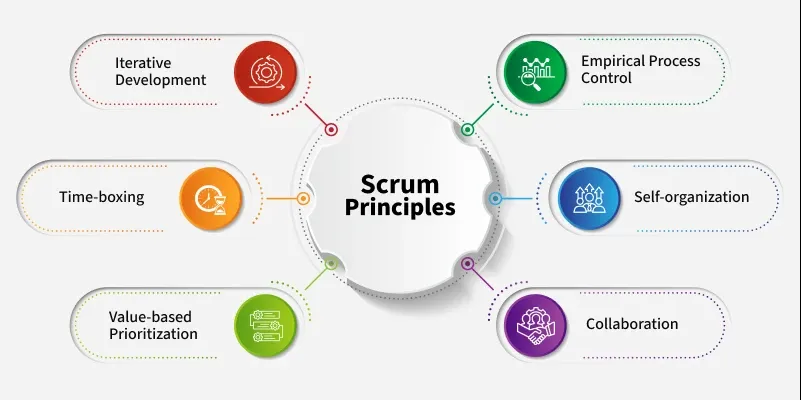
Scrum Principles
**1. Empirical Process Control
This principle is the backbone of Scrum. It’s based on three key ideas: being transparent, regularly inspecting progress, and making adjustments when needed. Scrum encourages learning by doing, which works especially well when things aren’t clear from the start. By constantly checking in and adapting, teams can stay on track and make improvements as they go.
**2. Self-organization
Scrum teams perform best when they have the freedom to organize themselves. This principle trusts that team members will do their best work when they can make decisions and manage tasks on their own. It leads to more accountability, a creative work environment, and a sense of ownership. When teams are empowered to take charge, they feel more responsible for the outcomes.
**3. Collaboration
At its core, Scrum is all about working together. Teams collaborate not just among themselves but also with customers and other stakeholders. This principle promotes clear communication, mutual understanding, and collective problem-solving. The goal is to create value by working together towards the same objectives, ensuring everyone involved is aligned throughout the project.
**4. Value-Based Prioritization
Scrum focuses on delivering the most valuable features as early as possible and continuously throughout the project. By prioritizing the most important tasks, teams can ensure they’re working on what truly matters. This helps in delivering results faster and ensures that the most valuable features are developed first.
**5. Time-boxing
Scrum relies on time as a constraint to manage tasks and project execution. Time-boxing sets fixed durations for different activities such as Sprints, Daily Standups, Sprint Planning, Sprint Reviews, and Retrospectives. This keeps the team focused, ensures progress is made without unnecessary delays, and helps everyone stick to a clear schedule.
**6. Iterative Development
Scrum works in small, manageable cycles known as iterations. Each cycle allows the team to review their work, gather feedback, and make adjustments. This approach helps teams quickly adapt to changes and ensures the product evolves to meet the customer’s needs. The Product Owner and the team guide this process to make sure everything stays aligned with customer expectations.
Benefits of Scrum Model in SDLC
The Scrum model offers several benefits that contribute to its widespread adoption in the software development industry and beyond. Here are some key advantages of the Scrum framework:
- **Flexibility and Adaptability: Scrum's iterative and incremental approach allows teams to adapt to changing requirements, priorities, and stakeholder feedback. This flexibility is especially valuable in dynamic and unpredictable project environments.
- **Customer Satisfaction: Regular sprint reviews and frequent delivery of potentially shippable product increments enable continuous feedback from stakeholders. This ensures that the product aligns with customer expectations, leading to increased satisfaction.
- **Early and Predictable Delivery: Scrum's time-boxed sprints result in regular and predictable releases of product increments. This facilitates early delivery of valuable features and allows stakeholders to plan accordingly.
- **Improved Collaboration: Scrum emphasizes collaboration among team members, stakeholders, and the Product Owner. Daily stand-up meetings, sprint reviews, and other Scrum events foster open communication and enhance teamwork.
- **Increased Transparency: Scrum promotes transparency through artifacts like the Product Backlog, Sprint Backlog, and burndown charts. This visibility into the project's status and progress helps stakeholders make informed decisions.
- **Reduced Time to Market: The iterative nature of Scrum, combined with regular releases, enables faster time-to-market for products. Teams can deliver valuable increments at the end of each sprint, providing opportunities for early product launches or updates.
- **Continuous Improvement: Sprint retrospectives encourage the team to reflect on their processes and identify areas for improvement. This commitment to continuous improvement leads to enhanced efficiency, productivity, and overall project success.
- **Increased Product Quality: Scrum promotes a focus on delivering a potentially shippable product at the end of each sprint. This emphasis on quality, combined with regular testing and feedback, contributes to the overall quality of the product.
- **Risk Management: The Scrum framework encourages early identification and mitigation of risks. Regular inspection of the product and adaptation of the development process enable teams to address issues promptly.
- **Empowered and Motivated Teams: Scrum empowers cross-functional, self-organizing teams to make decisions and take ownership of their work. This autonomy fosters a sense of responsibility and motivation among team members.
- **Cost Control: The incremental and iterative nature of Scrum allows for better cost control. Stakeholders can evaluate progress regularly, and adjustments can be made based on evolving priorities and budget considerations.
- **Scalability: Scrum can be scaled to larger projects by using frameworks like the Scaled Agile Framework (SAFe) or Large Scale Scrum (LeSS). This scalability makes it applicable to a wide range of projects, from small teams to large enterprises.
Disadvantages of Scrum Model in SDLC
While the Scrum model has many advantages, Here are some of the common drawbacks:
- **Requires Experienced Team Members: Scrum works best when the team is experienced and can manage tasks independently. Since Scrum relies on self-organizing teams, each team member must be capable of taking ownership of their work. If the team lacks experience, it can lead to confusion and delays, making it harder for the Scrum process to be effective.
- **Time-Consuming Meetings: Scrum includes several regular meetings like Daily Standups, Sprint Planning, Sprint Reviews, and Retrospectives. While these meetings are meant to be short and focused, they can become time-consuming if not managed properly. If the meetings are not efficient, they can take away valuable time that could be spent on actual development work.
- **Scope Creep: Scrum encourages flexibility and adaptability, which can sometimes lead to scope creep. This happens when the requirements change constantly during a sprint, making it hard to finish tasks on time. If not controlled, scope creep can cause delays and increase the overall project cost.
- **Lack of Focus on Documentation: Scrum doesn't prioritize heavy documentation, aiming for a more flexible and agile approach. While this helps teams work faster, it can create challenges in large or complex projects. Without clear documentation, teams may struggle to understand requirements, track progress, or bring new team members up to speed.
- **Difficulty in Scaling for Larger Projects: Scrum is ideal for smaller teams, but it can be tricky to scale for large projects. Coordinating between multiple Scrum teams (also called "Scrum of Scrums") can get complicated, leading to communication issues and slower progress. As projects grow, managing multiple Scrum teams efficiently becomes a challenge.
**Conclusion
Scrum model brings a fresh and effective approach to software development and project management. By focusing on flexibility, transparency, and collaboration, it helps teams deliver results early and predictably, making customers happy with regular updates and feedback. Scrum encourages continuous improvement, allowing teams to organize themselves, stay motivated, and work towards excellence.