Software Development Models SDLC Models (original) (raw)
Last Updated : 13 Jan, 2026
SDLC Models or Software Development Life Cycle (SDLC) models are frameworks that guide the development process of software applications from initiation to deployment. Various SDLC models in software engineering exist, each with its approach to the phases of development.

SDLC Models - Software Development Models
During the software development phase, various software development life cycle models are specified and designed. To guarantee success at each stage of the software development process, each process model adheres to a set of phases specific to its kind.
Here's a brief tutorial on some popular SDLC models (Software Development Models):
1. **Waterfall SDLC Models
The Waterfall model is one of the oldest and most straightforward approaches to software development. In this blog, we will explore the key aspects of the Waterfall Model, its phases, advantages, disadvantages, and instances where it is most suitable.
The Waterfall model follows a linear and sequential approach to software development. Each phase in the development process must be completed before moving on to the next one, resembling the downward flow of a waterfall. The model is highly structured, making it easy to understand and use.

Waterfall SDLC Models
Phases of Waterfall SDLC Models
- **Requirements: The first phase involves gathering requirements from stakeholders and analyzing them to understand the scope and objectives of the project.
- **Design: Once the requirements are understood, the design phase begins. This involves creating a detailed design document that outlines the software architecture, user interface, and system components.
- **Development: The Development phase includes implementation involves coding the software based on the design specifications. This phase also includes unit testing to ensure that each component of the software is working as expected.
- **Testing: In the testing phase, the software is tested as a whole to ensure that it meets the requirements and is free from defects.
- **Deployment: Once the software has been tested and approved, it is deployed to the production environment.
- **Maintenance: The final phase of the Waterfall Model is maintenance, which involves fixing any issues that arise after the software has been deployed and ensuring that it continues to meet the requirements over time.
Advantages of the Waterfall SDLC Models
- **Simplicity: The linear and sequential nature of the Waterfall models makes it easy to understand and implement.
- **Clear Documentation: Each phase has its own set of documentation, making it easier to track progress and manage the project.
- **Stable Requirements: Well-suited for projects with stable and well-defined requirements at the beginning.
- **Predictability: Due to its structured nature, the Waterfall model allows for better predictability in terms of timelines and deliverables.
Disadvantages of the Waterfall SDLC Models
- **Rigidity: The model is highly inflexible once a phase is completed, making it challenging to accommodate changes.
- **Late Testing: Testing is performed after the implementation phase, so defects might not be discovered until late in the process.
- **Limited Client Involvement: Clients are involved mainly in the initial phase, and significant changes cannot be easily accommodated later in the development process.
- **No Prototyping: The models lack the provision for creating prototypes, which could be a disadvantage in projects where user feedback is crucial.
When to Use the Waterfall SDLC Models
- **Well-Defined Requirements: When project requirements are clear, stable, and unlikely to change significantly.
- **Small to Medium-Sized Projects: For smaller projects with straightforward objectives and limited complexity.
- **Mission-Critical Systems: In scenarios where it is crucial to have a well-documented and predictable development process, especially for mission-critical systems.
The Waterfall model has been a foundational approach to software development for decades. While it may not be the most flexible model in the face of changing requirements, its simplicity and predictability make it suitable for certain types of projects. Understanding the project requirements and constraints is key to deciding whether the Waterfall model is the right fit for a particular development endeavor. As the software development landscape evolves, newer models and methodologies continue to emerge, providing alternative approaches to meet the demands of a rapidly changing industry.
2. **Iterative SDLC Models
In software development, choosing the right SDLC models is crucial for success. Among the various approaches, the Iterative SDLC model stands out as a flexible and efficient methodology that promotes continuous improvement and adaptability. In this blog post, we will explore the intricacies of the Iterative SDLC models, shedding light on its principles, benefits, and best practices

Iterative Models
Key Principles of **Iterative SDLC Models
- **Incremental Progress: The Iterative model emphasizes incremental development, breaking down the project into manageable parts. This allows for quicker delivery of functional components and facilitates early user feedback.
- **Flexibility and Adaptability: One of the model's strengths is its adaptability to changing requirements. Developers can easily incorporate new features or modifications during any iteration without disrupting the entire development process.
- **Continuous Evaluation: Regular assessment and evaluation occur after each iteration, enabling developers to identify and rectify issues early in the development cycle. This continuous feedback loop ensures that the final product aligns with user expectations.
- **Risk Management: Risks are addressed proactively throughout the development process. By identifying potential issues early on, the team can mitigate risks and make informed decisions, reducing the likelihood of project setbacks.
Benefits of **Iterative SDLC Models
- **Faster Time-to-Market: Incremental development allows for the release of functional components at the end of each iteration, resulting in a faster time-to-market compared to traditional SDLC models.
- **Enhanced Flexibility: The ability to adapt to changing requirements makes the Iterative models suitable for projects with evolving needs, ensuring that the final product meets user expectations.
- **Improved Quality: Continuous evaluation and testing in each iteration contribute to higher software quality. Bugs and issues are identified and addressed early, preventing them from accumulating in later stages.
- **Increased Stakeholder Engagement: Stakeholders are involved throughout the development process, providing valuable feedback after each iteration. This ensures that the final product aligns with user expectations and business goals.
Best Practices for Implementing Iterative SDLC
- **Clear Project Scope: Define a clear and well-understood project scope to guide each iteration. This ensures that the development team and stakeholders are aligned on the project's goals.
- **Effective Communication: Open and transparent communication is crucial. Regular team meetings, stakeholder updates, and documentation help maintain a shared understanding of project progress and requirements.
- **Automated Testing: Implement automated testing to streamline the testing process in each iteration. This ensures that the software remains stable and functional as new features are added.
- **Version Control: Utilize version control systems to manage code changes and track project history. This helps in maintaining a stable codebase and enables easier collaboration among team members.
The Iterative SDLC models offers a dynamic and adaptive approach to software development, aligning with the industry's demand for flexibility and efficiency. By embracing incremental progress, continuous evaluation, and stakeholder engagement, development teams can deliver high-quality software that meets evolving user requirements. As organizations navigate the complex landscape of software development, the Iterative SDLC model stands as a valuable methodology for achieving success in a rapidly changing environment.
Iterative SDLC models vs Waterfall SDLC Models
| **Aspect | **Iterative SDLC Models | **Waterfall SDLC Models |
|---|---|---|
| **Development Approach | Cyclical and Incremental | Sequential and Linear |
| **Phases | Planning, Design, Coding, Testing, Evaluation (Repeated Iteratively) | Requirements, Design, Implementation, Testing, Deployment |
| **Flexibility | High - Embraces Changes and Enhancements Throughout Development | Low - Changes are Difficult to Accommodate After Initial Phases |
| **Risk Management | Proactive - Risks Addressed Throughout Iterations | Reactive - Risks Addressed in a Linear Manner |
| **Time-to-Market | Gradual Releases, Quicker Time-to-Market for Incremental Features | Single Release at the End, Potentially Longer Time-to-Market |
| **User Involvement | Continuous User Feedback and Involvement Throughout | Limited User Involvement until the Testing Phase |
| **Testing | Continuous Testing Throughout Iterations | Testing Conducted After the Completion of the Implementation |
| **Adaptability | Highly Adaptable to Changing Requirements | Less Adaptable, Changes May Be Costly and Time-Consuming |
| **Complexity Management | Easier to Manage and Control Complexity | Complexity Management Challenging Due to Sequential Approach |
3. **V-models (Verification and Validation Models) in SDLC
The V-models in SDLC emerge as a compelling alternative, offering a structured and systematic approach. This blog post aims to unravel the intricacies of the V-models SDLC, shedding light on its principles, advantages, and best practices.
The V-Models, also known as the Verification and Validation models, is an extension of the traditional Waterfall models. It introduces a parallel testing phase for each corresponding development stage, forming a V-shaped diagram. Let's delve into the key principles that underpin the V-Models.

V-Models
Key Principles of V-Models
- **Parallel Development and Testing: Unlike the sequential nature of the Waterfall models, the V-models promote parallel development and testing. Each development phase aligns with a corresponding testing phase, fostering early defect detection.
- **Verification and Validation: The V-models place equal emphasis on both verification (ensuring that the product is built right) and validation (ensuring that the right product is built). Verification activities align with development phases on the left side of the V, while validation activities correspond to testing phases on the right side.
- **Traceability: Traceability is a core tenet of the V-Models, ensuring a direct linkage between each development phase and its associated testing phase. This traceability facilitates comprehensive documentation and alignment between requirements, design, and testing activities.
- **Early Defect Detection: By integrating testing activities in parallel with development, the V-models enable the early detection of defects. This proactive approach contributes to the creation of a more robust and reliable end product.
Advantages of the V-Models
- **Clear Design and Planning: The V-Models's structured framework facilitates clear design and planning. Well-defined tasks and deliverables at each stage contribute to effective project management.
- **Early Issue Identification: Incorporating testing early in the development process allows for the timely identification and resolution of issues. This proactive stance minimizes the likelihood of significant defects surfacing later in the project.
- **Traceability and Documentation: The V-Models's emphasis on traceability ensures a strong connection between development steps and testing steps. This results in thorough documentation, enhancing transparency and aiding project management.
- **Predictability and Control: The systematic approach of the V-models contributes to predictability and control in the development process. Stakeholders benefit from a clear understanding of each phase, facilitating better management of expectations.
Best Practices for V-models Implementation
- **Thorough Requirements Analysis: A detailed and well-defined set of requirements is imperative for the success of the V-Models. Thorough requirements analysis ensures alignment with project goals throughout subsequent development and testing activities.
- **Effective Communication: Clear and consistent communication between development and testing teams is crucial. Regular meetings, status updates, and collaboration tools foster synchronization and enable prompt issue resolution.
- **Automated Testing: Leveraging automated testing tools enhances the efficiency and effectiveness of the testing process in the V-Models. Automation allows for the seamless execution, repetition, and adaptation of tests as needed.
- **Iterative Feedback Loop: Establishing an iterative feedback loop between development and testing teams is essential. Insights gained from testing inform and enhance subsequent development phases, fostering continuous improvement.
4. **Spiral SDLC Models
The Spiral model combines the idea of iterative development with the systematic aspects of the Waterfall model. It is based on the concept of a spiral, with each loop representing a phase in the software development process. The model is inherently risk-driven, meaning that risks are continuously assessed and addressed throughout the development life cycle.
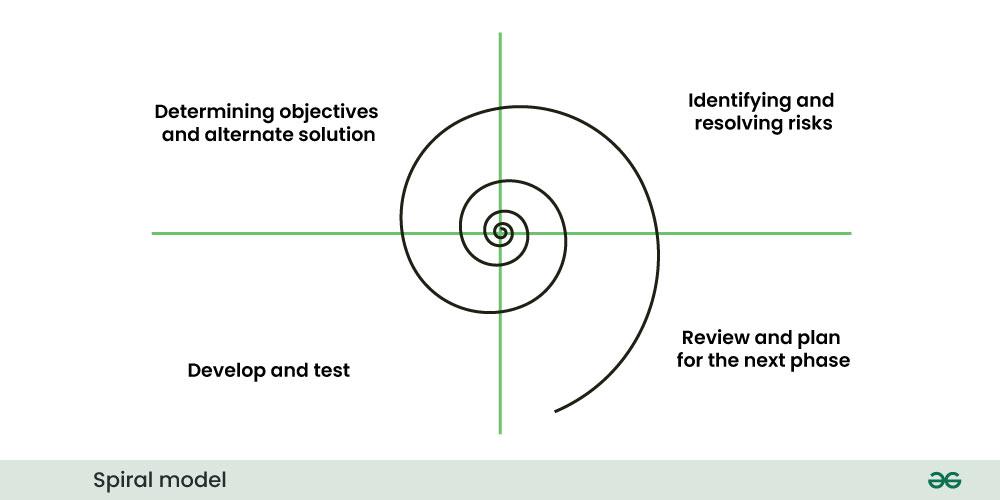
Spiral Models
Key Principles of Spiral SDLC Models
- **Iterative Development: The Spiral model embraces iterative development, allowing for the incremental release of the product. Each iteration, or spiral, includes planning, risk analysis, engineering, testing, and evaluation phases.
- **Risk Management: Risk analysis is a fundamental component of the Spiral Models. Each iteration begins with a risk assessment, and the project progresses based on addressing high-priority risks. This approach allows for proactive risk management and mitigation.
- **Flexibility: The models are highly adaptable to changes in requirements. As each iteration involves planning and assessment, modifications and adjustments can be made to accommodate evolving project needs.
- **Continuous Evaluation: Evaluation is integrated into every phase of the Spiral Models. After each iteration, the project is reviewed to assess progress, identify potential risks, and determine the next steps.
Advantages of the Spiral SDLC Models
- **Risk Mitigation: The focus on risk analysis and management allows for early identification and mitigation of potential issues, reducing the likelihood of project failure.
- **Flexibility in Requirements: Changes to requirements can be accommodated at any stage of the development process. The iterative nature of the Spiral models facilitates flexibility and adaptation.
- **High-Quality Products: Continuous evaluation and testing contribute to the production of high-quality software. Defects are identified and addressed early in the development life cycle.
- **Client Involveme nt : Clients and stakeholders are involved throughout the development process. Their input is sought during the planning and evaluation phases, ensuring the final product aligns with their expectations.
Best Practices for Spiral SDLC Models
- **Thorough Risk Assessment: Conduct a comprehensive risk assessment at the beginning of each iteration. Prioritize and address high-risk elements to minimize potential challenges.
- **Regular Review Meetings: Hold regular review meetings after each iteration to assess progress, evaluate the product, and plan the next steps. This continuous feedback loop is crucial for success.
- **Collaborative Team Communication: Foster open communication among team members. Collaboration is key to successfully navigating the iterative and dynamic nature of the Spiral Models.
- **Documentation : Maintain detailed documentation throughout the development process. This includes documentation of risks, decisions, and changes made at each iteration.
5. **Agile SDLC Models
Agile is not a specific methodology but rather a set of principles and values outlined in the Agile Manifesto. The Agile Manifesto prioritizes individuals and interactions, working solutions, customer collaboration, and responding to change over rigid processes and documentation. Several Agile methodologies, including Scrum, Kanban, and Extreme Programming (XP), have been developed to implement these principles.
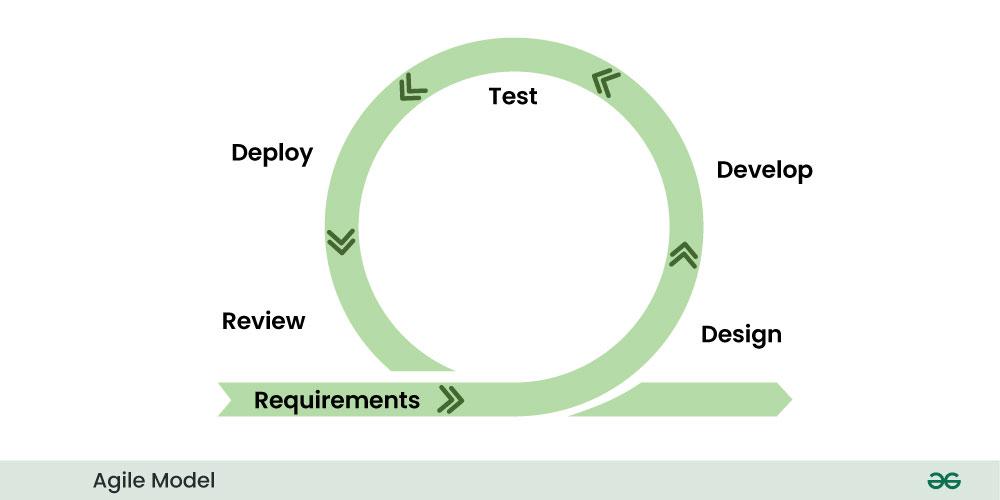
Agile SDLC Models
Key Principles of Agile SDLC Models
- **Iterative and Incremental Development: Agile promotes iterative development cycles, with each iteration producing a potentially shippable increment of the software. This allows for rapid adaptation to changing requirements.
- **Customer Collaboration: Regular and close collaboration with customers and stakeholders is integral to Agile. Their feedback is sought throughout the development process, ensuring that the product meets their expectations.
- **Adaptability to Change: Agile embraces change, even late in the development process. It recognizes that requirements are likely to evolve, and the methodology is designed to accommodate these changes efficiently.
- **Cross-Functional Teams: Agile encourages the formation of cross-functional teams comprising individuals with diverse skills. This promotes collaboration and enables the team to collectively take ownership of the entire development process.
Advantages of the Agile SDLC Models
- **Flexibility and Adaptability: Agile's iterative nature allows teams to adapt quickly to changing requirements. This flexibility is particularly valuable in dynamic and fast-paced environments.
- **Customer Satisfaction: Continuous customer involvement ensures that the delivered product aligns closely with customer expectations. This customer-centric approach enhances satisfaction and reduces the risk of delivering a product that does not meet user needs.
- **Early and Predictable Delivery: Agile's iterative cycles result in regular and predictable product deliveries. This allows stakeholders to see tangible progress at the end of each iteration.
- **Improved Quality: Continuous testing and integration throughout the development process contribute to higher software quality. Bugs and issues are identified and addressed early, reducing the risk of defects in the final product.
Best Practices for Agile SDLC Models
- **Effective Communication: Foster open and transparent communication within the team and with stakeholders. Regular meetings, stand-ups, and collaborative tools are essential for keeping everyone informed.
- **Prioritization and Planning: Prioritize features and tasks based on customer value. Regular planning sessions, such as Sprint Planning in Scrum, help the team focus on high-priority items.
- **Continuous Integration and Testing: Implement continuous integration practices to ensure that code changes are integrated and tested frequently. This minimizes integration issues and helps maintain a stable codebase.
- **Retrospectives for Continuous Improvement : Conduct regular retrospectives to reflect on what went well, what could be improved, and how the team can enhance its processes. Continuous improvement is a core principle of Agile.
6. **DevOps SDLC Models
DevOps, comprised of "development" and "operations," represents a cultural and organizational shift in how software is developed, tested, and deployed. It emphasizes collaboration and communication between software developers and IT operations, promoting automation and continuous delivery. DevOps is not just a set of practices; it is a cultural mindset that seeks to improve collaboration and efficiency across the entire software development lifecycle.

DevOps SDLC Models
Key Principles of DevOps SDLC Models
- **Collaboration: DevOps encourages close collaboration and communication between development and operations teams. Silos are dismantled, and teams work together to achieve common goals.
- **Automation: Automation is a fundamental principle of DevOps. By automating repetitive tasks, such as testing and deployment, teams can increase efficiency, reduce errors, and accelerate the delivery pipeline.
- **Continuous Integration and Continuous Delivery (CI/CD): DevOps promotes the practice of continuous integration, where code changes are regularly integrated into a shared repository, and continuous delivery, where software can be deployed to production at any time.
- **Infrastructure as Code (IaC): Infrastructure as Code is the practice of managing and provisioning infrastructure through code and automation tools. This allows for consistent and repeatable infrastructure deployments.
Advantages of the DevOps SDLC Models
- **Increased Collaboration: DevOps breaks down traditional barriers between development and operations, fostering a culture of collaboration. Shared goals and responsibilities lead to improved communication and efficiency.
- **Faster Time-to-Market: Automation and continuous delivery practices in DevOps result in shorter development cycles and faster deployment of features and updates, reducing time-to-market.
- **Improved Reliability: Automated testing and deployment processes enhance the reliability of software releases. DevOps practices contribute to the detection and resolution of issues early in the development lifecycle.
- **Scalability and Flexibility: DevOps enables organizations to scale their infrastructure and applications efficiently. Automation allows for the rapid provisioning and scaling of resources based on demand.
Best Practices for DevOps SDLC Models
- **Cultural Transformation: DevOps is not just about tools; it requires a cultural shift. Encourage a collaborative and transparent culture where teams work together to achieve shared objectives.
- **Automation Tools: Invest in and leverage automation tools for various aspects of the development and operations lifecycle, including continuous integration, testing, deployment, and monitoring.
- **Continuous Monitoring: Implement robust monitoring practices to gain insights into application and infrastructure performance. Continuous monitoring helps detect and address issues proactively.
- **Feedback Loo ps : Establish feedback loops throughout the development and operations processes. This includes feedback on code quality, application performance, and user satisfaction.
7. **Rapid Application Development (RAD) SDLC Models
Rapid Application Development is an iterative and incremental model that prioritizes quick development and iteration cycles. It places a strong emphasis on user feedback and involvement throughout the development process. RAD aims to deliver functional prototypes rapidly, allowing stakeholders to provide feedback and guide ongoing development.

Rapid Application Development
Key Principles of RAD SDLC Models
- **Iterative Development: RAD follows an iterative development approach, breaking down the project into smaller, manageable components. Each iteration results in a functional prototype, facilitating continuous improvement.
- **User Involvement: Users and stakeholders are actively involved throughout the development process. Their feedback is sought early and often, ensuring that the application aligns with user expectations.
- **Prototyping: Prototyping is a core aspect of RAD. Functional prototypes are quickly developed and refined based on user feedback. This iterative prototyping approach accelerates the development lifecycle.
- **Adaptability to Changes: RAD is designed to accommodate changes and modifications to requirements even after the development process has started. This flexibility is crucial for adapting to evolving project needs.
Advantages of Rapid Application Development (RAD) SDLC Models
- **Speed and Time-to-Market: RAD's iterative nature and emphasis on quick prototyping contribute to faster development cycles, reducing time-to-market for applications.
- **User Satisfaction: Continuous user involvement and feedback ensure that the application meets user expectations. This user-centric approach enhances user satisfaction and adoption.
- **Adaptability to Changes: RAD's flexibility allows for changes and enhancements to be easily incorporated, even late in the development process. This is particularly valuable in dynamic project environments.
- **Cost-Effective: The rapid development and iteration cycles of RAD can lead to cost savings, especially when compared to traditional models that may involve lengthy planning phases.
Best Practices for RAD SDLC Models
- **Clear Project Scope: Define a clear and well-understood project scope to guide the iterative development process. This helps in prioritizing features and functionalities.
- **Active User Involvement: Actively involve users and stakeholders throughout the development process. Regular feedback sessions and usability testing are essential for shaping the application according to user needs.
- **Effective Communication: Maintain open and transparent communication among the development team, users, and stakeholders. This ensures that everyone is aligned on project goals and progress.
- **Prototyping Tools: Utilize prototyping tools that facilitate the quick creation of functional prototypes. These tools aid in visualizing and refining the application during the iterative cycles.
8. **Incremental SDLC Models
The Incremental model is an iterative software development process where the product is designed, implemented, and tested incrementally (a little more is added each time) until the product is finished. Each iteration represents a small part of the overall system and includes both new features and enhancements to existing ones.

Incremental SDLC Models
Key Principles of Incremental SDLC Models
- **Incremental Development: The development process is divided into increments, with each increment delivering a portion of the complete functionality. This allows for the gradual building of the system.
- **Partial System Functionality: Each increment provides partial system functionality, allowing stakeholders to see tangible progress early in the development process. This helps in gathering feedback and making adjustments.
- **Integration of Increments: Increments are integrated with the existing system or increments from previous iterations. This integration ensures that the complete system evolves gradually with each increment.
- **Parallel Development: Different teams or development groups can work on different increments simultaneously. This parallel development approach contributes to faster development cycles.
Advantages of the Incremental SDLC Models
- **Early and Tangible Results: Stakeholders see tangible results early in the development process as each increment delivers a part of the functionality. This helps in managing expectations and gathering early feedback.
- **Flexibility and Adaptability: The models allow for changes to be incorporated easily at each increment. This flexibility is particularly beneficial when dealing with evolving requirements or feedback from users.
- **Risk Management: Risk is mitigated as the development process is divided into smaller, manageable increments. This allows for early detection and resolution of issues, minimizing the impact on the overall project.
- **Faster Time-to-Market: The incremental and parallel development approach often results in a faster time-to-market compared to traditional sequential models. This is especially valuable in dynamic and competitive environments.
Best Practices for Incremental SDLC Models
- **Clear Requirements Definition: Ensure that the requirements for each increment are well-defined. Clear requirements facilitate smooth development and integration processes.
- **Thorough Testing at Each Increment: Rigorous testing should be conducted at each increment to ensure that the integrated system functions correctly. This includes testing the new features and ensuring compatibility with existing ones.
- **Effective Communication: Maintain open and effective communication among teams working on different increments. Regular updates and coordination are essential for successful parallel development.
- **Iterative Feedback: Encourage iterative feedback from stakeholders after each increment. This feedback loop helps in refining the system and addressing any issues early in the development process.
Comparison between various SDLC Models
Below is a table comparing several Software Development Life Cycle (SDLC) models, including Waterfall, Iterative, Spiral, Agile, V-Models, and Incremental. Please note that this is a high-level comparison, and the suitability of a particular model depends on the specific requirements and nature of the project.
| **Aspect | **Waterfall | **Iterative | **Spiral | **Agile | **V-Models | **Incremental |
|---|---|---|---|---|---|---|
| **Development Approach | Sequential | Iterative | Iterative | Iterative | Iterative | Iterative |
| **Phases | Linear | Planning, Design, Coding, Testing, Evaluation (Repeated Iteratively) | Planning, Risk Analysis, Engineering, Testing (Cyclical) | Planning, Sprint, Review, Retrospective (Iterative Cycles) | Planning, Design, Implementation, Testing, Deployment (Parallel) | Divided into increments, each with Planning, Implementation, Testing |
| **Flexibility | Low | High | High | High | Moderate | High |
| **Risk Management | Late mitigation, Limited adaptability | Proactive risk management, Adaptability to changes | Continuous risk assessment, Proactive mitigation | Continuous risk assessment, Adaptability to changes | Risk management aligned with phases, Moderate adaptability | Proactive risk management, Adaptability to changes |
| **Time-to-Market | Longer | Faster | Variable | Faster | Moderate | Faster |
| **User Involvement | Limited | Continuous | Periodic | Continuous | Periodic | Continuous |
| **Testing | After Implementation | Continuous throughout iterations | Integrated throughout the spiral | Continuous and c | After Implementation | Continuous throughout increments |
| **Adaptability | Low | High | High | High | Moderate | High |
| **Complexity Management | Linear approach, Limited adaptability | Easier to manage, Adaptability to changes | Cyclical approach, Risk-d | Adaptive approach to changes | Traceability helps manage c | Adaptive approach to changes |
This table provides a high-level comparison of key aspects of different SDLC models. The choice of S depends on project requirements, the level of flexibility needed, and the nature of the development process.
When to use which SDLC models?
Choosing the right Software Development Life Cycle (SDLC) Model depends on various factors such as project requirements, timelines, budget, and team expertise. Here's a table that outlines when to use different SDLC models based on specific considerations:
| **Consideration | **Waterfall | **Iterative | **Spiral | **Agile | **V-Models | **Incremental |
|---|---|---|---|---|---|---|
| **Project Size | Small to Medium | Medium to Large | Large | Small to Medium | Medium to Large | Small to Large |
| **Project Complexity | Low to Medium | Medium to High | High | Low to High | Medium to High | Medium to High |
| **Requirements Stability | Stable | Can evolve | Can evolve | Likely to change frequently | Moderate stability | Stable to Moderate Stability |
| **Client Involvement | Limited | Continuous | Periodic | High and Continuous | Periodic | Continuous |
| **Budget Constraints | High Predictability, Fixed Budget | Moderate Predictability, Some Flexibility | Some Flexibility | Variable, Suitable for Changing Budgets | Moderate Predictability, Fixed Budget | Moderate Predictability, Some Flexibility |
| **Risk Tolerance | Low | Moderate | High | Moderate | Moderate | Moderate to High |
| **Time-to-Market | Moderate | Faster | Variable | Faster | Moderate | Faster |
| **Documentation Emphasis | Extensive Documentation | Moderate Documentation | Detailed Documentation | Minimal Documentation | Moderate Documentation | Moderate Documentation |
| **Testing Approach | Sequential Testing after Development Phases | Continuous Testing Throughout Iterations | Continuous Testing Throughout the Spiral | Continuous and Collaborative Testing | Testing Conducted After the Completion of Phases | Continuous Testing Throughout Increments |
| **Change Management | Limited Flexibility | High Flexibility | Adaptive to Changes | Highly Adaptive to Changes | Moderate Flexibility | High Flexibility |
It's important to note that these recommendations are general guidelines, and the choice of an SDLC models may vary based on the specific context and requirements of each project. Additionally, hybrid approaches that combine elements from different SDLC models are also commonly used to tailor the development process to a project's unique needs.
Which is the most widely used SDLC model and Why?
**Agile is widely considered one of the most used Software Development Life Cycle (SDLC) models in the software industry. Agile methodologies, including **Scrum, **Kanban, and others, have gained significant popularity. Here are some reasons why Agile is commonly used:
- **Adaptability to Change: Agile is highly adaptive and embraces changes in requirements even late in the development process. This flexibility is crucial in dynamic business environments where requirements may evolve.
- **Customer Satisfaction: Agile methodologies prioritize continuous customer involvement and feedback. This ensures that the delivered product aligns closely with customer expectations, leading to higher customer satisfaction.
- **Faster Time-to-Market: Agile promotes iterative development cycles, allowing for the delivery of working software in short increments. This results in a faster time-to-market for features and updates.
- **Risk Management: Agile practices, such as continuous testing and customer feedback, contribute to early detection and resolution of issues. This proactive approach enhances risk management and reduces the likelihood of major defects.
- **Collaborative Team Environment: Agile emphasizes cross-functional teams working collaboratively. This fosters better communication, cooperation, and a shared sense of responsibility among team members.
- **Continuous Improvement: Agile methodologies encourage regular retrospectives and continuous improvement. Teams reflect on their processes and outcomes, making adjustments to enhance efficiency and effectiveness.
- **Iterative Development: The iterative nature of Agile allows for the delivery of incremental, tangible results. This provides stakeholders with visibility into the progress of the project and allows for adjustments based on feedback.
- **Predictable and Sustainable Pace: Agile promotes a sustainable pace of work for development teams. This helps prevent burnout and ensures that teams can consistently deliver value over the long term.
It's important to note that the choice of an SDLC models depends on various factors, including project size, complexity, organizational culture, and specific project requirements. While Agile is prevalent, other models like Waterfall, Iterative, and others are still used based on the unique characteristics of different projects. Additionally, some organizations adopt hybrid approaches that combine elements from multiple SDLC models to tailor the development process to their specific needs.
How to Choose an SDLC Model?
Selecting the right Software Development Life Cycle (SDLC) model is crucial for project success. The SDLC defines how software is planned, built, tested, and maintained, and the right model aligns with project goals, team skills, and constrain.
**1. Project Requirements:
- **Clear and Stable Requirements: Use Waterfall or V-Model when requirements are well-defined and unlikely to change.
- **Evolving or Unclear Requirements: Use Agile or Iterative models when requirements are likely to change.
**2. Project Size and Complexity:
- **Small and Simple Projects: Use Waterfall or RAD for straightforward projects with limited scope.
- **Large and Complex Projects: Use Agile, Spiral, or DevOps for projects requiring flexibility and scalability.
**3. **Team Expertise:
- **Experienced Teams: Use Agile or Scrum when teams are skilled in iterative development.
- **Less Experienced Teams: Use Waterfall or V-Model for teams needing clear guidance.
**4. Client Involvement:
- **Frequent Client Feedback: Use Agile, Scrum, or RAD when regular client interaction is required.
- **Minimal Client Involvement: Use Waterfall or V-Model when client input is limited to initial stages.
**5. Time and Budget Constraints:
- **Fixed Time and Budget: Use Waterfall or V-Model for strict schedules and budgets.
- **Flexible Time and Budget: Use Agile or Spiral when adjustments are feasible.
**6. Risk Management:
- **High-Risk Projects: Use Spiral for projects with significant uncertainties.
- **Low-Risk Projects: Use Waterfall for projects with minimal risks