Iterative Waterfall Model Software Engineering (original) (raw)
Last Updated : 16 Jan, 2026
The Classical Waterfall Model is difficult to use in real-world projects because it does not allow changes once a phase is completed. To overcome this limitation, the Iterative Waterfall Model was introduced.
It follows the same phase-by-phase structure as the Waterfall Model but adds feedback paths, allowing earlier phases to be revisited and improved.
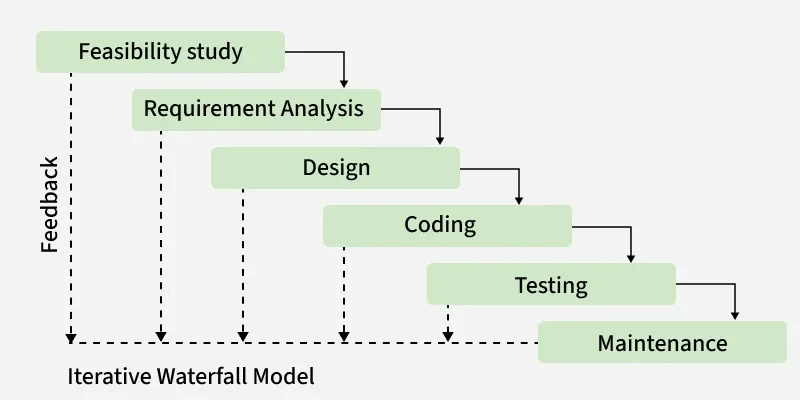
Iterative Waterfall Model
The Iterative Waterfall Model is a software development approach that combines:
- The sequential structure of the Waterfall Model
- The flexibility of iteration and feedback
Each phase can send feedback to its previous phase, making it possible to correct mistakes early instead of waiting until the end.
- Sequential development with feedback loops
- Errors are corrected in the same phase where they occur
- Changes are reflected in later phases
- Improves efficiency compared to the classical Waterfall Model
- Reduces time and cost of fixing errors
**Example:
Developing a mobile banking app where requirements are defined first, the app is designed, developed, tested, and deployed. After feedback, errors are fixed and features are improved by revisiting earlier phases. This cycle is repeated until the final, stable version is achieved.
Phases of Iterative Waterfall Model
1. Requirements Gathering
- Business owners and developers discuss project goals
- Functional and non-functional requirements are collected
- Requirements are clearly documented
2. Design
- A preliminary system design is created
- Architecture, database, and interface design are planned
- Design can be revised based on feedback
3. Implementation
- Developers write the code based on the design
- Modules are developed step by step
- Errors found can send feedback to the design phase
4. Testing
- The software is tested to ensure it meets requirements
- Bugs and issues are identified early
- Necessary corrections are made through feedback loops
5. Deployment
- The software is deployed and made available to users
- Final checks are performed
6. Review and Improvement
- System performance is reviewed
- Improvements and refinements are made
- The process repeats until the product meets objectives
When to use Iterative Waterfall Model?
- Requirements are mostly clear but may need refinement
- Team is learning new technologies
- Project has a high risk of future changes
- Large projects with limited resources
- When early error detection is important
Application
- Projects with stable core requirements
- Systems using new or unfamiliar technology
- Large projects divided into manageable phases
- High-risk projects requiring regular validation
Why is iterative waterfall model used?
- Allows feedback between phases
- Helps detect and fix errors early
- Reduces rework and development cost
- Keeps the project aligned with goals
Advantages
- Early detection and correction of errors
- Improved collaboration between developers and clients
- Better flexibility than classical Waterfall
- Regular testing improves quality
- Faster delivery of refined versions
- Reduced project risk
Drawbacks
- Changes after development starts are difficult
- No partial or incremental delivery
- Phases cannot overlap
- No formal risk management mechanism
- Limited customer interaction after requirements phase