Project Director: Roles, Responsibilities, Skills and Salary (original) (raw)
Last Updated : 23 Apr, 2026
In project management, senior leadership is essential to ensure that projects are planned, executed, and delivered successfully within defined goals. This responsibility is handled by a Project Director, who oversees the entire project lifecycle and aligns strategy with execution. A Project Director plays a key role in coordination, decision-making, and ensuring successful project outcomes.
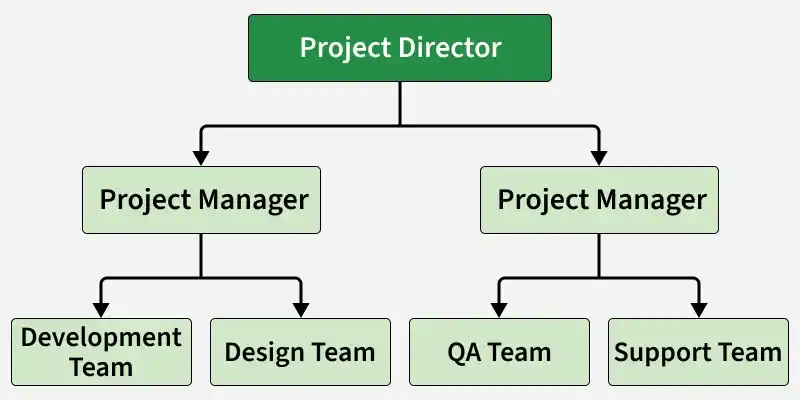
Project Team Hierarchy
Roles and Responsibilities
Project Directors are responsible for ensuring the successful planning, execution, and delivery of projects by aligning them with organizational objectives. Their role combines strategic oversight, team leadership, and effective communication to drive project success.
- **Strategic Planning: Define project goals, develop execution strategies, and ensure alignment with business objectives.
- **Team Leadership: Lead and support cross-functional teams, fostering collaboration and optimal resource utilization.
- **Stakeholder Communication: Maintain clear and consistent communication with stakeholders regarding project status, progress, and outcomes.
- **Issue Resolution: Identify challenges early and implement effective solutions to keep the project on track.
- **Change Management: Manage changes in scope, budget, or timeline while ensuring proper approval and documentation processes.
- **Performance Evaluation: Conduct post-project reviews to assess outcomes, capture lessons learned, and document best practices.
- **Stakeholder Management: Build and maintain strong relationships with clients, sponsors, and partners to ensure alignment and satisfaction.
- **Project Oversight: Monitor overall project performance to ensure deadlines, budgets, and quality standards are consistently met.
Skills and Qualifications
Project Director requires a combination of strong leadership skills and a relevant educational background to effectively manage projects and drive successful outcomes.
**Key Skills:
- **Leadership: Ability to guide teams, inspire collaboration, and ensure successful project delivery.
- **Project Management Expertise: Strong understanding of methodologies, tools, and processes for planning, executing, and monitoring projects.
- **Problem-Solving: Capability to identify issues, analyze root causes, and implement effective solutions.
- **Communication: Clear and effective verbal and written communication with stakeholders, teams, and senior management.
**Educational Qualifications:
- **Bachelor’s Degree: A degree in project management, business administration, engineering, or a related field provides a strong foundation.
- **Professional Certifications: Certifications such as PMP, PRINCE2, or Certified ScrumMaster (CSM) enhance credibility and career prospects.
Qualities of a Good Project Director
A successful Project Director demonstrates strong leadership and professional ethics.
- **Ethical Conduct: Maintains integrity, transparency, and accountability.
- **Organizational Skills: Manages time, resources, and priorities effectively.
- **Leadership Ability: Motivates teams and fosters collaboration.
- **Communication Skills: Clearly conveys goals and expectations.
- **Problem-Solving Ability: Handles challenges efficiently to ensure project success.
Steps to Become a Project Director
Becoming a Project Director requires a combination of education, practical experience, and strong leadership capabilities. It involves gradually progressing through project management roles while developing strategic and decision-making skills.
- **Educational Qualification: Obtain a bachelor’s degree in fields such as business administration, engineering, project management, or a related discipline.
- **Gain Relevant Experience: Start in roles like project coordinator, team leader, or project manager to build hands-on experience in managing projects.
- **Pursue Leadership Opportunities: Take initiative by leading teams, managing projects, or participating in leadership roles within your organization.
- **Develop Core Skills: Strengthen key skills such as communication, negotiation, decision-making, and conflict resolution.
- **Enhance Industry Knowledge: Stay updated with industry trends, tools, regulations, and best practices to make informed decisions and drive successful projects.
Salary
- **Average Salary (India): ₹10,00,000 – ₹30,00,000 per year
- **Factors Affecting Salary: Experience, industry, company size, and location
- **Additional Benefits: Bonuses, incentives, and stock options
- **Project Management Tools: Jira, Asana, MS Project for planning and tracking
- **Collaboration Tools: Enable communication and team coordination
- **Reporting Tools: Provide real-time insights and performance tracking
- **Integration Capabilities: Support integration with other business tools
Project Director vs Project Manager
| **Project Director | **Project Manager |
|---|---|
| Handles strategic decisions and overall project direction | Manages day-to-day project execution |
| Oversees multiple projects or large programs | Focuses on a specific project |
| Works closely with senior stakeholders | Works closely with team members |
| Defines vision, budget, and priorities | Executes plans within defined scope |