Risk Based Testing and Failure Mode and Effects Analysis (original) (raw)
Last Updated : 16 May, 2026
In software testing, identifying and managing risks is essential to ensure high-quality and reliable software. Not all parts of an application have equal importance, so focusing on critical areas helps reduce failures and improve efficiency. Risk management techniques guide teams to analyze potential issues and prioritize testing effectively.
- Focuses on identifying and managing risks
- Helps in prioritizing testing efforts
- Improves software quality and reliability
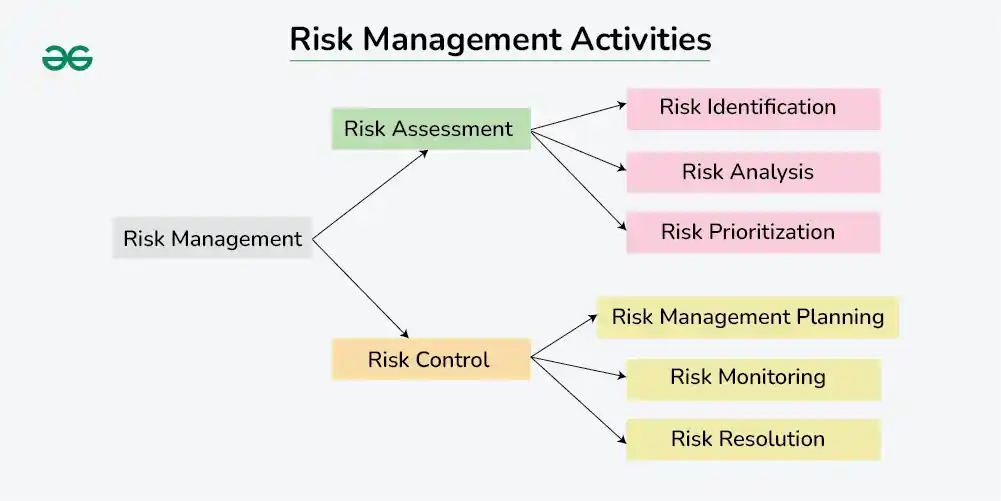
Risk-Management
Risk
Risk is the probability of a negative or undesirable outcome that can impact software quality or project success. It can affect users, stakeholders, and overall system performance.
- Represents potential problems or failures
- Impacts quality, cost, and timelines
- Evaluated based on likelihood and impact
Types of Risks
**1. Product Risk: Product risk affects the quality and functionality of the software. It may lead to system failure or incorrect behavior.
- Related to software functionality and performance
- Can cause crashes or financial loss
**Example: Payment system failure
**2. Project Risk: Project risk affects the overall success and completion of the project. It is related to planning, resources, and execution.
- Related to schedule, budget, and resources
- Can cause project delays
**Example: Lack of skilled team members
Risk-Based Testing (RBT)
Risk-Based Testing is a testing approach where testing activities are prioritized based on the level of risk. Higher-risk areas are tested more thoroughly and earlier in the process.
- Focuses on high-risk areas first
- Allocates testing effort based on risk level
- Improves efficiency and effectiveness of testing
**Example: Testing payment and login modules first in an e-commerce application.
Steps of Risk-Based Testing
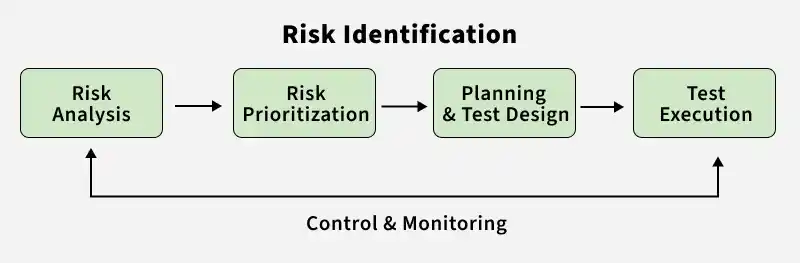
Steps of Risk-Based Testing
- **Risk Identification: Identify potential risks from requirements, design, and past defects.
- **Risk Analysis: Analyze risks based on likelihood and impact.
- **Risk Prioritization: Rank risks as high, medium, or low based on importance.
- **Test Planning: Plan testing strategy and resources according to risk levels.
- **Test Execution: Execute tests starting with high-risk areas.
- **Risk Monitoring: Continuously track and update risks during testing.
- **Reporting: Report test results along with remaining (residual) risks.
Characteristics of Risk-Based Testing
Risk-Based Testing ensures that testing effort aligns with risk levels. It helps reduce critical risks systematically during the testing process.
- Higher risk leads to more testing effort and priority.
- Testing order based on risk level
- Maintains traceability between risks and test cases
- Helps in decision-making for test completion
How Risk-Based Testing is Implemented
Risk-based testing is implemented by identifying and prioritizing risks. Testing activities are then aligned accordingly.
- Allocate effort based on risk level
- Test high-risk areas first
- Prioritize defect fixing based on risk
- Report residual risks to stakeholders
- Continuously review and update risks
Failure Mode and Effects Analysis (FMEA)
FMEA is a systematic technique used to identify potential failure points in a system and analyze their impact. It helps teams understand where and how a system might fail.
- Identifies failure modes and their causes
- Analyzes impact of failures
- Used in high-risk and critical systems
Key Concepts in FMEA
FMEA focuses on analyzing failures in detail to prevent issues. It evaluates failures based on severity, occurrence, and detection.
- **Failure Mode: What can go wrong?
- **Cause: Why does it happen?
- **Effect: What is the impact?
FMEA Process
FMEA follows a structured step-by-step approach to identify and manage risks.
- Review the process and identify components
- Identify possible failure modes and effects
- Assign Severity (impact level)
- Assign Occurrence (probability of failure)
- Assign Detection (likelihood of detection)
- Calculate RPN (Risk Priority Number)
- Plan and implement actions
- Re-evaluate and repeat
Risk Priority Number (RPN)
RPN helps prioritize risks based on their severity, occurrence, and detection.
- Higher RPN indicates higher priority risk
- Helps in decision-making and prioritization
- Focuses on critical failure points
**Formula: RPN = Severity × Occurrence × Detection

FMEA Template
Benefits of FMEA
FMEA helps in identifying and preventing risks early in the process. It provides a detailed understanding of potential failures.
- Provides detailed risk analysis
- Helps in preventing defects early
- Improves system reliability and safety
Challenges of FMEA
FMEA can be complex and time-consuming to implement. It requires detailed analysis and continuous updates.
- Documentation-heavy process
- Difficult to identify root causes accurately
- Needs regular updates and maintenance