Load Testing Software Testing (original) (raw)
Last Updated : 16 May, 2026
Load Testing is a type of performance testing that evaluates how a system performs under expected user load. It helps ensure the application remains stable, responsive, and efficient when multiple users access it simultaneously.
- Checks response time, speed, and system stability under normal and peak load
- Identifies bottlenecks, crashes, and performance issues
- Ensures the system can handle expected number of concurrent users
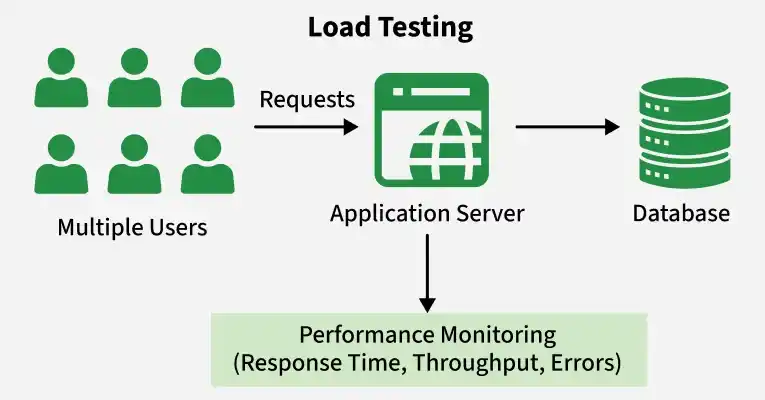
Load Testing
**Example: An e-commerce website is tested with 10,000 users during a sale to check if it can handle heavy traffic without crashing.
Types of Load Testing
Load testing can be categorized into different types based on how the system is evaluated under varying load conditions.
- **Baseline Testing: Measures system performance under normal expected user load to establish a reference point.
- **Incremental Load Testing: Gradually increases the number of users to observe how performance changes as the load grows.
- **Peak Load Testing: Tests the system under maximum expected user traffic to ensure it performs well during high-demand periods.
- **Break Point Testing: Pushes the system beyond its limits to determine the point at which it fails or crashes.
Load Testing Techniques
Different techniques are used in load testing to evaluate system behavior under various load conditions.
- **Stress Testing: Checks how the system performs under loads beyond normal usage.
- **Spike Testing: Evaluates system response to sudden traffic spikes.
- **Soak Testing: Assesses performance under a continuous load over an extended period.
Preparing for Load Testing
Proper preparation ensures accurate results and effective evaluation of system performance.
- **Select Tools: Use tools like JMeter, LoadRunner, Locust, Gatling, or Apache Benchmark to simulate users and measure performance.
- **Define Objectives: Set clear goals, including expected response times, transaction volumes, and user behavior.
- **Identify Key Scenarios: Focus on critical user actions like logins, searches, form submissions, and other frequent interactions.
Objectives of Load Testing
Load testing aims to ensure the system can handle expected and future workloads efficiently.
- **Evaluate Scalability: Measure how the system handles increasing users and transactions, and identify performance limits.
- **Plan Capacity: Ensure the system can accommodate future growth in users, data, and transactions.
- **Identify Bottlenecks: Detect weak points in the application or infrastructure that may degrade performance.
- **Analyze Response Time: Track key transactions to ensure the system responds promptly under varying loads.
- **Detect Memory Leaks: Identify and fix resource leaks that could reduce performance over time.
Situations for Performing Load Testing
Load testing should be performed at critical stages of the software development lifecycle to ensure system stability and performance.
- **Before Product Release: To verify that the system can handle expected user traffic in production.
- **After Major Updates: When new features, modules, or architectural changes are introduced.
- **Before High-Traffic Events: Such as sales, product launches, or marketing campaigns.
- **After Infrastructure Changes: When servers, databases, or network configurations are modified.
Load Testing Process
The load testing process involves a series of steps to evaluate system performance and identify potential issues under different load conditions.
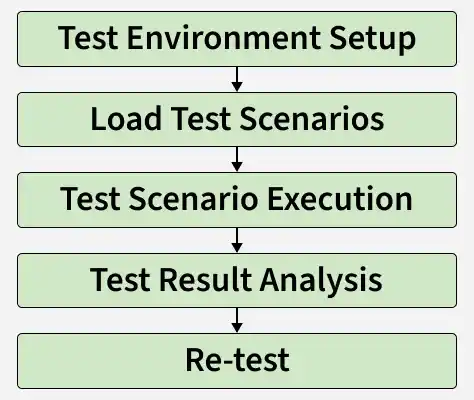
Load Testing
- **Test Environment Setup: Create a dedicated environment similar to production (servers, network, database). This ensures accurate and realistic test results without affecting real users.
- **Create Test Scenarios: Define user activities like login, search, transactions, etc. Prepare test data and decide number of users, load levels, and execution conditions.
- **Execute Tests: Run the load test using tools with multiple virtual users. Monitor system behavior, response time, server load, and error rates during execution.
- **Analyze Results: Examine collected data to find bottlenecks, slow responses, or failures. Identify root causes and suggest performance improvements.
- **Re-test if Needed: After fixing issues, perform testing again to verify improvements and ensure the system meets performance requirements.
Metrics of Load Testing
Measures system performance using metrics like response time, throughput, error rate, and resource utilization under varying load conditions.
- **Average Response Time: The average time the system takes to respond to user requests. It indicates how fast the application performs under load and directly affects user experience.
- **Error Rate: The percentage of failed or unsuccessful requests during testing. A higher error rate may signal server overload, configuration issues, or application defects.
- **Throughput: The amount of data processed or transferred per second during testing. It shows how much workload the system can handle efficiently.
- **Requests Per Second (RPS): The number of requests the system processes each second. It helps measure how well the application manages incoming traffic.
- **Concurrent Users: The number of users actively using the system at the same time. This helps determine whether the system can handle peak usage periods.
- **Peak Response Time: The highest time taken by the system to respond to a request, usually observed during maximum load conditions. It helps identify performance bottlenecks and slow system behavior under heavy traffic.
Use Case and Example
**Example:
An e-commerce website normally handles 5,000 concurrent users. Before a major festive sale, the team performed load testing using JMeter.
**Solution:
They gradually increased the load from 5,000 to 50,000 users. The test revealed that the checkout page response time jumped from 1 second to 8 seconds at 30,000 users, and the error rate rose sharply due to database overload.
After optimizing database queries and adding caching, they re-tested and successfully handled 50,000 users with average response time under 2 seconds. This prevented site slowdowns during the actual sale.
Various tools are used in load testing to simulate user traffic, measure performance metrics, and identify system bottlenecks effectively.
- **Apache JMeter****:** Open-source tool widely used for API and web load testing with strong support for scripting and distributed testing.
- **WebLoad: Tests web applications under different user loads to identify bottlenecks and ensure they handle expected traffic.
- **NeoLoad: Simulates virtual users to test scalability and stress performance, helping detect bottlenecks and reliability issues.
- **LoadNinja: Cloud-based tool for real-time load testing, providing insights into application performance and scalability.
- **Micro Focus LoadRunner (formerly HP Performance Tester): Enterprise tool designed for large-scale performance testing with advanced analytics and protocol support.
- **LoadUI Pro: Commercial tool for testing web applications and APIs; simulates various load conditions and monitors system behavior.
- **LoadView: Cloud-based platform that simulates real user interactions to evaluate website performance under high traffic.
Monitoring During Load Testing
Monitoring tools help track server and application performance while load tests are running to identify system bottlenecks and resource usage issues.
- **CPU Monitoring: Checks processor utilization during heavy traffic conditions.
- **Memory Monitoring: Detects high memory consumption and memory leaks.
- **Server Monitoring: Tracks server health, uptime, and resource utilization.
- **Network Monitoring: Measures bandwidth usage, latency, and network stability.
- **Database Monitoring: Observes query execution time and database performance under load.
Advantages of Load Testing
Load testing has several advantages that make it an important aspect of software testing:
- **Identifies Bottlenecks: Detects performance issues such as slow database queries, limited memory, or network congestion, allowing developers to optimize the system.
- **Improves Scalability: Determines the maximum system capacity and ensures the application can handle increasing users and transactions over time.
- **Enhances Reliability: Reveals issues like high error rates or slow responses under heavy load, ensuring stable performance in production.
- **Reduces Deployment Risk: Identifies potential failures before release, minimizing the chances of crashes or poor performance in real-world use.
- **Cost-Effective: Fixing performance issues during testing is much cheaper than resolving them after deployment.
- **Improves User Experience: Ensures smooth and responsive performance, leading to higher user satisfaction and trust.