Cost Vs Performance (original) (raw)
Last Updated : 16 Apr, 2026
Cost vs Performance in system design refers to the trade-off between system efficiency and the resources required to achieve it. Higher performance typically increases cost, so the goal is to design systems that deliver optimal performance within budget.
- **Cost: Resources required to build, run, and maintain the system.
- **Performance: How efficiently the system handles tasks (speed, scalability, responsiveness).
- **Trade-off: Improving performance often increases cost, so balance is essential.
**Example: A startup may choose cloud services instead of building its own data center. This reduces cost while still providing good performance and scalability.
Factors influencing System Cost and Performance
Several factors influence the cost and performance of a system:
1. Scope and Complexity
The overall size and complexity of a system determine how much effort and resources are required to build and maintain it.
- The size and complexity of the system greatly affect both cost and performance.
- More complex systems typically require more resources to build and maintain, which can increase costs. However, they might also offer higher performance if designed effectively.
2. Technology and Tools
The choice of technologies and tools plays a major role in defining system efficiency, cost, and performance.
- The choice of technology and tools used in system design can significantly impact both cost and performance.
- Cutting-edge technologies may offer better performance but could be more expensive to implement.
- On the other hand, using older or less advanced technologies might reduce costs but could compromise performance.
3. Requirements and Specifications
Clearly defined requirements help in making better design decisions and balancing cost with performance.
- Clear and well-defined requirements and specifications are crucial for balancing cost and performance.
- Meeting specific performance criteria often comes with associated costs, so understanding and prioritizing requirements can help optimize the balance.
4. Scalability and Flexibility
Designing systems that can scale and adapt ensures long-term efficiency and better performance.
- Systems that are designed to scale and adapt to changing needs tend to have better long-term performance but may incur higher initial costs.
- Building flexibility into the system architecture allows for easier upgrades and modifications, which can enhance performance without excessive cost.
5. Resource Allocation
Efficient use of resources helps achieve desired performance without unnecessary expenses.
- Proper allocation of resources such as time, budget, and personnel is essential for achieving the desired balance between cost and performance.
- Allocating resources efficiently ensures that the system meets performance requirements without overspending.
6. Quality and Reliability
Maintaining high quality and reliability is important for consistent system performance over time.
- Investing in higher quality components and processes can improve system performance and reliability but may also increase costs.
- Balancing the trade-off between quality and cost is crucial to achieving the desired level of performance within budget constraints.
Importance of Balancing Cost and Performance
Balancing cost and performance in system design means finding the right mix between how well something works and how much it costs. Here's why it's important:
- **Saving Money: We want to make sure that whatever we're designing doesn't cost more than it needs to. If it's too expensive, it can hurt profits.
- **Using Resources Wisely: Balancing cost and performance helps us use these resources wisely.
- **Planning for Growth: We want our design to be able to grow and change in the future without costing a fortune. This is important if we expect our business to get bigger or if customer needs might change.
- **Beating the Competition: If we can offer something that works really well at a good price, we'll have an edge over our competitors.
- **Reducing Risks: Spending too much money without thinking about the costs can put a project in danger. Balancing cost and performance helps us avoid this risk.
Relationship between Cost and Performance
In system design, the relationship between cost and performance is often characterized by a trade-off. Here's how it works:
1. Cost-Performance Trade-off
Balancing cost and performance is one of the most important decisions in system design.
- Generally, there's a trade-off between the level of performance you want from a system and the cost associated with achieving that performance.
- If you want higher performance, it usually comes at a higher cost. Conversely, reducing costs might mean sacrificing some level of performance.
2. Optimization
Optimization helps in achieving the best possible performance without unnecessary spending.
- System designers aim to find the sweet spot where they achieve the desired level of performance while keeping costs within acceptable limits.
- This involves optimizing the design to maximize performance for a given cost or to minimize costs while still meeting performance requirements.
3. Budget Constraints
Budget limitations directly influence design choices and system capabilities.
- The available budget plays a significant role in determining the trade-off between cost and performance.
- Designers must work within the budget constraints to deliver a system that meets performance expectations without exceeding the available funds.
4. Performance Requirements
Clearly defined performance goals help in deciding how much to invest in the system.
- Higher performance requirements increase cost due to more resource usage.
- Lower requirements reduce cost but may not meet user expectations.
5. Technology and Innovation
Modern technologies can help improve performance while controlling costs.
- Modern technologies improve performance while controlling costs.
- Innovations help achieve better efficiency without significantly increasing expenses.
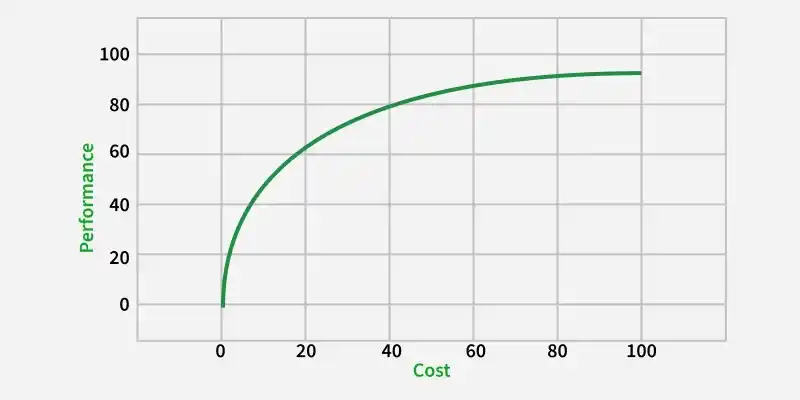
Cost Vs Performance
How Trade-Offs Between Cost and Performance Impact Architectural Decisions
Trade-offs between cost and performance profoundly influence architectural decisions in system design. Here's how:
1. Choice of Components
Selecting the right components is crucial as it directly impacts both system cost and performance.
- High-performance components improve efficiency but increase cost
- Budget-friendly options reduce cost but may impact performance
- Architects must balance cost and performance to meet system needs within budget
2. Scalability and Flexibility
Designing systems that can grow and adapt is important for long-term performance and cost efficiency.
- Architectural decisions impact a system's ability to scale and adapt to changing performance requirements.
- Designing for scalability may increase upfront costs but improves long-term performance.
- Similarly, building flexibility into the architecture enables cost-effective upgrades and modifications to meet evolving needs without requiring a complete redesign.
3. Architectural Patterns and Design Principles
Using the right design patterns helps in managing system complexity and optimizing performance.
- Choosing appropriate architectural patterns and design principles can help balance cost and performance.
- For example, using microservices architecture allows for independent scaling of components, optimizing resource usage and reducing costs.
- Similarly, adhering to principles like separation of concerns and modularity can improve performance by isolating and optimizing critical components.
4. Cloud and Infrastructure Choices
Choosing the right infrastructure plays a key role in controlling costs while ensuring system performance.
- Cloud computing offers scalability and performance benefits but also introduces cost considerations.
- Architects must evaluate cloud service models and deployment options to balance performance and cost.
- Additionally, selecting the right mix of cloud services and optimizing resource utilization can help control costs while ensuring adequate performance.
5. Trade-offs in Reliability and Resilience
Improving system reliability often requires additional investment, creating a balance between cost and stability.
- Architectural decisions often involve trade-offs between performance and reliability/resilience.
- For example, redundant components and fault-tolerant designs can improve system reliability but may come with higher costs.
- Architects must carefully balance these trade-offs based on the system's criticality, user expectations, and budget constraints.
Prioritization Scenarios
Here are some scenarios where prioritizing either cost or performance over the other can lead to different outcomes:
1. Web Hosting Services
The choice between high-performance hosting and low-cost hosting directly affects website speed and user experience.
Prioritizing Performance:
- Opting for high-performance web hosting services with fast servers, advanced caching mechanisms, and dedicated resources ensures quick website loading times and responsive user experiences.
- However, these premium hosting solutions typically come at a higher cost.
**Prioritizing Cost:
- Choosing budget-friendly web hosting services with shared servers and limited resources may lead to slower website performance, especially during peak traffic periods.
- While this option reduces upfront costs, it may result in a poor user experience and potential revenue loss due to slower load times.
2. Automobile Manufacturing
Deciding between performance and cost influences the quality, features, and pricing of vehicles.
**Prioritizing Performance:
- Investing in high-performance materials, advanced engineering techniques, and cutting-edge technology leads to the production of high-performance vehicles with superior speed, acceleration, and handling.
- However, these vehicles often come with a premium price tag due to the high cost of development and manufacturing.
**Prioritizing Cost:
- Focusing on cost-efficient manufacturing processes, standard components, and simplified designs results in more affordable vehicles with lower upfront prices.
- While these vehicles may offer satisfactory performance for everyday driving, they may lack the advanced features and performance capabilities of higher-end models.
Challenges in Balancing Cost and Performance
Balancing cost and performance in system design is often challenging due to various factors. Here are some common challenges:
1. Unclear Requirements
When system requirements are not clearly defined, it becomes difficult to decide the right balance between cost and performance.
- Lack of clarity or changing requirements can make it difficult to determine the appropriate level of performance needed while staying within budget constraints.
- Unclear requirements can lead to over-engineering or underestimating the required performance, resulting in cost overruns or underperformance.
2. Complexity
As systems grow larger and more complex, managing cost and performance becomes harder.
- Balancing cost and performance becomes more challenging as systems grow in complexity.
- Complex systems may have numerous interdependencies and trade-offs that need to be carefully evaluated.
- Managing this complexity requires a deep understanding of the system architecture and its impact on cost and performance.
3. Limited Resources
Having limited budget, time, or skilled people makes it difficult to achieve both high performance and low cost.
- Limited resources, such as budget, time, and skilled personnel, pose significant challenges in achieving the desired balance between cost and performance.
- Designers must prioritize competing needs and allocate resources effectively to maximize performance within budgetary constraints.
4. Technological Constraints
Existing technology limitations can restrict performance improvements without increasing cost.
- Technological limitations or constraints can hinder the ability to achieve optimal performance without exceeding cost targets.
- For example, legacy systems may lack the capabilities needed to deliver high performance without significant upgrades or investments.
Best Practices for Optimizing Cost and Performance
Optimizing cost and performance involves balancing efficiency and expenses through smart design decisions.
- **Set Clear Objectives: Define performance goals and cost limits early.
- **Prioritize Requirements: Focus on critical features that impact performance.
- **Iterative Design: Continuously refine based on testing and feedback.
- **Cost-Performance Analysis: Choose the most cost-effective solutions.
- **Modularity & Reusability: Use flexible designs to reduce cost and improve scalability.
Cost Vs Performance
This concept explains the trade-off between how much money is spent and how efficiently a system performs.
| Cost | Performance |
|---|---|
| Money required to build and maintain the system | How efficiently the system works |
| Focuses on budget, infrastructure, and resources | Focuses on speed, efficiency, and response time |
| Lower cost may reduce system quality or features | Higher performance improves user experience |
| Increasing cost often increases system capability | Performance improves with better resources and design |
| Goal is to minimize expenses | Goal is to maximize efficiency |