Edge Caching System Design (original) (raw)
Last Updated : 4 May, 2026
Edge caching stores frequently accessed data near users (e.g., CDN or edge servers) to reduce data travel distance. It delivers faster access with lower latency by serving data from nearby locations instead of a central server, improving overall performance.
- Stores data near users to reduce latency, improve response speed, and deliver faster access to content.
- Reduces load on central servers and bandwidth usage, commonly used in CDNs for static and frequently accessed data.
**Example: When you watch a video on YouTube, it loads quickly because the video is served from a nearby CDN edge server instead of a distant central server.
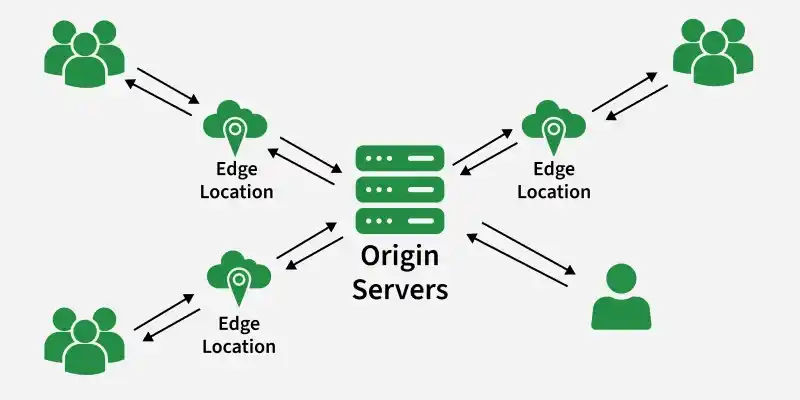
Edge Caching
In the above Diagram:
- Users send requests to the nearest edge location instead of directly to the origin server, which reduces latency and improves speed.
- If the data is already stored in the cache (cache hit), it is returned immediately if not (cache miss), it is fetched from the origin server and then stored in the cache.
- Origin servers provide the original data, while edge locations handle repeated requests, reducing load on the main servers and improving overall performance.
Real world Applications
Edge caching has become a critical component in various real-world applications across different industries, enhancing performance and user experience. Here are some notable use cases:
- **CDNs (Content Delivery Networks): Platforms like Akamai, Cloudflare, and Amazon CloudFront use edge caching to deliver web content, videos, and updates faster by storing data on globally distributed edge servers.
- **Video Streaming Services: Platforms like Netflix and YouTube cache popular videos at edge nodes, reducing buffering and ensuring smooth playback even during high traffic.
- **E-commerce Websites: Platforms like Amazon and eBay cache product images, descriptions, and static content to improve page load speed and user experience during peak events.
- **Online Gaming: Games like Fortnite and platforms like Xbox Live use edge caching to store game assets closer to players, reducing lag and improving real-time gameplay.
- **IoT Applications: Smart city and industrial IoT systems use edge caching to store and process sensor data locally, enabling faster real-time decisions without constant communication with central servers.
- **Social Media Platforms: Platforms like Facebook and Instagram cache user-generated content (images, videos) at edge locations to ensure quick loading of feeds and posts.
Components
Edge caching involves several key components that work together to optimize content delivery and improve system performance. Here are the main components:
- **Edge Nodes: Distributed servers close to users that store cached content locally to reduce latency and improve speed.
- **Caching Mechanisms: Strategies like LRU, LFU, and TTL decide what data to cache, how long to keep it, and when to evict it.
- **CDN (Content Delivery Network): A network of geographically distributed edge servers that replicate and deliver content efficiently.
- **Load Balancer: Distributes incoming traffic across edge nodes to prevent overload and ensure high performance.
- **Data Synchronization: Keeps cached data updated using techniques like cache invalidation, periodic refresh, or push updates.
- **Edge Computing: Processes data near users to reduce latency and enable faster, real-time responses.
- **Security Components: Uses encryption and authentication to protect cached data and ensure secure access.
- **Analytics & Monitoring: Tracks cache performance, user behavior, and usage patterns to optimize delivery.
- **APIs: Enable communication between edge nodes and central servers for fetching and updating data.
- **User Devices: End devices request content and may also store local cache to improve access speed.
Working
Edge caching works by storing content closer to users and serving requests from nearby edge nodes instead of always hitting the central server, reducing latency and improving performance.
1. Request Flow
Whenever a client sends an HTTP request, the system first checks whether the request is eligible to be served from the edge cache (based on caching rules like TTL, headers, etc.). If the request is cache-eligible, the nearest edge node checks its local cache for the requested content. This reduces the need to contact the central server for every request.
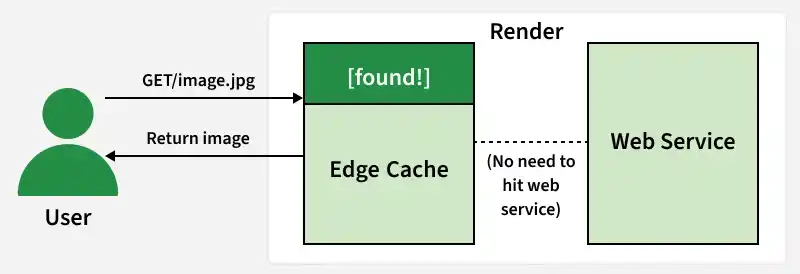
2. Cache Hit (Fast Path)
If the requested content is already available in the edge cache and is not expired, it is directly served to the user.
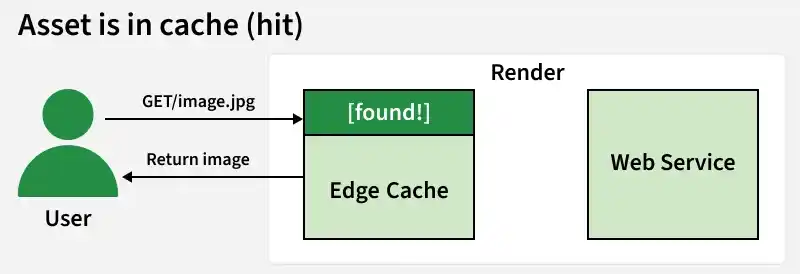
Cache Hit
In this case, the request never reaches the central server, resulting in faster response time and reduced backend load.
3. Cache Miss (Fallback Path)
If the content is not available in the cache (cache miss), the edge node forwards the request to the central server to fetch the data.
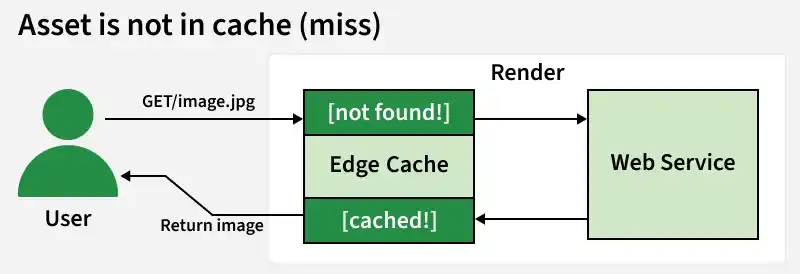
Cache miss
Once the data is retrieved, it is returned to the user and also stored in the cache for future requests.
4. Cache Management & Updates
To maintain performance and freshness, the system applies caching techniques like TTL (expiration), eviction policies (LRU/LFU), and cache invalidation. Edge nodes may also periodically sync with the central server to update outdated content.
5. Optimization
The system continuously monitors cache hits, misses, and user behavior to optimize caching strategies and ensure frequently accessed content is always available at the edge.
Importance
Edge caching plays a crucial role in modern system design due to several key benefits:
- **Reduced Latency: By storing content closer to users, edge caching minimizes the time it takes to retrieve data. This is particularly important for applications requiring real-time responses, such as online gaming, video streaming, and interactive web applications.
- **Improved User Experience: Faster load times lead to a smoother user experience, reducing frustration and abandonment rates. Websites and applications that leverage edge caching can maintain high performance even during peak usage times.
- **Bandwidth Optimization: Edge caching reduces the amount of data that needs to travel across the core network by serving cached content locally. This alleviates congestion, lowers bandwidth costs, and improves overall network efficiency.
- **Scalability: As user demand grows, edge caching allows systems to scale more effectively. By offloading requests from central servers to local caches, systems can handle more simultaneous users without performance degradation.
- **Increased Reliability: Edge caches can serve content even if the central server experiences downtime or network issues. This redundancy enhances system reliability and ensures continuous availability of content.
Challenges
While edge caching offers significant benefits, it also presents several challenges that must be addressed in system design. Here are some of the main challenges associated with edge caching:
- **Challenges of Edge Caching: Introduces complexity in maintaining consistency, performance, and efficient resource usage across distributed nodes.
- **Cache Consistency: Keeping edge cache data in sync with the central server is difficult, leading to stale or outdated content.
- **Cache Eviction Policies: Choosing what data to remove when cache is full is complex; poor strategies can increase cache misses.
- **Network Variability: Different network conditions (latency, bandwidth) across regions can affect performance and reliability.
- **Management Complexity: Requires advanced monitoring, analytics, and maintenance to manage distributed edge nodes effectively.
- **Limited Storage: Edge nodes have limited memory, so efficient caching strategies are needed to store useful data only.
- **Geographic Distribution: Wide distribution of nodes makes data synchronization and updates more challenging and resource-intensive.
Implementing **Strategies
Implementing edge caching effectively requires a thoughtful approach to ensure optimal performance, reliability, and security. Here are some best practices for successful edge caching implementation:
- **Define Clear Caching Policies: Establish specific caching strategies that outline what content to cache, how long to cache it (Time-To-Live, or TTL), and when to refresh or invalidate cached content. This helps maintain cache consistency and performance.
- **Use Intelligent Cache Algorithms: Implement efficient caching algorithms like Least Recently Used (LRU), Least Frequently Used (LFU), or adaptive caching methods. These algorithms help prioritize which content to retain in the cache based on usage patterns.
- **Optimize Content Selection: Cache only the most frequently accessed and performance-critical content. Use analytics to identify popular content and user behavior, ensuring that the cache serves relevant material to users.
- **Implement Cache Invalidation Strategies: Develop mechanisms for cache invalidation to ensure that outdated content is promptly removed or updated. Use push notifications or polling to refresh cache entries when underlying content changes.
- **Monitor Performance and Usage: Continuously monitor cache performance and user interactions. Use analytics tools to gather data on cache hit rates, response times, and content usage patterns to inform optimizations.
Role of Edge Caching in Microservices Architecture
Edge caching plays a significant role in enhancing the performance and efficiency of microservices architecture. Here’s how it contributes to this architectural model:
- **Role of Edge Caching in Microservices: Improves performance, scalability, and reliability by reducing backend dependency and serving data closer to users.
- **Reduced Latency: In microservices, multiple services communicate over the network; edge caching stores frequently accessed data closer to users, reducing travel distance and improving response time.
- **Improved Performance: By caching responses (like images, configs, or static data), edge caching allows faster delivery without repeatedly calling backend microservices.
- **Load Distribution: Edge nodes handle a portion of user requests by serving cached content, reducing load on core microservices and allowing them to focus on complex processing.
- **Enhanced Resilience: If a microservice becomes unavailable, edge caching can still serve previously cached data, ensuring continuity and better user experience.
- **Scalability: As traffic grows, edge caching supports horizontal scaling by offloading requests from central services to distributed edge nodes.
- **Bandwidth Optimization: Reduces the number of repeated requests sent to backend services, lowering bandwidth usage and cost, especially in cloud environments.