Function as a Service (Faas) System Design (original) (raw)
Last Updated : 30 May, 2024
Function as a Service (Faas) is an important approach to software development where you create small, specialized functions to handle specific tasks. Instead of building entire applications, developers focus on writing these functions, which are then executed in response to events or requests. This article is your go-to resource for understanding and implementing Function as a Service.
.webp)
Important Topics for Function as a Service (Faas)
- What is Function as a Service (FaaS)?
- Key Concepts of FaaS
- Benefits of FaaS in System Design
- FaaS Architecture and Components
- Design Considerations for FaaS
- Use Cases and Applications
- Implementation Strategies
- Challenges with Function as a Service (Faas)
- Real-World Examples of Function as a Service (Faas)
What is Function as a Service (FaaS)?
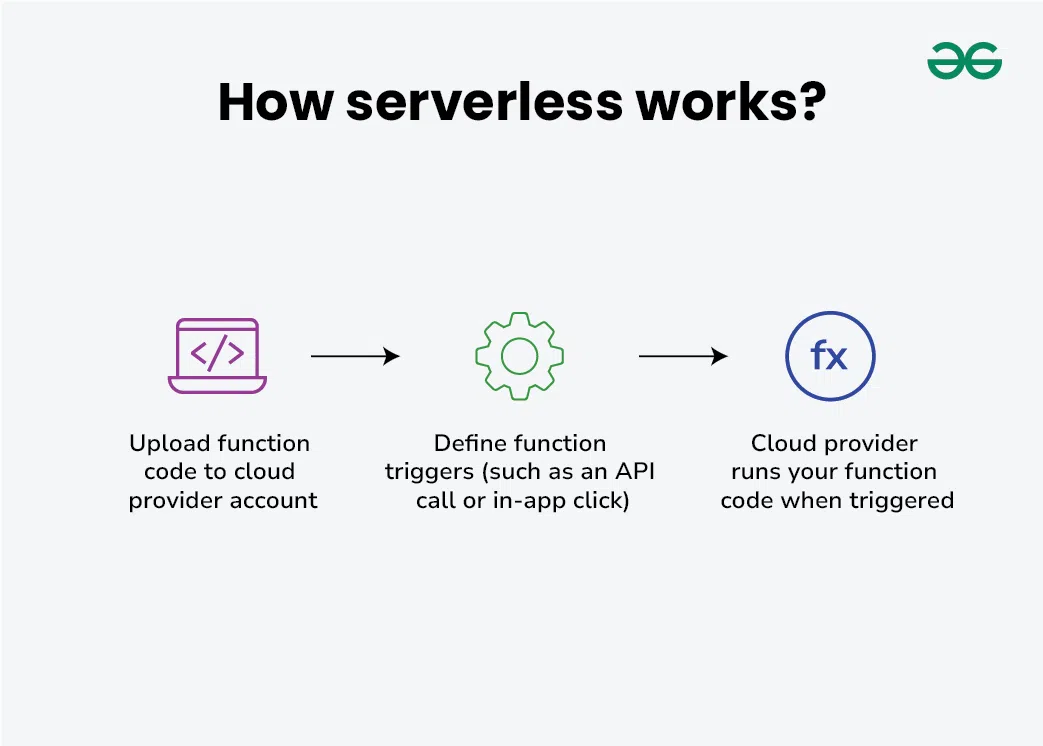
Function as a Service (FaaS) is a model in system design where developers write and deploy small, independent functions to perform specific tasks. These functions are typically event-driven and executed in response to triggers or requests, such as HTTP requests, database events, or time-based events.
- Developers don't have to handle infrastructure or servers while using FaaS. Instead, they focus solely on writing code for individual functions.
- The FaaS platform provides and scales the underlying resources automatically, based on the demand.
.webp)
Function as a Service (FaaS) is a key component of serverless architecture. Serverless architecture, also known as serverless computing or Function as a Service (FaaS), is a cloud computing model where cloud providers dynamically manage the allocation and provisioning of servers, enabling programmers to concentrate only on creating and implementing functions as code.
Key Concepts of FaaS
Key concepts of Function as a Service (FaaS) in system design revolve around its core principles and components:
- **Functions: Functions are the building blocks of FaaS. They are small, independent units of code designed to perform specific tasks or respond to events. As a function doesn't store data between calls, it is stateless.
- **Event Triggering: FaaS functions are typically triggered by events such as HTTP requests, database changes, file uploads, or timers. These triggers initiate the execution of the corresponding function, allowing for event-driven architecture.
- **Serverless: FaaS abstracts away the need to manage servers or infrastructure. Developers don't need to provision, scale, or maintain servers; the FaaS platform handles these tasks automatically, allowing for a serverless computing model.
- **Pay-per-Use: FaaS follows a pay-per-use billing model, where users are charged based on the resources consumed by their functions, such as compute time and memory usage. This model offers cost-efficiency, especially for sporadic workloads.
- **Scalability: FaaS platforms automatically scale functions in response to workload demands. Functions can handle varying levels of traffic, ensuring high availability and efficient resource utilization.
- **Statelessness: FaaS functions are stateless by design, meaning they don't store information between invocations. Any required state must be managed externally, such as through databases or external storage services.
Benefits of FaaS in System Design
Function as a Service (FaaS) offers several benefits in system design:
- **Scalability: FaaS platforms automatically scale functions in response to workload fluctuations. This elasticity ensures that applications can handle varying levels of traffic without manual intervention, leading to improved performance and reliability.
- **Cost-Efficiency: FaaS follows a pay-per-use billing model, where users are charged only for the resources consumed by their functions. This cost-effective pricing structure eliminates the need to provision and maintain costly infrastructure, making it ideal for applications with unpredictable or sporadic workloads.
- **Simplicity: FaaS abstracts away the complexities of infrastructure management, allowing developers to focus solely on writing code for individual functions. This simplicity accelerates the development process, reduces time to market, and enables rapid iteration and experimentation.
- **Flexibility: FaaS enables developers to deploy code quickly and easily, supporting a variety of programming languages and frameworks. This flexibility allows teams to choose the best tools for the job and adapt to evolving requirements without being tied to a specific technology stack.
- **Event-Driven Architecture: FaaS is inherently compatible with event-driven architecture, where functions are triggered by events such as HTTP requests, database changes, or messages from other services. This event-driven approach facilitates loose coupling between components, promotes scalability and resilience, and enables seamless integration with other systems and services.
- **High Availability: FaaS platforms typically offer built-in redundancy and fault tolerance, ensuring high availability of functions even in the face of hardware failures or other disruptions. This reliability helps to maintain service uptime and deliver a consistent user experience.
FaaS Architecture and Components
Function as a Service (FaaS) architecture typically consists of the following components:
- **Function:
- The fundamental unit of FaaS architecture is the function itself. A function is a small piece of code that performs a specific task or responds to an event. Functions in FaaS are stateless, meaning they don't retain information between invocations.
- **FaaS Provider:
- The FaaS provider is the cloud service provider that offers the FaaS platform. Examples of FaaS providers include AWS Lambda, Azure Functions, Google Cloud Functions, and IBM Cloud Functions. The provider is responsible for managing the underlying infrastructure, scaling functions, and handling operational tasks.
- **Event Sources:
- Event sources trigger the execution of functions. These sources can include HTTP requests, database changes, file uploads, message queues, timers, and other events generated by external systems or services. FaaS platforms support various event sources, enabling event-driven architecture.
- **Function Execution Environment:
- Each function runs in its own isolated execution environment, which includes the necessary runtime environment and dependencies to execute the code. The execution environment is provisioned by the FaaS provider dynamically when a function is invoked and is discarded after execution to conserve resources.
- **Scaling Mechanism:
- FaaS platforms employ scaling mechanisms to dynamically adjust the number of function instances based on workload demands. Scaling can be done horizontally (adding more instances) or vertically (adjusting resources allocated to each instance) to accommodate changes in traffic and ensure optimal performance.
- **Invocation Mechanism:
- Functions are invoked either synchronously or asynchronously based on the nature of the event. Synchronous invocation occurs when a response is required immediately, such as in response to an HTTP request. Asynchronous invocation occurs when a response is not immediately required, such as processing events from a message queue.
- **Monitoring and Logging:
- FaaS platforms provide monitoring and logging capabilities to track the performance, execution, and errors of functions. Developers can monitor metrics such as execution time, invocation count, and error rate, and view logs to troubleshoot issues and optimize performance.
Design Considerations for FaaS
When incorporating Function as a Service (FaaS) into system design, several critical considerations ensure efficient and effective implementation:
- **Function Granularity: Design functions to be small and focused on specific tasks. Granular functions promote reusability, scalability, and easier maintenance. Avoid creating monolithic functions to maximize the benefits of FaaS.
- **State Management: FaaS functions are stateless, meaning they don't retain data between invocations. Design systems to store and manage state externally, such as in databases or object storage. Use appropriate mechanisms for state synchronization and consistency.
- **Cold Start Performance: Minimize cold start latency, the delay when a function is invoked for the first time or after a period of inactivity. Optimize function initialization by reducing dependencies, optimizing code size, and implementing pre-warming techniques to improve responsiveness.
- **Concurrency Handling: Understand the concurrency limits imposed by the FaaS provider and design systems to handle concurrent executions gracefully. Implement throttling mechanisms and queueing strategies to manage workload spikes and prevent performance degradation.
- **Dependency Management: Minimize dependencies and manage them efficiently to reduce function footprint and improve performance. Utilize lightweight frameworks and dependency injection techniques, and consider dependency caching to optimize function execution.
- **Monitoring and Logging: Implement robust monitoring and logging solutions to track function performance, diagnose issues, and ensure system reliability. Utilize built-in monitoring features provided by the FaaS platform and integrate with external monitoring services for comprehensive visibility.
- **Security Measures: Apply security best practices to FaaS functions to protect against common threats such as injection attacks, data breaches, and unauthorized access. Implement strong authentication, authorization, and encryption mechanisms to safeguard sensitive data and resources.
- **Cost Optimization: Optimize costs by right-sizing functions, leveraging cost-saving features such as reserved capacities or spot instances, and monitoring resource usage to identify potential savings opportunities. Implementing cost-effective practices ensures efficient resource utilization and cost management.
Use Cases and Applications
Function as a Service (FaaS) offers versatility across various domains in system design. Some prominent use cases and applications include:
- **Real-Time Data Processing: FaaS is well-suited for processing real-time data streams from IoT devices, sensors, or event-driven applications. Functions can analyze, transform, and act upon incoming data, enabling real-time decision-making and event-driven workflows.
- **Asynchronous Processing: FaaS is commonly used for asynchronous processing tasks such as image or video transcoding, file processing, or data validation. Functions can be triggered by events such as file uploads or database changes, enabling efficient and scalable processing of asynchronous tasks.
- **Microservices Architecture: FaaS can be integrated into microservices architectures to implement lightweight and independent microservices. Each microservice can be encapsulated as a function, promoting modularity, scalability, and flexibility in system design.
- **Event-Driven Workflows: FaaS enables the creation of event-driven workflows and orchestration of complex business processes. Functions can respond to events from various sources, trigger subsequent actions, and coordinate the flow of data and logic across multiple services and systems.
- **API Backend Services: FaaS can serve as the backend for API services, providing scalable and efficient request handling. Functions can process incoming API requests, validate inputs, enforce security policies, and interact with backend systems, supporting the development of scalable and resilient API services.
- **Chatbots and Voice Assistants: FaaS can power conversational interfaces such as chatbots and voice assistants. Functions can process user inputs, execute conversational logic, and integrate with external services to provide personalized and context-aware responses.
Implementation Strategies
**1. Start with Small, Low-Risk Tasks:
- Begin by identifying tasks that are well-suited for FaaS deployment, such as background processing, event handling, or lightweight APIs.
- Starting small allows teams to gain familiarity with FaaS concepts, tools, and best practices without risking critical workloads.
**2. Decompose Monolithic Applications:
- Break down monolithic applications into smaller, more manageable functions that can be independently deployed and scaled.
- Identify isolated components or modules within the monolith suitable for FaaS implementation.
**3. Leverage Managed Services:
- Integrate FaaS functions with managed services provided by cloud providers, such as databases, object storage, or message queues.
- Offloading responsibilities to managed services simplifies architecture, reduces operational overhead, and improves scalability and reliability.
**4. Optimize for Cold Starts:
- Minimize cold start latency by optimizing function code, reducing dependencies, and employing lightweight runtime environments.
- Utilize warm-up techniques, such as scheduled pings or provisioned concurrency, to mitigate cold start effects and improve responsiveness.
**5. Monitor and Iterate:
- Implement comprehensive monitoring and logging to track function performance, resource utilization, and error rates.
- Use monitoring data to identify bottlenecks, optimize performance, and iterate on improvements continuously.
Challenges with Function as a Service (Faas)
- **Cold Start Latency: Cold start latency can impact application responsiveness, particularly for functions with infrequent invocations. Strategies to mitigate cold starts include warm-up techniques, optimizing code and dependencies, and utilizing provisioned concurrency.
- **Vendor Lock-In: Depending heavily on a specific FaaS provider can lead to vendor lock-in, limiting portability and flexibility. Design systems with abstraction layers and adhere to cloud-agnostic practices to mitigate vendor dependency and maintain flexibility.
- **State Management: Managing state in stateless functions poses challenges, especially for operations requiring shared state or transactions. Adopt state management strategies such as external storage, caching, or stateful serverless patterns to handle stateful operations effectively.
- **Complexity and Debugging: Decomposing applications into small functions can introduce complexity in debugging, tracing, and understanding the flow of execution. Implement comprehensive monitoring, logging, and debugging tools to facilitate troubleshooting and maintenance.
- **Security Concerns: Securing serverless applications requires attention to authentication, authorization, data encryption, and protection against common security threats. Implement robust security measures and adhere to best practices to mitigate security risks and ensure data confidentiality and integrity.
Real-World Examples of Function as a Service (Faas)
- **Netflix: Netflix utilizes AWS Lambda for various tasks, including image processing, video transcoding, and A/B testing, enabling scalability and cost-efficiency in their media streaming platform.
- **Airbnb: Airbnb employs AWS Lambda for handling background tasks, such as image resizing and data processing, allowing them to focus on core business logic and innovation.
- **NASA Jet Propulsion Laboratory (JPL): NASA JPL utilizes AWS Lambda for processing telemetry data from spacecraft and satellites in real-time, enabling rapid analysis and decision-making for space missions.
- **Slack: Slack uses AWS Lambda for implementing chatbots, background tasks, and serverless microservices within their collaboration platform, enabling real-time interactions and seamless integration with external services.
Conclusion
In conclusion, Function as a Service (FaaS) offers a revolutionary approach to system design, enabling developers to build scalable, efficient, and cost-effective applications. By breaking down tasks into small, independent functions and leveraging cloud infrastructure, FaaS simplifies development, promotes flexibility, and enhances agility. Despite challenges such as cold start latency and vendor lock-in, FaaS has been successfully adopted by leading organizations across various industries, demonstrating its effectiveness in real-world scenarios. As FaaS continues to evolve, understanding its principles and best practices is essential for unlocking its full potential in system design and driving innovation in the digital landscape.