What is PCI DSS (Payment Card Industry Data Security Standard) Complete Guide (original) (raw)
Last Updated : 17 Dec, 2024
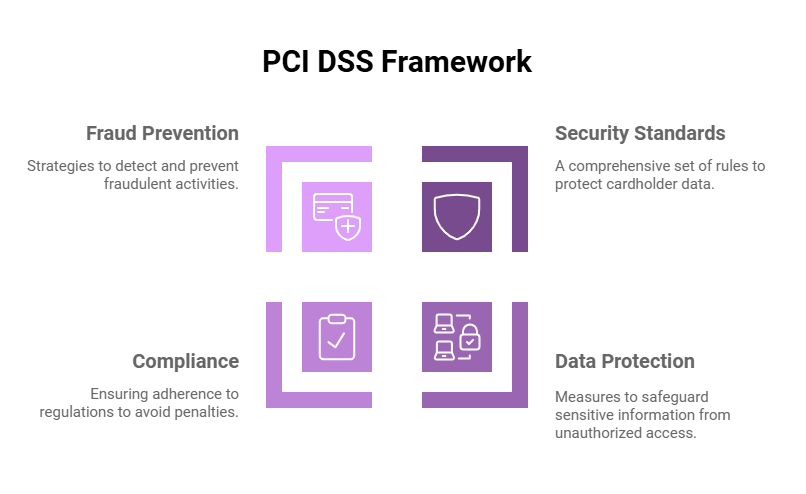
**PCI DSS stands for the **Payment Card Industry Data Security Standard. It is a set of security standards designed to ensure that all companies that handle **credit card information maintain a secure environment. PCI DSS was developed by major credit card companies - **Visa, **MasterCard, **American Express, **Discover, and **JCB - to protect sensitive payment card information from fraud and data breaches.
The standard applies to any organization that processes, stores or transmits cardholder data. This includes businesses, service providers, and merchants, ranging from small enterprises to large multinational corporations.
What is PCI DSS
**Key Objectives of PCI DSS
The goal of PCI DSS is to protect the security of cardholder data by implementing specific security measures, controls, and practices. It outlines requirements for securing systems and networks to prevent data breaches, identity theft, and fraud. PCI DSS aims to ensure that cardholder information is properly handled and kept safe from malicious activities.
The **PCI DSS requirements are organized into **12 high-level security requirements, which are divided into six major categories:
PCI DSS Requirements (12 Key Requirements)
1. Build and Maintain a Secure Network and Systems
- Install and maintain a firewall configuration to protect cardholder data.
- Do not use vendor-supplied defaults for system passwords and other security parameters.
2. Protect Cardholder Data
- Protect stored cardholder data using strong encryption, masking, and other methods.
- Encrypt transmission of cardholder data across open, public networks (e.g., using HTTPS or TLS).
3. Maintain a Vulnerability Management Program
- Protect all systems against malware by using and regularly updating anti-virus software or anti-malware solutions.
- Develop and maintain secure systems and applications by patching and updating them regularly to fix vulnerabilities.
4. Access Control
- Restrict access to cardholder data to only those individuals who need it to perform their job.
- Identify and authenticate access to system components (i.e., each individual must have a unique ID).
- Restrict physical access to cardholder data.
5. Regularly Monitor and Test Networks
- Track and monitor all access to cardholder data and systems, maintaining logs for auditing purposes.
- Test security systems and processes regularly through penetration testing and vulnerability assessments.
6. Maintain an Information Security Policy
- Maintain a policy that addresses information security for all employees, contractors, and third-party service providers.
**Steps for Achieving PCI DSS Compliance
**Step 1: Assess Your Systems and Processes
- Review your current infrastructure to identify where cardholder data is stored, processed, or transmitted.
- Evaluate your security practices against the PCI DSS requirements.
**Step 2: Implement Required Security Measures
- Apply necessary technical, organizational, and physical security measures to protect cardholder data.
- This includes configuring firewalls, encrypting data, restricting access, and patching systems.
**Step 3: Complete a Self-Assessment Questionnaire (SAQ) or External Audit
- Depending on your business's PCI DSS level, complete an SAQ or engage a Qualified Security Assessor (QSA) for a detailed audit.
- Ensure that all vulnerabilities are addressed before submitting the results.
**Step 4: Submit Compliance Report
- If required, submit your compliance documentation to the relevant acquiring bank or payment processor.
**Step 5: Maintain Ongoing Compliance
- Compliance is an ongoing process. Regularly update your systems, monitor security controls, and conduct penetration testing to stay compliant.
**Why is PCI DSS Important?
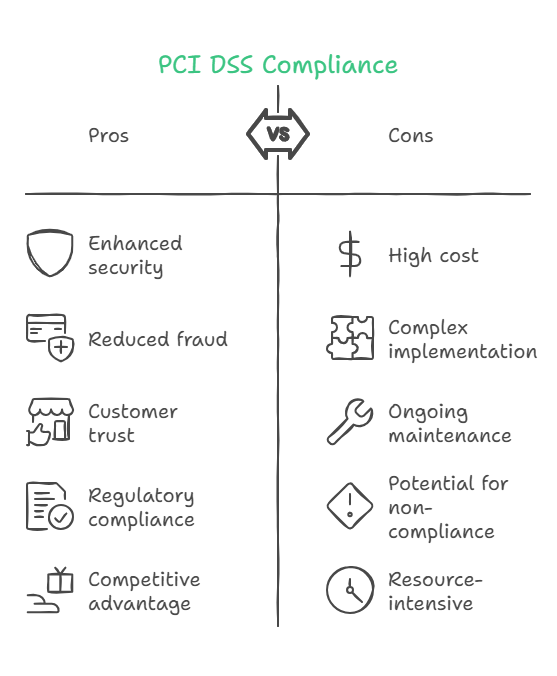
PCI DSS is critical for organizations that handle credit card transactions because it provides a clear framework for safeguarding sensitive payment data. The standard not only helps protect consumers from fraud and identity theft, but also offers benefits to businesses, including:
- **Reducing the risk of data breaches: Implementing PCI DSS controls can reduce the likelihood of a security breach, thus protecting both the business and its customers.
- **Improved trust and credibility: Being PCI DSS-compliant can improve customer confidence, as people know their sensitive payment data is being handled securely.
- **Legal and financial protection: Non-compliance with PCI DSS can lead to hefty fines, penalties, and even legal consequences. In the event of a data breach, companies may face costly repercussions from payment card issuers, banks, and customers.
- **Enhanced security: PCI DSS standards push businesses to implement best practices in data security, including encryption, authentication, and access control.
PCI DSS COMPLIANCE PROS AND CONS
**PCI DSS Compliance Levels
PCI DSS defines different compliance levels depending on the volume of transactions a business processes annually. Businesses are required to follow specific procedures based on their level, ranging from simple self-assessment to a detailed audit.
- **Level 1: Businesses that process over 6 million transactions per year. These businesses must undergo a **formal PCI DSS audit by a Qualified Security Assessor (QSA) or an Internal Security Assessor (ISA).
- **Level 2: Businesses that process between 1 million and 6 million transactions per year. These businesses must complete an **annual Self-Assessment Questionnaire (SAQ).
- **Level 3: Businesses that process between 20,000 and 1 million e-commerce transactions annually. These businesses must also complete an SAQ annually.
- **Level 4: Businesses that process fewer than 20,000 e-commerce transactions or 1 million total transactions annually. These businesses must complete an SAQ but may not require formal audits.
**Common Challenges in Achieving PCI DSS Compliance
- **Complexity: Implementing PCI DSS can be a complicated process, particularly for large organizations with complex IT environments.
- **Cost: Achieving PCI compliance may require investments in new security technologies and personnel training.
- **Ongoing Effort: Maintaining compliance requires continuous monitoring, regular updates, and periodic assessments, making it an ongoing effort.
**Conclusion
**PCI DSS plays a crucial role in protecting cardholder data and reducing the risk of payment card fraud. Compliance with PCI DSS is mandatory for businesses that store, process, or transmit credit card information, and it helps ensure the security of sensitive data.
Understanding the requirements and taking the necessary steps to become PCI DSS-compliant can protect your business from the financial and reputational damage caused by a data breach. Whether you're a small business or a large enterprise, following the **PCI DSS standards is essential for securing sensitive customer information and maintaining trust in your organization.