Strategic Projects: Producing Scientific Results of Public Relevance (original) (raw)
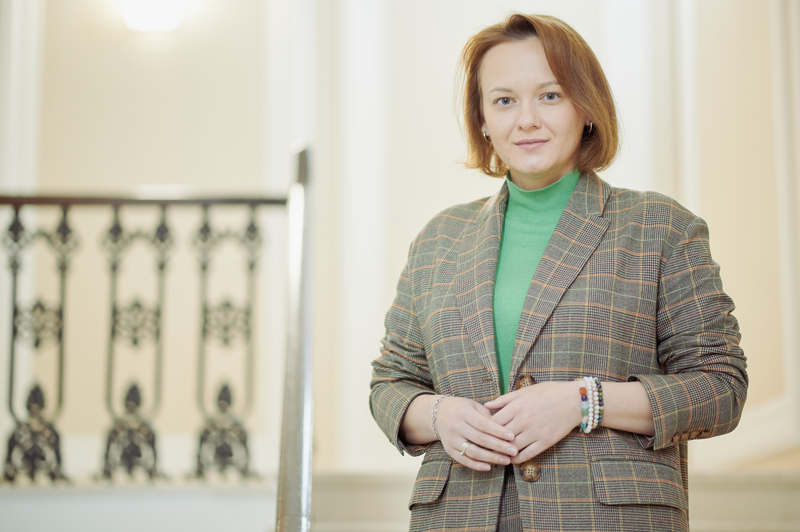
Elena Odoevskaya
© HSE University
About a year ago, HSE University was among the first group of Russian universities to receive a grant from the ‘Priority 2030’ Strategic Academic Leadership Programme and began implementing strategic research projects. HSE University recently defended its report before the programme's board. Elena Odoevskaya, HSE University Vice Rector and coordinator of the HSE Development Programme for the Period until 2030 and the ‘Priority 2030’ programme, spoke to the HSE News Service about what has been achieved this year and how the format of strategic projects is changing at the university.
— How and why did strategic projects come about at HSE University?
— As part of the HSE Development Programme for the period until 2030, we have begun to transform our research work into a new format of large interdisciplinary full-cycle projects with economic, social and scientific significance.
— Once the HSE Development Programme was adopted, the university became a participant in the ‘Priority 2030’ Strategic Academic Leadership Programme. Was the result a collaboration between the two programmes?
— Yes, together they form part of our integrated development programme. The goal of ‘Priority 2030’ is to form a broad group of leading universities in Russia by 2030—centres of scientific, technological and socioeconomic development for the country. In alignment with the format of the ‘Priority 2030’ programme, we have formed five strategic projects that focus on people and their needs in a changing world: ‘Human Success and Autonomy in a Changing World’, ‘Social Policy for Sustainable Development and Inclusive Economic Growth’, ‘National Centre for Science, Technology and Socio-Economic Forecasting’, ‘Digital Transformation: Technologies, Effects, Efficiency’ and ‘Evidence-based Urbanism’.
— The university team recently presented the results of the ‘Priority 2030’ programme at a defence before the programme’s board. What was the focus of the defence?
— In presenting this year's results, we have focused on the specific effects for society, the economy and ultimately for each individual that have been achieved and that can be achieved as a result of the work of our researchers. Despite the first year being just a start-up period, we already have a number of interesting developments based on the groundwork available at HSE University.
Here are just a few examples: in the ‘Human Success and Autonomy in a Changing World’ strategic project, several projects in the next one to two years of implementation will be taken to the TRL 6-8 level (full-featured demos and prototypes working in real conditions, ready for subsequent scaling/production). These are tools to increase human resilience to the perception of fakes and deep fakes, as well as tools to assess the characteristics of human autonomy, and supra-professional skills.
HSE University in the ‘Priority 2030’ programme in 2021–2022
28 base chairs of Russian Academy of Sciences (RAS) institutions
30 mirror laboratories in partnership with regional universities
528 employees of Russian universities awarded internships at HSE University
200+ research and analysis projects commissioned by regional governments and businesses
15,000 network students and 43 universities
11 intellectual competitions involving 155,000 schoolchildren
496 partner schools
In 2022 the strategic project team at the ‘National Centre for Scientific, Technological and Socio-Economic Forecasting’ presented scenario analyses of socio-economic development, climate change, science and technology development based on big data analysis using the unique iFORA system.
Next year we aim to present an open database on sanctions, which will be constantly updated. Our colleagues have done a tremendous job in terms of systematising all the knowledge regarding the restrictive measures that have been imposed, as well as when and how they were intensified, right down to politicians' public statements on social media regarding the sanctions. This is an extremely useful tool for researchers, government representatives and the public.
The strategic project ‘Digital Transformation: Technologies, Effects, Efficiency’ provides an empirical basis for assessing the social effects of digital transformation and trends in the development of artificial intelligence.
Our insights into how technology is used by society and companies forms the basis of proposals for measures to support the IT industry.
A very promising area of this project is research into 6G networks.
— How are things with the ‘Evidence-based Urbanism’ strategic project?
— A year into the project, it has been shown that it is at a high level of readiness in terms of bringing technology to the market. Some of it has already been implemented in the work of city administrations. For example, the project has developed original transport modelling software, which is superior to foreign analogues in terms of functionality. Given the high degree of development of Evidence-based Urbanism, it was decided that this area will be further implemented as part of the University's research policy, but not as a strategic project; its team will continue to implement projects commissioned by industrial partners and government authorities.
— Will a new strategic project be created?
— Yes, we invited the programme board to support the strategic project ‘The Resilient Brain: Neurocognitive Technologies for Adaptation, Learning, Development and Rehabilitation in a Changing Environment’. The project will contribute to combating neurodegenerative diseases and mental disorders, addressing disability, and promoting active longevity. The project is expected to bring new products to the market quickly, for example in the field of personalised neuroprosthetics. It is worth mentioning that HSE University started developing the field of cognitive science quite a while ago.
Now, in 2022, there is not just a research unit within the university, but a globally competitive neuroscience research cluster.
Our colleagues are developing unique technologies; they have a substantial number of partnerships with medical organisations. We expect that specific technologies will be brought to market in the next two or three years of the project.
— Is the practice-oriented approach, involving external partners, one of the characteristics of the strategic projects?
— This is a conscious policy, because our task is to make sure that our research is full-cycle research—from the formulation of a hypothesis to a specific technology, prototype, or know-how. It is necessary for research to have a customer or consumer: an industrial partner, a specific company. In some cases, it’s HSE University itself, such as when we are talking about filling our educational products; or our founder, the Russian government, if we are talking about scenarios for the development of a particular industry. They can also be ordinary people for whom specific products are created. So our task is to provide a tool, a methodology, a development that will live on without us.
HSE Strategic Projects Today
60+ research projects
40+ faculties, labs, and centres
650 researchers
55% researchers aged 39 or younger
13 consortiums with other universities
— Are there any outside partner universities of the strategic projects?
— We have about 13 consortiums. For instance, one of our strategic projects has a consortium with Sechenov University—a leader in training for the healthcare and pharmaceutical industries—on foresight research in the field of drag design. The number of such consortia will continue to grow in future.
— Apart from the new ‘Resilient Brain’ strategic project, are there any other changes planned for HSE University's participation in ‘Priority 2030’?
—Like all higher education institutions, we need to rethink our international activities. To achieve this, we have decided to incorporate a new policy on the ‘Decolonisation of International Education: Expanding Spaces of Friendship and Mutual Trust’. We have already started creating an educational and research cluster in Eurasian integration, Oriental Studies and African Studies to win the battle for international talent. In doing so, HSE University will share its experience in international communication with other universities.
This year, as you know, we were also faced with the withdrawal of global educational platforms, such as Coursera, from cooperation with Russian universities. This is a serious challenge because, for example, HSE University had a base of around two million participants in our courses there, and this was effectively cancelled. But we supported all those who studied with us, for example, in the online master's programme: they are now studying on our internal Smart LMS platform.
The ‘Priority 2030’ Strategic Academic Leadership Programme has been implemented since May 2021. It is planned that the programme will concentrate resources to ensure the contribution of Russian universities in achieving the national development goals of the Russian Federation until 2030, increase the scientific and educational potential of universities and research organisations, and ensure the participation of institutions of higher education in the socio-economic development of the constituent entities of the Russian Federation. The goal of ‘Priority 2030’ is to create more than 100 progressive modern universities in Russia by 2030—centres of scientific and technological and socio-economic development for the country. HSE University, together with eight other universities, is included in the first group of the programme under the ‘Research Leadership’ track.
Scientists Show That Peer Influence Can Be as Effective as Expert Advice
Eating habits can be shaped not only by the authority of medical experts but also through ordinary conversations among friends. Researchers at HSE University have shown that advice from peers to reduce sugar consumption is just as effective as advice from experts. The study's findings have been published in Frontiers in Nutrition.
11 February
HSE University Develops Tool for Assessing Text Complexity in Low-Resource Languages
Researchers at the HSE Centre for Language and Brain have developed a tool for assessing text complexity in low-resource languages. The first version supports several of Russia’s minority languages, including Adyghe, Bashkir, Buryat, Tatar, Ossetian, and Udmurt. This is the first tool of its kind designed specifically for these languages, taking into account their unique morphological and lexical features.
30 January
Language Mapping in the Operating Room: HSE Neurolinguists Assist Surgeons in Complex Brain Surgery
Researchers from the HSE Center for Language and Brain took part in brain surgery on a patient who had been seriously wounded in the SMO. A shell fragment approximately five centimetres long entered through the eye socket, penetrated the cranial cavity, and became lodged in the brain, piercing the temporal lobe responsible for language. Surgeons at the Burdenko Main Military Clinical Hospital removed the foreign object while the patient remained conscious. During the operation, neurolinguists conducted language tests to ensure that language function was preserved.
28 January
HSE Scientists Use MEG for Precise Language Mapping in the Brain
Scientists at the HSE Centre for Language and Brain have demonstrated a more accurate way to identify the boundaries of language regions in the brain. They used magnetoencephalography (MEG) together with a sentence-completion task, which activates language areas and reveals their functioning in real time. This approach can help clinicians plan surgeries more effectively and improve diagnostic accuracy in cases where fMRI is not the optimal method. The study has been published in the European Journal of Neuroscience.
23 January
Transition to Sustainable Development Requires Deep Structural Transformation of Business
A group of researchers has proposed assessing the ESG transformation of businesses through the partner turnover ratio in raw material and distribution supply chains. The researchers note that the path towards sustainability requires a deep and often costly restructuring of partner networks. This and other papers were presented at the Third International Annual Conference ‘ESG Corporate Dynamics: the Challenges for Emerging Capital Markets.’
29 December 2025
HSE Researchers Offer Guidance to Prevent Undergraduate Burnout
Researchers at the HSE Institute of Education have identified how much time students should ideally devote to their studies, extracurricular activities, and personal life to maintain strong academic performance without compromising their mental health. An analysis of responses from 2,753 students, combined with their actual academic results, revealed several risk factors—such as excessive homework—as well as positive factors, including sufficient sleep, regular exercise, and moderate participation in projects. Based on these findings, the researchers developed practical recommendations for both students and universities. The paper has been published in the European Journal of Education.
25 December 2025
HSE Scientists Contribute to Development of Postquantum Ring Signature for Sber
A new cryptographic data protection mechanism has been jointly proposed by experts from the HSE Tikhonov Moscow Institute of Electronics and Mathematics, Sber, and QApp. The researchers have developed a postquantum ring signature scheme that ensures anonymity (within a defined group of participants), as well as the integrity and authentication of the source of digital transactions, even in the presence of an adversary equipped with a quantum computer.
18 December 2025
‘National Symbols of States Are an Integral Part of Cultural Code’
In December 2025, HSE University hosted the first Forum of the BRICS Law Schools Consortium organised by the HSE Faculty of Law. The forum brought together 42 international delegates (including 10 deans) from 14 universities in Belarus, China, South Africa, India, and Indonesia. The programme included expert discussions, the signing of cooperation agreements, and the adoption of decisions on the future areas of activity of the BRICS Law Schools Consortium, which was established at the initiative of the HSE Faculty of Law.
17 December 2025
When a Virus Steps on a Mine: Ancient Mechanism of Infected Cell Self-Destruction Discovered
When a virus enters a cell, it disrupts the cell’s normal functions. It was previously believed that the cell's protective response to the virus triggered cellular self-destruction. However, a study involving bioinformatics researchers at HSE University has revealed a different mechanism: the cell does not react to the virus itself but to its own transcripts, which become abnormally long. The study has been published in Nature.
17 December 2025
Researchers Identify Link between Bilingualism and Cognitive Efficiency
An international team of researchers, including scholars from HSE University, has discovered that knowledge of a foreign language can improve memory performance and increase automaticity when solving complex tasks. The higher a person’s language proficiency, the stronger the effect. The results have been published in the journal Brain and Cognition.
16 December 2025