‘We Are Developing Technologies to Support People and Strengthen the Intellect’ (original) (raw)
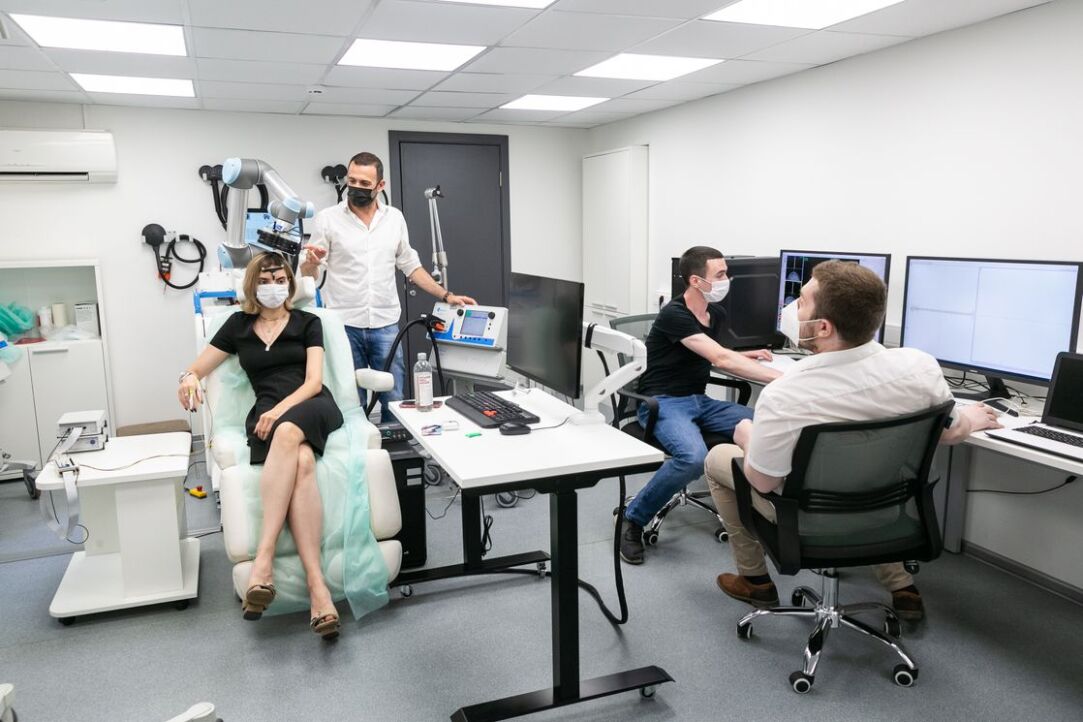
HSE News Service spoke to Director of the Institute of Cognitive Neurosciences, Head of the Centre for Cognition and Decision Making at HSE University, Anna Shestakova about the achievements and goals of the new HSE University’s strategic project ‘Human Brain Resilience: Neurocognitive Technologies for Adaptation, Learning, Development, and Rehabilitation in a Changing Environment’.
— Please tell us how the project idea came about, who initiated it, and how the team was formed.
— It was launched in the spring of this year, and was preceded by a great deal of work. We, like all divisions, participated in the initial competition for strategic projects. Taking into account the growing interest in the achievements of the brain sciences and the importance of developing new neurotechnologies, together with the Centre for Language and Brain, the Faculty of Computer Science, and the Faculty of Biology and Biotechnology, as well as partner laboratories at HSE University in St. Petersburg, Nizhny Novgorod, and Perm, we began to form a multidisciplinary project with the apposite name of ‘The Resilient Brain’.
The Institute for Cognitive Neurosciences (ICN) and the Centre for Language and Brain (CNB) are unique scientific divisions demonstrating outstanding world-class results both in the field of studying the neurobiological foundations of brain activity and in the field of diagnosis and rehabilitation of cognitive impairments and disorders.
We study the brain mechanisms of decision-making, memory, attention, speech, body-brain interaction, and cognitive reserve; we are engaged in the neuromodelling of brain processes, creating algorithms for artificial and extended natural intelligence for a wide range of cognitive tasks, developing brain signal decoding programmes and multimodal neuroimaging, neurofeedback, speech diagnostics neurotechnologies, stimulation-free preoperative mapping, and much more.
Psychologists, linguists, mathematicians, physicists and engineers, doctors and biologists—together we are developing neurotechnologies using augmented intelligence aimed at improving the quality of human life and expanding cognitive functions.
— What are the project goals and objectives?
— There are three of them: fundamental, applied and educational.
Scientific discoveries about the functioning of the human brain, as well as neurotechnologies developed as a result of these advances, will be significant for many priority areas. The concepts and tools developed can be used to respond to the key challenges of modern reality: the need for rapid adaptation and learning in a changing situation, population aging, and an increase in the number of neuropsychiatric diseases. The biomedical tools we develop can be implemented in various areas of healthcare and improve its manufacturability based on the principles of a personalised approach. The resulting computational solutions based on the work of the human brain will be able to advance research in the field of artificial and extended natural intelligence.
Neurotechnologies for the correction of speech disorders are being developed by CNM under the guidance of its Director Olga Dragoy. Computerised game tools for correcting children’s learning difficulties (in particular, reading) in the language sphere are also being advanced there.
Under the leadership of Alexey Ossadtchi, together with LIFT (a new centre for biomedical technologies), a unique new-generation non-contact encephalography technology using optical magnetometry is being developed.
Finally, within the project’s framework, technologies for the neuroprediction of market behaviour and neurocognitive technologies for optimising urban spaces are under development.
— What is the project's main peculiarity, its uniqueness?
— The focus on augmented intelligence as the antithesis of artificial intelligence: to put people first and technology second. This is very important, because in the world of new technologies, one should understand how the human intellect works and what the brain mechanisms are in order to create new technologies to improve the abilities of the brain and the human.
— What scientific works formed the basis of the proposed solutions?
— Our consortium is, first and foremost, a team of outstanding world-famous scientists who are able to captivate young people with scientific and applied problems at the forefront of science and neurotechnologies. ICH employees annually publish around 50 papers in leading international journals, including NeuroImage, Human Brain Mapping, Stroke, JNeuroisci, PNAS, PLOS Biology, and many others. HSE University employs outstanding specialists in the field of studying the neurocognitive mechanisms of human cognition, and each of them is a unique researcher in their field.
— What results are expected to be obtained after the project implementation and what has been done so far?
— The results include technologies for the development of programmes for correcting speech disorders, as well as applications and games for children. These are also tools for biomedicine: passive preoperative non-invasive mapping without stimulation for brain surgery, new neuroimaging technologies, next-generation encephalography, new neurostimulation protocols, and much more.
The project partners have accumulated impressive experience in the implementation of applied research. FCS scientists are the authors of mathematical methods that can be applied to the study of natural and augmented natural intelligence.
— How often is it possible to use scientific approaches in the solution of applied problems?
— Almost always, the transfer of research into technology is a global trend. However, it is important to note that not every fundamental result can be applied to the solution of specific problems, in our case, those related to the rehabilitation and diagnosis of various pathologies.
— Do you think it is possible to broadly use technology to enhance/strengthen the physical and cognitive abilities of a human in the near future?
— Thanks to the growth of computer technology and AI, the development and implementation of technologies such as neuro- and biofeedback and brain-computer interfaces have accelerated remarkably and are already being used in medicine and education.
Neurofeedback technology (NFB) is a neuromodulation technology that allows a person to control the activity of their own brain. Within the framework of this approach, signals of brain activity are analysed in real time and parameters characterising brain activity are calculated, then information about it is presented to the user. The use of the NFB allows the user to learn self-regulation skills, including the conscious regulation of brain activity.
— Is it possible to apply your developments in the prevention and treatment of diseases and, possibly, the prevention of deviant behaviour?
— Most of our work is aimed at studying the mechanisms of decision-making, visual and auditory perception, their norm and pathology. For example, in Alzheimer’s disease, schizophrenia and autism, certain cognitive functions are impaired. If we know how the brain provides a particular function and how its implementation differs in pathology, we can diagnose disorders and even point out abnormalities in the brain with certain problems.
— What departments and research groups are involved in the project outside of HSE University?
— These are all medical universities, research medical institutions; they are all tied to the development of biomedical technologies.
— How will the project contribute to the development of the university?
— One can call it a new direction in the natural sciences. It is a project with an emphasis on the natural sciences. We are entering the biomedical research market, and this is important for the reputation of HSE University as a multidisciplinary university.
The project has several tasks, including the creation of unique educational tracks. The key educational initiative is the Master’s programme ‘Cognitive Sciences and Technologies: From Neuron to Cognition’, which is very popular among HSE University applicants. For the second year, the new Bachelor’s programme ‘Cognitive Neurobiology’ on the basis of the Faculty of Biology and Biotechnology (supervised by Olga Martynova) is welcoming new applicants.
Thanks to the effort of ICN, a new cross-disciplinary graduate school in cognitive science has emerged.
We have become trendsetters in creating new areas of education, for example, the cross-cutting track ‘bachelor’s degree —master’s degree—postgraduate studies.’
The annual school on active and passive methods of neuromapping led by Matteo Feurra and Evgeny Blagoveshchensky is also enjoying great success.
Scientists Show That Peer Influence Can Be as Effective as Expert Advice
Eating habits can be shaped not only by the authority of medical experts but also through ordinary conversations among friends. Researchers at HSE University have shown that advice from peers to reduce sugar consumption is just as effective as advice from experts. The study's findings have been published in Frontiers in Nutrition.
11 February
HSE University Develops Tool for Assessing Text Complexity in Low-Resource Languages
Researchers at the HSE Centre for Language and Brain have developed a tool for assessing text complexity in low-resource languages. The first version supports several of Russia’s minority languages, including Adyghe, Bashkir, Buryat, Tatar, Ossetian, and Udmurt. This is the first tool of its kind designed specifically for these languages, taking into account their unique morphological and lexical features.
30 January
HSE Scientists Uncover How Authoritativeness Shapes Trust
Researchers at the HSE Institute for Cognitive Neuroscience have studied how the brain responds to audio deepfakes—realistic fake speech recordings created using AI. The study shows that people tend to trust the current opinion of an authoritative speaker even when new statements contradict the speaker’s previous position. This effect also occurs when the statement conflicts with the listener’s internal attitudes. The research has been published in the journal NeuroImage.
29 January
Language Mapping in the Operating Room: HSE Neurolinguists Assist Surgeons in Complex Brain Surgery
Researchers from the HSE Center for Language and Brain took part in brain surgery on a patient who had been seriously wounded in the SMO. A shell fragment approximately five centimetres long entered through the eye socket, penetrated the cranial cavity, and became lodged in the brain, piercing the temporal lobe responsible for language. Surgeons at the Burdenko Main Military Clinical Hospital removed the foreign object while the patient remained conscious. During the operation, neurolinguists conducted language tests to ensure that language function was preserved.
28 January
HSE Scientists Use MEG for Precise Language Mapping in the Brain
Scientists at the HSE Centre for Language and Brain have demonstrated a more accurate way to identify the boundaries of language regions in the brain. They used magnetoencephalography (MEG) together with a sentence-completion task, which activates language areas and reveals their functioning in real time. This approach can help clinicians plan surgeries more effectively and improve diagnostic accuracy in cases where fMRI is not the optimal method. The study has been published in the European Journal of Neuroscience.
23 January
Transition to Sustainable Development Requires Deep Structural Transformation of Business
A group of researchers has proposed assessing the ESG transformation of businesses through the partner turnover ratio in raw material and distribution supply chains. The researchers note that the path towards sustainability requires a deep and often costly restructuring of partner networks. This and other papers were presented at the Third International Annual Conference ‘ESG Corporate Dynamics: the Challenges for Emerging Capital Markets.’
29 December 2025
HSE Researchers Offer Guidance to Prevent Undergraduate Burnout
Researchers at the HSE Institute of Education have identified how much time students should ideally devote to their studies, extracurricular activities, and personal life to maintain strong academic performance without compromising their mental health. An analysis of responses from 2,753 students, combined with their actual academic results, revealed several risk factors—such as excessive homework—as well as positive factors, including sufficient sleep, regular exercise, and moderate participation in projects. Based on these findings, the researchers developed practical recommendations for both students and universities. The paper has been published in the European Journal of Education.
25 December 2025
HSE Scientists Contribute to Development of Postquantum Ring Signature for Sber
A new cryptographic data protection mechanism has been jointly proposed by experts from the HSE Tikhonov Moscow Institute of Electronics and Mathematics, Sber, and QApp. The researchers have developed a postquantum ring signature scheme that ensures anonymity (within a defined group of participants), as well as the integrity and authentication of the source of digital transactions, even in the presence of an adversary equipped with a quantum computer.
18 December 2025
‘National Symbols of States Are an Integral Part of Cultural Code’
In December 2025, HSE University hosted the first Forum of the BRICS Law Schools Consortium organised by the HSE Faculty of Law. The forum brought together 42 international delegates (including 10 deans) from 14 universities in Belarus, China, South Africa, India, and Indonesia. The programme included expert discussions, the signing of cooperation agreements, and the adoption of decisions on the future areas of activity of the BRICS Law Schools Consortium, which was established at the initiative of the HSE Faculty of Law.
17 December 2025
When a Virus Steps on a Mine: Ancient Mechanism of Infected Cell Self-Destruction Discovered
When a virus enters a cell, it disrupts the cell’s normal functions. It was previously believed that the cell's protective response to the virus triggered cellular self-destruction. However, a study involving bioinformatics researchers at HSE University has revealed a different mechanism: the cell does not react to the virus itself but to its own transcripts, which become abnormally long. The study has been published in Nature.
17 December 2025