Expert says this intervention could save young people from sudden cardiac death after Christian Eriksen’s second collapse (original) (raw)
Heart conditions are often seen as synonymous with older people and unhealthy lifestyles. As such, there is something especially unnerving about a professional sportsperson – someone who is at the peak of athleticism – suddenly being struck down.
Yesterday, this scenario was played out on the world stage when Danish footballer Christian Eriksen collapsed mid-game for the second time in his career. The 34-year-old, who was fitted with an ICD device after suffering a sudden cardiac arrest while facing Finland at Euro 2020, is reportedly “doing well” and is expected to be discharged from hospital soon. He made a statement late on Monday that it was “different” from what happened in the Euro 2020 match.
But that initial cardiac arrest is not an isolated incident, nor is it exclusive to professional sport.
“So much of our work is returning to communities where, often, the fittest and healthiest person on a sports team had an undiagnosed heart condition and died suddenly,” says Dr Steven Cox, chief executive of charity organisation Cardiac Risk in the Young (CRY).
“...But as a charity, we never accepted that the starting position [for our work] is where someone has died. Once you have a tragedy, it rips the family apart, and of course we support them through that. But we have always been focused on preventing that first death.”
The vast impact of sudden cardiac deaths
Each week in the UK, 12 people aged 35 or below die suddenly from a previously undiagnosed heart condition, CRY reports.
“Every day we are contacted by a family that has just suffered a bereavement,” Dr Cox says. “It is one of the most common causes of death in young people. We believe it’s an incredibly under-resourced area and there is a general underestimation not only of young sudden death, but also of the impact young sudden death has on families, friends and wider communities.”
It is seemingly indiscriminate too, impacting people of varying ages and fitness levels.
“You can still perform at a very high level [in sport] with an underlying cardiac condition,” says Dr Cox. “But typically, most of the deaths in sport occur when people are 14, 15 or 16 and on the career path to greatness, pushing their body to the limit.”
Exercise generally improves long-term heart health. But Dr Cox says sport – and the stress it places on the heart – can significantly increase your risk of cardiac arrest if you have an underlying heart condition. This is why it is important to identify it early in young athletes.
“Arrhythmogenic cardiomyopathy is the one condition where you are going to get that lifestyle advice of avoiding competitive sport,” he says.
“It’s a very difficult decision for a young athlete. I was an 18-year-old aspiring athlete when I was picked up with this condition via screening in 1992. The choice I made was not to continue professional sport. I could have continued, but I felt like it was tempting fate.”
Read more: Christian Eriksen collapses again during Denmark friendly with match called off
How to minimise sudden cardiac deaths
To minimise sudden cardiac deaths from undiagnosed heart conditions, CRY wants cardiac screening in the form of an electrocardiogram (ECG) for all young people across the country.
This is in opposition to a recent government release from the UK National Screening Committee, which states: “The volume and type of new evidence related to screening for cardiac conditions associated with sudden cardiac deaths in young people is currently insufficient to justify more in-depth work in the form of an evidence summary. It recommends that the topic should be reconsidered in three years’ time.”
Cardiac screenings are not infallible. But they can still save lives, Dr Cox argues, particularly in the right hands.
“The ECG is an incredibly powerful tool when it’s read by a specialist,” he says. “That’s not just a cardiologist, but a cardiologist with a specialist interest in these conditions that affect young people.
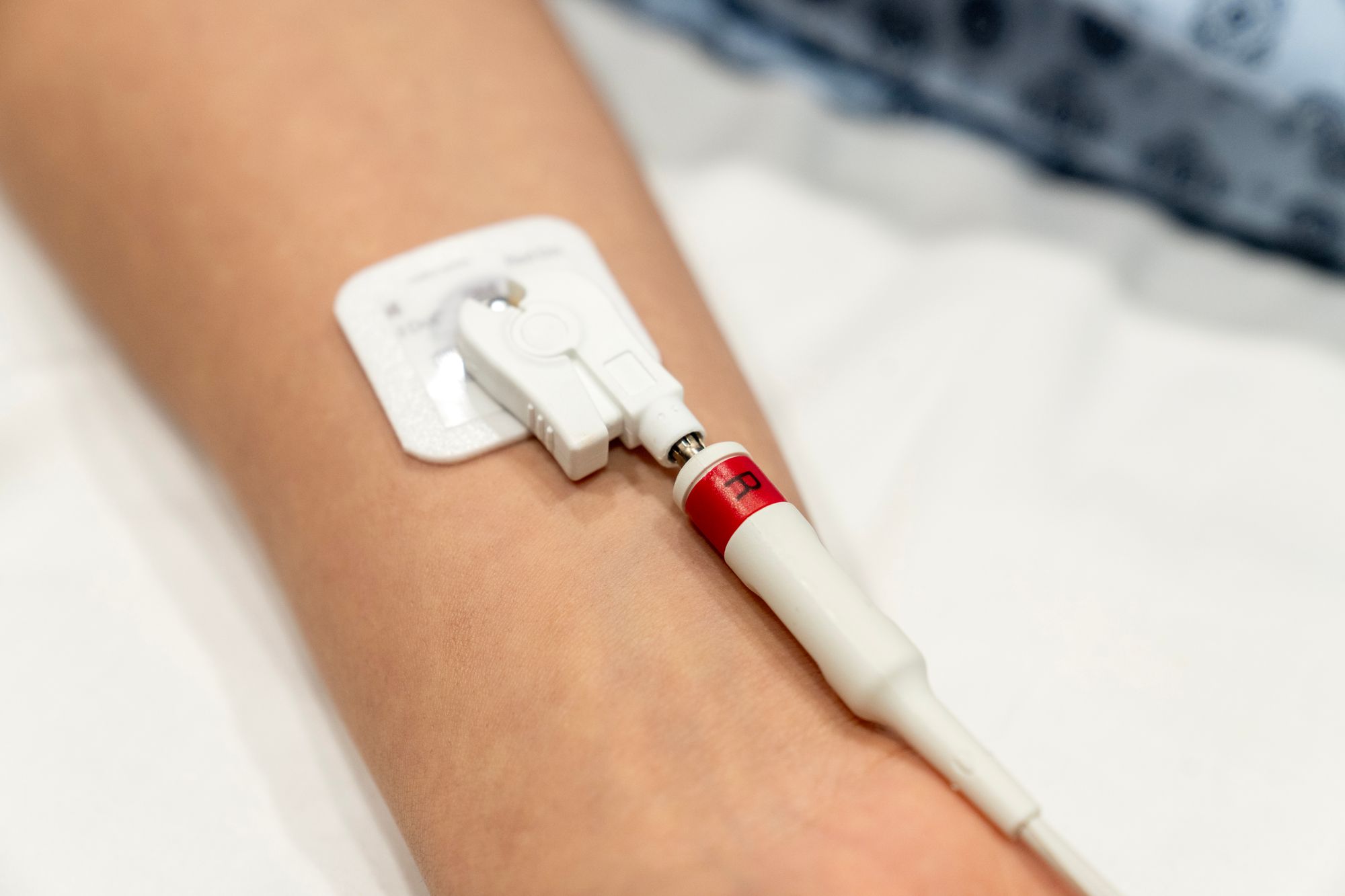
Despite your age, you can be referred for an ECG by a doctor, GP or healthcare provider (Getty/iStock)
“I understand it is very important to understand false positives, especially when you have a national health care system that picks up the bill for any extra investigations. But when you put a specialist on the front line, you reduce those false positives down to a very small level.”
To demonstrate this, CRY recently published large-scale research around the cardiac screening of more than 100,000 people.
“From that population, we were able to identify the strengths and weaknesses of screening,” says Dr Cox. “There were people we screened who went on to die suddenly, and we need to understand that better.
“But from that research we also saw that 10 young people went on to have an ICD implanted, and three of those have already had shocks which saved their lives. Another 10 people had pacemakers, two had heart transplants, and almost 100 people have since had ablation therapy for conditions that were identified.”
How to get an ECG
You can be referred for an ECG by a doctor, GP or healthcare provider. Anyone aged 14-35 can also go to Testmyheart.org.uk to book an appointment for a free screening with CRY.
“We are trying to make it as accessible as possible,” Dr Cox says. “We have a specialist reading that initial ECG. But there’s a real problem with having enough specialists to respond to demand.”
I understand it is very important to understand false positives, but when you put a specialist on the front line, you reduce those false positives to a very small level
Dr Steven Cox, chief executive of Cardiac Risk in the Young
CRY currently tests between 30,000 and 35,000 people each year. However, there is a waitlist of more than 140,000.
“That’s where AI machine learning is going to be a game-changer,” explains Dr Cox. “We’re going to be able to, in essence, clone our experts to be able to provide better expertise for more people.
“That is crucial. If you don’t have that expertise, false positives increase, false negatives increase, and then the value of the screening programme becomes debatable.”
Read more: A cardiac nurse says these five daily behaviours can reduce your risk of heart disease
What else can you do to protect against sudden cardiac death?
Roughly 80 per cent of young sudden cardiac deaths occur with no symptoms present. But the remaining 20 per cent do come with warning signs.
“People need to be aware that syncope – passing out, particularly when you don’t protect yourself as you fall – could be a red flag that you need to get investigated,” says Dr Cox. “You can also have exercise-related chest pain, breathlessness, palpitations and dizziness.
“If you’re concerned, you should go and see your GP, get referred and have an ECG. But these symptoms can be easily dismissed for other lifestyle factors – not sleeping well enough, not eating well enough or anxiety. That’s why it’s much better to go straight in and have the ECG.”
The other thing to look out for, he advises, is a family history of young sudden death – particularly “a death under the age of 50 which hasn't quite made sense”.
He gives the example of a car crash or drowning in which an undiagnosed heart condition could have played a part.
“When there are suspicious deaths in young people, these need to be investigated,” says Dr Cox. “But the most important point to reiterate here is just how vital it is that people are aware of whether they have an underlying cardiac condition.
“Such knowledge is potentially lifesaving– it starts off a treatment pathway to mitigate the risk of a cardiac arrest, allowing the young individual to live a normal and active life.”
Read more: Expert warns why this daily habit is shortening your life – even if you exercise