Popular protests may be inevitable, warns Iran's Supreme National Security Council - Iran Intl (original) (raw)
Jerusalem Post/Middle East/Iran News
Iran’s economy cannot withstand more than six to eight weeks of naval blockade, according to the report presented to the Security Council. The US blockade has now been in place for two weeks.
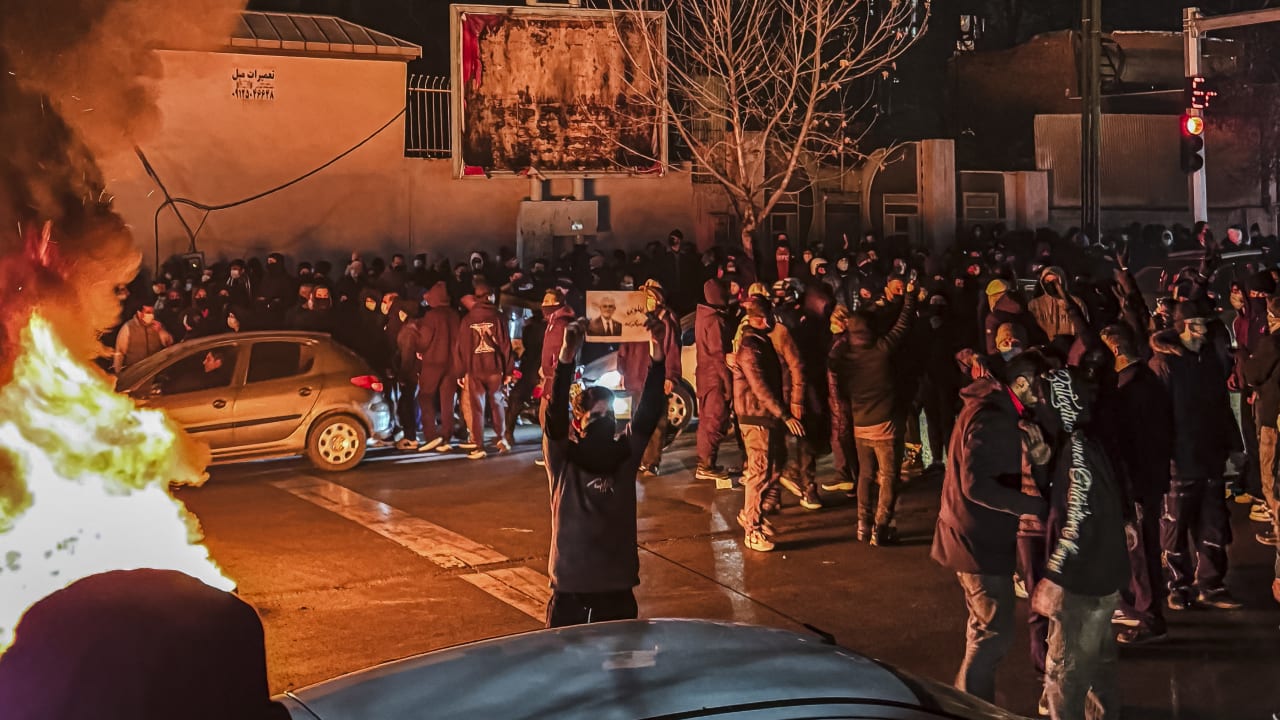
Iranians gather while blocking a street during a protest in Tehran, Iran on January 9, 2026. The nationwide protests started in Tehran's Grand Bazaar against the failing economic policies in late December, which spread to universities and other cities
(photo credit: MAHSA/Middle East Images/AFP via Getty Images)
APRIL 28, 2026 02:57
Updated: APRIL 28, 2026 02:59
Iran’s Supreme National Security Council held a meeting following a report from intelligence agencies with concerns over popular protests returning to the streets, Iran International reported early Tuesday morning, citing sources familiar with the gathering.
Security agencies fear that the economic crisis, widespread unemployment, and rising prices will lead to protests. They also raised the alarm over the possibility of supporters of Crown Prince Reza Pahlavi taking to the streets.
Recent actions by the government have drastically increased unemployment, with the internet outage leading to unemployment of about 20 percent of the internet-dependent workforce, security agencies warn. They also cautioned that two million more private sector employees will be unemployed by the end of spring, Iran International reported.
The report presented to the council described the Iranian economy as critical, Iran Intl wrote, arguing that Iran’s economy cannot withstand more than six to eight weeks of the US- imposed naval blockade, which has now been in place for two weeks.
Popular protests inevitable, may pose real risk to Islamic Republic
Additionally, Iran International sources shared that the council discussed the closure of industries and production centers in the oil, petrochemical, and steel sectors, which is estimated to take years to rebuild.

A woman walks past a billboard with a graphic design about the Strait of Hormuz on a building, amid a ceasefire between US and Iran, in Tehran, Iran, April 27, 2026. (credit: Majid Asgaripour/WANA/via Reuters)
The stopping of economic activity due to the closure of financial markets, including banks, stock exchanges, and exchange markets the real price of goods is not known, these sources added.
With all these conditions in place, security agencies have said that popular protests are inevitable, Iran Intl reported.
Members of the Supreme National Security Council, considering these factors, fear that protests during talks with the US or after the ceasefire extension could pose a real risk of the fall of the Islamic Republic, Iran International wrote.