justcbdstore.com (original) (raw)


Clear Bears
Regular price From $17.99
Sale price From $17.99 Regular price
Choose options
CBD Oil Tincture Coconut
Regular price From $29.99
Sale price From $29.99 Regular price
Unit price
/per
Choose options
Choose your option
Choose options
Nighttime CBD Oil Tincture with Melatonin
Regular price From $24.99
Sale price From $24.99 Regular price
Unit price
/per
Choose options
Choose your option
Choose options
Full Spectrum CBD Tincture
Regular price From $24.99
Sale price From $24.99 Regular price
Unit price
/per
Choose options
Choose your option
Sold out
Sold out
CBD + THC Full Spectrum Oil
Regular price $79.99
Sale price $79.99 Regular price
Unit price
/per
Sold out
Choose your option
Choose options
CBD Gummies For Sleep
Regular price From $17.99
Sale price From $17.99 Regular price
Unit price
/per
Choose options
Choose your option
Choose options
Clear Bears
Regular price From $17.99
Sale price From $17.99 Regular price
Unit price
/per
Choose options
Choose your option
Choose options
Peach Rings
Regular price From $17.99
Sale price From $17.99 Regular price
Unit price
/per
Choose options
Choose your option
Choose options
Sour Cherries
Regular price From $17.99
Sale price From $17.99 Regular price
Unit price
/per
Choose options
Choose your option
Choose options
Daily Recharge Gummies
Regular price From $20.00
Sale price From $20.00 Regular price
Unit price
/per
Choose options
Choose your option
Choose options
PM Reset Gummies
Regular price From $20.00
Sale price From $20.00 Regular price
Unit price
/per
Choose options
Choose your option
Add to cart
CBD+ Calm Mixed Berry Gummies
Regular price $60.00
Sale price $60.00 Regular price
Unit price
/per
Add to cart
Choose your option
Choose options
Worms
Regular price From $17.99
Sale price From $17.99 Regular price
Unit price
/per
Choose options
Choose your option
Choose options
Rainbow Ribbons
Regular price From $17.99
Sale price From $17.99 Regular price
Unit price
/per
Choose options
Choose your option
Choose options
Sugar Free Worms
Regular price From $17.99
Sale price From $17.99 Regular price
Unit price
/per
Choose options
Choose your option

How to Lucid Dream: 5 Science Backed Techniques That Actually Work
You know that moment when you’re in the middle of a dream, and something feels just slightly off? Maybe you notice you can breathe underwater, or your childhood home has rooms that never existed. And then, for a split second, you think: “Wait. Am I dreaming?” For most of us, that thought jolts us awake. Scientific research shows that lucid dreams arise from measurable brain activity and can be cultivated. This article explores what lucid dreaming is, the neuroscience behind it, and the potential benefits, as well as evidence based techniques for becoming lucid. Understanding Lucid Dreams A lucid dream happens when you become conscious during a dream while you’re still asleep. Your body stays in REM sleep (that’s the stage where most vivid dreaming happens), but part of your brain wakes up just enough to recognize what’s happening. You’re observing the dream, and sometimes you can even guide it. This isn’t a new idea. Tibetan monks have practiced dream yoga for centuries, and researchers have been studying lucid dreaming in sleep labs since the 1970s. What we’ve learned is that lucid dreaming is a real, measurable experience that happens to about half of us at least once in our lives, and some people experience it regularly. What Happens in Your Brain During Lucid Dreams When you’re lucid dreaming, something interesting happens in your brain. The prefrontal cortex (the part that handles self-awareness and decision-making) becomes more active than it usually is during regular dreams. Brain imaging studies show that during lucid REM sleep, there’s increased activity in areas like the frontopolar cortex and precuneus compared to normal dreaming. The 2024 brain connectivity study tracked what happens in people’s brains during lucid dreams. The researchers found that different parts of the brain start talking to each other more than usual, especially through something called alpha waves in the back of the head. It’s kind of like being in two places at once. You’re asleep and dreaming, but there’s also this awareness sitting in the background. You’re not awake, but you’re not totally checked out either. That in between state is what lets you watch your dreams happen and sometimes steer them. Why People Want to Learn Lucid Dreaming Working Through Nightmares One of the most practical applications of lucid dreaming is helping people who struggle with recurring nightmares. When you realize you’re dreaming during a nightmare, you have the option to change the narrative or remind yourself it’s not real. A small study worked with veterans who’d been having PTSD nightmares. After they completed a six-day workshop on lucid dreaming, more than 90% reported that their symptoms improved. In another study, about two-thirds of people who kept dream journals and maintained good sleep habits began having what the researchers called “healing dreams.” The improvements stuck around for at least a month after. A Space for Creativity Some people treat lucid dreams like a mental playground. Artists have woken up and sketched what they saw. Musicians have hummed melodies they heard in dreams and later tried to recreate them. It’s a place where physics doesn’t matter, and logic takes a back seat. That kind of freedom can unlock ideas that feel buried during the day. Building Self-Awareness People who lucid dream regularly tend to be better at noticing their own thoughts without spiraling into them. When researchers test for mindfulness, these folks usually score higher. A study last year looked at people who meditate and found something interesting: those who had more lucid dreams were also calmer when life got stressful and more aware of what was going on in their heads. Practicing awareness in dreams carries over into everyday life. Meditation (especially the kind where you observe what comes up) seems to help with both. What to Know Before You Start Lucid dreaming isn’t something everyone needs to pursue, and it comes with a few considerations. Sleep Quality Comes First Some methods for triggering lucid dreams involve waking people up in the middle of the night with an alarm. That’s fine once in a while, but if you do it too much, your sleep gets chopped up, and you end up dragging the next day. The Sleep Foundation points out that lucid dreaming is interesting, but it’s not worth wrecking your sleep over. Rest comes first. The goal is never to sacrifice rest for the sake of having a lucid dream. Understanding Sleep Paralysis Occasionally, lucid dreaming and sleep paralysis overlap. Sleep paralysis is when your mind wakes up before your body does, so you’re conscious but temporarily unable to move. It’s a natural part of REM sleep (your body paralyzes itself so you don’t act out your dreams), but it can feel unsettling if you don’t know what’s happening. The helpful thing to know is that it’s temporary and harmless. Some experienced lucid dreamers use sleep paralysis as a bridge into a lucid dream by remaining calm and drifting back into sleep while maintaining awareness. Research shows that it’s nightmares themselves, rather than lucidity, that correlate with poor sleep quality and stress. Not for Everyone If you have a history of certain mental health conditions, particularly those involving dissociation or difficulty distinguishing between dreams and reality, lucid dreaming might not be the right practice for you. It’s worth checking with someone who knows your situation. 5 Science-Backed Techniques for Lucid Dreaming There’s no guaranteed method, but researchers have identified several approaches that seem to help. Here are the five most effective techniques. Reality Testing This is the simplest technique to start with. Throughout the day, pause and ask yourself: “Am I dreaming?” Then do a quick test. Try to push your finger through your opposite palm, or read a line of text twice (in dreams, text often changes between readings). The idea is to build a habit that eventually carries over into your dreams. When you do this check inside a dream, you’ll notice something impossible happening, and that awareness can trigger lucidity. Dream Journaling Keep a notebook on your nightstand. The second you wake up, write down whatever scraps you remember. Over time, you’ll spot patterns. These repeating elements are your clues. When they pop up in a dream, they can tip you off that you’re dreaming. The other thing journaling does is tell your brain that dreams are worth paying attention to, and that alone usually makes them easier to remember. MILD (Mnemonic Induction of Lucid Dreams) This technique is simple. Set your alarm to go off five or six hours after you go to bed. When it wakes you, try to remember what you were dreaming about. Then, while you’re drifting back to sleep, keep telling yourself, “Next time I’m in a dream, I’ll realize it.” You’re just trying to lodge that thought somewhere your sleeping brain can find it. A 2017 study found that people who combined this method with reality testing and a short wake period achieved a 17% success rate over one week, with some participants reaching 46% success when they fell back asleep quickly. Importantly, the technique didn’t seem to harm their sleep quality. Wake Back to Bed (WBTB) You set a gentle alarm for about 5 hours after you fall asleep, stay awake for 10 to 30 minutes (maybe read something about lucid dreaming or write in your journal), then go back to sleep. This works because you’re going back to bed during a time when REM sleep is denser, which can make lucid dreams more likely. The key is keeping the wake period short and calm so you can fall back asleep easily. Meditation and Mindfulness Practice There’s a clear overlap between meditation practices and lucid dreaming. Studies show that people who meditate regularly, especially using open-monitoring techniques, tend to have more lucid dreams. It makes sense: both practices involve observing your mental state without getting swept up in it. Even 10 minutes of daily meditation can help build the kind of awareness that supports lucidity. The Foundation: Quality Sleep for Vivid Dreams Here’s the thing that often gets overlooked: you can’t really explore lucid dreaming if you’re not sleeping well in the first place. Deep, restorative REM sleep is where vivid dreams happen, and if stress, screens, or racing thoughts are keeping you from getting there, no technique is going to help much. How Dreamscape Supports Your Lucid Dreaming Practice Most people try lucid dreaming techniques and wonder why they don't work. The problem usually isn’t the method; it’s the foundation. You can’t become aware in your dreams if you’re not reaching deep, vivid REM sleep in the first place. That’s where Dreamscape Sleep Gummies come in. They’re designed to address the two biggest barriers to lucid dreaming: poor sleep quality and weak dream recall. Better Recall, More Awareness People who use Dreamscape consistently report three things: they fall asleep faster, they stay asleep longer, and they wake up actually remembering their dreams. That last part is critical. If you can’t remember your dreams, you can’t work with them. You can’t spot patterns. You can’t practice becoming lucid. The gummies don’t force lucidity; they create the conditions where it becomes possible. Deep REM cycles. Vivid, cohesive dreams. Clear recall in the morning. This is where support from natural ingredients can make a difference. Dreamscape Sleep Gummies were designed with this in mind. Each gummy combines CBD (25mg), CBN (15mg), a measured amount of THC (5mg), along with ashwagandha and chamomile extracts. CBD works with your body’s endocannabinoid system to support a calmer state. CBN is often called the “sleepy cannabinoid” because people associate it with deeper rest. A small amount of THC can enhance dream vividness and recall. Research on cannabinoids and sleep suggests they may influence sleep cycles in ways that support what’s called REM rebound (when your brain compensates for lost REM time by dreaming more intensely). Ashwagandha has been studied for its role in reducing stress and supporting sleep quality. It has a long history in Ayurvedic practice for quieting mental chatter. Chamomile has been used for centuries as a gentle way to ease into sleep, and research supports its calming properties. What people often notice is that they fall asleep more easily, stay asleep through the night, and wake up remembering their dreams more clearly. That kind of sleep is exactly what supports lucid dreaming practice. Your Evening Routine for Lucid Dreaming If you’re curious about exploring lucid dreaming, here’s a gentle way to start: Before Bed: Take one or two Dreamscape gummies about 30 to 60 minutes before you plan to sleep. Jot down any dreams from last night if you remember them. Set a simple intention (something like, “I want to notice when I’m dreaming tonight”). Run through a couple of reality checks. Read a sentence twice and see if it changes. Look at your hands. Just get in the habit. During the Night: If you’re trying the wake-back-to-bed thing, set a gentle alarm for around five hours in. When you wake up, take a minute to remember what you were dreaming about. Repeat your intention to yourself, then go back to sleep. The ashwagandha and chamomile in the gummies make it easier to drift off again without your thoughts spiraling. In the Morning: Grab your journal before you do anything else. Don’t check your phone. Just write. Any flashes of memory, any weird moments, anything that felt different. It doesn’t matter if you had a full lucid dream or just remembered a color. All of it counts. Starting Your Lucid Dreaming Practice Lucid dreaming isn’t something you need to force. For some people, it happens naturally once they start paying closer attention to their dreams. For others, it takes consistent practice over weeks or months. And for some, it’s simply not something they’re drawn to, and that’s completely fine. The main thing is getting good sleep. If you’re not resting well, none of this is going to work. Solid sleep affects everything: how clearly you think, how stable your mood is, how well your body recovers. And yes, how vividly you dream. Treat lucid dreaming like an experiment. Start simple. Keep a journal. Do reality checks. Sleep well. See what happens. If you do wake up inside a dream at some point, it might surprise you. Not just about the dream itself, but about the quiet awareness that exists underneath everything, even when you’re asleep. If you’re ready to support better sleep and explore your dream world, try Dreamscape Sleep Gummies and see how your nights begin to shift. References Sterling, T. R., Lau, B., Zhang, J., Freeman, A., Bosch, R. J., Brooks, J. T., Deeks, S. G., French, A., Gange, S., Gebo, K. A., Gill, M. J., Horberg, M. A., Jacobson, L. P., Kirk, G. D., Kitahata, M. M., Klein, M. B., Martin, J. N., Rodriguez, B., Silverberg, M. J., & Willig, J. H. (2011). Risk Factors for Tuberculosis After Highly Active Antiretroviral Therapy Initiation in the United States and Canada: Implications for Tuberculosis Screening. The Journal of Infectious Diseases, 204(6), 893–901. https://doi.org/10.1093/infdis/jir421 Voss, U., Holzmann, R., Hobson, A., Paulus, W., Koppehele-Gossel, J., Klimke, A., & Nitsche, M. A. (2014). Induction of self awareness in dreams through frontal low current stimulation of gamma activity. Nature Neuroscience, 17(6), 810–812. https://doi.org/10.1038/nn.3719 Trigwell, S. (2019). A Focus on Replacement. Alternatives to Laboratory Animals, 47(3-4), 109–109. https://doi.org/10.1177/0261192919886664 Borghesi, S., Colciago, S., Zeri, F., Scialdone, A., & Tavazzi, S. (2020). In vitro glistening formation in IOLs: automated method for assessing the volumetric density and depth distribution of microvacuoles. Journal of Cataract and Refractive Surgery, 46(8), 1178–1183. https://doi.org/10.1097/j.jcrs.0000000000000272 Sun, F., Fang, M., Zhang, H., Song, Q., Li, S., Li, Y., Jiang, S., & Yang, L. (2024). Drp1: Focus on Diseases Triggered by the Mitochondrial Pathway. Cell Biochemistry and Biophysics, 82(2), 435–455. https://doi.org/10.1007/s12013-024-01245-5 Pacheco, D. (2020, October 30). Lucid Dreams: Definition, Techniques, and Benefits. Sleep Foundation. https://www.sleepfoundation.org/dreams/lucid-dreams Pultar, J., Wadowski, P. P., Panzer, S., & Gremmel, T. (2019). Oral antiplatelet agents in cardiovascular disease. Vasa, 48(4), 291–302. https://doi.org/10.1024/0301-1526/a000753 Zhang, C., Christensen, G., Kurtek, S., Srivastava, A., Weiss, E., Murphy, M., & Williamson, J. (2012). WE-E-213CD-05: A Non-Rigid Image Registration Algorithm That Accommodates Organ Segmentation Error. Medical Physics, 39(6Part27), 3960–3960. https://doi.org/10.1118/1.4736161 Shannon, S., Lewis, N., Lee, H., & Hughes, S. (2019). Cannabidiol in Anxiety and Sleep: A Large Case Series. The Permanente Journal, 23(1). https://doi.org/10.7812/tpp/18-041Langade, D., Kanchi, S., Salve, J., Debnath, K., & Ambegaokar, D. (2019). Efficacy and Safety of Ashwagandha (Withania somnifera) Root Extract in Insomnia and Anxiety: A Double-blind, Randomized, Placebo-controlled Study. Cureus, 11(9). https://doi.org/10.7759/cureus.5797 Gupta, S. (2010). Chamomile: A herbal medicine of the past with a bright future. Molecular Medicine Reports, 3(6). https://doi.org/10.3892/mmr.2010.377 Bouthaina Hasnaoui, Diarra, A. Z., Makouloutou-Nzassi, P., Jean-Michel Bérenger, Afaf Hamame, Barthelemy Ngoubangoye, Gaye, M., Davoust, B., Oleg Mediannikov, Lekana-Douki, J. B., & Parola, P. (2024). Identification of termites from Gabon using MALDI-TOF MS. Heliyon, 10(6), e28081–e28081. https://doi.org/10.1016/j.heliyon.2024.e28081

CBD, CBN, and Ashwagandha: The Science Behind Natural Sleep Support
Researchers and herbalists have been tinkering with sleep remedies for centuries. What started as chamomile tea or a valerian root sachet has expanded into a much wider palette of plant‑based helpers, and our understanding of how they work continues to evolve. CBD and CBN are cannabinoids that interact with the body's endocannabinoid system and may promote a calmer mental state. Moreover, ashwagandha is an adaptogen with compounds that appear to influence GABA receptors and ease stress. Instead of trying to "knock you out," these ingredients aim to support your natural wind‑down process. That's why you'll increasingly see blends rather than single‑ingredient products. Studies suggest that CBD may help with certain sleep issues, that ashwagandha can help adults fall asleep faster and improve sleep quality, and that CBN is often used in nighttime formulas, though modern research is sparse. When combined thoughtfully, they address different parts of the nighttime routine: calming mental chatter, easing the transition into sleep, and supporting deeper rest. This evolving approach is embodied in Dreamscape, a hemp‑derived gummy that blends CBD, CBN, and a measured amount of THC with ashwagandha and chamomile. The Dreamscape formulation is designed to support a calm wind-down and deeper relaxation, while ashwagandha and chamomile help ease the transition into sleep. Each ingredient plays a specific role: CBD promotes a calmer mental state, CBN is often associated with deeper sleep, and ashwagandha helps quiet mental chatter. By bringing ancient adaptogens and modern cannabinoids together, Dreamscape reflects how "sleep science" is moving beyond single solutions toward gentle, well‑rounded support. Understanding the Stages of Sleep To appreciate why these ingredients work well together, it helps to know what happens after your head hits the pillow. Sleep cycles through different stages, each with unique functions. Stage 1 (N1): Light sleep The first stage of sleep is brief, often lasting just one to seven minutes. Your body hasn't fully relaxed yet, but brain activity and muscle movement begin to slow. You're easy to wake during this phase. Stage 2 (N2): Deeper relaxation Stage 2 brings a more subdued state. Body temperature drops, muscles relax, and heart and breathing rates slow. This stage can last 10–25 minutes in the first cycle and often makes up about half of an adult's total sleep. Stage 3 (N3): Deep sleep Also known as slow‑wave or delta sleep, Stage 3 is the most restorative. Muscle tone, pulse, and breathing rate decrease, and brain activity shows distinctive delta waves. Experts believe deep sleep is critical for physical recovery and immune function. You spend most of your time in deep sleep during the first half of the night; later cycles shorten N3 and lengthen REM. Stage 4: REM sleep During REM (rapid eye movement) sleep, brain activity picks up to near‑waking levels. Your eyes dart under closed lids while most muscles remain paralyzed. REM sleep is known for vivid dreaming and is believed to support memory, learning, and creativity. You usually don't enter REM until about 80 minutes after falling asleep, and the duration of REM periods lengthens throughout the night. Why Dreamscape Helps A balanced sleep cycle requires moving smoothly through all of these stages. Disruptions—whether from stress, irregular schedules, or environmental factors—can interfere with both the depth and continuity of sleep. Dreamscape gummies are designed to support your body's natural progression through the night: Winding down (Stages 1 & 2): CBD and ashwagandha help calm the mind and body, making it easier to relax and drift into light sleep. Supporting deeper sleep (Stage 3): CBN works alongside a modest dose of THC to encourage a more immersive sleep. Research suggests THC/CBN combinations are linked to improved subjective sleep quality. Enhancing dream phases (REM): The measured THC dose can enrich dream vividness and recall, while chamomile offers a gentle, familiar sense of calm. As always, natural supplements work best alongside good sleep habits: maintain a consistent bedtime, create a dark and quiet sleep environment, and minimize screen time before bed. With thoughtful use, Dreamscape can be a gentle ally in your journey toward calmer evenings and more restorative nights. Can you take it every night? These ingredients are generally used to support the body's normal patterns rather than override them. Research on ashwagandha shows that the benefits actually improve with consistent use over time. A study tracked people using ashwagandha over several months and found that sleep improvements were sustained and even increased over that period. The same pattern shows up with CBD. Research followed people using CBD for sleep and nervous tension over time and found that the improvements were maintained. What can help is using your gummy as part of a broader sleep routine. Taking it at the same time each night, dimming the lights an hour before bed, putting your phone away, and doing some light stretching or reading, all of this together creates a signal to your body that it's time to wind down. The gummy supports that process through multiple biological pathways, but it works even better when you're also creating the right environment and sleep habits. How to Incorporate Dreamscape into your Routine? The simplest way to use it is to take one gummy about 30 to 60 minutes before you actually want to be asleep. Then give that window a little respect. Dim the lights. Put your phone across the room, or at least out of your hand. Do something that feels genuinely calming, not scrolling through your phone, watching 40 videos in a row. A few pages of a book, light stretching, even just sitting with quieter music, helps. You don't need a perfect routine. You need to make it easier for your body to shift gears. Some people notice a difference the first night. For others, it's more subtle at first and becomes clearer over a few days as their sleep becomes more consistent. Dreamscape is formulated for people who are ready to prioritize their sleep again, want something that works with their body rather than against it, and are tired of feeling tired. Because you deserve to wake up actually feeling rested. References Cheah, K. L., Norhayati, M. N., Husniati Yaacob, L., & Abdul Rahman, R. (2021). Effect of Ashwagandha (Withania somnifera) extract on sleep: A systematic review and meta-analysis. PLOS ONE, 16(9), e0257843. https://doi.org/10.1371/journal.pone.0257843 Suni, E. (2023, December 8). Stages of sleep: What happens in a sleep cycle. Sleep Foundation. https://www.sleepfoundation.org/stages-of-sleep THC and CBN associated with improved sleep quality. (2025, October 14). NORML. https://norml.org/news/2025/10/09/clinical-trials-cannabis-formulations-dominant-in-thc-and-cbn-but-not-cbd-associated-with-improved-sleep-quality

CBD Only Gummies vs CBD + THC Gummies: What's the Difference?
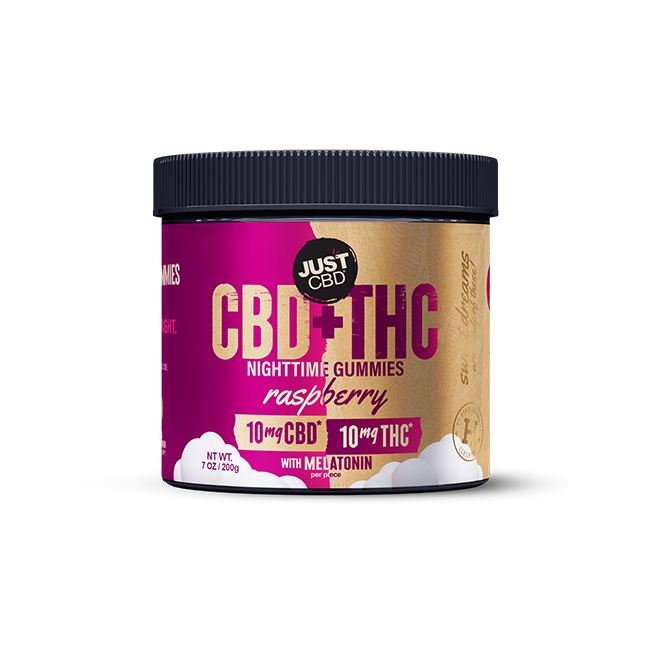
Key Points: CBD only gummies deliver mild, clear-headed “ease and calm,” making them ideal for daytime or everyday relief. CBD+THC gummies combine CBD calming effects with THC for deeper relaxation. Works best for winding down, nighttime, or deeper rest. Start with one gummy: CBD is for flexible daily use, while CBD+THC is designed for evening and sleep support. Choose based on your goal: If you want steady calm & focus (CBD-only), if you want deeper relaxation and sleep (CBD+THC) Choosing the right gummy starts with understanding what each formula is designed to do. CBD-only gummies and CBD plus THC gummies both come from hemp, but the way they feel and the moments they fit into are noticeably different. If you have ever wondered why one feels lighter and the other feels deeper, this breakdown will help you choose the one that matches your routine. What Are CBD-Only Gummies CBD-only gummies are made with cannabidiol as the main active ingredient. CBD supports relaxation and helps smooth out tension without affecting your clarity. These gummies work well for everyday use because their effects are calm, steady, and functional. People often use them in the morning or afternoon when they want to stay productive but need help softening stress. Strengths vary. Lower strength is suitable for beginners or daytime use. Medium strength offers a more noticeable shift. Higher strength CBD jars are commonly used in the evening when someone wants extra support without THC. The wide range of flavors makes them easy to stick with. You can choose from fruit candy flavors, sour options, vegan ribbons, and sugar-free worms, depending on your routine. What Are CBD + THC Gummies? CBD plus THC gummies combine both cannabinoids in one serving. CBD helps ease the mind, while THC adds a heavier settling effect. Together they create a deeper, more complete evening experience. The shift feels fuller, which is why many people reach for these gummies at night when they want their body to slow down and release tension. Some blends stay mild and balanced. Others use higher cannabinoid levels for people who want a stronger night routine. Specific formulas also include ingredients like melatonin to support the final step into rest. How Do They Feel Different CBD only feels light and steady. You stay clear, but less tense. CBD plus THC feels deeper, slower, and more grounded. It is not overwhelming, but it is more noticeable. CBD only fits daytime. CBD plus THC fits the evening. Dosage: How Much Should You Take Start low regardless of the formula. One gummy is the standard starting point for both CBD-only and CBD plus THC. If you are new to either, try one piece at a time and see how your body responds. You can adjust your intake on the following night or the next day. For CBD only, people often stay in one piece for daytime and use a higher strength gummy at night if they need more support. For CBD plus THC, one piece is usually enough because the effect is more substantial. When to Take Them? CBD only gummies Take them during the day, when you want calm that doesn't interrupt your focus. You can also take them in the evening if you want a softer wind-down. CBD plus THC gummies Use them in the evening or at night. They work best after long days, when your mind is racing, or when you want a more profound sense of relaxation before bed. How Long They Take to Kick In For most people, gummies begin to settle in thirty to sixty minutes. It varies based on metabolism, what you ate that day, and your sensitivity. CBD plus THC formulas can feel stronger in the same time window because the combination has a deeper presence. Best Time to Use Each Type CBD only Morning for calm focus. Afternoon for smooth stress support. Evening for mild relaxation. CBD plus THC Evening wind down. Nighttime routines. The hour before bed when you want to ease into rest. The Bottom Line CBD-only gummies offer steady calm and more flexibility for daytime use. CBD plus THC gummies create a more profound evening effect that helps you slow down after a long day. Once you know how each formula feels, the choice becomes simple. One supports your pace. The other slows your pace. Both have a place in the proper routine.

ABOUT US
We offer high quality CBD products made from organically sourced USA-grown hemp. In addition, we carry a wide range of CBD items for sale, including everything from tasty CBD Gummies and powerful CBD oil to soothing creams and CBD pet treats. All of our merchandise comes with a 30-day money-back guarantee.
JustCBD remains a leader in the competitive CBD industry. We now have more than 22,000 5-star reviews. Every CBD product we sell is GMP certified, as well as third party laboratory tested to confirm buyers' safety. Here at JustCBD, our customers have always been our first priority. Client satisfaction is at the heart of everything we strive to achieve.
More About Us