Testis - Latest research and news (original) (raw)
Latest Research and Reviews
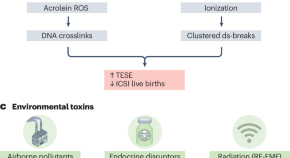
Sperm DNA fragmentation and its influence on mammalian reproduction
In this Review, the authors synthesize current understanding of sperm DNA fragmentation and its effects on mammalian reproduction. Reproductive consequences for fertilization, embryo development, and pregnancy outcomes and strategies aimed at reducing or preventing DNA fragmentation are examined.
- Mehran Dabiri
- Dale M. Goss
- Majid Ebrahimi Warkiani
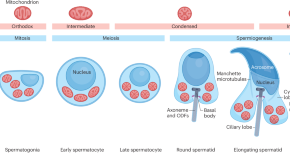
Sperm mitochondrial sheath formation — how and why?
In this Review, the authors describe the mechanisms that mediate mitochondrial sheath formation and its maintenance and function within the mature sperm. They also provide the field with a strong and up-to-date background on current data and hypotheses.
- Maddison L. Graffeo
- Jessica E. M. Dunleavy
- Moira K. O’Bryan
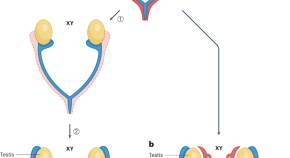
Persistent Müllerian duct syndrome — a rare but important cause of male factor infertility
Persistent Müllerian duct syndrome (PMDS) is a rare difference in sex development, characterized by the presence of Müllerian duct derivatives in 46,XY individuals with male-typical development. Untreated PMDS is associated with risks of infertility and malignancy. In this Review, the authors provide an comprehensive primer on the epidemiology, pathophysiology and management of the condition, considering the need for a high index of clinical suspicion and timely intervention, raised awareness of PMDS among clinicians and multidisciplinary care to optimize outcomes for patients.
- Michael George
- Susan Wong
- Vaibhav Modgil
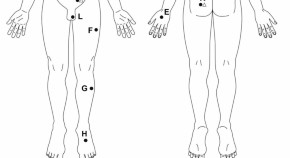
Exercise, diet and psychological support for patients with testicular cancer
This Review discusses the potential benefits of prehabilitative interventions in patients with and survivors of testicular cancer. Although there are few studies in the field, available data suggest a benefit of prehabilitation in improving mental health and quality of life in these patients, highlighting the need for additional research in this field.
- Logan G. Briggs
- Sarah P. Psutka
- Sara C. Parke
News and Comment

Much of the Y chromosome has remained obscure owing to the challenge of sequencing repetitive genomic regions. Recently, the Y chromosome has been fully sequenced, revealing extensive heterochromatic areas and 41 new protein-coding genes. Furthermore, 43 Y chromosomes have been sequenced, showing extensive multi-sample variation and providing promising insights into male infertility.
- Miguel G. Rojas
- Edoardo Pozzi
- Ranjith Ramasamy