Ebola Outbreak Is Highlighting America’s Global Health Retreat | Opinion (original) (raw)
For many Americans, Ebola feels like a crisis that belongs somewhere else—distant, tragic, but ultimately contained. Yet history keeps warning us otherwise.
The 2014 West African Ebola epidemic killed more than 11,000 people, destabilized health systems across Guinea, Liberia, and Sierra Leone, and triggered global alarm as cases spread to Italy, Mali, Nigeria, Senegal, Spain, the United Kingdom, and the United States. In America, imported cases in Texas and New York became a stark reminder that outbreaks unfolding thousands of miles away can quickly arrive at our doorstep. The World Bank estimated the outbreak cost West Africa billions in economic losses.
What prevented that epidemic from becoming even worse was not luck alone. It was the existence of a global outbreak-response infrastructure built through international cooperation, disease surveillance systems, laboratory networks, emergency response teams, and foreign assistance programs heavily financed by the United States and European governments. During the Ebola epidemic alone, the United States committed more than $5.4 billion to domestic and international Ebola preparedness and response efforts.
A decade later, the world is confronting another Ebola outbreak. But this time, the systems that once helped contain these threats are weaker.
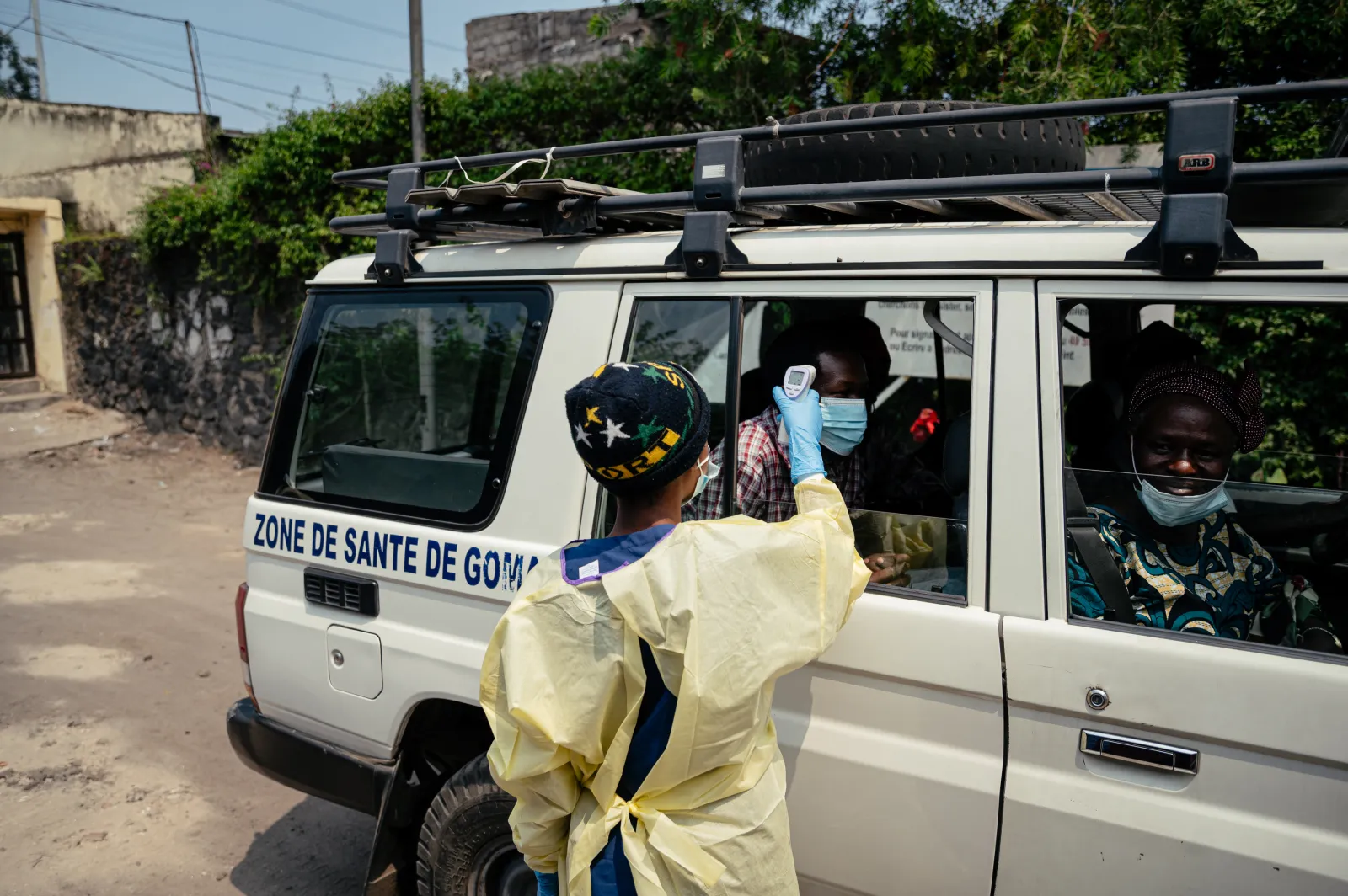
The current outbreak spreading across the Democratic Republic of Congo (DRC) and Uganda involves the rare Bundibugyo strain of Ebola—a strain so uncommon that many front line laboratories initially failed to identify it correctly. By the time health officials confirmed the outbreak, transmission had already spread through funeral gatherings, crossed into Uganda, and entered regions already destabilized by conflict and displacement.
The World Health Organization (WHO) has now declared the outbreak a Public Health Emergency of International Concern. More than 860 suspected cases and 200 deaths have already been reported. Unlike the Zaire strain, there is currently no approved vaccine or targeted treatment for Bundibugyo Ebola. These deaths are often preventable, and vulnerable communities should not be left to confront deadly outbreaks on their own.
Experts are especially concerned because the Bundibugyo strain behaves differently enough from prior Ebola outbreaks that existing diagnostics and preparedness systems did not fully anticipate it. Africa CDC officials have warned that the absence of vaccines and therapeutics creates an especially dangerous situation for the region.
But the story here is not simply a viral mutation. It is also institutional erosion.
For decades, the United States supported much of the world’s epidemic preparedness infrastructure through USAID, the CDC, PEPFAR, and partnerships with the WHO and African public health agencies. U.S. global health funding helped build laboratory networks, train field epidemiologists, establish emergency operations centers, strengthen genomic sequencing capacity, and support cross-border disease surveillance in lower-income countries. Much of this work accelerated after the launch of the Global Health Security Agenda in 2014 and through major post-Ebola investments by USAID and CDC.
These systems rarely attracted political attention because successful outbreak prevention is often invisible. When they work, epidemics are detected early and contained quietly.
That infrastructure is now being hollowed out at precisely the moment the world faces rising risks of zoonotic spillover, climate-driven displacement, political instability, and the rapid spread of infectious disease across increasingly fragile regions.
Since January 2025, the Trump administration has pursued an “America First” restructuring of U.S. foreign assistance that has profoundly weakened the country’s global health programs and epidemic preparedness in countries such as the DRC. In July 2025, Secretary of State Marco Rubio announced that USAID would cease implementing foreign aid programs, with remaining assistance administered through the State Department. The administration had already moved to terminate more than 80 percent of USAID contracts and programs, sharply reducing the agency’s role in outbreak preparedness, laboratory strengthening, vaccination campaigns, and disease surveillance.
The consequences extend far beyond aid delivery. Science reported that U.S. cuts left disease surveillance programs around the world in limbo, damaging efforts to track pathogens and prevent outbreaks. The administration’s broader retreat from multilateral global health cooperation has weakened coordination between U.S. agencies and international bodies such as the WHO, eroding the real-time information sharing and cross-border alert systems that help detect outbreaks before they escalate. In fragile regions already burdened by conflict, displacement, and distrust of institutions, delays of even a few weeks can fundamentally alter the trajectory of an epidemic.
Yet this outbreak is still containable. Much of the surveillance and response infrastructure built after the 2014 Ebola epidemic still remains—and those resources must be urgently mobilized before more preventable deaths occur.
The United Kingdom recently announced plans to reduce overseas aid spending to 0.3 percent of gross national income by 2027—the lowest level in decades—while broader reductions across Europe are reshaping the global aid landscape. Analysts estimate the UK’s cuts could reach roughly 40 percent in some sectors, including global health and humanitarian assistance.
Global health security is domestic health security.
Foreign aid has increasingly been framed in American political discourse as charity rather than self-protection. But infectious disease outbreaks do not remain confined to the places where they begin. Africa CDC has warned that 10 African countries are face the risk of being affected. The U.S. CDC confirmed that an American health care worker in the DRC tested positive for Ebola Bundibugyo disease and was evacuated to Germany for treatment. A second American identified as a high-risk contact was also transported to the Czech Republic for monitoring, heightening concerns about transmission internationally.
What is unfolding now in the DRC and Uganda is not simply a regional crisis. It is an early stress test of a world where wealthy nations are retreating from the very systems that once protected them. The question is whether governments will recognize the warning before the next outbreak becomes far deadlier - and far more expensive - to contain.
Pathogens exploit precisely these moments of global fragmentation.
Thoai D. Ngo, PhD, MHS, is the chair and professor of the Heilbrunn Department of Population and Family Health at Columbia University Mailman School of Public Health.
The views expressed in this article are the writer's own.