Trump's hard sell in China (original) (raw)
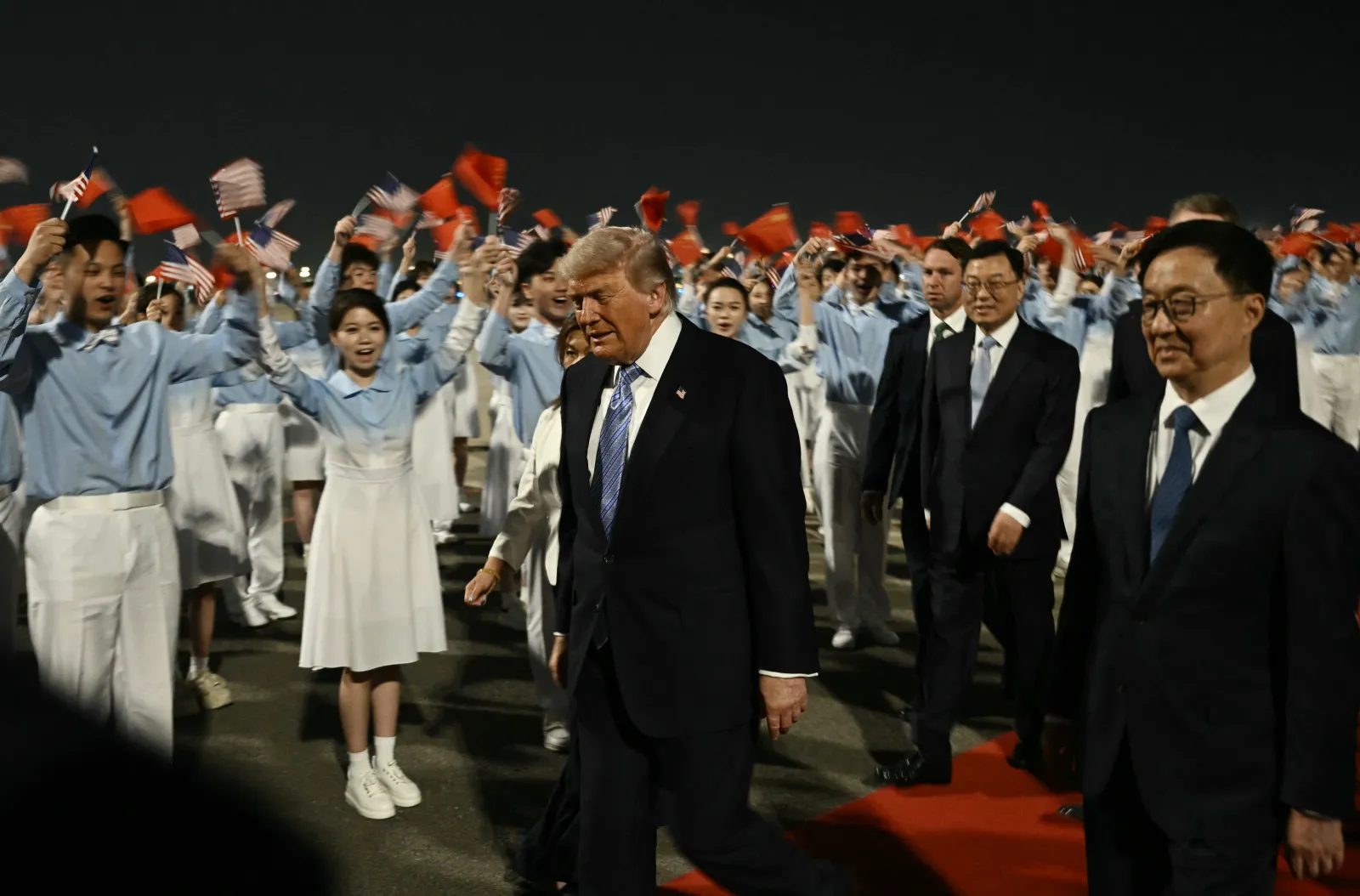
U.S. President Donald Trump's mission to China looks as much like a traveling sales show as a meeting between the world's top global powers, but selling America will be harder than the hype.
In part, that's because of China's protection for its markets, with Trump saying he will ask counterpart Xi Jinping to "open up" after a period of bad blood and retaliatory action stemming from the American president's tariff war aimed at cutting the U.S.'s trade deficit.
But there's also another significant obstacle: China is simply far ahead in making things when it comes to cost, process and often innovation. Its products can always compete on price and, in many cases, performance.
Trump may only get a flavor of the modern China from his motorcade without seeing the rapidly expanding high-speed railways, the latest advances in drones, batteries and solar panels, or the convenient apps to organize an entire life from a mobile phone.
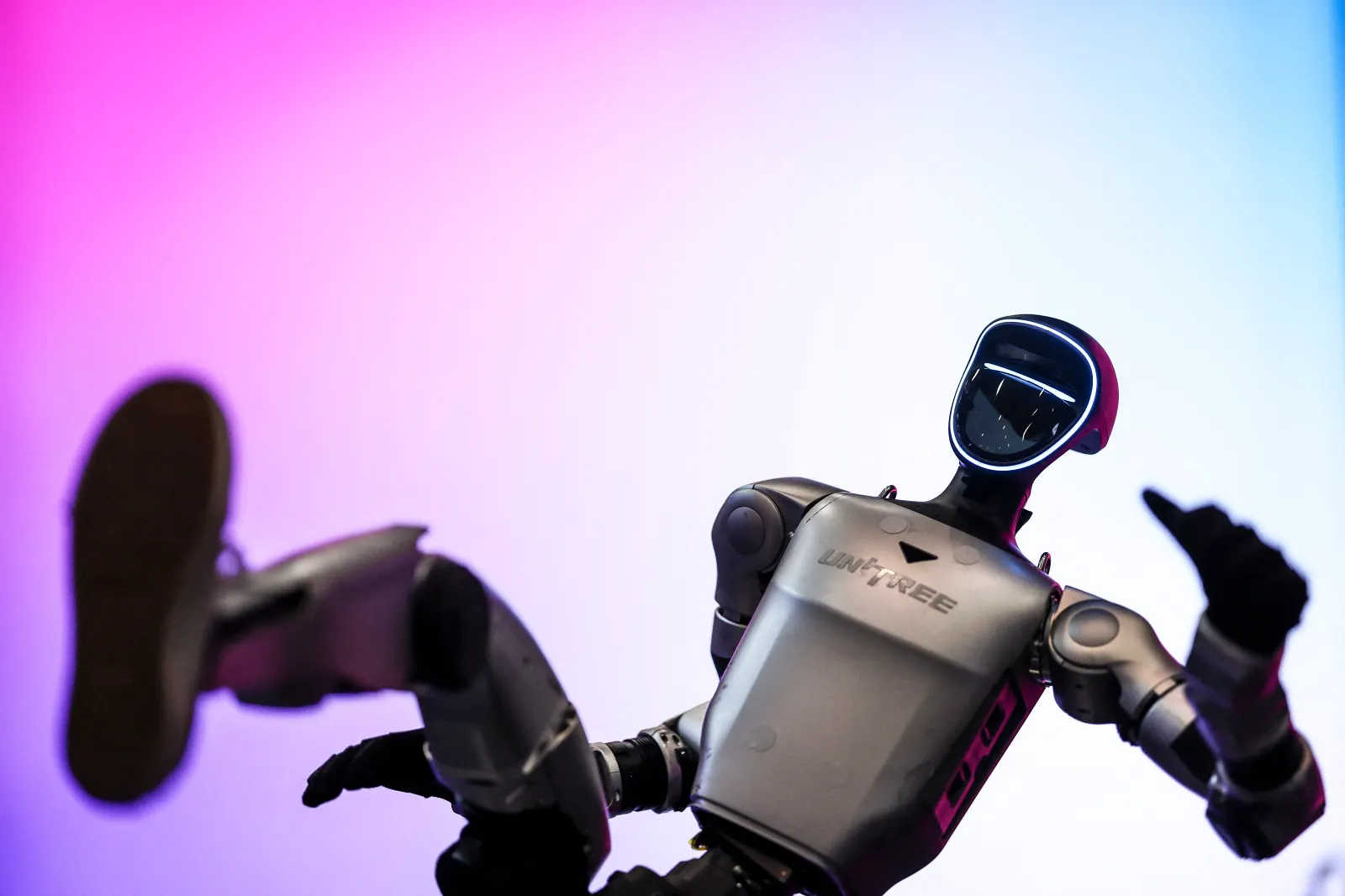
"China has the advantage of the strong supply chain," Yolanda Xie, a marketing manager at top humanoid-robot maker Unitree, told Newsweek at the company's headquarters in Hangzhou, China.
"For Unitree, the key components—such as joint models, LIDAR—these key components are designed and developed and manufactured by us. This not only can control the cost of the robot but also can increase the communication efficiency and guarantee the delivery of quality. And secondly, the talent in China is quite a lot as well."
Robots and EVs
Unitree humanoid robots are already for sale on Amazon in the United States for less than 18,000,anditsrobotdogsareevencheaper.EstimatesforthepriceoftheOptimusrobotfromElonMusk′sTeslarangefrom18,000, and its robot dogs are even cheaper. Estimates for the price of the Optimus robot from Elon Musk's Tesla range from 18,000,anditsrobotdogsareevencheaper.EstimatesforthepriceoftheOptimusrobotfromElonMusk′sTeslarangefrom20,000 to $30,000, according to the Standard Bots website. But Optimus has not been released, whereas Unitree is working on a new generation.
Musk, the world's richest man, is among the business leaders in Trump's delegation.
Tesla is a telling case in cooperation between a U.S. company and China since it builds vehicles there for both the domestic market and, increasingly, for export. Tesla has a strong reputation as a brand in China, where it's cheaper to build than in the United States, but its share of the local market fell to barely 3 percent in April, according to the CnEVPost website.
Tesla was overtaken last year by China's BYD as the world's largest electric-car maker, selling more than 2.25 million vehicles worldwide compared to 1.64 million for Musk's firm. Chinese state support has helped to lift the electric vehicle industry, but intense domestic competition has also forced innovation.
"They have been under pressure for many years," Yu Zhang, the managing director of Automotive Foresight, a vehicle consultancy in Shanghai, told Newsweek. "The margins are pretty low."
China is indisputably the world leader in electric vehicles now as it is in batteries, solar panels, windmills and other aspects of green technology. China controls over 70 percent of the world's commercial and consumer drone market.
Manufacturing Superpower
While the U.S. remains the world's greatest military superpower, China has long overtaken it in manufacturing. China accounts for some 28 percent of global manufacturing compared to 18 percent for the United States, something Trump very much wants to change to bring jobs back to the U.S..
American brands are evident in China, but under pressure. Apple's share of the Chinese handset market surged to 25 percent briefly last year with the iPhone17's launch—though iPhones are made in China, and now India, rather than the United States. Starbucks and KFC are widespread, though the coffee chain's market share has tumbled to local rivals.
American exports to China have also suffered self-inflicted damage, not least the restrictions imposed on exports of the latest microchips in a bid to slow China's tech development in the artificial intelligence race. That spurred China's own chip manufacturing.
"China's AI moves on with or without U.S. chips," Nvidia CEO Jensen Huang said recently. He is part of the delegation accompany Trump, whose approach tends to be more based on dealmaking than it does on any ideological commitment to a confrontation with the U.S.'s only global rival.
As with chips, the United States suspended some sales of critical aviation technologies to China last year, but that is only encouraging it to develop its own jet engines.
Aviation is one area where there is still potential for U.S. dealmaking, and the CEOs of both Boeing and GE are in the Trump delegation. Another important area is agriculture. Trump may well be happy to take pledges of increased Chinese imports of grains and meat that will look good for farmers back home, even if they are economically insignificant.
There's less chance of reward for the bankers and credit card companies on the team. China is already expanding its own payments system regionally and globally, and it doesn't show much readiness for opening. It's not clear what Meta's delegate can hope to get either after China blocked its acquisition of the Chinese-founded, Singapore-headquartered AI startup Manus, making clear AI is not an area of flexibility for China.
China's Poorer Side
There's one less evident reason American companies might find it hard to crack Chinese markets: While China's products are racing away, driven by hypercompetition and innovation, not all its people are doing well.
A side of China that Trump won't see is that of the shuttered shops and empty buildings beyond the major cities, victims of a lingering real estate bust. Nor will he meet the people who complain that the flagging economy has never regained its momentum since the coronavirus pandemic, the villagers selling handfuls of greens for pennies by the roadside or the youths who have decided to "let it rot" because they see no opportunity.
China recently downgraded its growth forecast to a range of 4.5 to 5 percent, the lowest since 1991. That figure might still seem impressive compared to U.S. estimates of 1.6 percent, but there remain doubts over how far it reflects reality.
Local vehicle sales are a key indicator here. Sales in April dropped more than a quarter from a year before. China's car exports, meanwhile, jumped almost 85 percent.
It points to an economy surviving on debt and dependent on what it can sell abroad. Chinese consumers are hardly well placed to buy a surge of American products when many of them are struggling to afford their own.