How Wildlife Is Exploited and What You Can Do | Issues | PETA (original) (raw)
As humans continue to develop natural areas, animals’ homes continue to disappear. And as animals search for food, water, shelter, and a place to raise their young, they’re often deemed “nuisances” or “pests” or said to be “overpopulated.” Each year, millions of them are killed because humans have taken over their living areas and don’t want them there. Canada geese, rabbits, raccoons, chipmunks, mice, rats, wasps, beavers, bats, snakes, ducks, prairie dogs, and pigeons are among the types of wildlife who most often suffer because of a perceived conflict with humans.
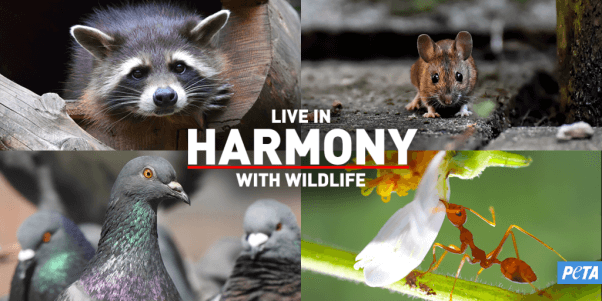
Animals ask for very little except for the opportunity to live in peace. But adding to their struggle to survive are hunters, who enjoy stalking and killing them even when they make their homes far away from cities. Hunters frequently victimize bears, coyotes, ducks, foxes, mountain lions, prairie dogs, deer, geese, and wolves. Anglers like to trick fish into biting on hooks that pierce their faces before pulling them out of the water and allowing them to suffocate. And trappers lay traps that slam shut on unsuspecting animals’ legs so that they can kill them for being a “nuisance” or for their fur.
Throughout our history, PETA has been advocating for wildlife as well as for all other abused and exploited animals, and we’ve achieved monumental victories. By informing homeowners and businesses how to escort mice and rats outdoors humanely, we’ve secured countless bans on indiscriminate glue traps. We’ve persuaded numerous outlets to use humane options instead of poisoning animals, gotten balloon releases replaced with events that don’t involve wildlife-killing plastic, had nets that were entangling birds removed, shut down illegal wildlife dealers, and succeeded in doing much, much more for animals.
Our Emergency Response Team has helped callers handle thousands of wildlife emergencies. Staffers have provided them with information on saving baby birds, helping turtles cross the road, humanely trapping raccoons and other small animals, rehabilitating and rescuing wildlife, and other common aspects of animal care and control.
We must learn to share the planet with animals. Here are some easy ways you can help make the world a kinder place for wildlife.
Helping Wildlife
- Rinse out recyclable jars and bottles and put the lids back on them so that the containers can’t become lodged on an animal’s head. Cut apart plastic six-pack rings, including the inner diamonds.
- Keep your trash inside tightly sealed containers.
- Putting an inexpensive cap on your chimney will keep birds, squirrels, and others from making their nests inside, preventing horrific deaths and saving you from spending time and money having them removed.
- Escort bugs outdoors with PETA’s Humane Bug Catcher. You can also use our Humane Smart Mousetrap to catch and relocate small animals and our Frogsaver Lily Pad to help them escape from your pool.
- Replace some hard-to-maintain grass areas in your yard with native plants and trees to provide wild animals with food sources and habitats.
- Keep cats indoors or on a screened porch to prevent them from killing wildlife (and to keep them safe, too).
- Choose Earth-friendly lawn-care methods. Pesticides and herbicides made of dangerous chemicals pollute the environment and poison animals’ food sources.