Group Therapy and Support Groups in Chicago, IL (original) (raw)
Support Groups in Chicago, IL
This group is for individuals who have or have had an eating disorder or disordered eating patterns and identify as being a member of the LGBTQ+ community. It is an opportunity to process day-to-day life as a queer person also working on recovery from an eating disorder/disordered eating. Participants are required to have an outpatient therapist and sign a release for group facilitator to connect with the individual therapist. Tuesday group is in person at 7pm and Thursdays are virtual at 7pm central time.
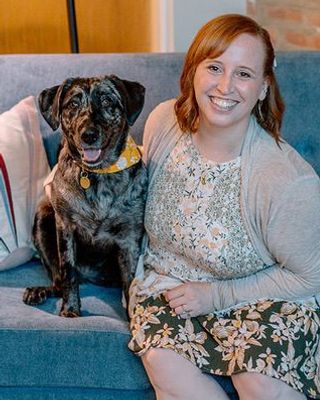
Hosted by Stephanie Kilper
Licensed Clinical Professional Counselor, LCPC, BC-DMT
This group is for individuals who have or have had an eating disorder or disordered eating patterns and identify as being a member of the LGBTQ+ community. It is an opportunity to process day-to-day life as a queer person also working on recovery from an eating disorder/disordered eating. Participants are required to have an outpatient therapist and sign a release for group facilitator to connect with the individual therapist. Tuesday group is in person at 7pm and Thursdays are virtual at 7pm central time.
This group is virtual and comprised of no more than seven fathers. It is a 6 week group centered on the barriers fathers face that impact positive, meaningful engagement with their children. The expectation is that fathers do the homework exercises which create a blue print for a better relationship with children and peel away internal & external stressors that impede progress.

Hosted by Jataun J Rollins
Clinical Social Work/Therapist, AM, LCSW
This group is virtual and comprised of no more than seven fathers. It is a 6 week group centered on the barriers fathers face that impact positive, meaningful engagement with their children. The expectation is that fathers do the homework exercises which create a blue print for a better relationship with children and peel away internal & external stressors that impede progress.
An 8-week processing group where experiences are enacted through LARP. Focus on communication and connections.
Hosted by Laura M Kiernan
Clinical Social Work/Therapist, LSW, JD
An 8-week processing group where experiences are enacted through LARP. Focus on communication and connections.
As a therapy and wholistic wellness center, we integrate evidence-based and trauma informed practices—somatic experiencing, art, music, dance/movement, yoga/mindful meditation, and creative writing—with clients to nurture and reconnect their minds and bodies in this disconnected world. Our priority is to be authentic, create a space for compassion, curiosity, creativity, challenge, and discovering what feeds your hearts. We are intentional in cultivating an inclusive space for intersecting identities—BIPOC (Black, Indigenous, and other people of color), multicultural, and biracial individuals, couples, and families and those who identify as LGBTQIA+ or non-binary.

Hosted by Michelle Ahmed
Marriage & Family Therapist, MS, LMFT
As a therapy and wholistic wellness center, we integrate evidence-based and trauma informed practices—somatic experiencing, art, music, dance/movement, yoga/mindful meditation, and creative writing—with clients to nurture and reconnect their minds and bodies in this disconnected world. Our priority is to be authentic, create a space for compassion, curiosity, creativity, challenge, and discovering what feeds your hearts. We are intentional in cultivating an inclusive space for intersecting identities—BIPOC (Black, Indigenous, and other people of color), multicultural, and biracial individuals, couples, and families and those who identify as LGBTQIA+ or non-binary.
This virtual 12-week group offers structured instruction and guided practice in core Dialectical Behavior Therapy (DBT) skills, including mindfulness, emotion regulation, distress tolerance, and interpersonal effectiveness. Participants will have the opportunity to learn and apply these techniques in real-life situations while connecting with others in a supportive, collaborative environment focused on building emotional balance and healthier relationships.

Hosted by Afsha Merchant
Pre-Licensed Professional, LPC
This virtual 12-week group offers structured instruction and guided practice in core Dialectical Behavior Therapy (DBT) skills, including mindfulness, emotion regulation, distress tolerance, and interpersonal effectiveness. Participants will have the opportunity to learn and apply these techniques in real-life situations while connecting with others in a supportive, collaborative environment focused on building emotional balance and healthier relationships.
Tides Mental Health offers therapy sessions in-person, online via telehealth, and offers a wide variety of days and times to accommodate all.
Hosted by Loretta Echols
Pre-Licensed Professional, LSW
Tides Mental Health offers therapy sessions in-person, online via telehealth, and offers a wide variety of days and times to accommodate all.
The Friends, Family, and Loved Ones Workshop is for individuals and families who are looking for more effective ways to support, guide, and validate loved ones struggling with Borderline Personality Disorder or problems with Emotional Dysregulation. Throughout the 2 day workshop you will: Learn to effectively validate yourself and your loved one, Improve your ability to communicate clearly and with compassion, Learn how to elicit support in crisis situations, Improve your understanding of your loved one’s behaviors and emotions, Learn the basics of Dialectical Behavior Therapy, Increase your understanding of BPD/ED on how it is maintained over time.

Hosted by Chicago Behavior Therapy
Psychologist, PsyD, DBT-LBC
The Friends, Family, and Loved Ones Workshop is for individuals and families who are looking for more effective ways to support, guide, and validate loved ones struggling with Borderline Personality Disorder or problems with Emotional Dysregulation. Throughout the 2 day workshop you will: Learn to effectively validate yourself and your loved one, Improve your ability to communicate clearly and with compassion, Learn how to elicit support in crisis situations, Improve your understanding of your loved one’s behaviors and emotions, Learn the basics of Dialectical Behavior Therapy, Increase your understanding of BPD/ED on how it is maintained over time.
This is an online training group for therapists interested in group dynamics includes discussion of cases and other professional issues, as well as experiential learning based on the psychodynamic processes that occur within the group. A group practice is not required to join. Please contact me for more information.

This is an online training group for therapists interested in group dynamics includes discussion of cases and other professional issues, as well as experiential learning based on the psychodynamic processes that occur within the group. A group practice is not required to join. Please contact me for more information.
Welcome to "Embrace and Thrive," a transformational group designed exclusively for teenagers seeking to enhance their social and emotional understanding of life. This empowering program offers a supportive and dynamic space where teens can develop essential tools for navigating their social interactions, managing emotions, and fostering healthy relationships. "Embrace and Thrive" equips teenagers with practical tools to navigate the complexities of their social worlds, and manage the pressure that comes from societal expectations, growing up, and fitting in.

Hosted by Adam Mills
Pre-Licensed Professional, PsyD
Welcome to "Embrace and Thrive," a transformational group designed exclusively for teenagers seeking to enhance their social and emotional understanding of life. This empowering program offers a supportive and dynamic space where teens can develop essential tools for navigating their social interactions, managing emotions, and fostering healthy relationships. "Embrace and Thrive" equips teenagers with practical tools to navigate the complexities of their social worlds, and manage the pressure that comes from societal expectations, growing up, and fitting in.
Utilizing the Open Studio Process, I offer creative process workshops and specialized groups. I originated the Create Space workshops to offer the Open Studio Process of process-oriented intuitive art making and reflective writing in a small group context. I also offer specialized creative process workshops for your staff or team.

Utilizing the Open Studio Process, I offer creative process workshops and specialized groups. I originated the Create Space workshops to offer the Open Studio Process of process-oriented intuitive art making and reflective writing in a small group context. I also offer specialized creative process workshops for your staff or team.
This group is for trauma survivors who have been in treatment with an individual therapist and would like to build a strong toolkit of skills to help with day-to-day emotional challenges. The group combines somatic psychotherapy, DBT and relational models and is designed to gradually increase participants' emotional and body-awareness skills so that they can feel a sense of control over their emotional and behavioral responses. The group is NOT a process group. It is psycho-educational and experiential. Participants will not be asked to discuss their trauma experience(s).

Hosted by Francine Kelley
Counselor, LCPC, SEP, LFYP, RYT500
This group is for trauma survivors who have been in treatment with an individual therapist and would like to build a strong toolkit of skills to help with day-to-day emotional challenges. The group combines somatic psychotherapy, DBT and relational models and is designed to gradually increase participants' emotional and body-awareness skills so that they can feel a sense of control over their emotional and behavioral responses. The group is NOT a process group. It is psycho-educational and experiential. Participants will not be asked to discuss their trauma experience(s).
Are you struggling with losing a beloved furry friend/companion/animal assistant? Losing a pet can be one of the most heart-wrenching experiences in life. At St Pauls, we understand the deep bond you shared with your beloved pet/family member, and we're here to offer support, understanding, and a virtual shoulder to lean on. Join Dr. Nancy Curotto from Pet Loss Psychotherapy for a 1-hour virtual support group. Click the link to register for the virtual support group. tinyurl.com/healing-hearts-support.
Hosted by Nancy Curotto, Psy.D. LLC/ Pet Loss Psychotherapy
Are you struggling with losing a beloved furry friend/companion/animal assistant? Losing a pet can be one of the most heart-wrenching experiences in life. At St Pauls, we understand the deep bond you shared with your beloved pet/family member, and we're here to offer support, understanding, and a virtual shoulder to lean on. Join Dr. Nancy Curotto from Pet Loss Psychotherapy for a 1-hour virtual support group. Click the link to register for the virtual support group. tinyurl.com/healing-hearts-support.
This is an 8-week virtual Acceptance & Commitment Therapy (ACT) group focused on teaching individuals mind-body strategies, as well as providing support to better manage chronic pain. Participants can expect to learn strategies that can assist them in increasing activity and function without necessarily eliminating their pain. Sample skills taught include: strategies for accepting chronic pain, mindfulness based techniques, exploration of values, and methods for taking committed action to help decrease pain suffering while increasing agency in ones’ life.

This is an 8-week virtual Acceptance & Commitment Therapy (ACT) group focused on teaching individuals mind-body strategies, as well as providing support to better manage chronic pain. Participants can expect to learn strategies that can assist them in increasing activity and function without necessarily eliminating their pain. Sample skills taught include: strategies for accepting chronic pain, mindfulness based techniques, exploration of values, and methods for taking committed action to help decrease pain suffering while increasing agency in ones’ life.
CORE welcomes men & women between the ages of 18 - 65 to join us in an ongoing relationship process group. This group focuses on building awareness within yourself and helping others do the same. Explore your relationships, and enhance your interpersonal skills.

CORE welcomes men & women between the ages of 18 - 65 to join us in an ongoing relationship process group. This group focuses on building awareness within yourself and helping others do the same. Explore your relationships, and enhance your interpersonal skills.
What Would Queer Jesus Do™ is a peer support group designed to build community for BIPOC folks and white allies who are LGBTQ+ and were raised in Christianity. Whether your connection to Christianity is severed, intact, or something in between, WWQJD™ is a space to explore what faith and spirituality can look like when allowed to be truly inclusive and expansive, coming back to the question “What would a Queer Jesus do?” Through peer support, storytelling, and a liberation lens, WWQJD™ aims to foster trust and curious exploration within a community-minded setting for group members.

Hosted by Leanette Pokuwaah
What Would Queer Jesus Do™ is a peer support group designed to build community for BIPOC folks and white allies who are LGBTQ+ and were raised in Christianity. Whether your connection to Christianity is severed, intact, or something in between, WWQJD™ is a space to explore what faith and spirituality can look like when allowed to be truly inclusive and expansive, coming back to the question “What would a Queer Jesus do?” Through peer support, storytelling, and a liberation lens, WWQJD™ aims to foster trust and curious exploration within a community-minded setting for group members.
At InPowered Therapy we hold a deep sense of our shared humanity at the heart of the work we do. We believe everyone is the expert on themselves and that we all have the power to change, heal, and grow within us, we just need to learn how to connect with it. Our job is to support, empower, and guide you to that space with(IN) yourSELF that is inherently able to grow, heal and change.

Hosted by InPowered Therapy + Yoga
At InPowered Therapy we hold a deep sense of our shared humanity at the heart of the work we do. We believe everyone is the expert on themselves and that we all have the power to change, heal, and grow within us, we just need to learn how to connect with it. Our job is to support, empower, and guide you to that space with(IN) yourSELF that is inherently able to grow, heal and change.
Luminary Solutions will help you discover that leading light that shines from deep within; your true self. Everyone is on a unique journey and through our therapeutic process, We will assist you in uncovering the path to a deeper, more fulfilling life.

Hosted by Cassidy Karlin
Pre-Licensed Professional, IFS, Trauma
Luminary Solutions will help you discover that leading light that shines from deep within; your true self. Everyone is on a unique journey and through our therapeutic process, We will assist you in uncovering the path to a deeper, more fulfilling life.
Making the decision to seek counseling services can be difficult and also worthwhile. The welcoming staff at Clarity Clinic is ready to pair you and your loved ones with skilled and supportive professionals that will empower you to reach your personal goals as well as a balanced lifestyle.

Making the decision to seek counseling services can be difficult and also worthwhile. The welcoming staff at Clarity Clinic is ready to pair you and your loved ones with skilled and supportive professionals that will empower you to reach your personal goals as well as a balanced lifestyle.
Through the Waves is a guided 6-week grief & loss support group for adults ages 18+ navigating grief and loss. Together, we’ll explore how to stay present through pain, build tools for emotional grounding, and find connection in shared experience. NOTE:Those experiencing perinatal loss, acute crisis, active suicidal ideation, or untreated severe mental illness may be referred to individual therapy or specialized care prior to joining the group.

Hosted by Elisa Brennecke
Through the Waves is a guided 6-week grief & loss support group for adults ages 18+ navigating grief and loss. Together, we’ll explore how to stay present through pain, build tools for emotional grounding, and find connection in shared experience. NOTE:Those experiencing perinatal loss, acute crisis, active suicidal ideation, or untreated severe mental illness may be referred to individual therapy or specialized care prior to joining the group.
Children's Advocate Social skills groups are small groups (typically two to ten participants) led by an adult who teaches & counsels the kids how to interact appropriately with others. They can also be useful in teaching kids to control their emotions, trauma focused and understand other people's perspectives.

Hosted by Children\'s Advocate LLC
Children's Advocate Social skills groups are small groups (typically two to ten participants) led by an adult who teaches & counsels the kids how to interact appropriately with others. They can also be useful in teaching kids to control their emotions, trauma focused and understand other people's perspectives.
See more therapy options for Chicago
FAQs - About Group Therapy and Support Groups
How can I find a support group in Chicago?
To find a support group in your area, start by entering your city, zip code, or the name of the group into the search bar at the top of the page. When searching, consider whether you prefer an in-person or virtual group. This can help you decide how broad your geographic search should be. If you are open to virtual groups, you might want to search by state instead of just your city, especially if there are limited options nearby.
Once you complete your search, you can use the filters to narrow the results by selecting specialties (such as grief, trauma, or eating disorders), therapeutic approaches, age groups, and other criteria to find a group that best fits your needs.
How does group therapy work?
Group therapy is led by one or more trained therapists and provides a space where participants can process their experiences and learn from others facing similar challenges. Groups may focus on a specific issue—such as addiction, grief, physical illnesses, parenting, or caregiving—or they may center around a particular therapeutic approach, such as Cognitive Behavioral Therapy (CBT), social skill development, or Exposure Therapy. Some groups are also designed for specific populations, such as teens, veterans, or LGBTQ+ individuals.
It’s also important to distinguish group therapy from peer-led support groups, like Alcoholics Anonymous. While both can offer valuable support, therapy groups are typically led by licensed professionals and follow a more structured format. Therapy groups often meet for a fixed length of time with a consistent group of members, while many peer support groups meet for an indefinite period of time with members coming and going.
What are the benefits of group therapy?
Group therapy offers several important benefits. It brings together people facing similar challenges—whether related to mental health, physical health, or life transitions—and creates a supportive environment where participants can exchange feedback, share experiences, and learn from one another. Hearing different perspectives can help individuals discover new coping strategies and practical tools they may not have encountered on their own. Sharing personal experiences, such as coping with a serious illness or navigating family struggles, can also reduce feelings of isolation and foster a sense of connection and understanding. In addition to emotional support, group members often gain useful, real-world advice from peers who have faced similar situations.
Group therapy is typically more affordable than individual therapy and, for certain conditions, can be equally effective. Many groups also include structured activities—such as guided journaling, cognitive-behavioral exercises, or role-playing—to help participants develop concrete skills they can apply in daily life.
Is group therapy as effective as individual therapy?
It is difficult to make a blanket statement about the effectiveness of support groups, as they vary widely in focus and the conditions they address. However, support groups can be highly valuable in helping individuals gain emotional support and achieve meaningful treatment outcomes. For certain conditions, such as substance use, research has shown that group therapy can be particularly effective—sometimes just as effective as individual therapy—in supporting long-term recovery.
Many professionals attribute the effectiveness of group therapy to the unique benefits of the group setting, which fosters peer-to-peer learning and a sense of connection through shared experiences. Group settings also offer accountability and encouragement from both facilitators and fellow participants, which helps sustain motivation and supports continued progress. These factors together play a key role in promoting the overall effectiveness of group therapy.
How much does group therapy cost?
Group therapy is typically less expensive than individual therapy, with sessions typically costing between 50and50 and 50and75 each. In comparison, individual therapy can cost anywhere from 100to100 to 100to200 or more per session, even with insurance. Some therapists or organizations offer low-cost or free group therapy options, particularly through community centers or nonprofit organizations. In some cases, groups may require payment upfront for a set number of sessions, such as paying for six weekly sessions at the first meeting. However, many providers offer payment plans to help make participation more accessible if this upfront payment is required.
Does insurance cover group therapy?
As with individual therapy, insurance coverage for group therapy varies based on factors such as your specific insurance plan, the purpose of the group, your diagnosis, and whether the group provider is in-network. Many insurance plans cover group therapy sessions that address diagnosable mental health conditions, such as substance use disorders, anxiety, or depression.
However, groups that focus on topics not directly tied to a mental health diagnosis—such as parenting support or divorce recovery—are less likely to be covered. Because coverage can vary widely, it’s important to check with your insurance provider before joining a group to confirm whether the sessions will be covered and what out-of-pocket costs you may be responsible for.
How long does group therapy last?
The length of each group therapy session typically ranges from 45 minutes to two hours, depending on the therapy approach, the group’s goals, and how often the group meets. In some cases, group therapy is part of a larger treatment program, such as an Intensive Outpatient Program (IOP), where group sessions complement individual therapy and are scheduled as part of the program’s overall structure.
The duration of participation in a group also varies. Some groups are designed to be short-term, lasting anywhere from 6 to 24 weeks—for example, bereavement groups or skills-based groups like those using Dialectical Behavioral Therapy (DBT). Other groups may be longer-term, lasting a year or more, and some ongoing support groups meet indefinitely, allowing participants to stay as long as they find the group helpful.
What are the limitations of support groups?
Support groups offer many benefits, but they also have certain limitations. Unlike therapy groups, many support groups do not provide formal therapeutic treatment and are not led by licensed mental health professionals. For individuals seeking clinical treatment for specific mental health diagnoses—such as depression, eating disorders, or substance use—individual therapy or group therapy led by a licensed professional may offer more personalized and specialized care.
The effectiveness of a support group also depends heavily on the group’s participants and the overall group dynamic. When members engage respectfully and offer constructive support, the group can foster valuable peer-to-peer learning. However, if certain participants dominate discussions, provide inaccurate advice, or create conflict, it can disrupt the group’s sense of safety and reduce its effectiveness. Confidentiality can also be harder to maintain in support groups, particularly in open groups where participants can join or leave at any time. With new members regularly entering the group, it can be more difficult to build and sustain a consistent sense of trust and privacy.