Purdue CRANS (original) (raw)
Purdue's Center for Radiological and Nuclear Security
Protecting the Nation's nuclear assets through analysis, simulation, and action.
Research Areas
- Preventing the use of nuclear or radiological materials or devises for malicious purposes
- Reducing the opportunities for malicious use of potential threat materials through security or replacement
- Mitigating and minimizing the consequences of radiological or nuclear incidents
- Developing detection technologies and systems for nuclear security
Our Mission
To advance learning, discovery, and engagement in the security of nuclear and radiological materials and in the reduction of nuclear and radiological threats for the purpose of protecting human health and the environment.
Conceived of in 2016 and officially created in 2018, the Purdue University Center for Radiological and Nuclear Security (CRANS) is a joint center based in the School of Health Sciences with heavy participation from the School of Nuclear Engineering, the Department of Political Sciences, the History Department and the School of Materials Science and Engineering. CRANS looks to sustain efforts in nuclear security, particularly through teaching and mentoring students, in an effort to combat the eroding population of skilled personnel in the field. CRANS strives to mentor and train new personnel through new course offerings and research.
News
CRANS Conference on Active Non-Proliferation
Drs. Jason Harris and Robert Bean helped organize a conference on Active Non-Proliferation.
CRANS is officially recognized as a University Center
The Center for Radiological and Nuclear Security has been officially recognized as a university center at Purdue University
Faculty

Jason Harris, PhD
Director
School of Health Sciences
Professor Harris' research focuses on nuclear security, risk assessment and nuclear security culture, as well as radiation detection for safeguards, reactor and accelerator applications.
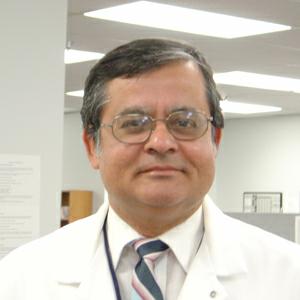
Rusi Taleyarkhan, PhD
School of Nuclear Engineering
Professor Taleyarkhan's ongoing research pertains to neutron, alpha and fission signature monitoring in spent nuclear fuel reprocessing, nuclear reactor facilities, international safeguards and cargo and vehicle scanning.
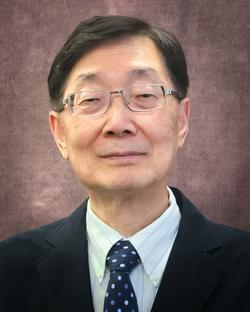
Chan Choi, PhD
School of Nuclear Engineering
Professor Choi's research is funded by the CNEC grant from the National Nuclear Security Administration.

Keith Shimko, PhD
Department of Political Science
Professor Shimko focuses on research arms control, nuclear nonproliferation, and modern weapons.
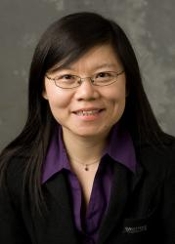
Linda Nie, PhD
School of Health Sciences
Professor Nie is an expert in nuclear instrumentation, nuclear physics and its relationship with environment management, and radiation emergency management.
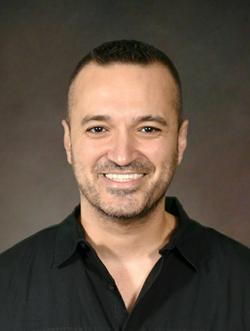
Hany Abdel-Khalik, PhD
School of Nuclear Engineering
Professor Abdel-Khalik focuses on the cargo interrogation problem, data mining, cyber security of nuclear reactors, and signature identification.

Robert Bean, PhD
School of Nuclear Engineering
Professor Bean is researching improved radiation detection and is currently funded under an NRC Faculty Development Grant.

Janelle Wharry, PhD
School of Nuclear Engineering
Professor Wharry is researching irradiation effects in the Ti02 material and nuclear fuels.

Maria Okuniewski, PhD
School of Materials Science and Engineering
Professor Okuniewski is research radiation damage in structural materials and nuclear fuels, with a goal of developing nonproliferation and accident tolerant fuels.

Mary Mitchell, PhD
Department of History
Professor Mitchell works on researching and chronicling the history of nuclear nonproliferation and broadly of science and technology.
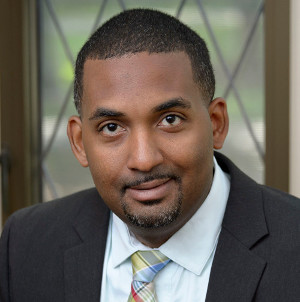
Dwaine Jengelley, PhD
Department of Political Science
Professor Jengelley is focusing on terrorism and counter-terrorism, specifically terrorism using or relating to weapons of mass destruction.
Students

Rane Shraddha
Continuing PhD Student
School of Health Sciences
Development of a Nuclear Security Potential Risk Model for Radiological Facilities
Marcia Robinson
Continuing MS Student
School of Health Sciences
Nuclear Security Culture Assessment at Universities
Emily Bragers
Continuing MS Student
School of Health Sciences
Active Interrogation Dosimetry of Low Energy Nuclear Reactions
Nathan Boyle
Continuing PhD Student
School of Nuclear Engineering
Optimization of tensioned metastable fluid detection systems for passive interrogation of SNMs
Mitchell Hemesath
Continuing MS Student
School of Nuclear Engineering
Alpha spectroscopy based monitoring of actinides in the environment and critical nuclear security facilities
Yeni Li
Continuing PhD Student
School of Nuclear Engineering
Cyber physical defense for digitally controlled industrial processes (nuclear power)
Arvind Sundaram
Continuing PhD Student
School of Nuclear Engineering
Cyber physical defense for digitally controlled industrial processes (nuclear power)
Gyuchul Park
Continuing PhD Student
School of Materials Science and Engineering
Low Fluence Neutron Irradiation Effects in Uranium Molybdenum Fuel
Alejandro Figueroa
Continuing PhD Student
School of Materials Science and Engineering
Nanobubble Lattice Organization and Recrystallization in Uranium Molybdenum Fuel
Amrita Sen
Continuing PhD Student
School of Nuclear and Engineering
Irradiation Induced Chemistry Evolution in Thorium-Bearing Oxide and Metallic Nuclear Fuels
Recent and Selected Publications
Publications
Courses
CRANS has created an educational program related to nuclear security including existing course with cirricula already pertinent, and new courses to expand the education of students interested in nuclear security. These additional courses, called NSE courses, build on top of the related courses, shown below.