What Is Organic SEO? And How to Get Started in 2025 (original) (raw)
What Is Organic SEO?
Organic search engine optimization (SEO) is the process of optimizing a website so it appears higher in search engine results pages (SERPs) without paying for ads.
Paid search results are ads that appear at the top of SERPs and require payment for each click.
Websites with high-ranking pages attract organic traffic, which means people find those pages naturally through search engines.
For instance, a lending company might create high-quality, relevant content that ranks for "personal loans" and gain potential customers. Without paying for each click.
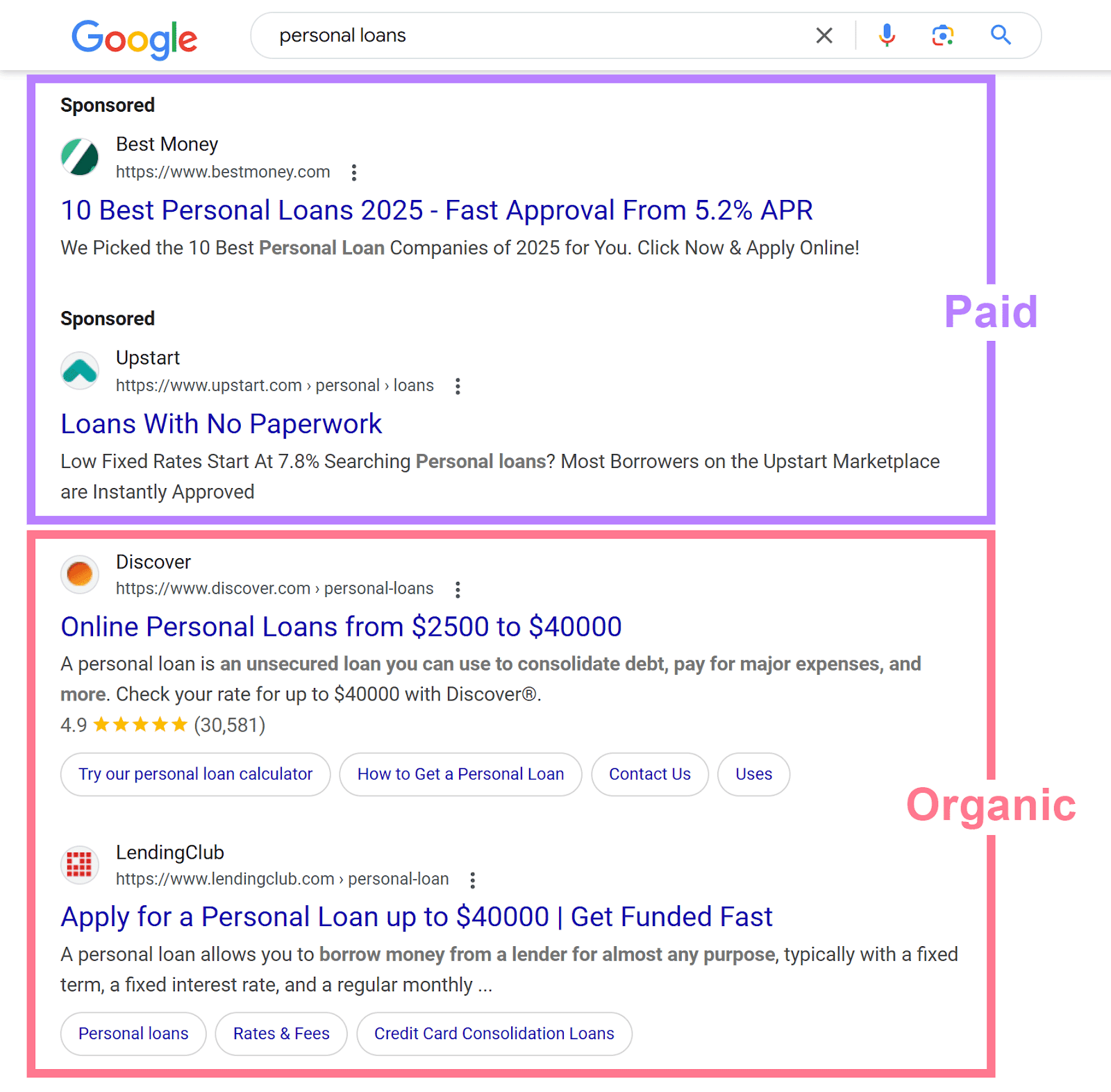
Organic SEO provides long-term visibility. But paid ads stop appearing once the budget runs out.
Further reading : Organic vs. Paid Marketing: What Are the Differences?
A strong organic SEO strategy that helps websites rank higher and attract more visitors includes:
- Keyword research: Identify the search queries (known as keywords) your target audience uses
- Content creation: Write high-quality, relevant content based on those keywords
- On-page optimization: Use keywords strategically in titles, headings, etc.
- Link building: Earn backlinks (links from other websites pointing to yours) from reputable websites to build credibility
- Technical SEO: Improve site speed, mobile-friendliness, and security to improve user experience
You’ll learn more about these elements later in this guide.
Why Is Organic SEO Important?
Organic SEO is important because it allows websites to appear in Google search results without paying for ads. And the top organic results get a lot of attention.

Our 2023 State of Search study found that the top three results have significantly higher click-through rates (CTRs) than lower results. On mobile, position 1 sees a 22% CTR, position 2 sees a 13% CTR, and position 3 sees a 10% CTR.
And the users who click through may be more likely to become customers.
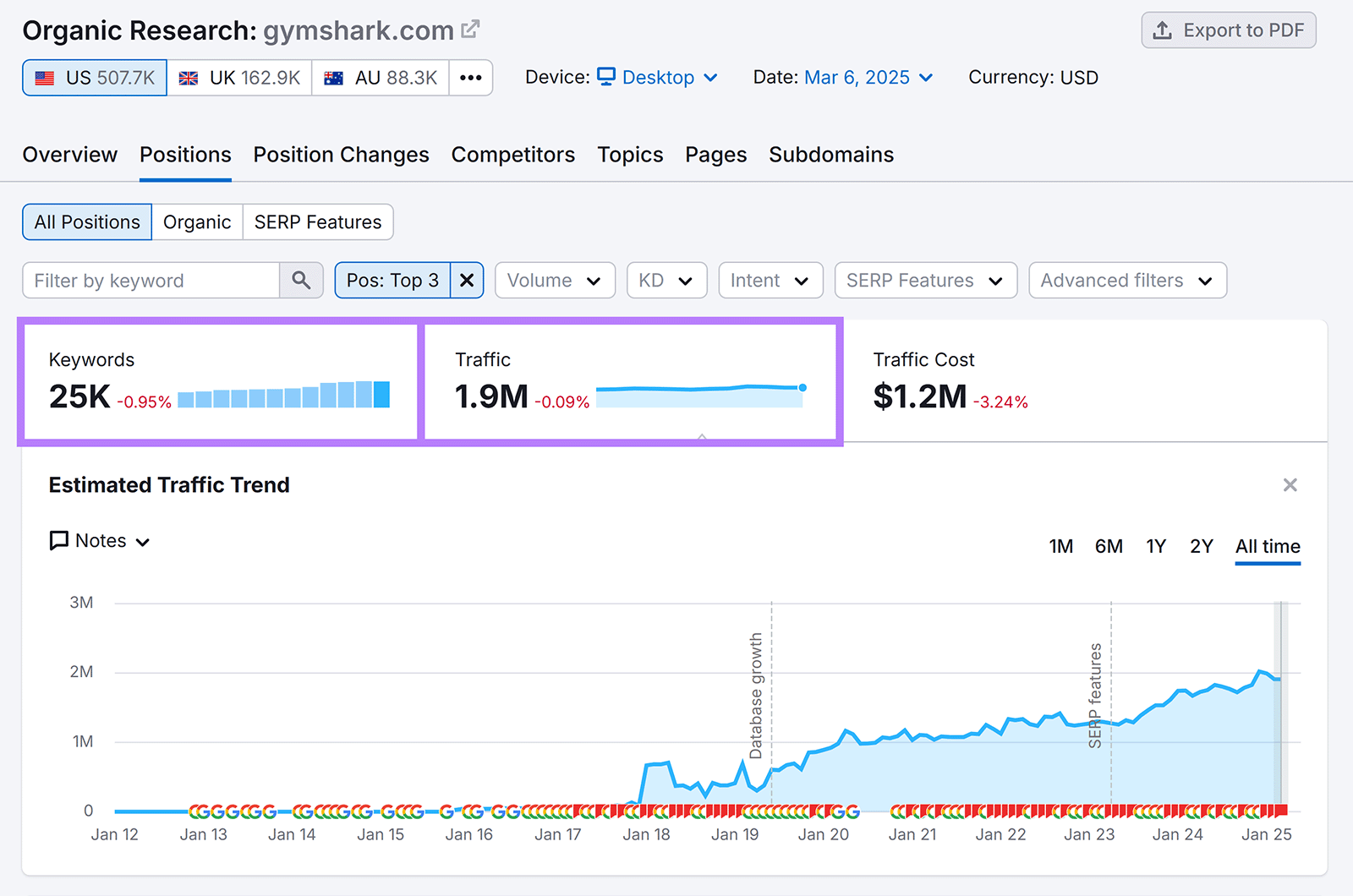
For example, apparel brand Gymshark attracts nearly 2 million monthly visitors from the 25,000+ search terms it ranks for, according to Semrush’s Organic Rankings tool:
Other key benefits of Organic SEO include:
- Brand visibility: Ranking on the first page—especially in the top three positions—increases brand recognition
- Credibility and trust: Many people trust organic results more than paid ads
- Qualified leads: People searching for topics related to specific products or services are already interested in what you offer, making them more likely to convert into customers
- Sustainable traffic: Unlike paid ads, which stop showing when your budget runs out, organic SEO continues to drive traffic after you earn a high ranking
- Long-term ROI: Although organic SEO takes time to build, it often results in higher conversion rates and a stronger return on investment (ROI) than other marketing channels
How Does Organic SEO Work?
Google wants to provide the best, most relevant answer to users. It considers many ranking factors to decide which pages should appear at the top of SERPs.
Although Google doesn’t disclose the exact workings of its search algorithm, it does share key factors, including:
- Text relevance: Content should match what users are searching for by using relevant terms
- Content quality: Content should be helpful, original, accurate, and well-structured
- Website authority: Pages with credible backlinks (links from other websites to yours) tend to rank higher
- Usability: Pages should be mobile-friendly, quick to load, and easy to navigate
How to Optimize Your Website for Organic SEO
Many businesses hire SEO professionals or agencies to handle organic SEO, so consider researching average SEO costs to get an idea of what to expect.
Or, get started on your own by following the below steps.
Do Keyword Research
Keyword research is the process of finding the words and phrases (keywords) people type into Google when searching for information, products, or services.
Using the right keywords helps your pages appear in SERPs when people look for topics related to your business.
If your page matches a search query, Google sees it as relevant and is more likely to rank it higher.
Start by brainstorming broad topics related to your business. For example, if you run a fitness blog, broad topics could include "workout plans," "healthy eating," and "weight loss tips."
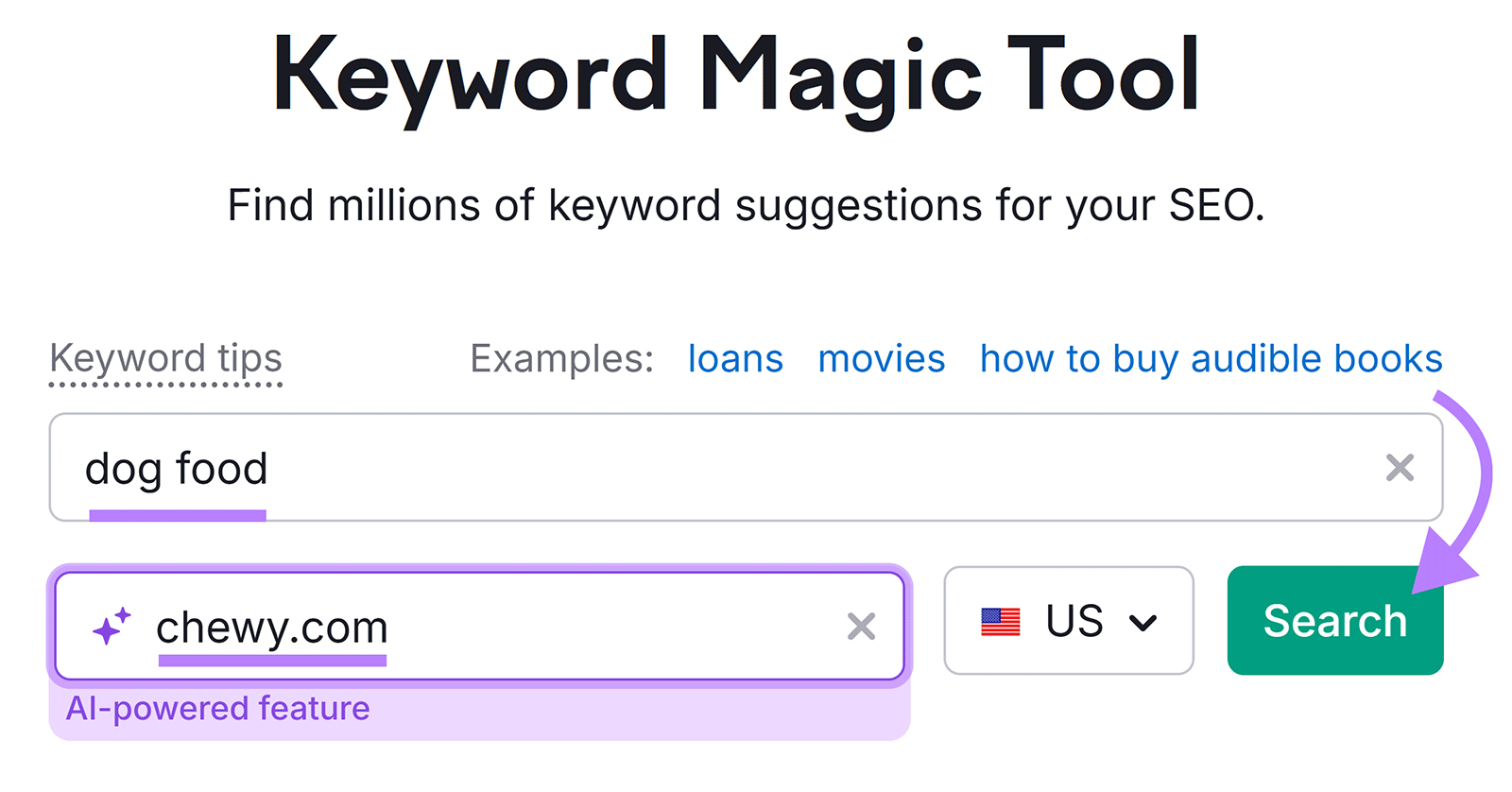
Semrush’s Keyword Magic Tool helps you find popular search terms, see how many people search for them (search volume), and understand how hard they are to rank for (keyword difficulty).
Enter a seed keyword (a broad term related to your topic) and your website. Next, select your target location and click “Search.”
The tool will generate many—in this case, hundreds of thousands—of keyword ideas.
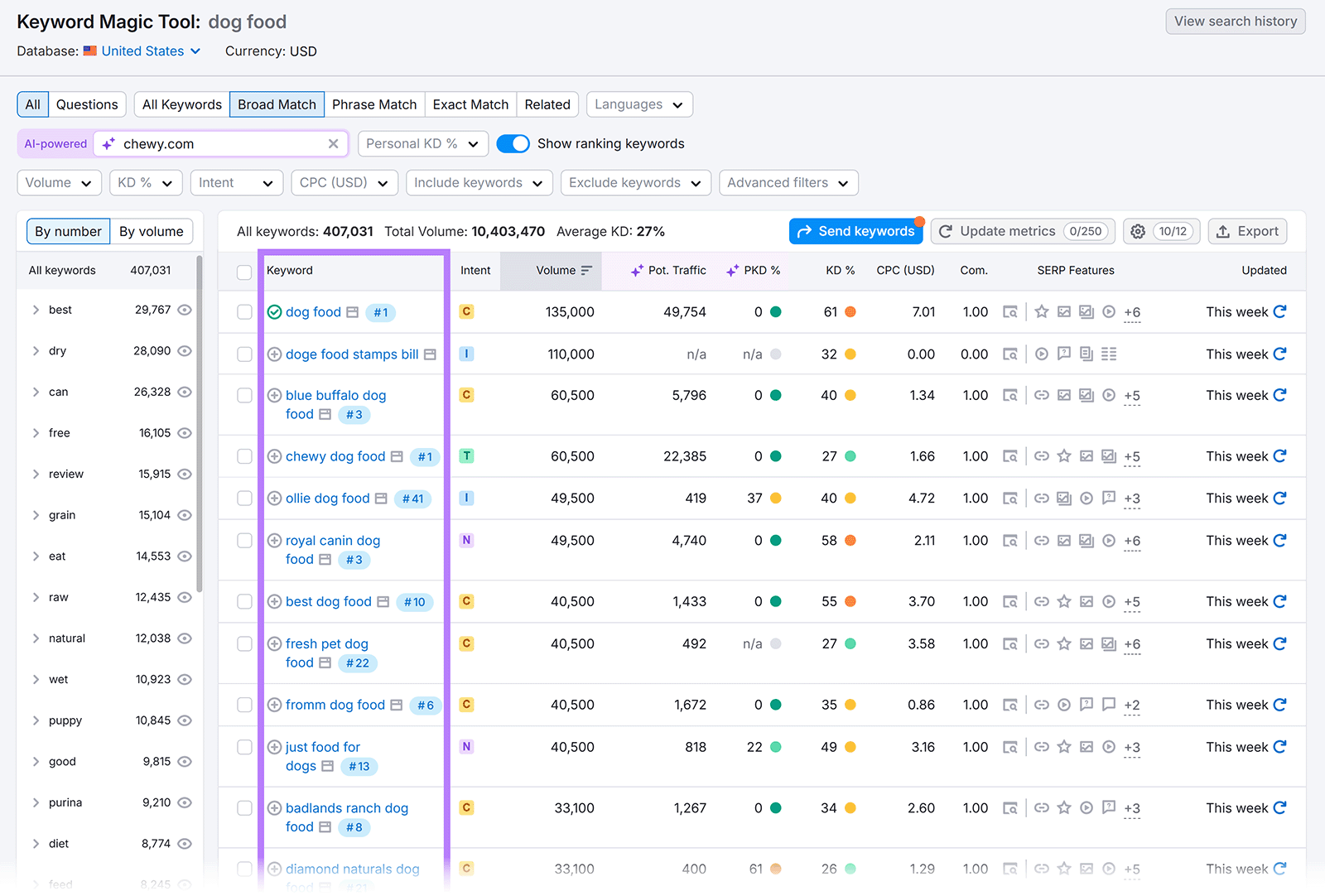
Pay attention to the following metrics as you review terms:
- Search volume: The estimated average number of monthly searches for a term. High volume suggests higher potential search traffic.
- Keyword difficulty: How hard it will be to rank for a term. A higher number indicates more effort is needed to rank.
If your website is new, focus on keywords with lower keyword difficulty scores to gain initial traction. As you build backlinks over time (which are extremely important for ranking), you can target more competitive terms.
Create Quality Content
Google prioritizes helpful, reliable, and people-first content rather than pages created just to rank.
The first step in creating quality content is to understand search intent (the reason for the search).
Are searchers trying to learn, compare options, find a particular page, or buy?
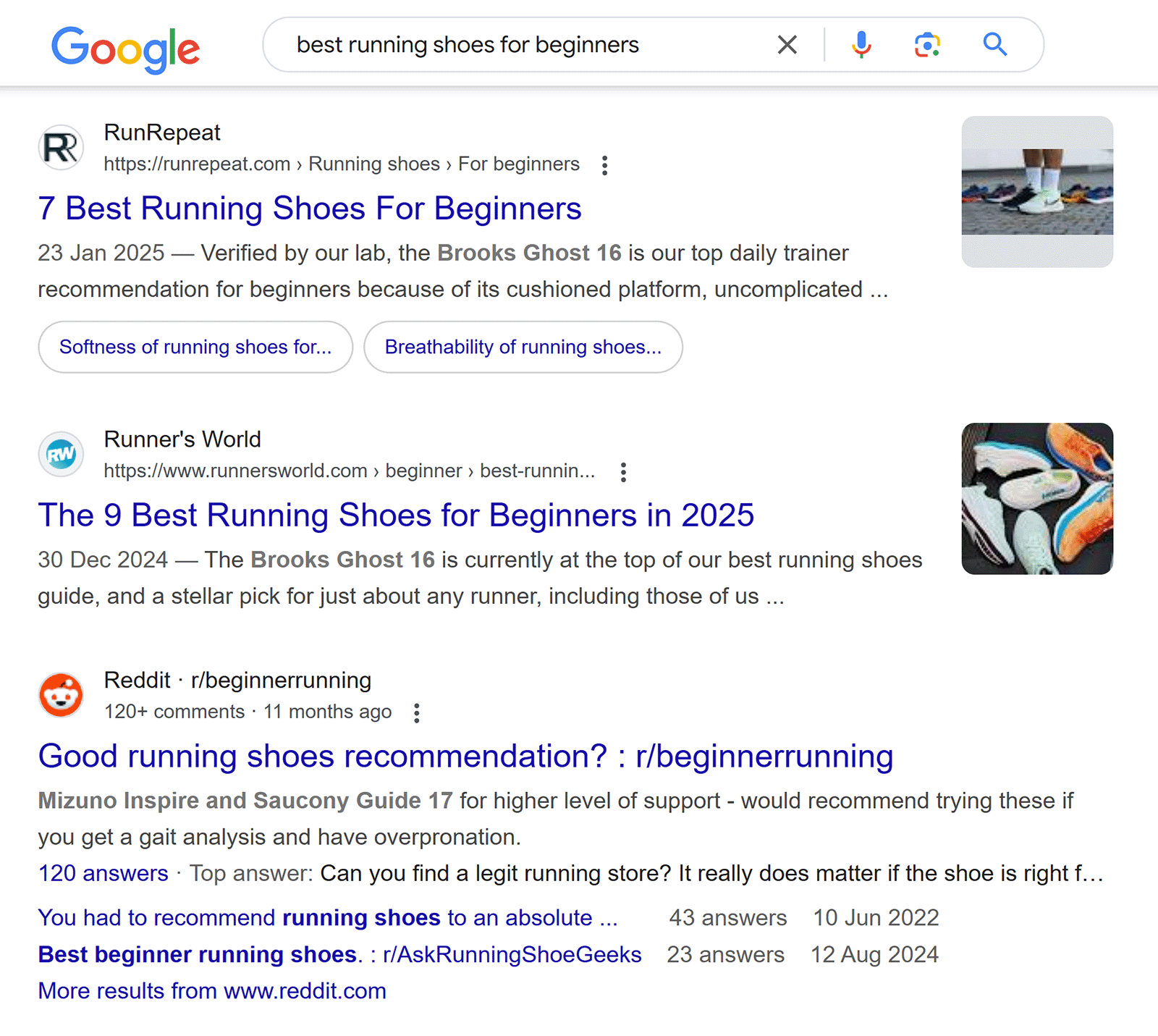
For example, someone searching for "best running shoes for beginners" wouldn’t want results about dress shoes or sandals. They’d expect search results specifically about running shoes for new runners.
Like this:
Review the top-ranking results for a keyword to confirm its intent.
In the Keyword Magic Tool, click the icon to see what types of pages are ranking.
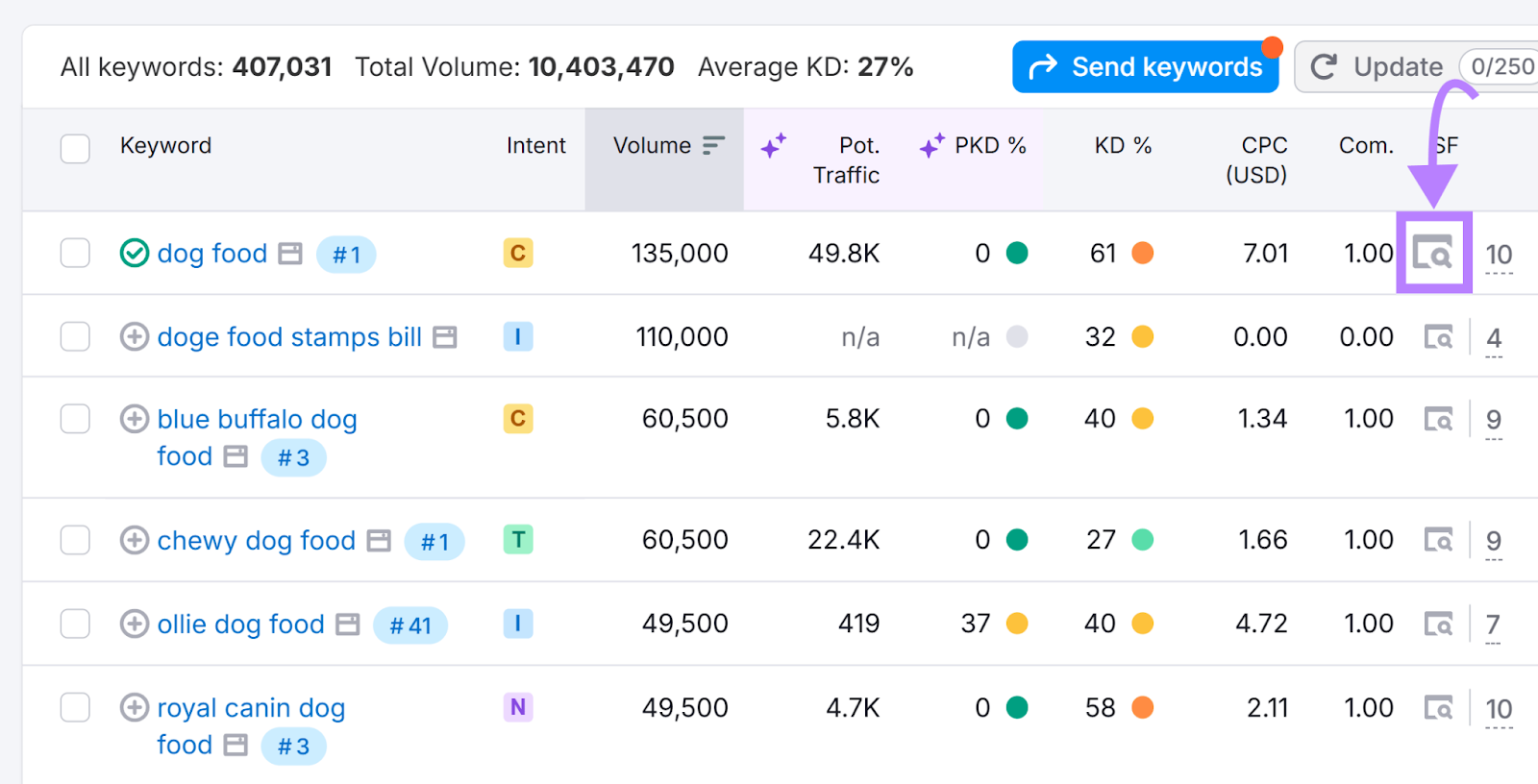
For example, a pet store might want to focus on the term "best dog food” for a category page.
However, if all the top search results are review round-ups from industry publications, this suggests that searchers actually want informational content. Making it difficult for a category page to rank well.
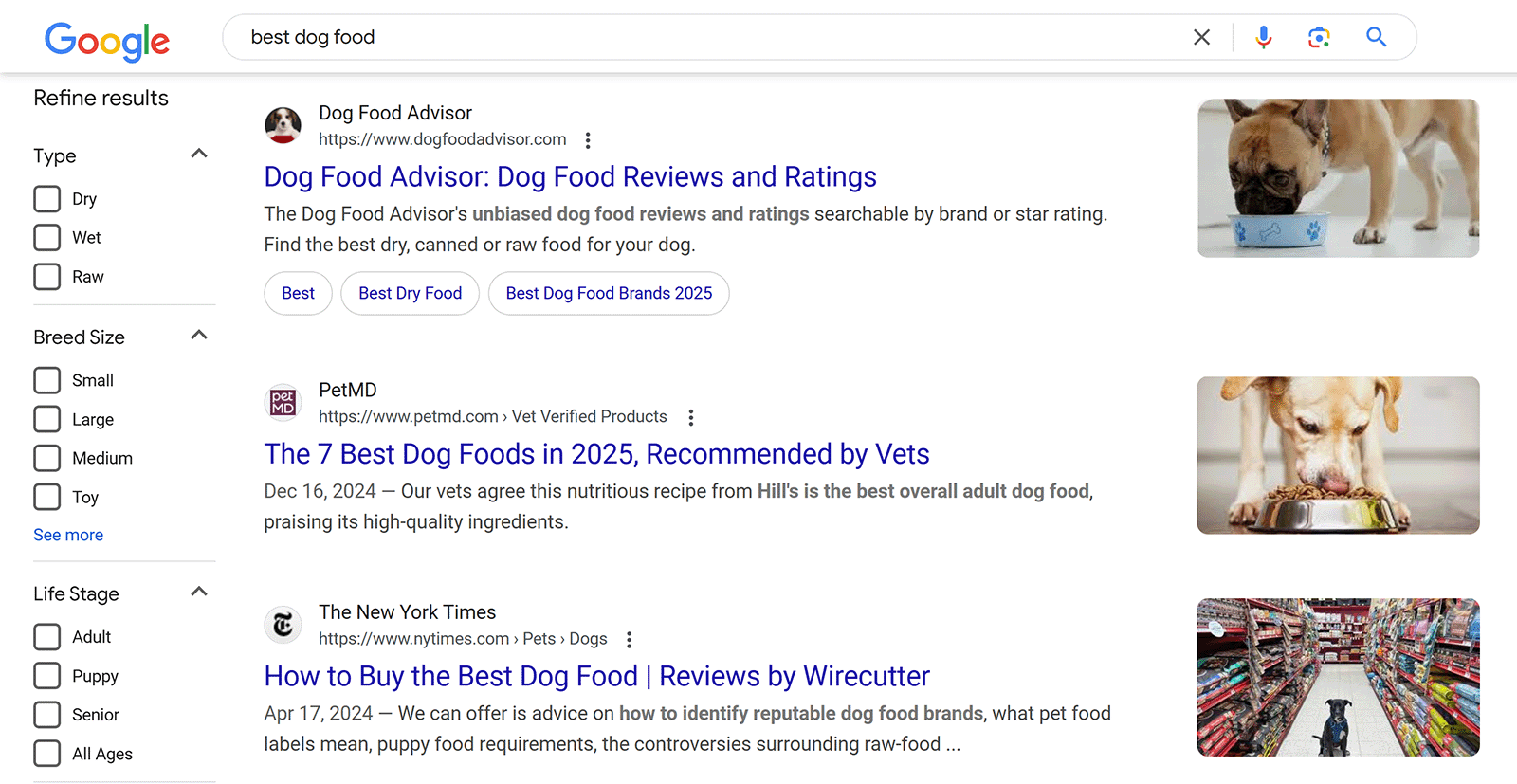
That suggests they could use the term "best dog food” to create a blog post. And then find an appropriate term with commercial intent for the category page.
Next, focus on the page’s quality.
According to Google’s guidelines, quality content should be:
- Helpful and informative: Thoroughly answer the user’s query and provide real value
- Original: Offer fresh insights, expert opinions, or new research
- Accurate and trustworthy: Use credible sources and ensure the content is free of factual errors
- Well-structured and readable: Use clear headings, bullet points, and other formatting elements
- User-focused: Make sure pages load quickly, are mobile-friendly, and avoid intrusive ads and distractions
There’s no single way to measure content quality. But high-quality content should align with your brand’s voice, meet audience needs, and enhance your reputation and authority within your industry.
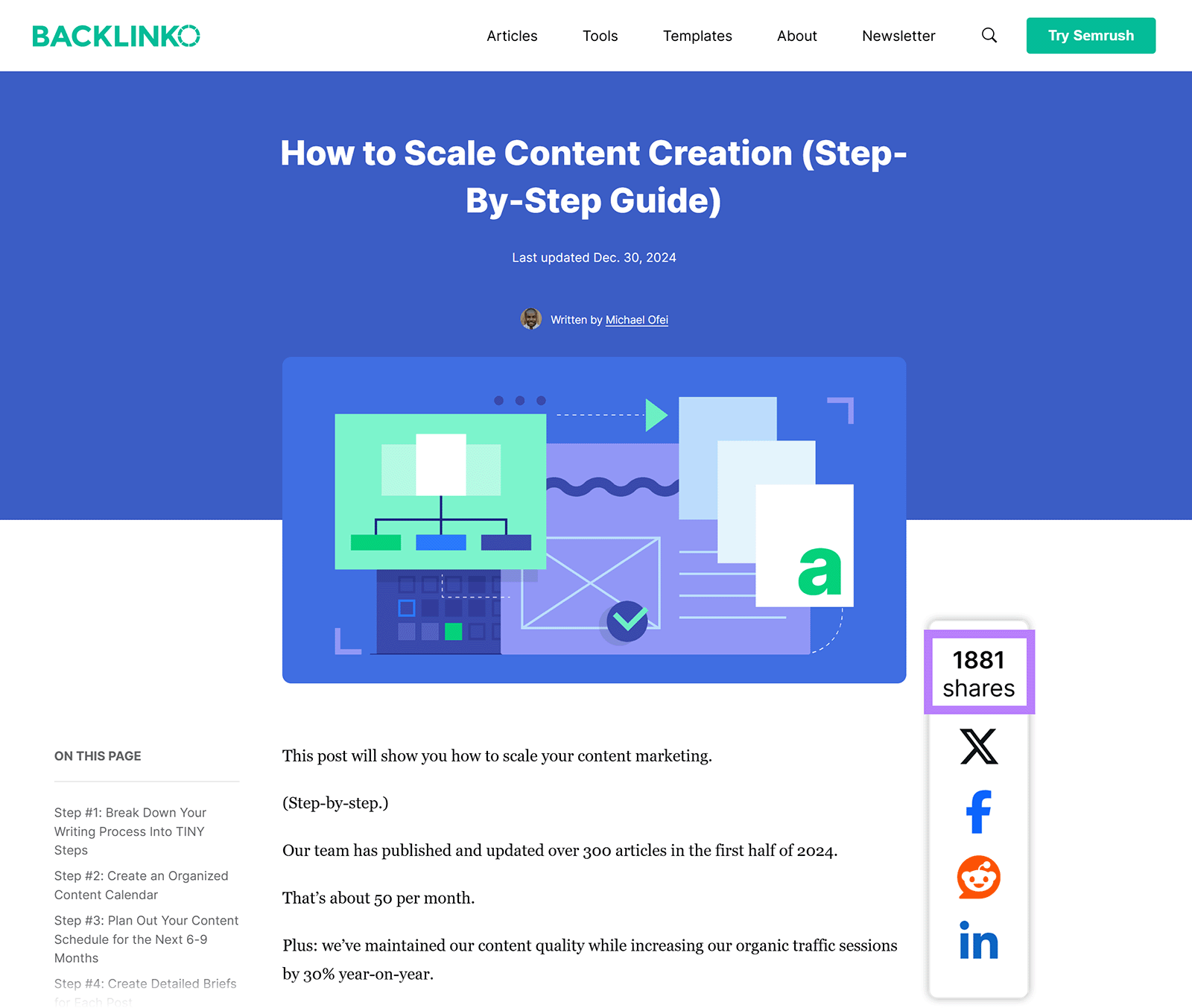
For example, SEO education blog Backlinko consistently publishes how-to guides that receive many shares. That engagement signals value and authority.
Examples of some of the different content types you can create include:
- Blog articles: Guides, how-to posts, and listicles
- Checklists and templates: Practical resources that help users complete specific tasks
- Interactive tools: Calculators, quizzes, and other tools that enhance user engagement
- Infographics: Visually appealing ways to convey data or concepts
- Case studies: Real-world examples of success stories
- Product pages: Well-optimized descriptions, high-quality images, and user reviews that support purchasing decisions
Further reading : 17 Types of Content to Use for Success
Optimize Your Pages for Search
On-page SEO involves refining your webpages’ structure, keywords, and user experience to help search engines better understand and rank them.
Think of it as giving your content the final polish—making sure keywords are naturally integrated and the page is easy to read and navigate.
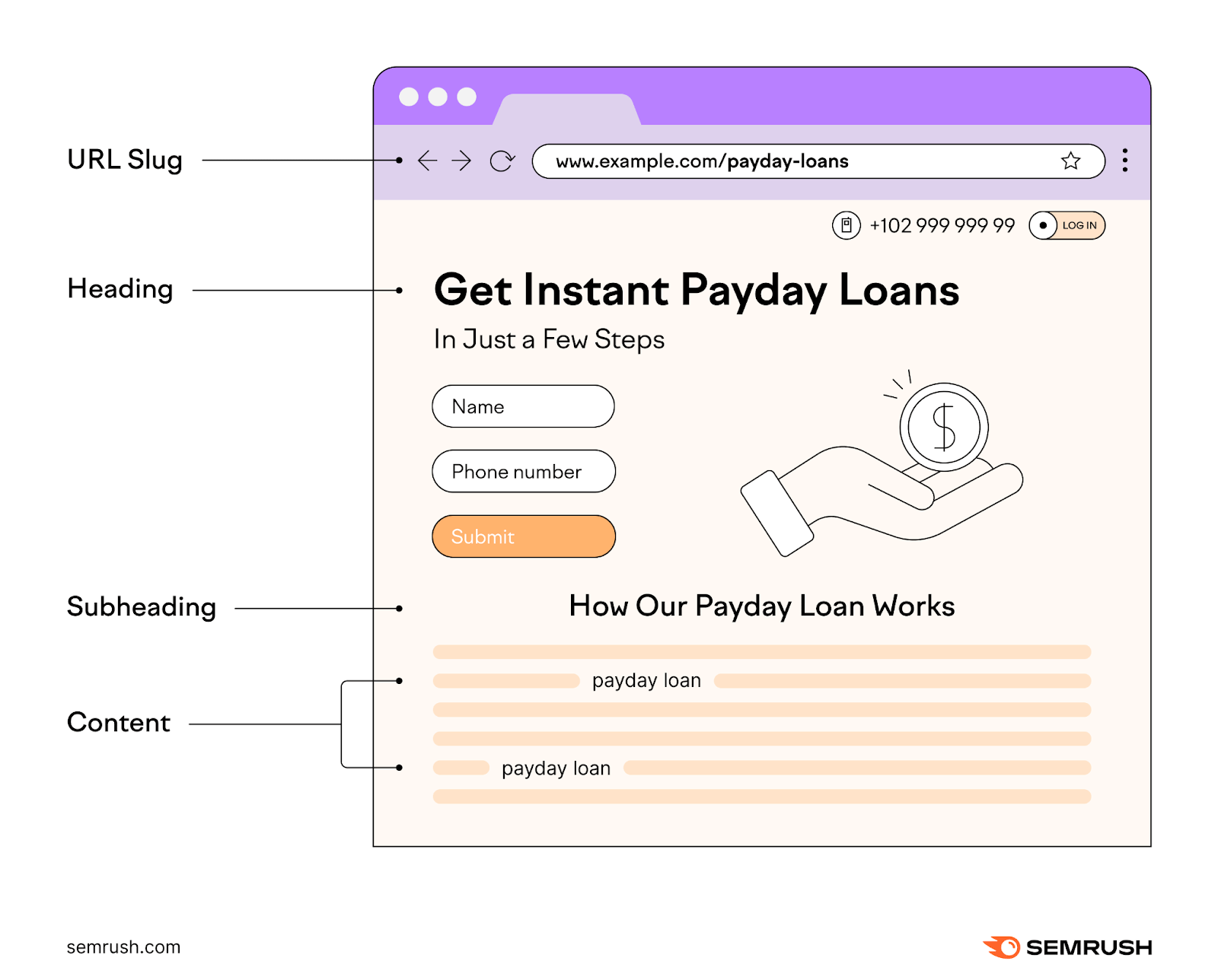
Focus on optimizing the following on-page SEO elements:
- Title tags: Naturally include the page’s primary keyword while keeping the title tag clear and compelling. This helps search engines understand the topic and encourages users to click.
- Meta descriptions: Write a concise and engaging meta description with relevant keywords. A well-crafted meta description can attract more clicks.
- URL slug: Include the keyword in your URL slug (the end portion of the URL). And keep it short and easy to read.
- Headings (H1, H2, H3, etc.): Structure your content logically with headings and use keywords where appropriate. Clear headings make it easier for both users and Google to navigate your content.
- Body text: Incorporate keywords naturally while ensuring your content is valuable and informative. Avoid keyword stuffing and focus on answering user queries effectively.
- Internal links: Link to other pages on your site that relate to your content. This helps Google crawl your site more effectively and keeps users engaged by offering them more useful information.
- Images and alt text: Use relevant images to enhance your content’s appeal and include descriptive alt text. This improves accessibility and helps Google understand the context of each image.
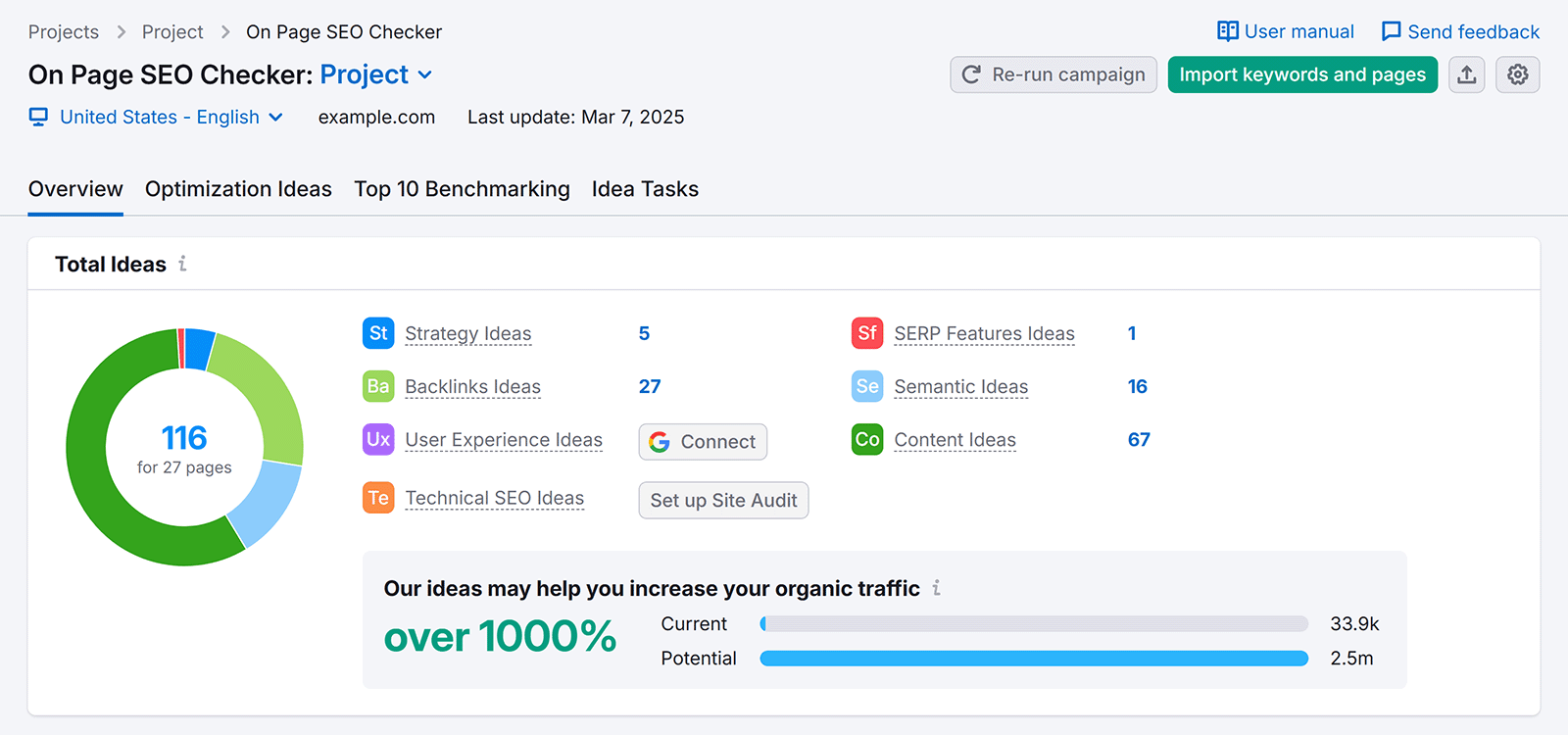
Use the On-Page SEO Checker for personalized tips on improving your website’s on-page SEO.
Build Links
Link building is the process of getting other websites to link to your pages. These links act as votes of confidence, signaling trustworthiness to Google.
Google has confirmed that it considers links from prominent websites when evaluating content. While "prominent" isn’t clearly defined, it likely refers to widely recognized sites that are relevant to the topic.
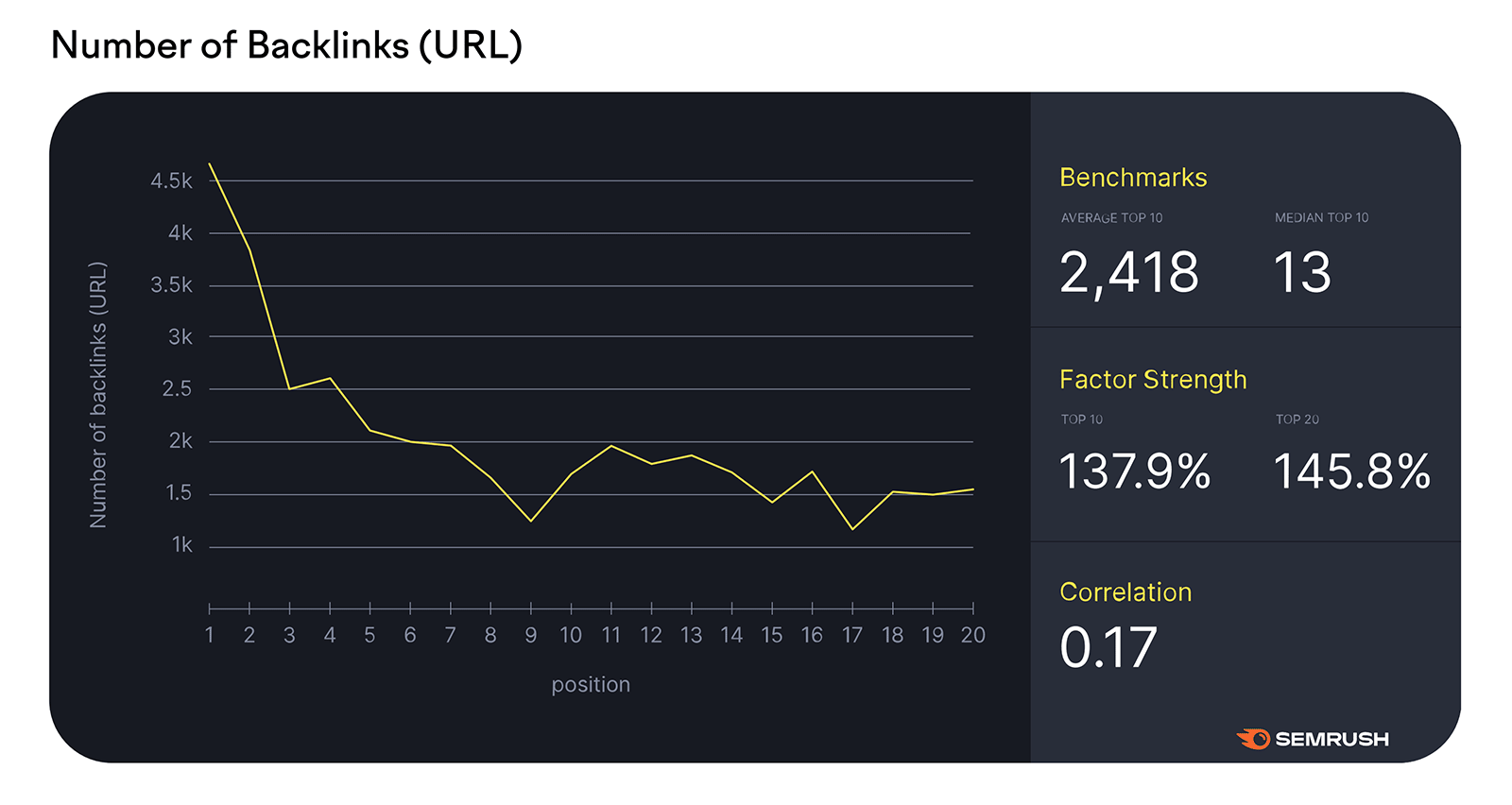
A Semrush study found that top-ranking pages often have more backlinks, with an average of 2,418 but a median of just 13. That may indicate quality is more important than sheer quantity.
Here are some popular ways to get backlinks:
- Inherit competitors' broken backlinks: Find broken links pointing to competitor sites and offer your content as a replacement
- Turn unlinked brand mentions into backlinks: Ask websites that mention your brand to link to you
- Create link-worthy content: Publish valuable resources like expert guides, infographics, or original research that others want to link to
- Improve popular content (skyscraper technique): Find high-performing content with backlinks, create a better version, and promote it
- Fix your broken backlinks: Identify and request updates for backlinks pointing to deleted or outdated pages on your site
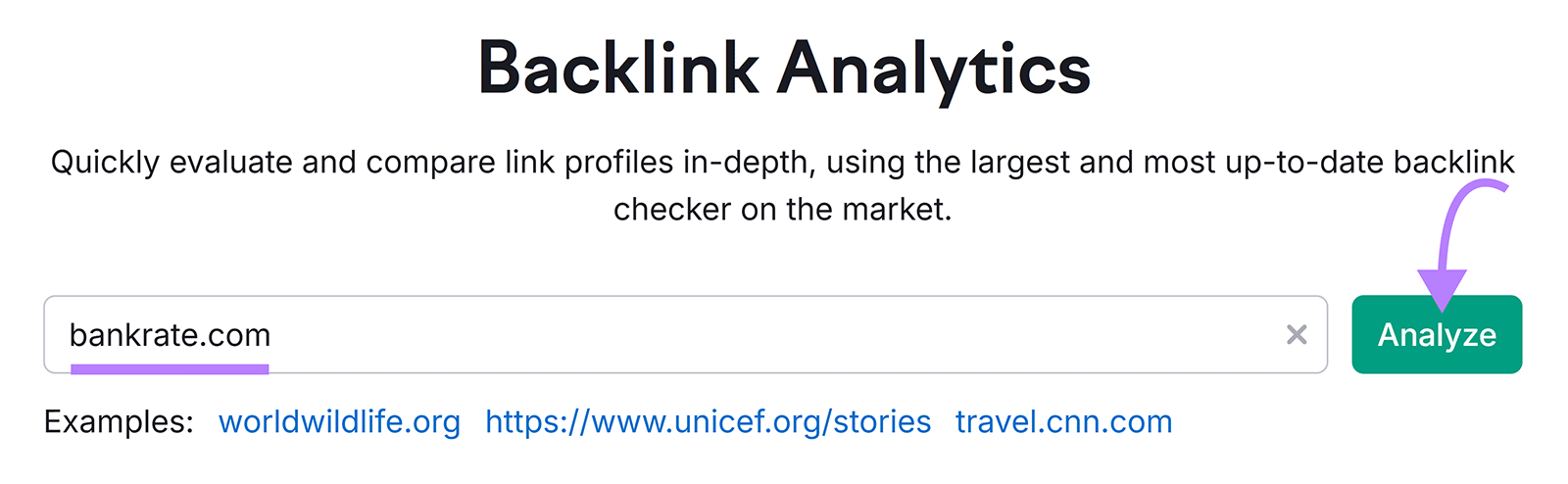
Tools like Semrush’s Backlinks can help. You can find broken pages on competitors’ sites and see which sites link to those pages.
Enter a rival’s domain in the tool.
Go to the “Indexed Pages” tab and check the box next to “Broken Pages” to see a list of broken pages that still get backlinks. As well as the number of sites linking to each one.
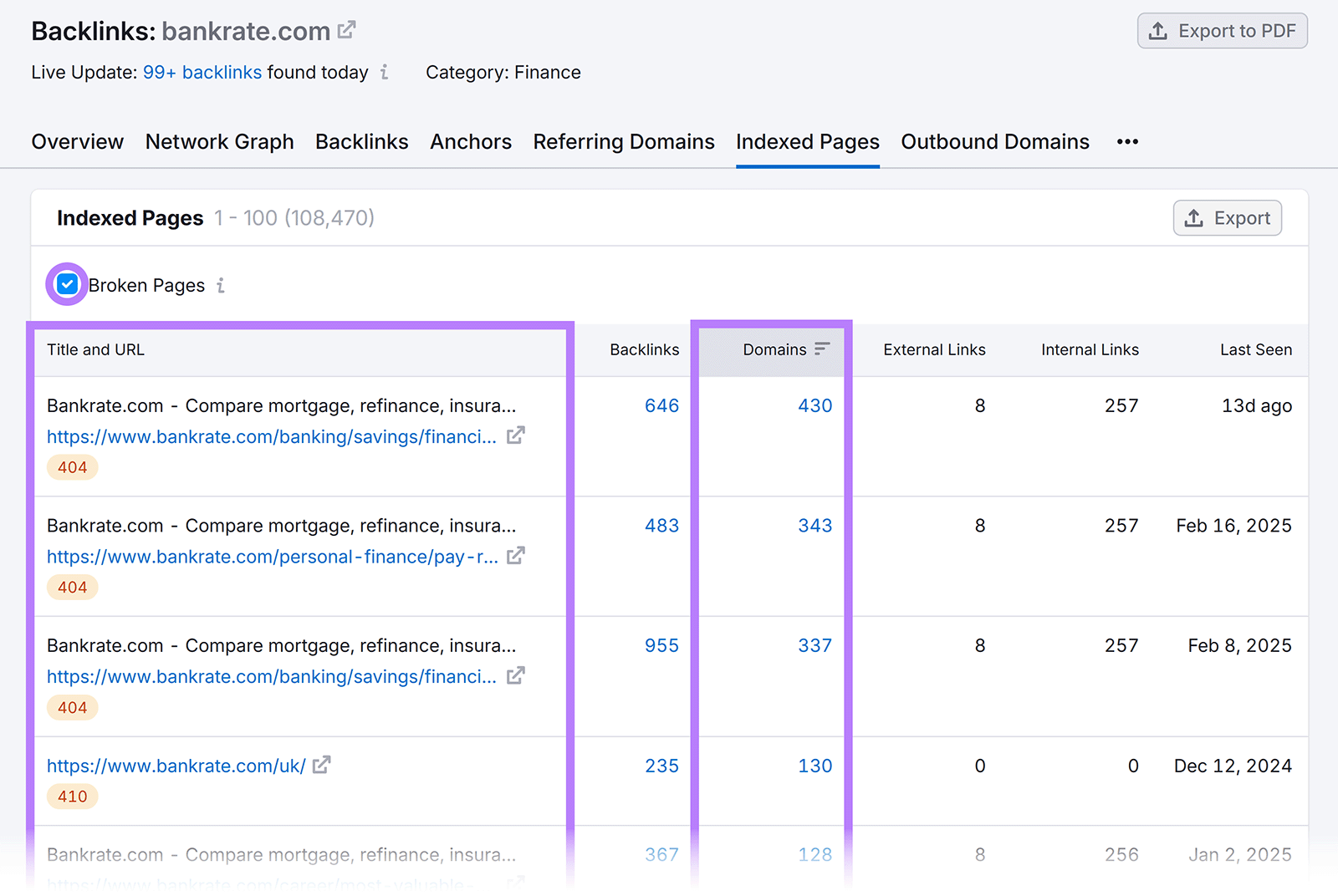
Conduct outreach to those linking sites to offer your relevant content as a replacement.
Of course, you either need to have existing content that’s a suitable match or be willing to create new content to serve as a replacement.
If you present an easy fix to another website’s broken link, they may agree to link to you.
Further reading : Broken Link Building: What It Is & How to Do It Right
Improve Your Technical SEO
Technical SEO ensures the technical aspects of your website are primed for search. Much of it is related to helping Google effectively find, understand, and rank your pages (a process known as crawling and indexing).
A strong technical foundation ensures your high-quality content is truly likely to rank and drive traffic.
Key technical SEO areas include:
- Mobile optimization: Make sure your site is responsive and easy to use on mobile devices. A mobile-friendly design can improve user engagement and help you rank better.
- Site speed: Compress images, remove unnecessary code, and optimize scripts to reduce loading times. Faster pages improve user experience and signal quality to Google.
- HTTPS protocol: Install an SSL certificate so your URLs use HTTPS rather than HTTP. Google favors secure sites, and users often trust them more.
- Robots.txt: Use robots.txt to tell website crawlers which pages to crawl and which to avoid. This helps crawlers prioritize your important pages.
- Structured data: Implement schema markup to help Google understand your content better. This can enhance your SERPs with rich snippets like ratings.
- XML sitemaps: Provide a clear map of your site to search engines. This helps website crawlers find and index your pages.
Finding and fixing technical SEO issues can be time-consuming, but you can streamline the process using Semrush’s Site Audit.
Open the tool and complete the setup process.
Then, the tool scans your site for technical SEO issues.
You’ll receive a Site Health Score (0-100), which reflects your website’s overall technical SEO performance. And compares your score to industry benchmarks.
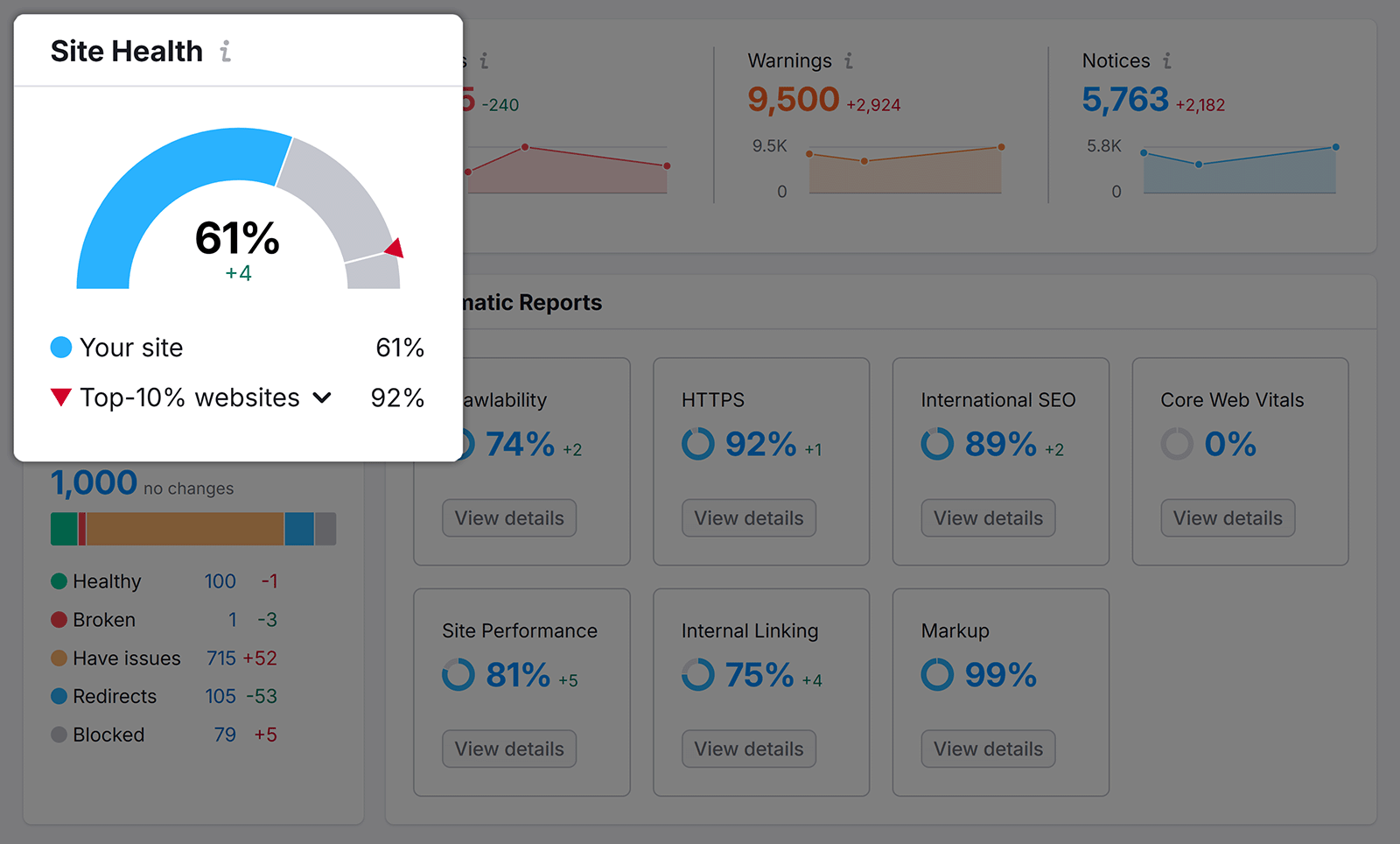
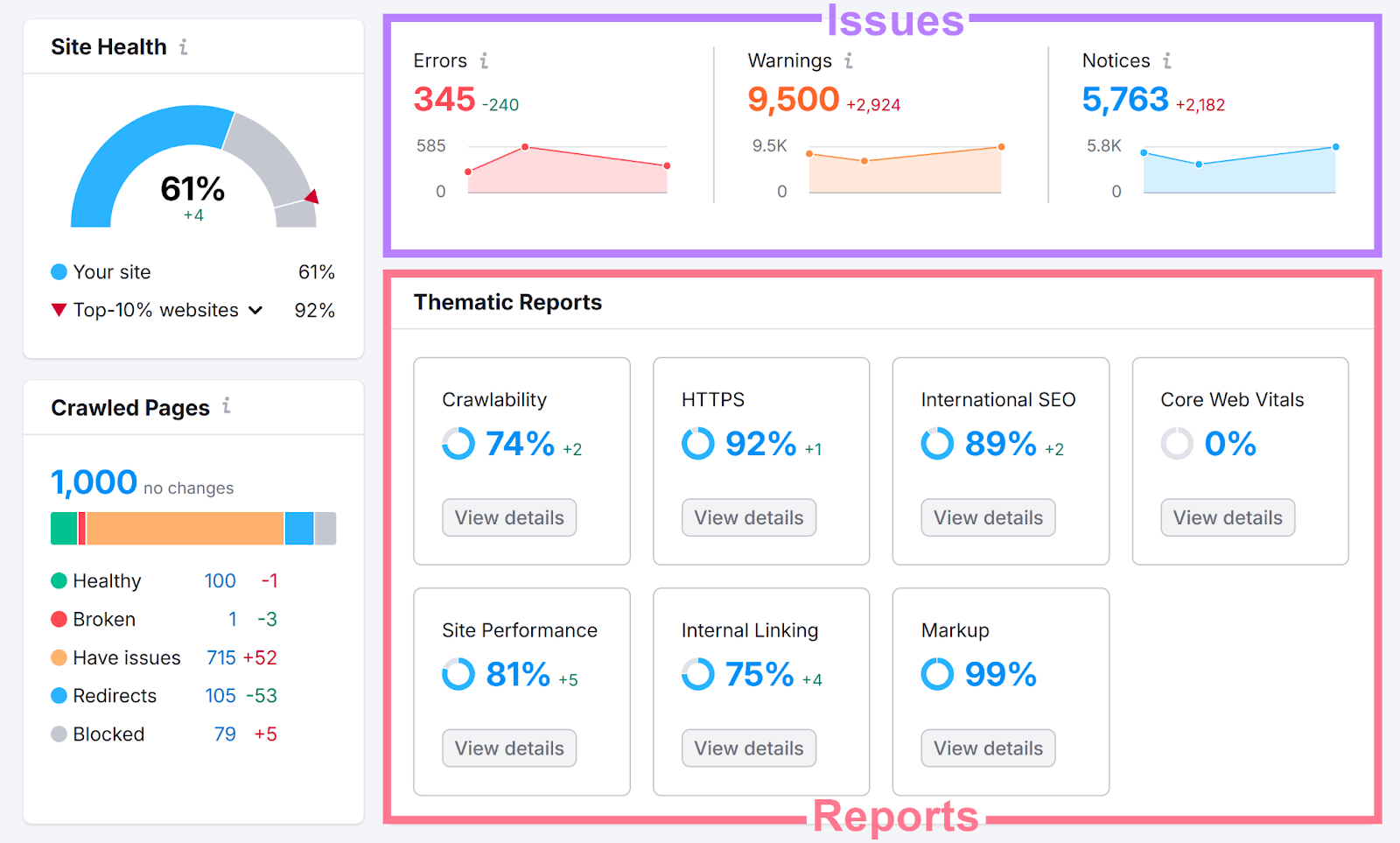
Issues are categorized by severity: “Errors,” “Warnings,” and “Notices.” Or you can focus on specific technical SEO issues by looking at the “Thematic Reports.
Visit the "Issues"tab for a full list of problems and the number of affected pages.
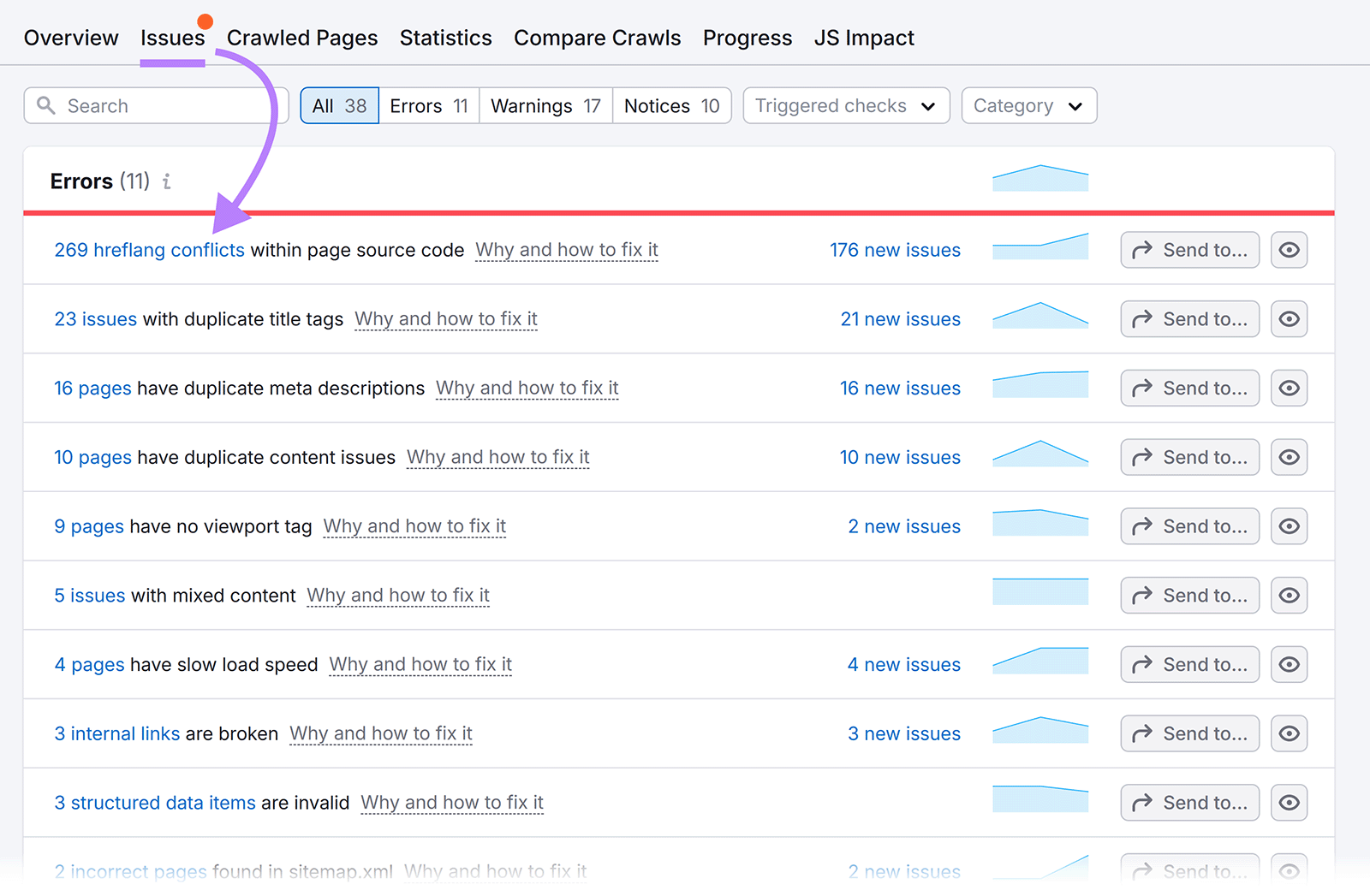
Each issue includes a “Why and how to fix it” link with guidance on how to address it.
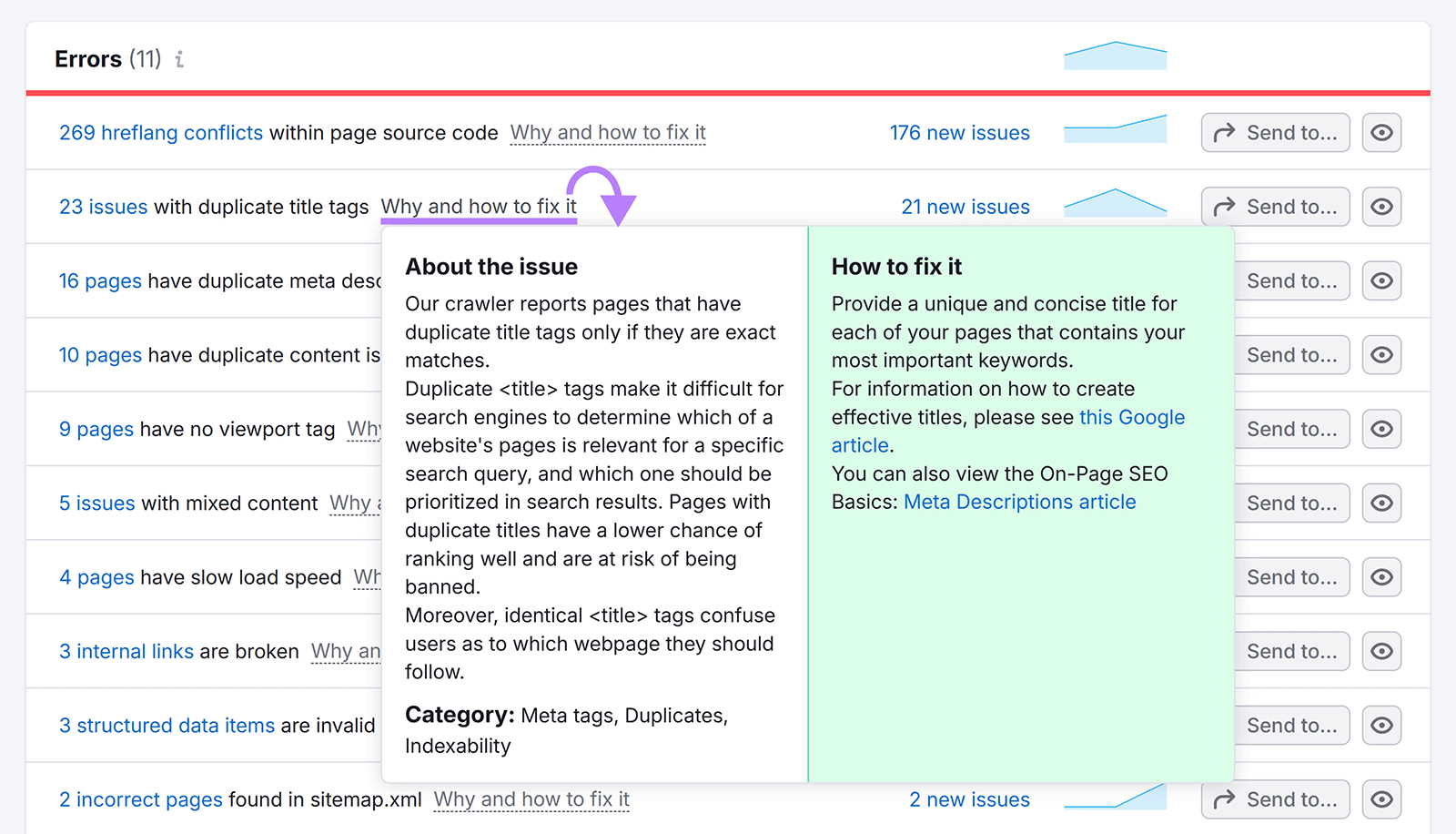
Some issues may be easy to fix yourself, while others may require a developer or system administrator.
How Long Does It Take for Organic SEO to Work?
Organic SEO typically takes four to 12 months to show significant results.
The exact timeline depends on factors like competition, website authority, content quality, and technical SEO improvements.
In most cases, SEOs need four months to a year to help your business first implement improvements and then see potential benefit.
Consistent efforts—publishing quality content, earning links, and fixing technical issues—often lead to a steady increase in visibility and traffic as your site gains authority.
But faster SEO results are possible. So, start with the following:
- Target low-difficulty keywords: Ranking for easier, less competitive keywords leads to quicker wins
- Optimize pages ranking in positions 4-10: Making small tweaks to pages ranking outside the top three results (like optimizing title tags) can increase organic traffic quickly
- Remove or improve unhelpful content: Deleting low-quality pages can improve rankings for better content (this is called content pruning)
Further reading : 10 Quick SEO Tips for Better Rankings + More Traffic
Track Your Organic SEO Progress
Because SEO is an ongoing process, monitoring key metrics helps you identify improvements, spot problems early, and adjust as needed.
Useful tools for monitoring include: