What Is SEO? Learn the Essentials of Search Engine Optimization (original) (raw)
Key Takeaways
- What is SEO? SEO (search engine optimization) is the process of improving a website’s visibility in organic search results on Google, Bing, and other search engines by researching search queries, creating helpful content, and optimizing the user experience.
- How do search engines work with SEO? Search engines crawl and index web content using more than 200 ranking factors, then evaluate this content to provide relevant results when users search — SEO optimizes sites based on these factors to improve rankings.
- What are the main types of SEO? SEO consists of on-page SEO (content, keywords, title tags), off-page SEO (backlinks, reviews, directory listings), technical SEO (site speed, structure, HTTPS), local SEO (local listings, location-based searches), and ecommerce SEO (product pages, schema markup).
- How much does SEO cost? SEO typically costs 1,500to1,500 to 1,500to5,000 per month for ongoing services, while one-time projects range from 5,000to5,000 to 5,000to30,000 depending on the service provider, project scope, and location.
- Why is SEO important for businesses? SEO helps businesses reach their target market, connect with consumers at every funnel stage, educate users for informed decisions, invest in cost-effective marketing, improve traffic quality, increase lead generation, and generate revenue.
What is SEO?
SEO stands for search engine optimization, which is the process of improving a website’s visibility in organic search results on Google and Bing, or other search engines. SEO involves researching search queries, creating helpful content, and optimizing the user experience to improve organic search rankings.
In this guide:
- What is SEO?
- How Did SEO Start?
- How Does SEO Work?
- Why is SEO Important?
- What Are the SEO Ranking Factors?
- FAQs
How did SEO start?
Search engine optimization started in the 1990s — its name came from either:
- Jefferson Starship’s promoters
- Danny Sullivan, now Search Liason at Google
- Niche marketing agency
According to legend, Jefferson Starship discovered SEO when fansites outranked the band’s site. Adding what are now known as keywords to the band’s website saw its rankings grow for “jefferson starship.”
Search engine optimization has evolved since the days of Jefferson Starship, with Google becoming the leader in the industry. That’s why, when talking about SEO, most people are talking about Google SEO.
If you’re curious to learn more about Google and its impact on SEO, check out our timeline of Google algorithm updates.
How does SEO work?
Understanding SEO’s definition is only the beginning of understanding how it works. First, you need to learn how search engines work, as their advanced algorithms power the search results and determine where websites appear in the search results. Then, you can understand how SEO works.
How search engines work
Search engines like Google have one goal: To organize the web’s information.
That’s why they operate like librarians by reading content across the web and adding it to their library. In SEO terms, we refer to this process as crawling (reading the web’s content) and indexing (adding the content to the library).
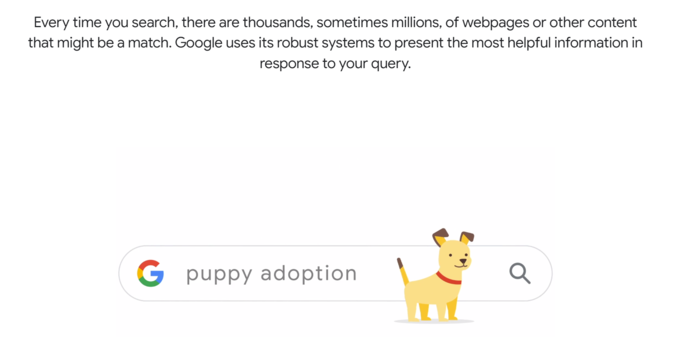
The comparisons between librarians and search engines don’t stop there, though.
Like librarians, search engines want to provide their users with helpful, reliable, and accurate information. That’s why search engines evaluate the content they crawl and index — and consider more than 200 factors when they do!
So, when the time comes and someone does a search, the search engine can pull the most relevant (and trustworthy) piece of content from its index, much like a librarian finding the perfect book based on someone’s interests.
Here’s a summary of what we covered:
- Search engines crawl the web via web crawlers or spiders.
- Search engines index this crawled content.
- Search engines evaluate the crawled content using more than 200 factors.
- Search engines use their evaluation and index to generate relevant organic search results.
How search engine optimization works
Search engine optimization uses how search works to optimize a site for organic search results.
Like search engines evaluating content based on more than 200 ranking factors, SEO does the same. Search engines like Google publish best practice guidelines, and many professional SEOs share their findings from working on hundreds of sites.
These ranking factors are bucketed into a few types of SEO:
- Off-page SEO, which defines your site’s online reputation. You’ll often evaluate your off-page SEO by looking at your external backlinks (what sites link to your website) and the authority or reputation of those backlinks.
- On-page SEO, which emphasizes your site’s existing and future content. You’ll evaluate several areas here, including title tags, meta descriptions, keyword targeting, content helpfulness, and more.
- Technical SEO, which focuses on your site’s accessibility. You’ll evaluate things like your site architecture, page speed, accessibility, internal linking, and other areas that often require collaborating with a developer.
- Local SEO, which focuses on your site’s visibility in localized search results, like ‘bakery near me’ or ‘bakery in la’. You’ll evaluate a few areas here, including your local listings (think Google Business Profile), on-site content, and more.
- Ecommerce SEO, which emphasizes your site’s product-based URLs. You’ll often evaluate your ecommerce SEO similar to your on-page SEO, with the addition of schema markup and Google Merchant Center.
Search engine optimization works by optimizing the above buckets to meet search engine best practices.
Don’t fail your website’s most important test
Get an SEO scorecard of your website for free in less than 30 seconds.
Why is SEO important?
SEO is important for several reasons, helping businesses:
- Reach their target market
- Connect with consumers and business buyers at every funnel stage
- Educate users to help them make informed decisions
- Invest in a cost-effective marketing strategy
- Improve traffic quality
- Increase lead generation
- Generate revenue
SEO optimization helps consumers, too. When companies optimize their sites for search, they make it easier for people to find them online. This is helpful for people looking for niche products, services, or information.
What are the SEO ranking factors?
“Google uses automated ranking systems that look at many factors and signals about hundreds of billions of web pages and other content in our Search index to present the most relevant, useful results, all in a fraction of a second.”
There are more than 200 SEO ranking factors, including:
- Backlinks
- Page speed
- HTTPS
- Domain
- Structured data
- Title tags
- Meta descriptions
- And more
These ranking factors fall into the following buckets:
On-page SEO
Your on-page optimizations will focus on the following areas:
- Title tags: Like a headline, title tags convey a URL’s purpose, and appear in organic search results. You’ll optimize title tags for SEO by including your target keyword, as well as writing something that’s engaging and authentic.
- Meta descriptions: Like a subline, meta descriptions expand on your title tag. You’ll optimize meta descriptions for SEO by including your target keywords, as well as including a call-to-action (CTA).
- Keyword targeting: Keywords are the words or phrases (also called queries) that people use to search online. You’ll use keywords in your title tags, meta descriptions, and content to indicate your content’s relevancy to searches.
- Content helpfulness: Quality is key to search engine optimization. Produce helpful content that shares your unique perspective or advice, and you’ll send a positive signal to Google about your content and site.
- Internal linking: Like road signs, internal links help users (and search engine crawlers) navigate your site and understand your content. You’ll optimize for this SEO element by using descriptive anchor text to link to your content.
You can learn more about on-page SEO in our guide!
Off-page SEO
Your off-page SEO optimizations will focus on the following areas:
- Backlinks: Like citations in academic papers, backlinks endorse your website. You’ll optimize your backlink profile by producing helpful and unique content, from tools to studies, to attract links from reputable sites in your industry.
- Directory listings: Like a phone book, directory listings can help users and search engines discover your site. You’ll optimize for this SEO element by claiming your Google Business Profile (if relevant) and joining relevant directory sites.
- Reviews: Like backlinks, reviews provide helpful context about your site and its usefulness. You’ll optimize for reviews by inviting users or customers to share their feedback, whether on your local listings or website.
You can learn more about off-page SEO in our guide!
Technical SEO
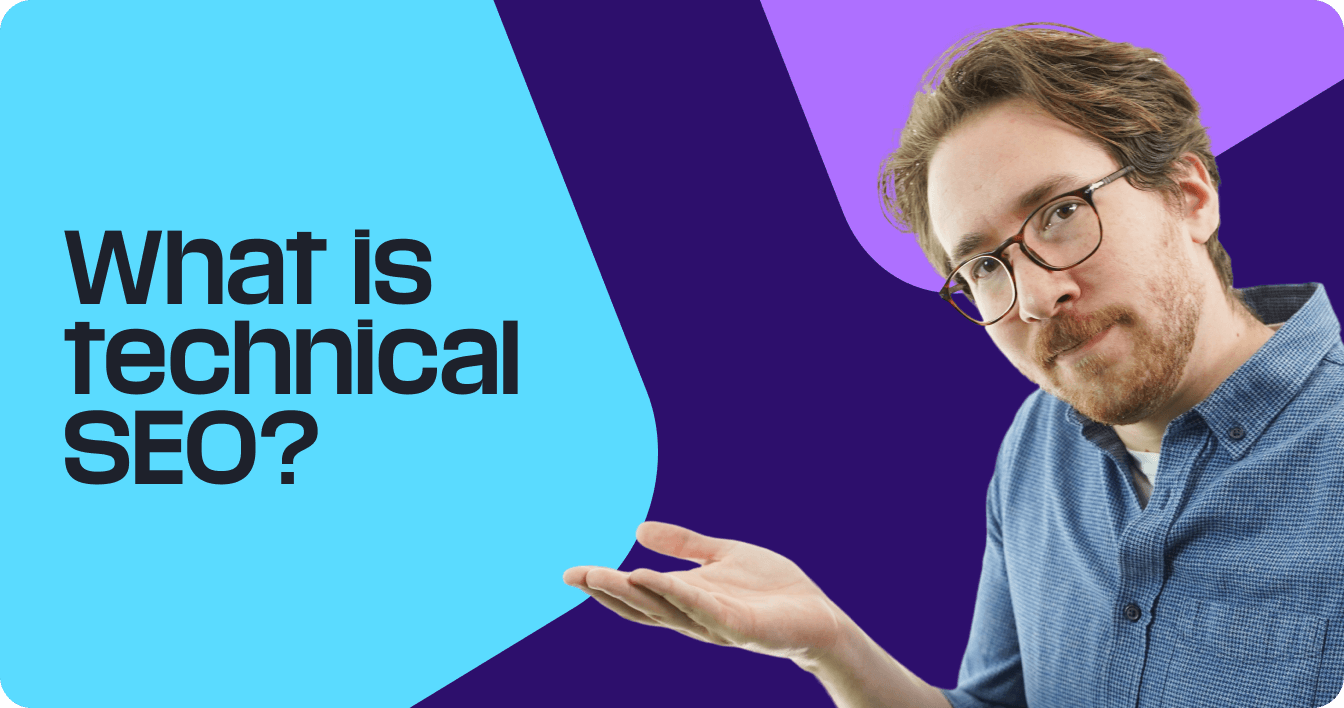
Your technical SEO optimizations will focus on the following areas:
- Domain: Your domain is like your home address. You’ll start your SEO journey by selecting a domain name. For long-term success, choose a domain that represents your brand and vision vs. a keyword-based domain name.
- Robots.txt: Like a stoplight, a robots.txt file provides search engine spiders or crawlers direction. You’ll use this file to allow spiders to crawl your site. You can also use it to stop them from visiting URLs like your paid landing pages.
- XML sitemap: Like a map, an XML sitemap provides search engine crawlers with your site URLs. As a part of this SEO optimization, you’ll generate and upload an XML sitemap to Google Search Console.
- Page speed or Core Web Vitals: Search engines value delivering an excellent user experience, which is why Google uses Core Web Vitals as a ranking factor. You’ll compress images, minify code, and more for this optimization.
- Structured data: With structured data or schema markup, you can provide search engines with more context about your content. Different types of schema include FAQ, LocalBusiness, Product, and more.
- HTTPS: Deliver a secure user experience with a website that uses HTTPS. You’ll optimize for this search engine optimization ranking factor by purchasing and installing an SSL certificate.
- Site architecture: Like a city, you’ll build your website. As a part of this SEO optimization, you’ll focus on creating a logical site structure, which will require thinking about your long-term vision for the site.
- Website accessibility: Let anyone experience your website with site accessibility upgrades. These upgrades including image alt text, as well as design-based changes that website plugins can provide.
You can learn more about technical SEO in our guide!
Keep in mind, the above list of sub-buckets just gives a glimpse of the available ranking factors. What’s important to know when having SEO explained to you is these factors have different weights.
For example, external backlinks are one of the most significant ranking factors because they signal an endorsement of your website from another site. You can think of them like citations at the end of a research paper — that’s how Google came up with the idea of using them!
So, when you practice SEO, you’ll prioritize certain factors over others.
FAQs
Looking to learn beyond what is SEO? View more SEO FAQs below:
How to learn SEO and get started?

If you want to learn SEO, there are plenty of online resources from the best SEO blogs. Hint: These sources rank at the top of search results because they’re well-known to Google as reliable sites for SEO information.
You can also check out our complete SEO glossary to get more definitions and explanations of essential SEO terminology!
Besides reading, though, consider getting hands-on experience with SEO.
You can do this by:
- Creating a site
- Applying for an internship
- Playing with SEO tools
- Using our SEO checklist
Getting first-hand experience will teach you a lot about how SEO works and how to improve your skills! You can also explore our SEO FAQs to get answers to some of the most common SEO questions. What does an SEO agency do?
An SEO agency provides website optimization services to help businesses rank higher in search results through on-page SEO, off-page SEO, and technical SEO, including SEO services like site audits, competitor analysis, content creation, and earned media development.
How much does SEO cost?
SEO costs typically range from USD 1,500 to USD 5,000 per month for ongoing services, while one-time projects can cost between USD 5,000 to USD 30,000, depending on factors like service provider, project scope, and location.
Learn more: How much does SEO cost?
What is the goal of SEO?
Typically, the goal of SEO is to improve one (or more) of the following metrics:
- Rankings
- Traffic
- Leads
- Sales
Since SEO can benefit every funnel stage, from awareness to purchase, businesses need to create a smart SEO optimization strategy. A smart strategy, for example, focuses on bringing qualified traffic to drive sales to make SEO worth the investment. How is SEO different from PPC?
SEO is different from pay-per-click (PPC) advertising because SEO is not advertising.
Search engine optimization focuses on improving a website and its content, while pay-per-click advertising focuses on improving an ad campaign and its ads. Both SEO and PPC appear in search results, with their placement in the paid and organic sections of search results depending on numerous factors, which shows how SEO and PPC work together to boost your visibility in search engines.
Will AI replace Google?
No, AI will not replace Google, but rather integrate with it. While AI is emerging as a powerful search tool, Google maintains 79% of desktop search market share and is adapting by developing its own AI technologies like Gemini to enhance search capabilities.
Learn more: Will AI replace Google?
Improve your SEO results with SEO.com
You’ve learned a lot, from what is SEO to SEO’s functionalities, and now you’re ready to bring search engine optimization to your organization’s digital marketing strategy. Kickstart your search engine optimization efforts today by requesting a quote from our professional SEO company!

SEO Services That Aren’t Cookie Cutter
Get an SEO strategy that’s tailored for your business, industry, and revenue goals.