Psychodynamic Approach In Psychology (original) (raw)
Importance of the unconscious mind
The unconscious mind contains hidden mental processes that shape judgments, emotions, and behaviors (Wilson, 2002).
According to the psychodynamic approach, the unconscious is the part of the mind that contains things we are unaware of, such as feelings, thoughts, urges, and memories.
According to Freud (1915), the unconscious mind is the primary source of human behavior. Like an iceberg, the most important part of the mind is the part you cannot see.
Our feelings, motives, and decisions are powerfully influenced by past experiences and stored in the unconscious.
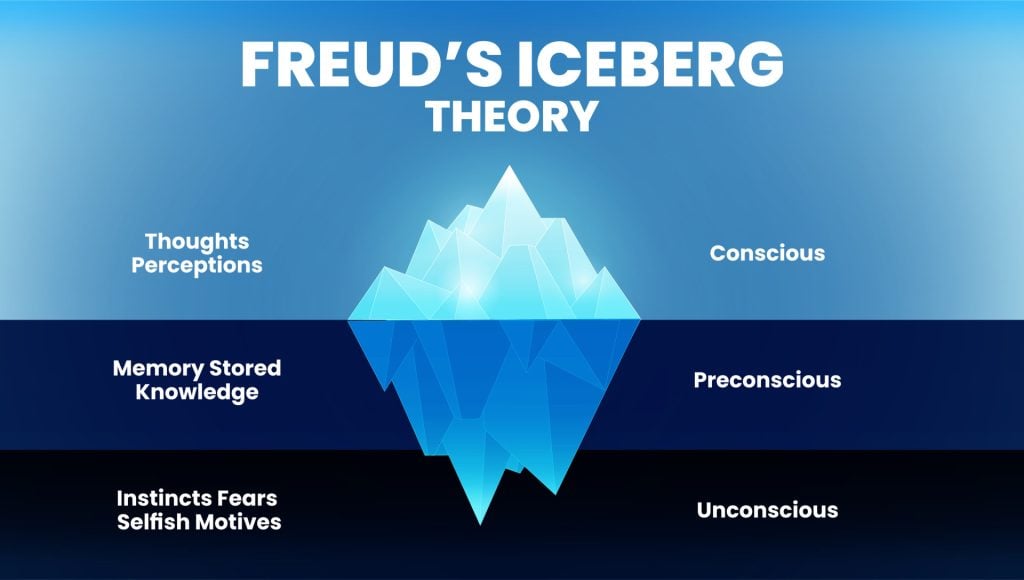
The Role of the Unconscious
Most of the content of the unconscious is unacceptable or unpleasant and could cause feelings of pain, anxiety, or conflict if it becomes conscious.
For example, hysteria is an example of a physical symptom that has no physical cause though the ailment is just as real as if it had, but rather is caused by some underlying unconscious problem.
The unconscious is seen as a vital part of the individual. It is irrational, emotional, and has no concept of reality which is why its attempts to leak out must be inhibited.
The role of the unconscious mind is to protect the ego from this content. However, according to Freud, the content of the unconscious motivates our feelings, motives, and decisions.
Importance of early experience
Our behavior and feelings as adults (including psychological problems) are rooted in our childhood experiences.
The psychodynamic theory states that events in our childhood have a significant influence on our adult lives, shaping our personality.
Personality is shaped as the drives are modified by different conflicts at different times in childhood (during psychosexual development).
Freud’s theory of psychosexual stages of development predicated that childhood experiences create the adult personality.
Events that occur in childhood can remain in the unconscious and cause problems as adults, such as mental illness.
Psychic determinism
Psychic determinism is the idea that all behaviors have underlying unconscious causes.
Unconscious thoughts and feelings can transfer to the conscious mind through parapraxes, popularly known as Freudian slips or slips of the tongue.
We reveal what is really on our minds by saying something we didn’t mean to.
Freud believed that slips of the tongue provided an insight into the unconscious mind and that there were no accidents, every behavior (including slips of the tongue) was significant (i.e., all behavior is determined).
Behavior can be explained in terms of the inner conflicts of the mind
Personality comprises three parts (i.e., tripartite): the id, ego, and super-ego.
Parts of the unconscious mind (the id and superego) are in constant conflict with the conscious part of the mind (the ego).
- The id is the primitive and instinctive component of personality. It consists of all the inherited (i.e., biological) components of personality present at birth, including the sex (life) instinct – Eros (which contains the libido), and the aggressive (death) instinct – Thanatos.
- The ego develops to mediate between the unrealistic id and the external real world. It is the decision-making component of personality.
- The superego incorporates society’s values and morals, which are learned from one’s parents and others. It has two components: the ego ideal, which sets the standards, and the conscience, which produces guilt.
When unconscious conflicts between the id and the superego cannot be resolved by the ego, they create anxiety. To reduce this anxiety, we use defense mechanisms such as repression.

Balance Between the Id, Ego, and Superego
To be mentally healthy, the ego has to be able to balance the demands of the ego and the superego. If the superego is dominant, the individual might develop a neurosis e.g., depression.
If the id is dominant, the individual might develop a psychosis e.g., schizophrenia.
According to the psychodynamic approach, the therapist would resolve the problem by assisting the client to delve back into their childhood and identify when the problem arose.
Having identified the problem, this can be brought into the conscious, where the imbalance can be resolved, returning equanimity between the id, ego, and superego.
Consequently, the defense mechanisms will only operate at the maintenance level, and the mental illness will be cured.
Key Figures
The psychodynamic approach was founded by Sigmund Freud, but it has since evolved through the contributions of both Freudians and neo-Freudians.
Sigmund Freud (1856–1939)
Sigmund Freud is the founder of psychoanalysis and the originator of many core psychodynamic concepts, including the unconscious mind, psychosexual stages of development, the id, ego, and superego, and defense mechanisms.
He believed that unconscious drives, especially sexual and aggressive instincts, shape behavior and personality.
Freud’s work laid the foundation for talking therapy and the belief that early childhood experiences can shape adult emotional life.
Neo-Freudians: Building on Freud
Neo-Freudians agreed with Freud’s emphasis on the unconscious but challenged or expanded his ideas in meaningful ways—shifting focus from biological instincts to social, cultural, and relational factors.
🔹 Carl Jung
Carl Jung developed Analytical Psychology, emphasizing the collective unconscious – a shared set of archetypes and symbols inherited across generations.
Unlike Freud, Jung believed in the potential for psychological growth and balance through self-integration, not just conflict resolution.
🔹 Alfred Adler
Adler broke from Freud to create Individual Psychology, focusing on feelings of inferiority and the drive for superiority and social connectedness.
He believed personality was shaped more by social interest and purposeful goals than unconscious conflict.
🔹 Melanie Klein
A pioneer of object relations theory, Melanie Klein emphasized how early relationships – especially between infants and caregivers – shape the internal world and unconscious mind.
Her work with children laid the groundwork for attachment theory and modern developmental psychology.
🔹 Karen Horney
Karen Horney challenged Freud’s male-centered theories, especially penis envy, arguing instead that cultural and social conditions, such as lack of warmth or security, were key in the development of neuroses.
She saw anxiety – not sexuality – as the root of psychopathology.
🔹 Erik Erikson
Erik Erikson extended Freud’s ideas into the lifespan with his psychosocial stages of development, which describe how identity evolves through challenges from infancy to late adulthood.
His theory remains influential in developmental and educational psychology.
Modern Developments in Psychodynamic Theory
Today, psychodynamic psychology has expanded far beyond Freud. Modern theorists integrate findings from neuroscience, attachment research, and interpersonal psychology to create more evidence-based and relationally focused models.
- Object Relations Theory: Builds on Melanie Klein’s ideas, focusing on how internalized images of early caregivers influence adult relationships and self-perception.
- Attachment-Based Psychodynamic Therapy: Incorporates Bowlby and Ainsworth’s work on secure and insecure attachment to explain emotional patterns and therapy needs.
- Neuropsychoanalysis: Bridges Freud’s insights with neuroscience, studying how brain systems relate to unconscious processes like emotion regulation and memory.
Contemporary psychodynamic thinkers recognize that not all of Freud’s ideas hold up scientifically – for example, the Oedipus complex is widely debated. However, research does support core principles such as:
- The role of the unconscious in shaping behavior
- The influence of early life experiences on adult personality
- The importance of interpersonal relationships in emotional wellbeing
What is an Example of Psychodynamic Behavior?
Understanding psychodynamic theory is easier – and far more engaging – when it’s applied to everyday situations.
While traditional examples like Freud’s case studies (e.g., Little Hans) are historically important, modern psychodynamic explanations can be used to understand common behaviors, and emotional struggles.
Below are several relatable examples that help illustrate core psychodynamic ideas in action.
1. Everyday Behaviors
Psychodynamic theory often explains behaviors that seem irrational or out of character as the result of unconscious conflicts or repressed emotions:
- Procrastination: A student consistently puts off studying. On the surface, it looks like laziness -but from a psychodynamic lens, it may be rooted in unconscious fear of failure or perfectionism, possibly shaped by overly critical parenting.
- Avoiding a Crush: Someone feels anxious or avoids a person they’re romantically interested in. This might reflect a repressed fear of rejection, triggered by early experiences of emotional abandonment or insecurity.
- Compulsive Hand-Washing: A person repeatedly washes their hands despite no visible dirt. Freud might interpret this as displacement – redirecting inner conflict or anxiety (perhaps related to guilt or a traumatic memory) onto a symbolic behavior.
2. Emotional Struggles and Defense Mechanisms
Psychodynamic theory also helps explain why people react strongly or strangely in emotional situations:
- Displacement: After being criticized at work, someone comes home and snaps at a family member. The ego, unable to confront the boss directly, redirects anger to a “safer” target.
- Repression: A person who was in a traumatic accident doesn’t remember the event at all. Their unconscious may be actively keeping the memory hidden to protect their conscious mind from distress.
- Projection: A person who feels jealous accuses their partner of being unfaithful, even with no evidence. Their own feelings are projected outward because acknowledging them would create guilt or anxiety.
3. Relationships and Personality
Many relationship difficulties and personality traits are interpreted in psychodynamic theory as reflections of childhood experiences:
- Fear of Commitment: Someone who repeatedly sabotages close relationships might be unconsciously reenacting attachment wounds from early childhood – such as being abandoned or emotionally neglected by a caregiver.
- Overly Compliant Behavior: An individual who avoids conflict at all costs may have developed this pattern during childhood to appease a harsh or unpredictable parent. Their ego defense mechanisms are still active in adult relationships.
4. Crime and Offending Behavior
Psychodynamic theory has also been used to explain criminal behavior, particularly in forensic psychology:
- An over-harsh superego might lead a person to commit crimes to satisfy an unconscious need for punishment, rooted in guilt or internalized shame from childhood.
- John Bowlby’s research on maternal deprivation showed that lack of attachment in early years could lead to affectionless psychopathy – a lack of empathy and remorse seen in some offenders.
Psychodynamic Therapy
1. What is it and how does it work?
Psychodynamic therapy is a psychological treatment based on the idea that unconscious conflicts, often stemming from early childhood experiences, influence present-day emotions, thoughts, and behaviors.
It aims to uncover these hidden influences to promote self-awareness, emotional insight, and long-term psychological change.
Unlike cognitive-behavioral therapy (CBT), which focuses on changing thoughts and behaviors directly, psychodynamic therapy explores the underlying emotional roots of psychological difficulties.
The client and therapist work together to identify recurring patterns, unresolved conflicts, and defense mechanisms that may be interfering with daily life and relationships.
2. Who Is Psychodynamic Therapy For?
Psychodynamic therapy is particularly helpful for individuals who experience recurring emotional or relational problems that do not have a clear external cause.
It is well-suited for those who want to gain deeper insight into themselves, rather than just manage symptoms.
Who needs psychodynamic therapy?
Those who:
- Struggle with long-standing emotional difficulties
- Experience repetitive patterns in relationships or behavior
- Feel emotionally stuck, conflicted, or disconnected from their sense of self
- Are curious about the “why” behind their emotions and actions
Psychodynamic therapy is ideal for individuals who are not just seeking symptom relief, but want to understand themselves more deeply.
Who Is a Good Candidate?
A good candidate typically:
- Has emotional stability and the ability to attend regular sessions
- Is open to self-exploration and examining painful memories or feelings
- Can form and maintain a working relationship with the therapist
- Is willing to commit time and effort to the therapy process
Clients motivated to understand their inner life, rather than those seeking quick fixes, tend to benefit most.
Best-suited conditions
Psychodynamic therapy is most effective for:
- Depression (especially when linked to loss, guilt, or identity issues)
- Generalized anxiety disorder (GAD)
- Panic disorder
- Personality disorders (e.g., borderline personality disorder)
- Chronic relationship problems
- Low self-esteem and emotional regulation difficulties
It is also used in psychodynamic couple’s therapy to help partners understand unconscious patterns in their relationship.
It is not ideal for:
- Schizophrenia or bipolar disorder with psychotic features
- Clients with severe cognitive impairments or poor reality testing
- Individuals requiring crisis intervention or short-term symptom management only
In these cases, a combination of medication and structured therapies (like CBT or DBT) may be more appropriate.
3. Core Goals and Techniques
Psychodynamic therapy uses a range of techniques to explore the unconscious and bring insight into the client’s inner world:
- Free Association: The client speaks freely without censorship. This helps uncover unconscious material by observing recurring themes, slips of the tongue, or emotionally charged topics.
- Dream Analysis: Dreams are seen as symbolic expressions of the unconscious. The therapist helps the client explore their dreams to reveal hidden conflicts or desires.
- Transference: Clients often project feelings about significant people (e.g., parents) onto the therapist. Understanding this dynamic can uncover unresolved emotional issues.
- Interpretation: The therapist helps the client understand the meaning behind behaviors, thoughts, and feelings that may seem confusing or contradictory.
- Resistance: Any hesitations or avoidance during therapy are explored as potential signs of deeper unconscious conflict.
4. What are the 5 Core Elements of Psychodynamic Therapy?
- Exploration of Emotion: Helping clients identify and express difficult feelings they may not fully understand.
- Recognition of Avoidance: Identifying defense mechanisms like denial, repression, or projection that block emotional insight.
- Focus on Patterns: Recognizing recurring themes in behavior and relationships that may originate in early life.
- Understanding Past Experiences: Exploring how childhood relationships and traumas still affect the client’s current emotional life.
- Use of the Therapeutic Relationship: The therapist-client interaction is used to highlight emotional dynamics and relational patterns that exist in the client’s other relationships.
5. How Long Does Psychodynamic Therapy Take?
- Short-Term Psychodynamic Therapy (STPP) typically lasts 12–24 sessions and focuses on one core issue.
- Long-Term Psychodynamic Therapy can continue for months or years, especially when working with complex emotional issues, personality disorders, or long-standing behavioral patterns.
Therapy length depends on the client’s needs, personal history, goals, and the severity of their difficulties.
6. What Is the Success Rate of Psychodynamic Therapy?
Research indicates that psychodynamic therapy can be as effective as CBT for many conditions, particularly depression and anxiety. A 2010 meta-analysis by Jonathan Shedler found that:
- Clients often continue to improve after therapy ends, suggesting deeper and longer-lasting change.
- It is especially effective for people with complex emotional and relational problems that may not respond well to symptom-focused approaches.
However, its effectiveness may be lower in clients who:
- Have difficulty reflecting on their inner world
- Lack motivation or emotional stability
- Require immediate symptom relief or behavioral strategies
Psychodynamic vs Psychoanalytic
Both psychodynamic and psychoanalytic theories originate from the ideas of Sigmund Freud, but they have different applications and emphases.
Psychoanalytic theory is the original theory of the unconscious mind, developed by Sigmund Freud.
Freud believed the unconscious mind is a powerful force influencing our thoughts, feelings, and behaviors. He also believed that childhood experiences are critical in shaping personality and behavior.
Psychodynamic theory is a broader term that encompasses a variety of theories that are based on Freudian principles.
Psychodynamic theorists generally agree that the unconscious mind is important, but they may have different views on its role in human behavior and how it develops.
Some psychodynamic theorists also emphasize social and cultural factors more than Freud did. Some of the most notable Neo-Freudians include Carl Jung, Alfred Adler, Karen Horney, and Erich Fromm.
| Psychodynamic | Psychoanalytic |
|---|---|
| Evolved from Freud’s ideas. | Focuses on Freud’s original theories. |
| Psychodynamic theory is a broader term that encompasses a variety of theories that are based on Freudian principles. | Psychoanalytic theory is the original theory of the unconscious mind, developed by Sigmund Freud. |
| Unconscious mind, childhood experiences, social and cultural factors. | Unconscious sexual and aggressive drives, childhood experiences. |
| More emphasis on the role of social and cultural factors in personality development than Freud. | More emphasis on the role of sexual and aggressive drives in personality development. |
| Neo-Freudians had a more optimistic view of human nature than Freudians did. They believed that humans have the potential to be good and to achieve their full potential. | Freud often portrayed human behavior as driven by irrational, unconscious desires and conflicts, leading to a somewhat pessimistic view of human nature. |
| While it employs some traditional psychoanalytic techniques, it’s more eclectic, adapting to the needs of the individual. It emphasizes exploring patterns in current relationships, emotions, and behaviors. | Incorporates specific techniques such as free association, dream analysis, and transference analysis. The aim is to bring unconscious material to the conscious mind for resolution. |
Critical Evaluation
✅ Strengths of the Psychodynamic Approach
1. Emphasis on the Unconscious Mind
A key strength of the psychodynamic approach is its emphasis on the unconscious mind as a powerful force shaping behavior.
Freud proposed that many of our actions are driven by unconscious thoughts, desires, and memories, which we are unaware of but which still influence how we behave.
This idea was groundbreaking at the time and laid the foundation for many psychological theories that followed.
Unlike the behaviorist approach, which only focused on observable behavior, psychodynamic theory encouraged psychologists to look beneath the surface of mental life.
Consequence:
This perspective led to the development of therapeutic techniques (like free association and dream analysis) that aim to bring unconscious conflicts into conscious awareness.
More recently, research in cognitive and social psychology (e.g., studies on implicit bias, automatic processing, and procedural memory) has provided empirical support for the idea that unconscious processes do influence behavior.
This has helped validate and modernize some of Freud’s core ideas, making the psychodynamic approach more relevant to current psychological science.
2. Importance of Early Childhood Experiences
The psychodynamic approach highlights the significance of early childhood experiences in shaping adult personality and behavior.
Freud believed that events in early life, especially within the family, create unconscious conflicts that can influence adult functioning.
This concept was later expanded by theorists like John Bowlby, who used it to explain emotional attachment and the impact of maternal deprivation on later mental health.
Consequence:
This emphasis on the formative nature of early life has had a profound impact on areas such as child development, education, social work, and mental health care.
For example, modern attachment theory builds on psychodynamic ideas to explain how secure or insecure childhood bonds can affect adult relationships and emotional resilience.
By stressing the developmental roots of psychological problems, the approach has helped shape preventive mental health strategies and early intervention programs.
3. Foundation for Talking Therapies
Another strength of the psychodynamic approach is that it pioneered the first form of talking therapy – psychoanalysis.
Freud’s development of psychoanalysis was revolutionary in moving away from physical treatments (like trepanning or electroshock) and toward understanding mental health as something that could be addressed through verbal expression and emotional insight.
His belief that talking about one’s thoughts and feelings could relieve psychological distress laid the foundation for many modern therapeutic approaches.
Consequence:
Even though classical psychoanalysis is rarely used in its original form today, its legacy remains in many modern therapies, including short-term psychodynamic therapy, interpersonal therapy (IPT), and even elements of cognitive-behavioral therapy (CBT).
This has helped to normalize therapy and mental health support, making it more accessible and less stigmatized.
The idea that emotional healing can come through expression and reflection continues to be a central principle in psychological treatment today.
What is the difference between psychodynamic therapy and cbt?
Psychodynamic therapy explores unconscious feelings and past experiences to understand present behavior, emphasizing insight into underlying emotional conflicts.
CBT (Cognitive Behavioral Therapy) focuses on identifying and changing current problematic thoughts and behaviors to improve emotional well-being.
While psychodynamic therapy delves deeper into the historical origins of issues, CBT targets immediate, practical solutions by modifying negative thought patterns and behaviors.
Psychoanalysis, originating from Freud, is lengthy, intensive, and rarely practiced in its original form today due to practical constraints.
However, its core concepts – like unconscious processes, early childhood experiences, and defense mechanisms – have profoundly influenced various modern therapeutic approaches.
- Short-term psychodynamic therapy maintains the psychoanalytic emphasis on unconscious motives and emotional conflicts, but in a briefer, structured format.
- Interpersonal therapy (IPT) incorporates psychoanalytic ideas by exploring how unconscious patterns influence current relationships.
- Cognitive-behavioral therapy (CBT), although very different, occasionally borrows psychoanalytic ideas, such as exploring deeper-rooted beliefs originating from past experiences or unconscious schemas affecting behavior.
Thus, classical psychoanalysis’s principles persist indirectly within contemporary therapeutic methods.
⚠️ Limitations of the Psychodynamic Approach
1. Unscientific and Unfalsifiable
A major criticism of the psychodynamic approach is that many of its concepts are unscientific and difficult to test.
Freud’s ideas – such as the id, ego, and superego, or the Oedipus complex – are abstract and not directly observable or measurable.
This means they cannot be tested in controlled scientific studies.
For example, how can we empirically prove that someone is experiencing repressed childhood trauma or acting out of unconscious guilt?
Consequence:
Because the theory is largely based on subjective interpretation (often by the therapist), it lacks falsifiability, a key criterion for scientific theory.
Karl Popper, a philosopher of science, famously argued that because Freudian theory could explain everything, it ultimately explained nothing.
This lack of scientific rigor has led to the psychodynamic approach being viewed as less credible in academic and clinical psychology, particularly in comparison to more empirically supported theories like behaviorism or cognitive psychology.
2. Overemphasis on Childhood and Sexuality
Freud’s theory places too much emphasis on childhood experiences – particularly those related to sexual development – as the root of all adult psychological problems.
Freud’s psychosexual stages, including controversial ideas like the Oedipus and Electra complexes, suggest that failure to resolve conflicts in early childhood leads to fixations that influence adult behavior.
However, many modern psychologists argue that this view is overly reductionist, meaning it simplifies human behavior too much by ignoring the role of social, cultural, and environmental influences.
Consequence:
This narrow focus can lead to misdiagnosis or inappropriate treatment, especially when current stressors, life changes, or adult relationships are more relevant to a client’s issues.
It may also alienate individuals who do not see their difficulties as rooted in early childhood trauma or who reject the sexual content of Freud’s theories as outdated or culturally insensitive.
As a result, the theory’s relevance in multicultural or modern therapeutic settings may be limited.
3. Deterministic View of Human Behavior
The psychodynamic approach has been criticized for being too deterministic, suggesting that all behavior is shaped by unconscious forces and early experiences.
This means that, according to Freud, people have little free will or conscious control over their actions.
For instance, even a seemingly random decision or mistake (a “Freudian slip”) is interpreted as having an unconscious cause.
This perspective removes the possibility that individuals might act rationally or change through personal agency alone.
Consequence:
This could be seen as disempowering for clients in therapy, especially those who want to feel in control of their behavior and future.
While some people may find relief in uncovering unconscious motivations, others may feel trapped by the idea that they are forever shaped by their past.
In contrast, humanistic and cognitive therapies emphasize growth, choice, and the ability to reframe thought patterns—elements many clients find more hopeful and motivating.
4. Methodological Issues: Biased Case Studies
The psychodynamic approach relies heavily on case studies, which raises questions about generalizability and research bias.
Freud’s theories were based on a small number of clinical case studies, often involving middle-class Viennese women in the late 19th and early 20th centuries.
These patients may not reflect the wider population, and Freud’s interpretations of their issues were highly subjective.
For instance, critics like Sulloway (1991) have accused Freud of manipulating case data to fit his theory.
Consequence:
Because of this, psychodynamic conclusions may lack external validity – meaning they can’t reliably be applied to other groups or contexts.
Additionally, the strong influence of the therapist in interpreting patient behavior could lead to confirmation bias, where the therapist sees what they expect to see.
This reduces confidence in the objectivity and reproducibility of psychodynamic findings.
5. Gender and Cultural Bias
Freud’s theories have been widely criticized for reflecting a Western, male-dominated perspective.
For example, his concept of “penis envy” suggested that girls experience anxiety over not having male genitalia, which Freud interpreted as a sign of female inferiority.
This theory – and others like it -have been challenged by feminist psychologists such as Karen Horney, who argued that Freud’s views were rooted in sexist assumptions rather than empirical evidence.
Consequence:
As a result, many of Freud’s ideas are considered culturally and socially outdated.
The theory does not adequately account for cultural differences, gender equality, or modern family structures, which limits its usefulness in a diverse and globalized world.
This has led to a decline in the application of classic psychoanalysis in favor of more inclusive and culturally sensitive approaches.
6. What is psychodynamic therapy not good for?
Psychodynamic therapy is generally not well-suited for individuals with severe mental health conditions such as psychotic disorders (e.g., schizophrenia) or certain types of obsessive-compulsive disorder (OCD).
This is because psychodynamic therapy requires the client to engage in self-reflection, insight, and verbal expression of thoughts and emotions.
For individuals with psychosis—who may experience delusions, hallucinations, or disorganized thinking – this process can be extremely challenging or even counterproductive.
The therapy’s abstract and introspective nature relies on a relatively stable ego function, which is often impaired in psychotic disorders.
Furthermore, Bachrach et al. (1991) argue that for clients with OCD, psychodynamic techniques may unintentionally encourage over-analysis, reinforcing their compulsive need to interpret and reinterpret events and thoughts.
Consequence:
As a result, psychodynamic therapy may not only be ineffective but potentially harmful for these individuals, leading to increased confusion or worsening of symptoms.
In such cases, alternative therapies, like antipsychotic medication, structured CBT, or behavioral interventions, are often recommended as they offer clearer structure, goal-setting, and symptom-focused strategies.
This limitation restricts the applicability of psychodynamic therapy to individuals who are emotionally stable enough to explore unconscious conflicts, typically those with neurotic conditions such as anxiety or mild depression.
Therefore, careful client assessment is crucial before beginning treatment.
Historical Timeline
- Anna O, a patient of Dr. Joseph Breuer (Freud’s mentor and friend) from 1800 to 1882 suffered from hysteria.
- In 1895 Breuer and his assistant, Sigmund Freud, wrote a book, Studies on Hysteria. In it, they explained their theory: Every hysteria is the result of a traumatic experience, one that cannot be integrated into the person’s understanding of the world. The publication establishes Freud as “the father of psychoanalysis.
- By 1896, Freud had found the key to his own system, naming it psychoanalysis. In it, he had replaced hypnosis with “free association.”
- In 1900, Freud published his first major work, The Interpretation of Dreams, which established the importance of psychoanalytical movement.
- In 1902, Freud founded the Psychological Wednesday Society, later transformed into the Vienna Psychoanalytic Society.
- As the organization grew, Freud established an inner circle of devoted followers, the so-called “Committee” (including Sàndor Ferenczi, and Hanns Sachs (standing) Otto Rank, Karl Abraham, Max Eitingon, and Ernest Jones).

- Freud and his colleagues came to Massachusetts in 1909 to lecture on their new methods of understanding mental illness. Those in attendance included some of the country’s most important intellectual figures, such as William James, Franz Boas, and Adolf Meyer.
- In the years following the visit to the United States, the International Psychoanalytic Association was founded. Freud designated Carl Jung as his successor to lead the Association, and chapters were created in major cities in Europe and elsewhere. .
- Regular meetings or congresses were held to discuss the theory, therapy, and cultural applications of the new discipline.
- Carl Jung’s study on schizophrenia, The Psychology of Dementia Praecox, led him to collaborate with Sigmund Freud.
- Jung’s close collaboration with Freud lasted until 1913. Jung had become increasingly critical of Freud’s exclusively sexual definition of libido and incest. The publication of Jung’s Wandlungen und Symbole der Libido (known in English as The Psychology of the Unconscious) led to a final break.
- Following his emergence from this period of crisis, Jung developed his own theories systematically under the name of _ Analytical Psychology. _Jung’s concepts of the collective unconscious and the archetypes led him to explore religion in the East and West, myths, alchemy, and later flying saucers.
- Melanie Klein took psychoanalytic thinking in a new direction by recognizing the importance of our earliest childhood experiences in the formation of our adult emotional world. .After becoming a full member of the Berlin Psychoanalytic Society in 1923, Klein embarks upon her first analysis of a child.
- Extending and developing Sigmund Freud’s ideas, Klein drew on her analysis of children’s play to formulate new concepts such as the paranoid-schizoid position and the depressive position.
- Alfred Adler (1927) thought that the basic psychological element of neurosis was a sense of inferiority and that individuals suffering with the symptoms of this phenomenon spent their lives trying to overcome the feelings without ever being in touch with reality
- Wilhelm Reich (1933) was a psychoanalyst who developed a number of radical psychoanalytical and physical theories. An apprentice of Freud, he believed that neuroses, as well as physical illnesses such as cancer, derived from a lack of “orgone energy” in the body.
- Anna Freud (Freud’s daughter) became a major force in British psychology, specializing in the application of psychoanalysis to children. Among her best known works are The Ego and the Mechanism of defense (1936).
- Erich Fromm, born in Frankfurt, was educated in Heidelberg and Munich before establishing a private psychotherapy practice in 1925. Fromm began as a disciple of Sigmund Freud, combining his psychological theories with Karl Marx’s social principle.
Issues and Debates
Free Will vs Determinism
The psychodynamic approach adopts a hard deterministic view of human behavior.
According to Freud, individuals do not have full conscious control over their actions.
Instead, behavior is seen as the result of unconscious psychological forces – such as repressed desires, unresolved conflicts, and instinctual drives – that operate beneath awareness.
These unconscious motives are believed to be shaped during early childhood and are strongly influenced by biological instincts (e.g., sex and aggression).
As a result, people are often unaware of why they behave in certain ways, and choices that appear voluntary may actually be determined by past experiences and internal conflict.
This perspective rejects the notion of free will, as it implies that we are not truly in control of our thoughts, feelings, or behaviors.
While this can help explain irrational or self-sabotaging behaviors, it has been criticized for being disempowering, as it offers little room for personal agency or conscious change without therapeutic intervention.
Nature vs. Nurture
The psychodynamic approach considers both biological (nature) and environmental (nurture) factors in the development of personality and behavior.
Freud believed that humans are born with innate drives -such as the libido (sexual energy) and Thanatos (death drive)—which originate from the id, the most primitive part of the personality.
However, Freud also argued that the way these instincts are managed and expressed depends on early life experiences, especially within the family and parent-child relationships.
For example, the resolution of psychosexual conflicts during childhood stages (like the Oedipus complex) has a lasting impact on the adult psyche.
This interactionist view suggests that while we are born with natural impulses, our social environment -especially our upbringing and early emotional experiences – shapes how these impulses are controlled and integrated into our personality.
In this way, the psychodynamic theory acknowledges that both nature and nurture are essential to understanding human psychology.
Holism vs. Reductionism
The psychodynamic approach is largely holistic.
It attempts to understand human behavior by looking at the whole person, including their past experiences, emotions, unconscious thoughts, and the complex interactions between different parts of the psyche.
Freud’s structural model – comprising the id, ego, and superego -offers a multi-layered view of mental functioning, where no single element explains behavior in isolation.
Instead, psychological symptoms are interpreted within the broader context of a person’s life story, emotional development, and internal conflicts.
However, the approach can also be considered partially reductionist, as it breaks the mind into specific components and often seeks singular explanations (e.g., repressed trauma or sexual fixation).
Despite this, the emphasis on interconnectivity and depth makes the psychodynamic theory more holistic than approaches like behaviorism, which tend to focus only on observable behaviors.
Idiographic vs. Nomothetic
Freud’s psychodynamic theory incorporates elements of both nomothetic (universal laws) and idiographic (individual uniqueness) approaches:
- From a nomothetic perspective, Freud believed that all humans share universal psychological structures and processes—such as the tripartite personality (id, ego, superego) and stages of psychosexual development.
- At the same time, he emphasized the uniqueness of individual experiences, particularly in how unconscious conflicts play out in different people. This is reflected in his use of detailed case studies, where each patient’s symptoms were understood in the context of their personal history and inner life.
Thus, the psychodynamic approach aims to identify general psychological mechanisms while also appreciating how they manifest in deeply personal and specific ways.
Are the research methods used scientific?
One of the major criticisms of the psychodynamic approach is that it lacks scientific credibility.
Many of Freud’s key concepts – such as the unconscious mind, repression, and defense mechanisms -are difficult to define operationally and cannot be measured or tested empirically.
The theory is often considered unfalsifiable, meaning it cannot be proven wrong.
For example, if a person behaves as predicted, this is seen as confirmation of the theory.
If they don’t, it is often claimed they are using defense mechanisms like denial or repression, which also “proves” the theory.
This circular logic makes it resistant to scientific testing.
As a result, critics argue that psychodynamic theory does not meet the standards of scientific psychology, which values observable, measurable, and replicable findings.
However, some modern research in neuroscience and cognitive psychology (e.g., studies on implicit memory and unconscious biases) has indirectly supported parts of Freud’s ideas – suggesting that unconscious processes do play a role in behavior.
Still, because the original theory relies heavily on subjective interpretation and case studies, it is often viewed as more of a philosophical or interpretive framework than a scientifically robust theory.
References
Adler, A., Jelliffe, S. Ely. (1917). Study of Organ Inferiority and its Psychical Compensation: A Contribution to Clinical Medicine. New York: Nervous and Mental Disease Publishing Company.
Adler, A. (1927). Understanding human nature. New York: Greenburg.
Bachrach, H. M., Galatzer-Levy, R., Skolnikoff, A., & Waldron Jr, S. (1991). On the efficacy of psychoanalysis. Journal of the American Psychoanalytic Association, 39(4), 871-916.
Bargh, J. A., & Chartrand, T. L. (1999). The unbearable automaticity of being. American psychologist, 54(7), 462.
Bowlby, J. (1952). Maternal care and mental health. Journal of Consulting Psychology, 16(3), 232.
Erikson, E. H. (1950). Childhood and society. New York: Norton.
Freud, A. (1936). Ego & the mechanisms of defense.
Freud, S., & Breuer. J. (1895). Studies on hysteria. In Standard edition (Vol. 2, pp. 1–335).
Freud, S. (1896). Heredity and the etiology of the neuroses. In Standard edition (Vol. 3, pp. 142–156).
Freud, S. (1900). The interpretation of dreams. In Standard edition (Vols. 4 & 5, pp. 1–627).
Freud, S. (1909). Notes upon a case of obsessional neurosis. In Standard edition (Vol. 10, pp. 153–249).
Freud, S. (1909). Analysis of a phobia of a five year old boy. In The Pelican Freud Library (1977), Vol 8, Case Histories 1, pages 169-306.
Freud, S. (1915). The unconscious. SE, 14: 159-204.
Freud, A. (1936). The Ego and the Mechanisms of Defense. International Universities Press, Inc.
Fromm, E. (1959). Psychoanalysis and Zen Buddhism. Psychologia, 2(2), 79-99.
Greenwald, A. G., & Banaji, M. R. (1995). Implicit social cognition: attitudes, self-esteem, and stereotypes. Psychological review, 102(1), 4.
Jung, C. G. (1907). Ueber die Psychologie der Dementia praecox. Psychological Bulletin, 4(6), 196-197.
Jung, C. G. (1912). Wandlungen und Symbole der Libido: Beiträge zur Entwicklungsgeschichte des Denkens. F. Deuticke.
Jung, C. G., et al. (1964). Man and his Symbols, New York, N.Y.: Anchor Books, Doubleday.
Kline, P. (1989). Objective tests of Freud’s theories. Psychology Survey, 7, 127-45.
Shedler, J. (2010). The efficacy of psychodynamic psychotherapy. American psychologist, 65(2), 98.
Stroop, J. R. (1935). Studies of interference in serial verbal reactions. Journal of experimental psychology, 18(6), 643.
Sulloway, F. J. (1991). Reassessing Freud’s case histories: The social construction of psychoanalysis. Isis, 82(2), 245-275.
Tulving, E. (1972). Episodic and semantic memory. In E. Tulving & W. Donaldson (Eds.), Organization of Memory, (pp. 381–403). New York: Academic Press.
Reich, W. (1933). On character analysis. The Psychoanalytic Review (1913-1957), 20, 89.
Wilson, T. D. (2004). Strangers to ourselves. Harvard University Press.