TermsFeed Privacy Consent (Cookies & Embedded Content) (original) (raw)
A consent management platform for cookies, scripts, and embeds to ensure compliance with GDPR, ePrivacy Directive, CCPA+CPRA, and other privacy laws.
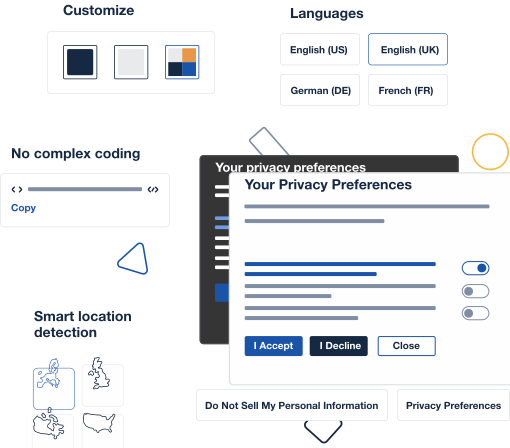
Easy to use consent management at your fingerprints.
Comply with global privacy laws and optimize consent rates for a better user experience — all with Privacy Consent.
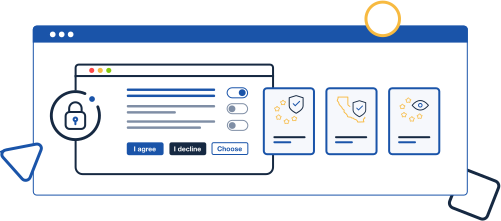
GDPR, CCPA+CPRA, ePrivacy compliance
One platform to manage consent requirements for GDPR, CCPA+CPRA, ePrivacy, and many other privacy laws.
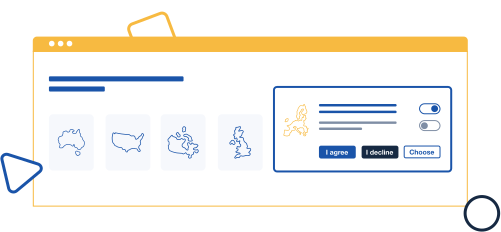
Intelligent geolocation
Show or hide notices based on visitor location with geolocation detection, optimizing consent rates.
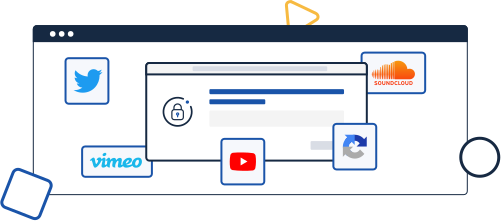
Embedded content control
Collect user consent before loading embedded content that may collect data — like YouTube, reCAPTCHA, and others.
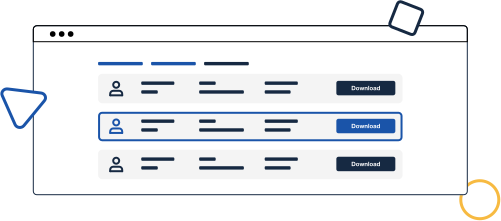
Consent log
Easily document and demonstrate user consent with downloadable and searchable logs (CSV format).
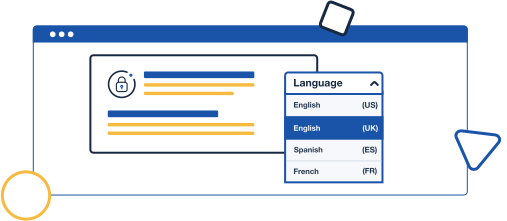
10+ languages
Deliver localized privacy notices in over 10 languages based on user preferences.
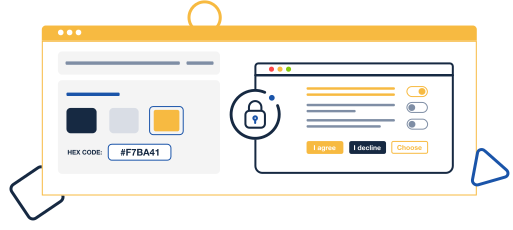
Design customization
Match your brand's style with customizable color palettes, custom CSS, and predefined design options.
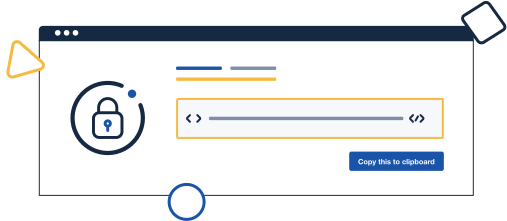
No complex coding
Go live with a single line of code. Manage everything from Privacy Consent, and updates are applied automatically.
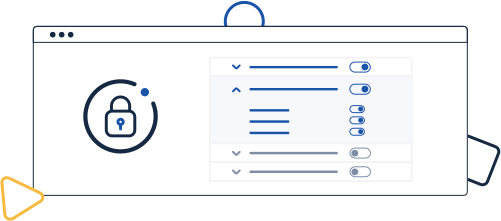
Preferences Center
Let users update their privacy preferences anytime with access to a Preferences Center.
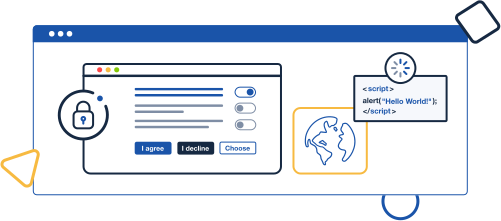
Intelligent vendor blocking
Control the loading of vendor scripts based on user location and consent status with geolocation-based blocking.
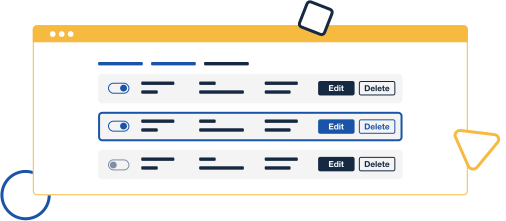
Centralized vendor management
Manage all vendor scripts requiring consent from a single, easy-to-control location.
Privacy compliance made simple with Privacy Consent.
Easily comply with global privacy laws — one powerful solution, ready to go out of the box.

United States
Several state-level privacy laws, such as CCPA+CPRA, require businesses to provide an opt-out mechanism.

Europe
European privacy laws, including the GDPR, mandate user consent for data collection and processing.

Canada
The Personal Information Protection and Electronic Documents Act (PIPEDA) requires an opt-out mechanism.

United Kingdom (UK)
UK privacy laws also require businesses to provide an opt-out mechanism for users.

Australia
Australian privacy regulations mandate an opt-out mechanism for users.

CCPA + CPRA
The California Consumer Privacy Act and the California Privacy Rights Act require an opt-out mechanism.

CalOPPA
The California Online Privacy Protection Act mandates businesses to offer an opt-out mechanism.

GDPR
The General Data Protection Regulation requires user consent for businesses in or operating within the EU.

PIPEDA
The Personal Information Protection and Electronic Documents Act in Canada requires an opt-out mechanism.

And more
Our solutions support compliance with many other privacy laws worldwide.
How the Privacy Consent works.
Privacy Consent is simple to set up and effortless to maintain — all packed into just one line of code.

I
Start the questionnaire
Answer a few quick questions to customize your Privacy Consent setup. Determine how it should work for you — show the notice banner at all times or based on visitor location.

II
Copy the code
Once completed, your Privacy Consent banner is ready. Copy the installation code (a single line of code) provided.

III
Integrate the code
Integrate the Privacy Consent code into your website. Manage everything from one location through the TermsFeed app, with updates applied automatically.
Prices for Privacy Consent.
What's included? Absolutely everything — all in a single package. Just pick the plan that fits your needs.
Monthly plan
$10.00 / Month
Email support 24/7
7 days refund policy
100% money-back guarantee
- Comply with GDPR, CCPA+CPRA and the ePrivacy Directive
- Unlimited website pages
- Unlimited additional subdomains
- Unlimited website visits (Up to 1 million plugin loads / month)
- Geolocation detection
- Consent logs (CSV files)
- Customize appearance
- Translated in 10+ languages
- Block third-party vendors
- Automatic updates
- Callbacks webhooks
Annual plan
$100.00 / Year (Get 2 months free, save $20)
Email support 24/7
7 days refund policy
100% money-back guarantee
- Comply with GDPR, CCPA+CPRA and the ePrivacy Directive
- Unlimited website pages
- Unlimited additional subdomains
- Unlimited website visits (Up to 1 million plugin loads / month)
- Geolocation detection
- Consent logs (CSV files)
- Customize appearance
- Translated in 10+ languages
- Block third-party vendors
- Automatic updates
- Callbacks webhooks
Frequently asked questions.
Got questions about Privacy Consent? Find answers to the most common questions below before you sign up.
Privacy Consent is TermsFeed's Consent Management Platform (CMP).
It helps you comply with privacy laws like GDPR and CCPA+CPRA by displaying a cookie consent notice, collecting user consent logs, and allowing users to update their preferences.
Yes, Privacy Consent works on all types of websites, regardless of platform or tech stack.
Simply create the installation code and add it to your site to get started.
Yes, Privacy Consent is an all-in-one consent management solution for cookies, embeds, and more.
Check our technical documentation for instructions on how to integrate Privacy Consent to block embeds and media players like YouTube, Vimeo, Spotify, and more.
Everything you need to know about consent.
Practical insights to help your business stay compliant with consent regulations and privacy laws.
TCPA Compliance for SMS Marketing: How to Avoid Fines
Businesses can avoid Telephone Consumer Protection Act (TCPA) fines by taking steps such as providing disclosures, honoring opt-out requests, and getting express written consent before sending Short Message Service (SMS) marketing texts. This article explains what the TCPA is, whether it applies to SMS messages, the differences between how SMS messages...
How to Get Legal Consent for SMS Marketing (TCPA Express Written Consent Guide)
To send marketing (advertising/telemarketing) SMS in the U.S., you generally need "prior express written consent" when the texts are sent using automated technology covered by the TCPA and FCC rules. For purely informational/transactional texts (e.g., appointment reminders), the consent standard is typically "prior express consent" (not written), as long as the...
Consent or Pay
Consent or pay is a business model where websites give users a choice between paying for a service, consenting to share personal data, or not using the service at all. The legality of this is in question, as most privacy laws require users to provide freely-given consent to sharing their...

The Rise of Class Actions in Data Protection: What Companies Should Expect
Class action lawsuits are on the rise, and laws such as the European Union's (EU) Directive 2020/1828 make it easier for consumers to bring collective action against companies that breach EU privacy and data protection laws. This article explains what data protection class actions are, the role of Directive 2020/1828, common...
How to Legally Collect Zero-Party Data Across Different Jurisdictions
Zero-party data is a marketer's dream. Forget inferences and assumptions, zero-party data is personal information customers voluntarily share with your business. It can provide incredible insights into an individual's tastes, product preferences, and personal style, allowing you to enhance and personalize the customer experience. However, just because a user voluntarily gives...
The Legal Anatomy of a Contact Form: Fields, Storage, and Consent
Your website's contact form might seem like a minor submission box, but in many cases, it's the point where personal information first enters your system, which makes it the starting line for privacy obligations. More specifically, collecting names, email addresses, and other identifiable information can bring your business under the scope...