Marketing strategy: 13 impactful strategies + how to create your own (original) (raw)
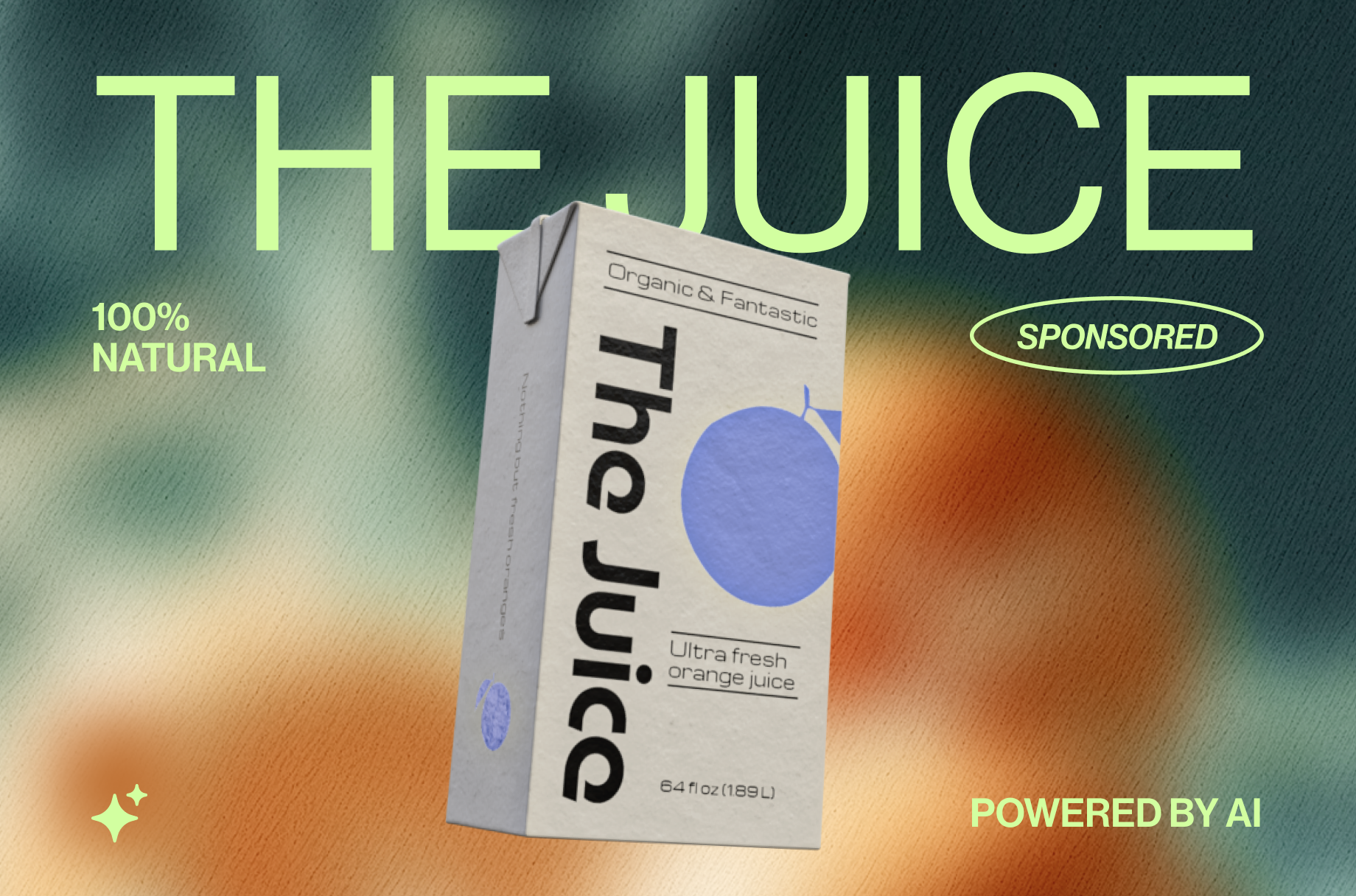
Every great business begins with a winning marketing strategy, your key to reaching the right audience and hitting your goals. Create a website to claim your space online and get your brand out there. From there, jump into smart marketing strategies like influencer marketing, PR and SEO to grab leads, drive traffic and grow your brand. Wix offers an AI website builder for on-brand, professional design.
This guide breaks down the what, why and how of marketing approaches and sales-driving techniques to set your business up for success.
Start building your online presence with Wix.
What is a marketing strategy?
A marketing strategy is a comprehensive plan designed to promote products or services, attract customers and achieve short, medium or long-term business goals. Its ultimate goal is to reach your target audience through marketing and advertising campaigns, encouraging them to buy or engage with your service. A well-crafted strategy can help boost brand visibility, engage customers and achieve key business objectives. It also helps you map out your target audience and identify the best ways to reach them using tracking and insights.
Essentially, a marketing strategy is an overarching plan that anyone deciding how to start a business or working with an existing business use to increase visibility and ultimately their profits. It can involve anything from creating a strong brand identity to developing innovative products and services. Successful marketing strategies should be tailored to your specific goals and objectives.
Creating strategic marketing strategies starts with defining what is product marketing for your niche, understanding where you are now, identifying key areas of improvement and focusing on achieving specific goals.
It should include:
- Goals of your business, e.g., to brand awareness or to sell services and products
- Your target market and research on who they are and where they are
- Buyer personas and information on your customer demographics, if relevant
- Competitors, including their marketing strategies and pricing
- Value of your product or services for your target customers
- Your company's value proposition and what sets up apart from competitors
- Your key branding messaging as this must run consistently through all your marketing materials and campaigns
For instance, Airbnb developed a groundbreaking marketing strategy by emphasizing user-generated content. They encouraged guests to share their travel experiences through photos and stories on social media, tagging their stays with #Airbnb. By doing this, they not only showcased the wide range of properties available but also built a sense of trust and community among travelers. This campaign created authentic engagement and quickly became a key driver of Airbnb’s global success.
What's the purpose of a marketing strategy?
Marketing strategies can have many different purposes. The main ones often cited are:
- Brand awareness
- Stronger customer relationships, both with existing and potential ones
- Competitive advantage, whether through more website traffic or greater brand awareness
- Furthers business goals, whether these revolve around building a brand or selling more
Marketing strategy vs. marketing plan
While these terms are used interchangeably, marketing strategies are broader summaries of what your business does to overcome your pain points, meet your goals and reach your audience.
Additionally, your marketing plan is highly detailed and involves the four Ps of marketing: product, price, place and promotion. It helps to ensure a more integrated marketing approach—that is, a unified message across all of your promotional channels.
How to create a marketing strategy in 5 steps
Creating a winning marketing strategy doesn’t have to be overwhelming simply follow these five simple steps to set clear goals, focus your efforts and achieve measurable results:
01. Define your goals
Data repeatedly shows that those who write down goals achieve more than those who don't. There are several ways to set your objectives, such as using the SMART Goals method, broader SWOT analysis. You might also need to run a marketing audit of your current strategies to see what's working, what's not and how this will impact your new marketing goals.
Your business goals might be to develop your brand awareness, break into a new geographic area or increase online sales by a given percent. The more specific and numerical these goals are, the better they can be tracked, measured and replicated.
02. Identify your target audience
After you determine exactly whom your business wants to reach, it will be clearer which marketing strategies to choose. That's because the messaging and platforms you'll use need to fit your target audience and target market. Audience parameters can be tied to demographics like age, gender, geographic region, likes, interests, etc. They can also be enhanced with competitor analysis. Create different lightboxes or conduct market segmentation to assist you in the process.

03. Understand your customer’s pain points and your value proposition
To develop a marketing strategy that works, you must understand what your ideal consumer struggles with regularly. This awareness will align your product, place, price and promotion to solve their pain points and increase your chances of scalability. Once you’re confident in your value proposition, you’re ready to proceed.

04. Select your marketing channels and allocate budgets
Where does your audience spend the most time—social media or reading online publications? Once you know where they are, choose the types of marketing and marketing channels to focus on. While niche marketing can be powerful, diversifying your strategy can also pay off.
Think about whether offline marketing could add value to your strategy. Combine it with personalized channels like email, SMS or social media to share tailored offers, encourage quick action and build trust with PR efforts like press releases, events and media outreach.
Set a budget for each channel, your KPIs and clear goals like ROI, engagement or lead generation. Use marketing tools to manage campaigns and a marketing plan template to stay organized. Check your performance monthly or quarterly and adjust your strategy based on results and trends.
05. Decide on the messaging, creatives and implementation plan
The final step in your marketing strategy is working on your messaging and creative formats. For example, if you plan to educate customers on product capabilities and spend a lot of time on YouTube, you might create a video campaign. The video messaging will resonate with your target audience in a relevant and meaningful way.

You can try direct marketing or PR activities to level up your strategy. Direct marketing is all about reaching your audience through personalized channels like email, direct mail, SMS or social media messages. It’s a great way to deliver tailored offers or info that encourages quick responses. PR, on the other hand, focuses on building a strong brand image through things like press releases, media outreach, events or partnerships. The goal here is to boost awareness and trust.
Create a simple content calendar, plan your budget for each channel and set clear goals like conversion rates, ROI, engagement, lead generation or sales growth. Once your plan is live, keep an eye on the results and adjust it monthly or quarterly based on what’s working and any market changes.

Why marketing strategies matter
There are plenty of benefits to defining your marketing strategies early on. Marketing strategies are essential for businesses as it helps them to identify their goals and objectives, understand their target audience and develop an effective approach to reach out to them. A well-crafted marketing strategy can help you gain a competitive advantage, improve your brand image and increase sales and revenue. Setting clear goals and objectives and aligning the marketing strategies to achieve them best sets you up for success. To understand more about the theory behind why marketing matters, we recommend the ideas and work of Michael Porter. He is credited with developing the concept of competitive advantage, for example. There's a lot to be gained from understanding his research and incorporating it into your marketing management.
Furthermore, marketing budgets might be limited when starting a business and a clear plan ensures you won't waste any resources. Besides, how will you measure success if you don't first establish what it looks like or how you'll get there in your small business marketing goals?
There's data to back this up. Marketers who document their strategy are over three times more likely to report success than those who don't, according to CoSchedule's research. Putting your strategy in writing is one of the simplest ways to improve your odds.
The main elements of a marketing strategy: what makes it good
| Element of a good marketing strategy | Action item | Why its important | Checklist |
|---|---|---|---|
| Target audience | Define your Ideal Customer Profile (ICP) | Use data to find the specific person who has the problem you solve. | [ ] |
| Market research | Perform a SWOT and Competitor Analysis | Identify your Strengths, Weaknesses, Opportunities, and Threats compared to competitors. | [ ] |
| Value prop (USP) | Clarify your Unique Selling Proposition | If you disappeared tomorrow, what would your customers miss that they can't get elsewhere? | [ ] |
| Goals and KPIs | Set SMART Goals and trackable metrics | Specific, Measurable, Achievable, Relevant, and Time-bound targets | [ ] |
| Channel selection | Pick 2-3 core platforms | Check where your audience actually hangs out e.g., LinkedIn vs. TikTok. | [ ] |
| Content strategy | Create value first content | Plan content that educates or entertains before it sells. AI can help draft but humans must edit. | [ ] |
| Customer journey | Map the awareness to advocacy path | How does a stranger become a lead, then a buyer then a fan who refers others? | [ ] |
| Budget and tools | Allocate spend and select your MarTech stack | Decide your ad spend vs. organic effort and pick tools (CRM, Email, Analytics) to automate. | [ ] |
| Brand voice | Establish a consistent tone and visual style | Whether you are "Bold and Edgy" or "Safe and Professional," it must be the same on every page. | [ ] |
For more information on what makes an effective modern marketing strategy, we recommend looking to Phil Kotler, whose work on marketing management and the importance of connecting with your audience, has been instrumental in improving marketing strategies.
The 4 Ps (now 5 Ps) of marketing
Not sure where to start with this? Consider using the marketing mix or 4 Ps of marketing. This is an approach that helps organizations develop and implement effective marketing strategies. It consists of four key elements that collectively shape a company's marketing approach—product, price, promotion and place or distribution.
In addition to this some models now include a 5th P: People. Focusing on the importance of customer and employee interactions in the marketing mix.
The marketing funnel
The marketing funnel shows how customers go from learning about your business to making a purchase. It has four stages: awareness, consideration, decision and retention. Each stage needs a different approach to guide and engage customers.
In the awareness stage, focus on getting noticed through ads, social media or SEO. During consideration, share helpful content like blogs, reviews or videos that solve problems or answer questions. In the decision stage, use things like discounts, free trials or personalized messages to encourage action.
Retention is just as important as getting new customers. Keep your audience engaged with loyalty programs, helpful emails and great customer service. A strong funnel turns leads into loyal customers and helps your business grow over time.
The 4 growth strategies (Ansoff's Matrix)
Beyond the tactics and channels you choose, it helps to decide the overall growth direction of your marketing. One classic framework for this is Ansoff's Matrix, which maps four growth strategies based on whether you're selling existing or new products to existing or new markets:
- Market penetration: Sell more of your existing products to your existing market. This is the lowest-risk option and usually relies on promotions, pricing or increased usage.
- Market development: Take your existing products into new markets, such as a new region or a new customer segment.
- Product development: Create new products or features for the market you already serve.
- Diversification: Offer new products to new markets. This carries the most risk but can open the door to significant growth.
Choosing the right quadrant depends on your goals, your appetite for risk and the conditions in your market. Many businesses combine more than one over time as they grow.
13 best marketing strategies
One of the biggest challenges in marketing strategies is keeping up with changing market trends and consumer preferences. Developing an effective marketing strategy can also require significant time, resources and expertise; the list of the types of marketing strategies out there is extensive. By analyzing the top marketing trends and doing in-depth customer and market research, we've narrowed it down to the top strategies for you.
Remember that no matter which methods you decide to include, they will only be effective if your audience likes and trusts your business. As you carry out campaigns, aim to educate, inspire or entertain your audience, so you'll see the most impactful results.
- Content marketing
- Social media marketing
- Search engine optimization (SEO)
- Pay-per-click advertising (PPC)
- Email marketing and newsletters
- Influencer marketing
- Earned media and PR
- Landing pages
- Advertising
- Affiliate marketing
- Retargeting
- AI marketing
- Partnership marketing
01. Content marketing
In the past decade, there's been a shift in the marketing mindset. Today we see a rise in blogs, podcasts and webinars that are engaging and inclusive to audiences—so they feel more connected with brands.
Creating valuable and informative content has become a win-win especially when it comes to developing and improving customer engagement. Content marketing creates a strategic opportunity for your business to connect with a customer meaningfully.
Content marketing also helps you generate awareness, become an authority and tell a story. Focusing on this strategy early on is handy for other marketing ideas, as you can share your content on social media or in email newsletters later. The most popular content strategies are:
- Content writing
- Infographics
- Video marketing
- Starting a podcast

02. Social media marketing
From Instagram Reels to TikTok, your options of getting in front of new audiences are endless. Ensure you strategically choose which channels you focus most on, based on your target audience. If you aim to reach a professional audience, LinkedIn is a must for creating a company page. Social media platforms are a great way to secure first-mover advantage, a concept in marketing and business when companies are the first to market in a specific product category. The speed at which it's possible to generate and distribute multimedia content on social media is ideal for this.
Related reading: The dead internet theory and how to protect your brand from bots
Video marketing is a format that is becoming more heavily favored on social media as users consume more content on their mobile devices (this marketing strategy also works well if you're focusing on mobile marketing), so consider this as an important form of content creation in your marketing strategy. This marketing strategy also allows brands to tap into the phenomenon of viral content. While not easy to achieve, it can have a dramatic impact on key marketing metrics and KPIs, such as website traffic and brand visibility.
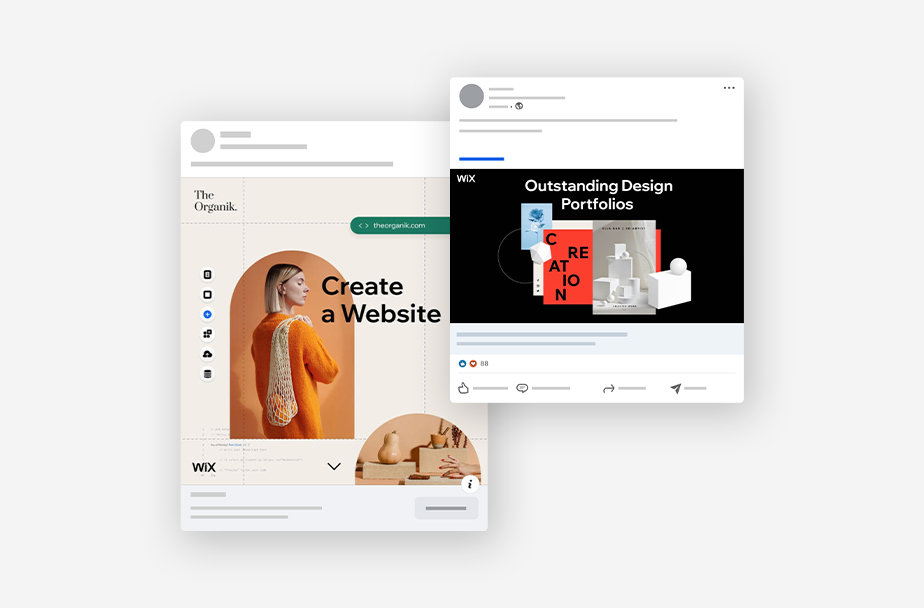
Social media advertising is another component that should not be overlooked. For example, advertising on Facebook can drastically increase new customers. Want to try social advertising for your business? Facebook & Instagram Ads with Wix lets you create and optimize campaigns across both platforms directly from your site's dashboard. Remarketing on social media channels is a highly effective way to bring people back to your website to complete a purchase.
Popular social networks for promoting a business:
- Instagram marketing
- YouTube marketing
- TikTok marketing
- Facebook marketing
- LinkedIn marketing
- Pinterest marketing
- Twitter marketing
Our recommended reading to improve your social media strategy:
- Types of Social Media Content for Your Business
- How to Increase Social Media Engagement
- Ways to Improve Your Social Media Presence

03. Search engine optimization (SEO)
Search engines are filled with micro-moments. These are high intent instances when someone wants to learn, buy or do something. By optimizing your chances of ranking higher on search engines to show up at these instances, you're practicing search engine optimization SEO.
Search engine optimization (SEO) can be used as a core marketing strategy or a marketing tactic. In either case, a solid SEO strategy centers around making a brand’s content desirable, discoverable and accessible for web users via search engines like Google and Bing. Like inbound marketing, the most effective SEO strategies will include a great deal of audience research (typically with keyword research) and will be designed to ensure the brand has competitive visibility within the target audience.
SEO strategists tend to specialize in certain skills, such as technical SEO. Taking this approach can help brands to concentrate knowledge, utilize the most effective SEO tools and best satisfy user intent.
Using SEO techniques, you'll direct the right kind of traffic to your site. People who find you through searches already arrive at your business website with intent. Driving traffic to your website isn't the only significant benefit. Bottom line sales also improve with SEO. In fact, 70% of online marketers say that "SEO is better than PPC advertising for generating sales."
To implement an SEO strategy, start by learning how to do keyword research the right way. After selecting which high intent keywords you're after, you can begin optimizing your content and improving your online presence to increase your search ranking and visibility.

04. Pay-per-click advertising (PPC)
Pay-per-click (PPC) advertising is a smart way to drive targeted traffic to your website through platforms like Google, Bing and social media. The best part? You only pay when someone clicks your ad, making it a cost-effective strategy to reach your ideal audience. Even better, PPC campaigns typically deliver a 200% return on investment, making them a highly effective choice for businesses.
Search advertising is one of the most common PPC methods. Businesses bid on keywords to appear at the top of search results. For instance, a local bakery could bid on “best cupcakes near me” to make sure customers find them first. Display ads are another effective option, like banners on related websites or social media ads tailored to specific demographics, interests or behaviors.
PPC campaigns are easy to track, helping you measure your return on investment (ROI) with precision. It’s a great way to generate leads quickly, promote seasonal offers or drive product launches.
Here’s how to get started with PPC advertising:
- Keyword bidding: Use tools like Google Ads or Bing Ads to identify high-volume keywords for your business and create targeted campaigns.
- Social media ads: Run tailored campaigns on platforms like Facebook or LinkedIn to reach specific audience segments.
- Retargeting ads: Re-engage visitors who left your site without taking action by showing them targeted ads that bring them back.
05. Email marketing and newsletters
According to Amanda Buhse, owner & COO of Coal and Canary:
"We focus a lot on our email marketing from our Wix site. One of our emails alone has generated over six hundred orders and over $40k in revenue. Currently, we send out newsletters and emails once a week now."
When done correctly, your newsletter and email marketing strategy can create a strong ROI, improve customer retention and influence purchasing decisions.
Email marketing tips:
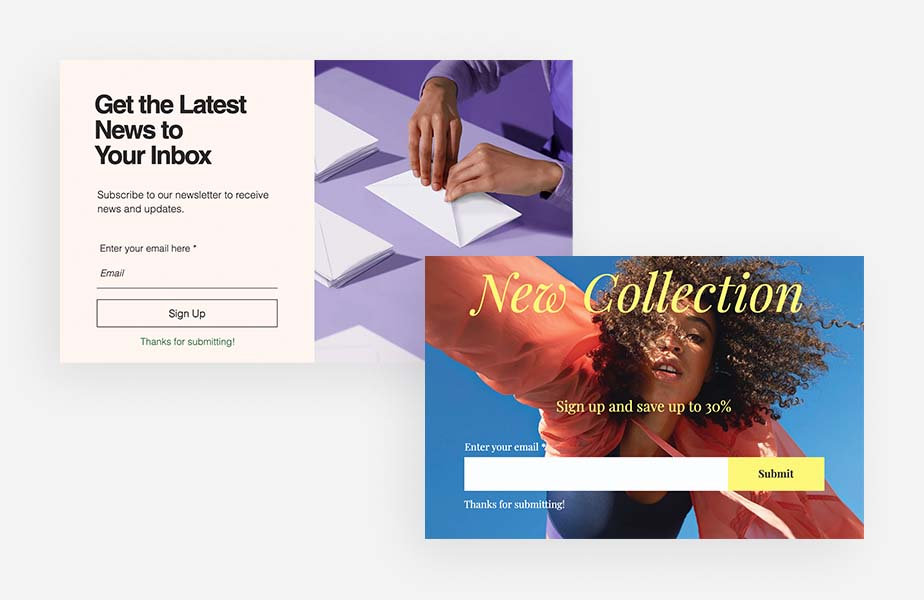
- To build your email list, add a pop-up to your website to collect user information.
- Share engaging content in your emails, such as blog posts, user-generated content and videos.
- Personalize emails by adding information such as first names and customizing content based on how the user engaged with your site.
06. Influencer marketing
According to author and entrepreneur Seth Godin, "People do not buy goods and services. They buy relations, stories and magic. These wise words sum up the power of influencer marketing. As one of the quickest growing marketing strategies, influencer marketing uses real people to speak for your brand. Another side of it, is tapping into celebrity branding—using high profile influencers or online celebrities as part of your marketing efforts.
Influencers are individuals with high following or authority on a given topic or niche. This is one of the best marketing strategies because you get to expose your products and brand to a high follower reach without spending time building the audience. More than that, the influencer you've chosen to work with can use their authority to sway potential consumers to buy. Influencer marketing is not unlike word of mouth marketing or referral marketing.
According to Sarah Adam, head of marketing partnerships and influencer marketing for Wix Studio:
"Marketing is forever changing and to be competitive and stand out, you need to keep up with the industry changes. Tactics that worked last year are no longer recommended today. Influencer marketing is a great example of that. It is literally changing and growing by the day and that is the core nature of the industry."
The key is to find influencers that relate to your product and align with your brand values. Don’t be afraid to start with smaller partnerships with nano and micro-influencers. Interestingly enough, often their engagement rates and conversions are much higher than the ones with massive followers.
After reading these impressive stats below, you’ll further understand the lucrative power of a good influencer marketing strategy in helping your secure greater market penetration as part of a wider mass marketing strategy:
- 60% of marketers report better performance with influencer content vs. their own brand content.
- Over 70% of marketers agree that the quality of customers and traffic from influencer marketing is better than other forms of marketing.
- Influencer marketing yields between 5.20to5.20 to 5.20to6.50 for every one dollar spent.
07. Earned media and PR
After you've launched your business and website, it's time to spread the word. Gaining positive publicity and traction from media outlets will create the buzz around your business to get the attention of the masses. Business marketing strategies within this realm come in varying forms, including TV, newspapers, radio and podcasts.
Ideally, the press and publicity you acquire are organic (unpaid), but even if you’re considering working with a paid PR agency, the ROI can prove worthy. Bill Gates himself said, “If I only had two dollars left, I would spend one dollar on PR. It's an effective way to take your marketing communication to the next level.
08. Landing pages
What is a landing page? In simple terms—a marketer's best friend. This standalone page has one clear goal which is conversions.

09. Advertising
There are numerous types of advertising to consider for your business. From social media advertising to TV and print advertising, the options for advertising campaigns greatly vary. One thing is clear, online advertising is a powerful way to get your audience's attention. Its digital technology helps you better target, track and measure the results of your paid marketing investment.
Learning how to advertise on Google early on will significantly benefit your growth within digital advertising. Since Google is the largest search engine globally, you want to stay ahead of the competition and show up for strategic keywords related to your offerings with Google ads. Advertising on Google and many social media platforms is also known as Pay-Per-Click (PPC) advertising.
To choose the proper advertising methods for your business, consider:
- Your audience
- Costs and budget
- Timing and length of your campaign
- Creative assets available
10. Affiliate marketing
To answer the question, “What is affiliate marketing?” you can think of it as paid partnerships where others promote your brand for you. By creating an affiliate marketing program, you’re ultimately working with another affiliate that will distribute product promotions on their social media accounts, blog or other platforms. Their sales get tracked with unique links called affiliate links, which allow the individual to get compensated based on performance.
This type of marketing is increasing in popularity, and more and more companies are rolling out their own affiliate programs. Due to this growth, today, 81% of advertisers include affiliate marketing as part of their overall marketing strategy.
11. Retargeting
Retargeting is a highly effective way to reach people who are already familiar with your brand and have expressed some level of interest in what you have to offer. It allows you to show ads to people who have already visited your website or shown interest in your products or services.
There are a few different ways to retarget people who have visited your website, from display and social media ads to email marketing, which can help you in the following ways:
- Increase brand awareness. Make sure your brand is top of mind for people who have already visited your website. This can make them more likely to remember you when they are ready to make a purchase.
- Generate leads. Showing ads to people who have visited your website and have done nothing else can encourage people to take the next step. Try offering free discounts or trials to give further incentives.
- Drive sales. People who abandoned their shopping carts or visited your website but didn’t buy anything might just need a reminder, and you can make sure they get one.
Whichever platform you choose, just make sure you are tracking the results of your retargeting campaigns so that you can see what’s actually working.
12. AI marketing
Artificial intelligence (AI) is rapidly transforming the world of marketing. AI-powered tools and technologies are being used to automate tasks, personalize experiences and target audiences more effectively. As a result, AI is becoming an essential part of any successful marketing strategy.
AI marketing is still in its early stages, but is rapidly growing in popularity. As AI technology continues to develop, it's likely that AI marketing will become even more important in the future. Here are some specific examples of how AI is being used in marketing today:
- Chatbots: Chatbots are AI-powered software programs that can simulate conversation with human users. Chatbots are increasingly being used in marketing to provide customer support, answer questions and generate leads.
- Personalized recommendations: AI can be used to recommend products or services to customers based on their past purchase history, interests and online behavior. This is a powerful way to increase customer engagement and drive sales.
- Targeted advertising: AI can be used to target ads to specific audiences based on their demographics, interests and online behavior. This is a more effective way to reach target audiences and improve the return on investment (ROI) of advertising campaigns.
- AI website maker: There are a number of AI-powered design tools available that can help businesses create websites more quickly and easily. These tools use AI to generate templates, layouts and even content for websites. Wix offers an AI website builder that creates a unique, business-ready site in no time.
These are just a few examples of how AI is being used in marketing today. As AI technology continues to develop, we can expect to see even more innovative and effective ways to use AI in marketing in the future (such as AI marketing automation).
13. Partnership marketing
Partnership marketing is a smart and effective way to team up with other businesses to achieve shared goals. By combining strengths, audiences and resources, businesses can expand their reach, boost brand visibility and drive sales—all while creating value for everyone involved.
One popular approach is co-marketing, where two brands work together to create and promote content or campaigns. For example, a fitness app might collaborate with a health food brand to produce a joint eBook on nutrition and workouts, sharing it with both audiences. Or a travel company might partner with a luggage brand for a giveaway, attracting a larger audience while highlighting both brands.
By pooling resources, partnership marketing saves time, cuts costs and delivers more impactful results than going it alone. It builds strong business relationships and provides greater value to shared audiences.
Here are some ideas to get started with partnership marketing:
- Co-branded content: Create shared content, such as blog posts or videos, that highlights both brands and reaches wider audiences.
- Joint events: Host webinars, workshops or live events together to engage both audiences and build stronger relationships.
- Affiliate collaborations: Partner with affiliates who promote your brand in exchange for a commission, increasing reach and sales.
Marketing strategies examples (and why we love them)
Wix: Content marketing with education in mind
If you haven't yet heard—we launched a podcast. Now What interviews leaders to discuss the future of business, design and eCommerce. The episodes are filled with helpful insights on succeeding as an entrepreneur as technology keeps changing.
Podcasting is a content marketing strategy that centers around the listener. On top of educating and informing with this content, Wix also turns some episodes into blog posts and shares them on social media. We saw how helpful it could be to have all types of content that listeners and readers can consume in the medium that best fits them. And most importantly its not just about promotion—it can inspire and teach something new. Podcasts and other forms of marketing content can also be used as part of your customer relationship management, as they allow you the ability to engage directly with your users or potential customers.

Berta: Social media marketing that keeps up with the trends
Bridal company Berta didn't earn its 2.9 million followers for nothing. Their highly engaging, humorous and trendy Instagram Reels and TikToks take over social media feeds. In one of their Instagram videos, they used a trending voice-over of the Kardashian family speaking. They styled each Kardashian voice with a different Berta dress to playfully showcase their dress line to each unique personality.
Their trendjacking marketing strategy is not only clever and entertaining, but it also displays products naturally. Berta makes themselves relatable and likable, while also positioning themselves as driven by innovation, through social media—something all brands can learn from.

Etsy: Email marketing campaigns that add value
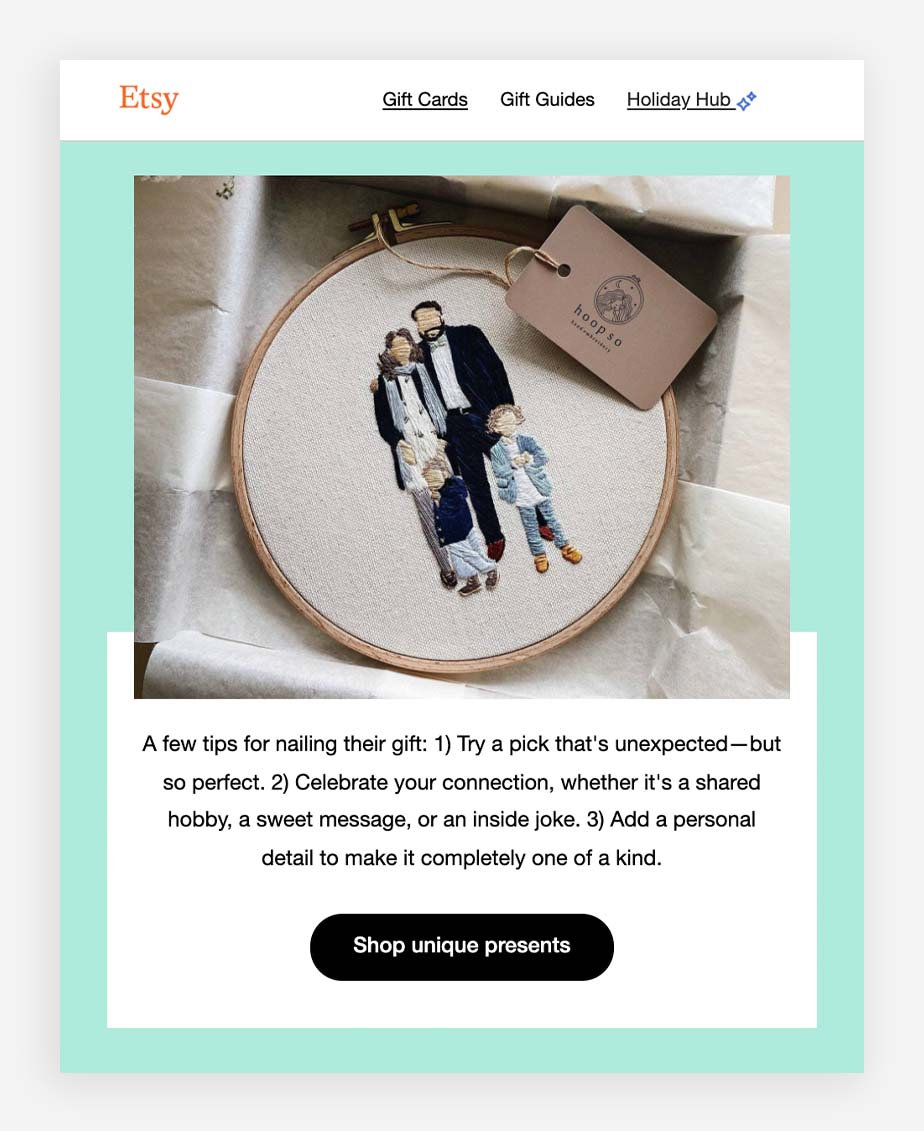
Etsy, a platform known for its handmade gifts, understands how to use email marketing to showcase products while also benefiting the reader. The sharp yet level-headed subject line "Next-level gifting" grabs attention immediately. Opening the email with the following helpful advice:
"A few tips for nailing their gift: 1) Try a pick that's unexpected—but so perfect. 2) Celebrate your connection, whether it's a shared hobby, a sweet message or an inside joke. 3) Add a personal detail to make it completely one of a kind."
The email grouped different products, such as jewelry, cozy gifts, heartfelt art and more. As a receiver, you're happy you got some thoughtful gift ideas from Etsy. Instead of spamming product links into an inbox, Etsy added value and tried to find ways their marketing could be helpful.
Blue Apron: Influencer marketing with a niche
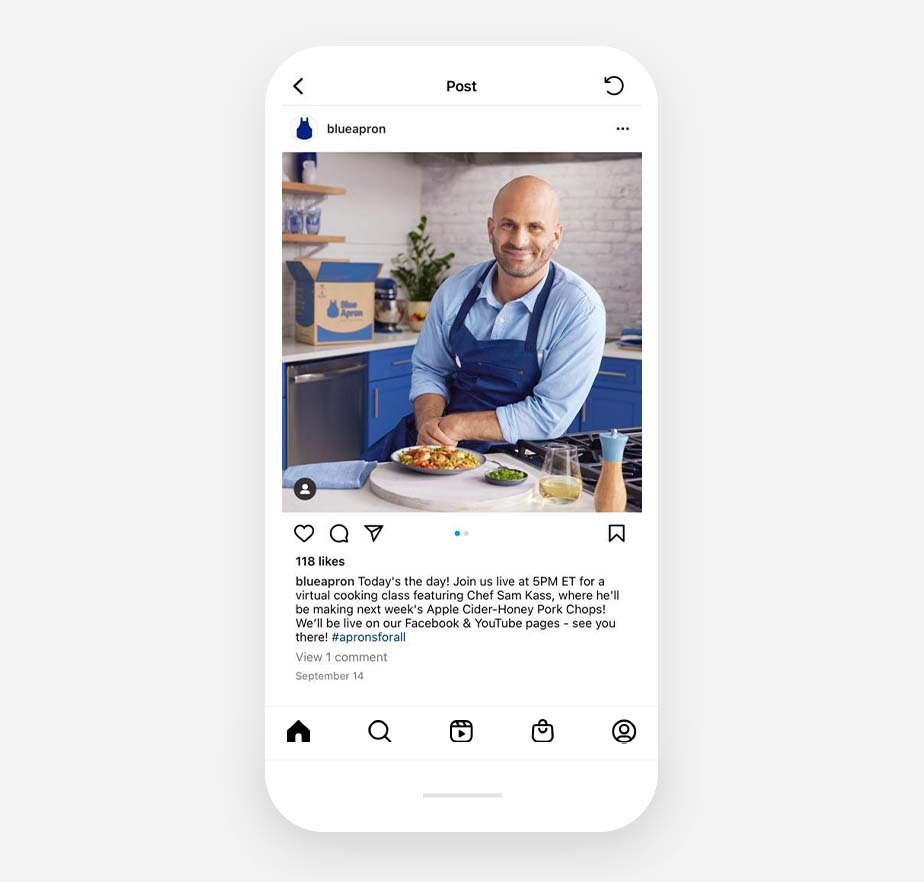
As a meal prep business, you can only imagine how strategic it was for Blue Apron to partner with a top chef like Sam Kass. Kass reaches 20,000 followers that are likely all food lovers. Blue Apron's use of influencer marketing and personalization has boosted engagement by hosting a virtual cooking class with Kass, helping them foster brand trust. They stayed focused on their niche within the foodie world and used leaders aligned with their values to represent their brand. While a highly effective strategy on its own, mass marketing is not necessarily the right approach in every situation. Understanding your market share within a niche that is more likely to convert is more important sometimes than focusing on a wider market grab. In essence, strategic marketing is where it's at.
How to track effective marketing strategies
Tracking your marketing strategies according to their set KPI's is essential for understanding how effective they have been and so you can optimize them as they run.

We've put together some of the main ways in which you can track your marketing strategies from planning to execution. The specific KPIs for each marketing strategy may vary, but in general they should all be tracked according to the following steps.
- Set your goals and define what you want to achieve with your marketing strategies. Do you want to increase website traffic, generate leads, boost sales or improve brand awareness?
- Choose the key performance indicators (KPIs) that align with your goals. If one of your goals is to increase website traffic, then your KPIs or marketing metrics would be page views, bounce rate and time on site.
- You should use always tracking tools in order to collect the specific data you need to understand how close you are to meeting your KPI's or not. The exact tools you use will vary according to your goals and specific metrics but some popular examples include Google Search Console, tools that track social media analytics and email marketing software. Make sure to fully understand what it is your tracking before choosing the right analytics tool for you. Some tools can measure multiple KPIs, such as traffic sources, traffic numbers and more. You may need to check that you have the necessary tracking codes installed on your website and landing pages to monitor your campaign's success.
- Once you've collected your data, you'll need to analyze it. First of make sure to regularly review and analyze the data collected from your tracking tools, either on a weekly, monthly or quarterly basis. This will help you identify what's working and what needs to be improved. It should also help you plan better future marketing strategies and campaigns.
- Don't be afraid to adjust your strategies. Based on the insights gained from your data analytics, you'll most likely need to adjust or optimize your marketing strategies to improve them. One example of this is if your social media campaign is not generating the desired engagement, try experimenting with different content formats or posting times.
- Monitor your strategies and their progress both over the short and long term. This should be a continuous process that involves reviewing your KPIs and metrics to ensure that you're on track to achieve your objectives.
What is a marketing strategist?
A marketing strategist is someone, generally referred to as a professional, who develops and implements marketing plans and campaigns to achieve a company's marketing and sales goals.
Their responsibilities include conducting market research, analyzing consumer behavior and market trends and identifying target audiences. From this information, they create effective marketing strategies and tactics, including product positioning, pricing, promotion and distribution. The ultimate aim of a marketing strategist is to increase brand awareness and drive sales growth.
Marketing strategy for different industries
Marketing strategies should fit each industry. Retail businesses thrive with social media, influencer partnerships and seasonal promotions. Meanwhile, growing eCommerce brands focus on email marketing, SEO and targeted ads.
A restaurant might focus on Instagram for great food photos while a tech company could use LinkedIn to share ideas and connect with B2B clients. Many eCommerce brands are now trying live shopping and augmented reality while the healthcare industry is turning to telemedicine and digital ads.
The main types of marketing
The main types of marketing can be broadly divided into two categories: traditional marketing and digital marketing.
Traditional marketing
This type relies on offline channels to reach its target audience and consumers.
Examples include print (newspapers, magazines, brochures), broadcast (TV, radio commercials), direct mail (catalogs, coupons), outdoor advertising (billboards, bus ads) and in-person or online public relations (press releases, media events).
Digital marketing
This type uses and takes place on online channels to connect with consumers. It includes content marketing (blog posts, articles, videos), social media marketing (Facebook, Twitter, Instagram), search engine optimization (SEO) for better search ranking, search engine marketing (paid ads on search results), email marketing, affiliate marketing (partnering with other websites) and mobile marketing (text messages, apps).
Marketing strategies FAQ
How often should you update your marketing strategy?
You should review your marketing strategy at least once a year or anytime there’s a big change in your business, industry or audience. Checking in more often, like every quarter, helps you stay on top of trends and keep your strategy relevant.
What are the common mistakes to avoid in marketing strategies?
Common mistakes include not knowing your target audience or skipping data and analytics. Others are relying too much on one channel, setting unrealistic goals or ignoring competitors and trends.
What are the main components of a good marketing strategy?
While the precise marketing strategy you choose will depend on your specific business, industry and marketing KPIs, the components of a good marketing strategy remain the same. These include clear goals and objectives, a well-defined target audience, a unique value proposition, a solid competitive analysis plan, a great marketing mix, a clear budget and metrics complete with a structured implementation plan.
Why is a good marketing strategy so important for your business?
A clear, planned marketing strategy is essential for your business, for the following reasons - it provides focus for all marketing efforts, it maximizes ROI, helps with brand building, enables measurement and optimization of marketing efforts, and allows you to stay competitive amongst other businesses.
What are best practices for marketing strategies?
- Conduct thorough market research to identify target audience and market trends
- Develop a clear and concise marketing message that resonates with your target audience
- Use a variety of communication channels to reach your target audience effectively
- Keep track of the results and adjust your marketing strategy accordingly
What are the 4 Ps of marketing strategies?
The four Ps are product, price, place, and promotion. Each ingredient in this marketing mix plays an important role in increasing sales and building a smart strategy for promoting your business.