Iran says memorandum reached with Pakistani mediator, awaits US response (original) (raw)
An Iranian official told Al Jazeera on Saturday that Tehran had reached a memorandum of understanding with the Pakistani mediator in negotiations with the United States and was now awaiting Washington’s response, in what could mark a critical turn in efforts to prevent a return to war.
According to the official, the draft understanding includes ending the war, lifting the blockade on Iran, reopening the Strait of Hormuz and withdrawing U.S. forces from the combat zone. The memorandum does not include nuclear issues, the official said, because they are complex and require more time for negotiations. Thirty days after an agreement is reached, he added, the door could be opened to nuclear talks.
Pakistan’s army chief leaves Tehran as Iran-US talks enter decisive final stretch
The official said Pakistan’s army chief Gen. Asim Munir had been expected to announce the memorandum of understanding in Tehran, but left Iran in order to coordinate with Washington. Qatar, he said, played a key role in drafting the document, and there had been communication between the mediators and Washington.
“Iran cannot offer more concessions than those included in the memorandum of understanding,” the official said.
U.S. Secretary of State Marco Rubio said Saturday that there had been “some progress” in the talks with Iran, but said Washington’s core demands remained unchanged.
“There may be news later today,” Rubio said. “I don’t have news for you at this very moment. There might be some news a little later today. There may not be. I hope there will be, but I’m not sure yet.”
#WATCH | Delhi | On talks with Iran, US Secretary of State Marco Rubio says, "There's been some progress made...Even as I speak to you now, there's some work being done...This issue needs to be solved, as the President said one way or the other. Iran can never have nuclear… pic.twitter.com/eoFZBiglCi
— ANI (@ANI) May 23, 2026
Rubio said work was continuing even as he spoke, adding that “there is a chance” the administration could have something to say “whether it’s later today, tomorrow, in a couple days.”
But he stressed that the dispute must be resolved, echoing President Donald Trump’s position that Iran cannot be allowed to obtain a nuclear weapon.
“The straits need to be opened without tolls,” Rubio said. “They need to turn over their enriched uranium. They need to turn over their highly enriched uranium. We need to address that issue. We need to address the issue of enrichment.”
Rubio said those had been Trump’s consistent demands, while emphasizing that the president’s preference was still to resolve the crisis diplomatically.
“The President’s preference is always to solve problems such as these through a negotiated diplomatic solution,” Rubio said. “That’s what we’re working on right now.”
Still, Rubio warned that the issue would be resolved “one way or the other.”
“We hope it’s done through the diplomatic route,” he said. “That’s what we’re working on.”
The reported breakthrough came as Munir left Tehran after a rapid series of meetings with senior Iranian officials, including President Masoud Pezeshkian, Foreign Minister Abbas Araghchi and parliament speaker Mohammad Bagher Ghalibaf. Munir has been serving as a mediator in the negotiations between Tehran and Washington.
Munir landed in Iran on Friday night and held hours of talks into the night with Araghchi. On Saturday, he met Ghalibaf, who has been involved in the talks, as well as Pezeshkian. He then met Araghchi again before departing Tehran.
According to Iranian reports, Ghalibaf told Munir that Tehran would not compromise on what it considers its national rights and warned that any renewed U.S. military action would carry severe consequences. Iranian media also quoted him as saying that Iran’s armed forces had rebuilt their capabilities during the ceasefire.
Munir, for his part, was quoted by Iranian media as praising Iran’s leadership during the meeting.
Araghchi later told UN Secretary-General António Guterres that Iran remained committed to diplomacy, while accusing Washington of undermining the talks through excessive demands, according to Iranian reports. He also spoke with Oman’s foreign minister, Badr al-Busaidi, whose office said the two discussed the importance of restoring safe maritime navigation.
Against the backdrop of the diplomatic contacts, Iran’s military said it had prepared itself for a broad confrontation with any enemy threat or aggression.
An Iranian lawmaker on the National Security Committee also addressed Munir’s visit in an interview with the Iranian news agency ISNA, saying there was cautious optimism about the talks but that serious obstacles remained.
“Given the goodwill between Iran and Pakistan, I feel that we are moving closer to a final agreement, but there are challenges,” the unnamed official said.
He added that both sides believed the main difficulties were coming from the American position, and said deeper negotiations were expected later in the day. The meeting, he said, could be viewed positively, though some of Washington’s recent positions were “worrying.”
Meanwhile, Britain’s United Kingdom Maritime Trade Operations, which monitors threats to shipping, said Saturday afternoon that numerous vessels had reported suspicious activity in the Gulf of Aden, between Yemen and Africa.
According to UKMTO, it received multiple reports of boats approaching vessels, as well as a large boat with two outboard engines seen carrying ladders and weapons. The agency urged ships transiting the area to exercise caution and report any further suspicious activity, adding that authorities had opened an investigation.
Qatar, another mediator in the talks, said its prime minister and foreign minister, Mohammed bin Abdulrahman Al Thani, had spoken with Araghchi about efforts to achieve peace and improve stability in the region.
According to Qatar, Al Thani stressed that freedom of navigation was a fundamental principle that could not be compromised, and warned that closing the Strait of Hormuz or using it to apply pressure would only deepen the crisis and endanger the interests of countries in the region.
Iranian reports said Araghchi also spoke Friday with Turkish Foreign Minister Hakan Fidan and Iraqi Foreign Minister Fuad Hussein.
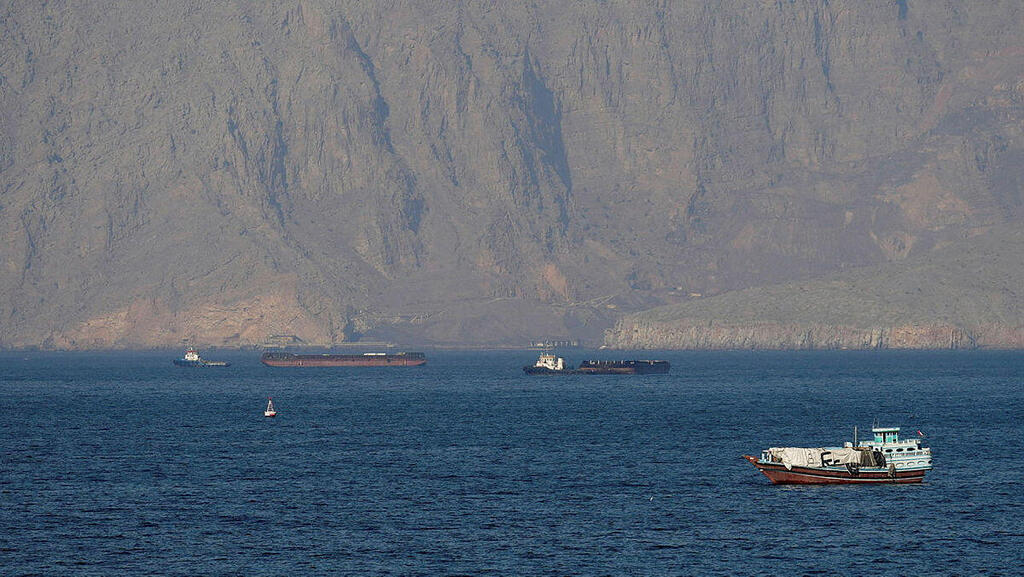
The Islamic Revolutionary Guard Corps, however, continued to demand security coordination for ships passing through the Strait of Hormuz, amid the U.S. pressure campaign on Iran. In a statement issued at noon, the IRGC said that over the previous 24 hours, 25 vessels, including oil tankers, container ships and commercial vessels, had passed through the strait.
3 View gallery
(Photo: REUTERS/Stringer/File Photo)
According to the IRGC, the ships crossed only after receiving the required approvals and in coordination with security provided by its navy. Reports said most of the vessels belonged to countries in Southeast Asia.
The two main points of dispute in the talks appear to be Iran’s enriched uranium stockpile, which unverified reports say Mojtaba Khamenei is refusing to remove from the country, and freedom of navigation through Hormuz.
Iran is continuing to demand an initial agreement to end the war before any negotiations on the core disputes, including its nuclear program.
Iran’s Tasnim news agency argued that Washington’s demand for a complete halt to uranium enrichment inside Iran had become unrealistic after the war, saying Tehran now views “zero enrichment” as tantamount to surrender. The agency said U.S. and Israeli military action had not caused Iran to retreat, but had instead strengthened its determination to maintain enrichment on its own soil.
On Friday night, the Qatari newspaper Al-Araby Al-Jadeed quoted a source in Pakistan’s Foreign Ministry as saying that Washington and Tehran were not showing enough flexibility on key issues, and that Munir’s visit to Tehran might be a last effort to prevent the war from returning to the region.
CBS reported that the administration in Washington was preparing for a possible new military strike against Iran, though no final decision had been made. Some members of the U.S. military and intelligence community reportedly canceled their Memorial Day weekend plans.
3 View gallery
(Photo: AP Photo/Alex Brandon)
Defense and intelligence officials also began updating emergency preparedness lists for U.S. facilities abroad, while forces deployed in the Middle East are being rotated as part of an effort to reduce the American military presence in the region amid concern over possible Iranian retaliation.
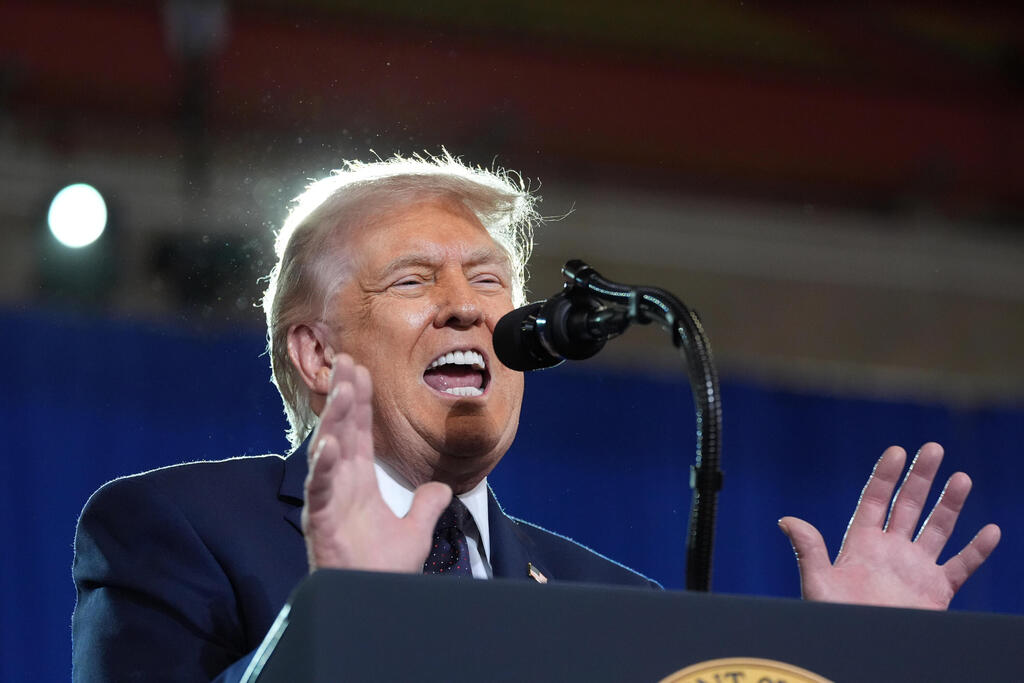
U.S. President Donald Trump said Friday that because of the situation and the “important period,” he would miss the wedding of his son Donald Trump Jr. in the Caribbean on Saturday and remain at the White House.
Axios reported that Trump has grown frustrated in recent days, after saying Monday that he had called off a major strike planned for the following day in order to give diplomacy another chance.
A source close to Trump told Axios he had raised the possibility of a “final” operation involving extensive strikes, after which he would declare victory and end the war. Another U.S. official described the negotiations in recent days as “painful,” saying drafts were being passed back and forth daily without significant progress.
The Wall Street Journal reported that Munir’s arrival in Iran reflected a critical point in the negotiations, though it remained unclear where the talks were heading despite reports of a final draft for a brief memorandum of understanding that would end the war and defer the main disputes, led by the nuclear issue, to later talks.
Journal correspondent Laurence Norman reported, citing his sources, that the reported draft was inaccurate. The newspaper later reported, citing Middle Eastern sources, that although mediators were trying to accelerate the talks and reach a breakthrough, failure to do so could lead to the war resuming within days.