Trump declares Iran deal complete Pakistan says ceasefire begins immediately, includes Lebanon (original) (raw)
The agreement, described by Iranian officials as a memorandum of understanding, is expected to be signed officially in Switzerland on Friday, June 19. According to Iran, the signing will open a 60-day period of negotiations toward a final agreement.
4 View gallery
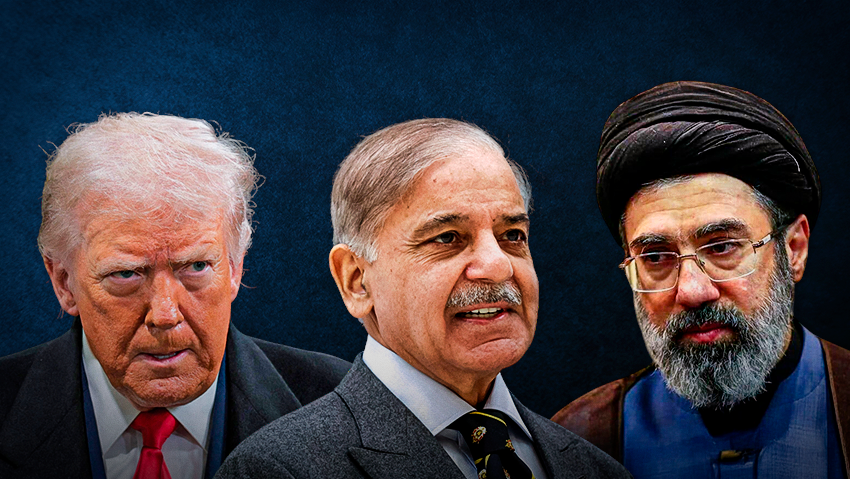
US President Donald Trump, Pakistani Prime Minister Shehbaz Sharif, Iranian Supreme Leader Mojtaba Khamenei
(Photo: Anna Moneymaker / AFP, ATTA KENARE / AFP, Sputnik/Alexander Kazakov/Pool via REUTERS)
Sharif, whose government has served as a central mediator between Washington and Tehran, said in a statement that a “peace agreement” had been reached between the United States and Iran. He said the two sides had agreed to the “immediate and permanent termination of military operations on all fronts, including in Lebanon,” where Israel has been fighting Hezbollah, the Iran-backed terrorist group. Lebanon is included because the war between the United States and Iran has intensified the wider confrontation between Israel and Tehran’s regional allies. Sharif added that once the agreement takes effect, mediators would help facilitate a series of meetings this week ahead of the signing ceremony.
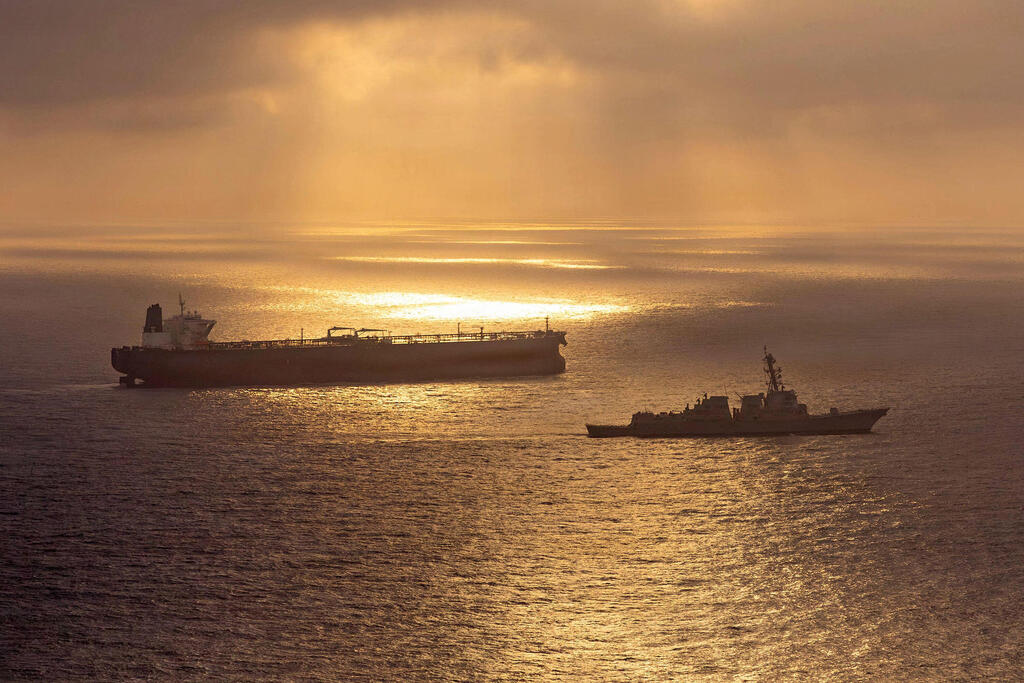
Minutes after Sharif’s announcement, Trump confirmed the deal on Truth Social. “The Deal with the Islamic Republic of Iran is now complete,” he wrote. “Congratulations to all!” Trump also said he had authorized the reopening of the Strait of Hormuz, one of the world’s most important oil shipping routes, and the immediate lifting of the U.S. naval blockade on Iran. “I hereby fully authorize the free and toll-free opening of the Strait of Hormuz, and at the same time authorize the immediate lifting of the United States naval blockade,” Trump wrote. “Ships of the World, start your engines. Let the oil flow!”
The Strait of Hormuz connects the Persian Gulf to global markets and is a critical route for oil exports. The U.S. naval blockade was imposed during the war to restrict Iranian maritime activity and increase pressure on Tehran.
A short time after Trump’s post, Iranian state television also announced that a deal had been reached, but presented it as a victory over Washington. According to the report, “Tehran forced the United States to accept the peace agreement.” Iran’s Fars news agency reported that maritime traffic through the Gulf would be “regulated by Iran in coordination with Oman,” a formulation that appeared to contradict Trump’s statement that the Strait of Hormuz would reopen freely and without tolls.
Iran’s deputy foreign minister said the memorandum of understanding “does not mean trust in the enemy,” and stressed that negotiations on a final agreement would take place only during the 60-day period. He said the text of the memorandum would be published after the official signing in Switzerland. “If we witness breaches from the other side, we will take our own measures,” he warned. Although Trump said the U.S. naval blockade would be lifted immediately, the Iranian official said Iran’s own commitments would take effect only on Friday, after the signing ceremony.
He said Iran had not agreed to the memorandum until its final demands were included. “Iran’s military power and the threats it presented helped finalize the text of the agreement,” he said. “We did not agree to the memorandum of understanding until we incorporated our final demands into the text. The armed forces will always have their finger on the trigger.” According to him, Iran will enter the next round of talks only after its frozen assets are released, the blockade is lifted and the war ends. He said the 60-day negotiation period would focus on ending sanctions, and that mediators would remain involved in the talks.
4 View gallery
Strait of Hormuz
(Photo: US NAVY / AFP)
International backing for the memorandum also began to take shape overnight. French President Emmanuel Macron said the G7 would discuss the “long-term reopening of the Strait of Hormuz,” while U.S. Vice President JD Vance said he planned to attend the signing ceremony in Switzerland. Trump’s participation, Vance said, was “possible.” Qatar, which has been involved in the mediation effort, also welcomed the agreement. Prime Minister Mohammed bin Abdulrahman Al Thani wrote on X that Doha welcomed the U.S.-Iran memorandum of understanding and looked forward to all parties engaging in the upcoming negotiations “in a positive and constructive spirit.”
The full terms of the agreement were not immediately known. Sources previously told Reuters that the draft deal would reopen the Strait of Hormuz, end the U.S. blockade of Iranian ports and extend a ceasefire. Iran’s nuclear program would not be resolved immediately, but would be discussed during the 60-day negotiation period. A senior Iranian official earlier told Reuters that, under the draft terms, the United States would agree to release $25 billion in frozen Iranian assets. Iran, in return, would agree not to produce or acquire nuclear weapons and would maintain the current state of its nuclear program until a final deal is reached, including no uranium enrichment or expansion of nuclear facilities.
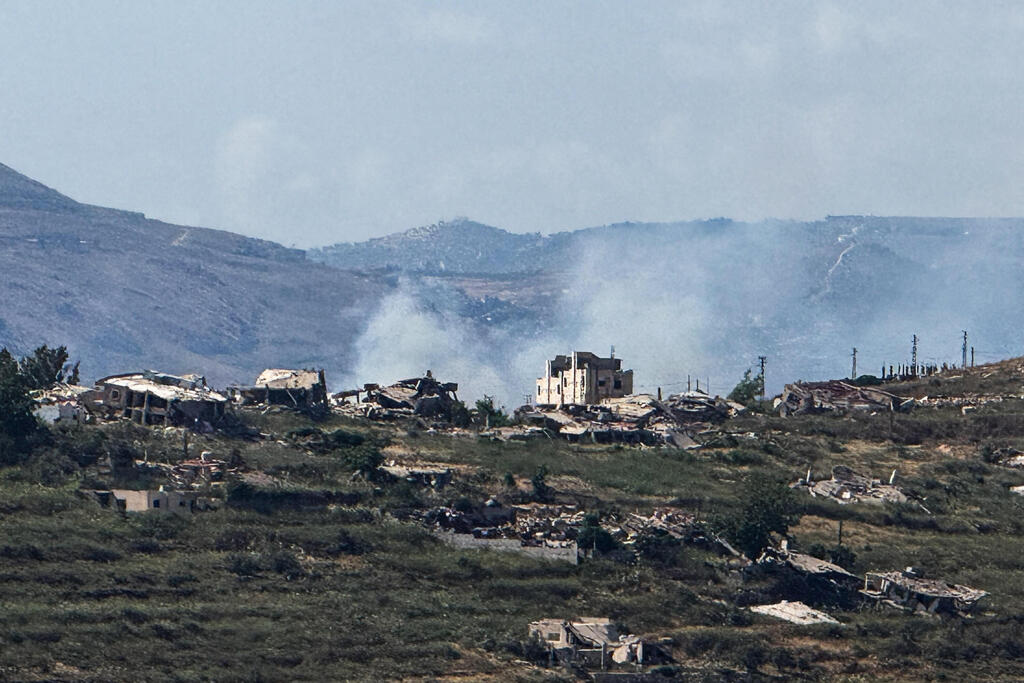
The announcement followed a tense day in which an Israeli strike in Beirut’s Dahieh district threatened to disrupt the U.S.-Iran talks. Israel said the strike targeted Hezbollah terrorists. Iran accused the United States of responsibility for the Israeli strike and warned of retaliation. Iran’s Foreign Ministry said Washington was “directly responsible” for what it called Israeli violations of the ceasefire in Lebanon, while Iran’s top military command said its “finger is on the trigger” and that it was ready to strike the “enemy’s heart.”
Earlier Sunday, Iranian negotiator Mohammad Baqer Qalibaf said Israel’s attack in Beirut proved that the United States lacked “the will and ability to fulfill your commitments.” Trump also criticized Israel over the strike. “This morning’s attack on Beirut should not have happened, particularly on a special day when we are so close to a Peace Deal with Iran,” he wrote on Truth Social.
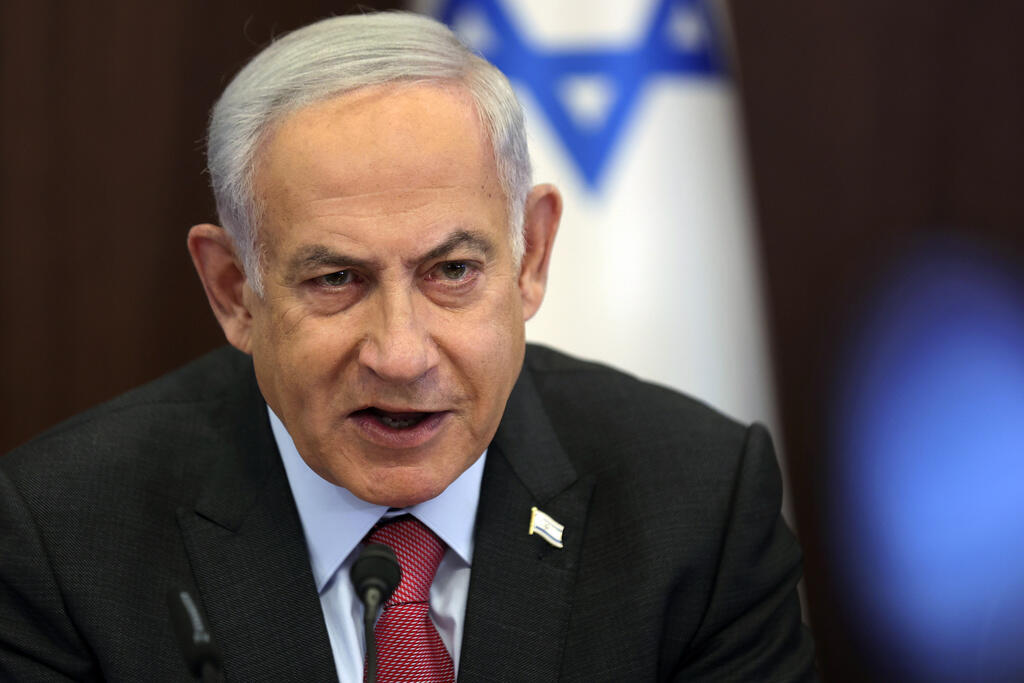
Prime Minister Benjamin Netanyahu left a Security Cabinet meeting in the government’s underground bunker in Jerusalem on Sunday night to speak by phone with Trump, as Washington tried to prevent Iran from launching missiles at Israel and keep the agreement on track. After the call ended, the cabinet meeting resumed. Defense Minister Israel Katz also spoke with his U.S. counterpart, Pete Hegseth.
4 View gallery
Prime Minister Benjamin Netanyahu
(Photo: Abir Sultan/Pool Photo/AP)
Trump later wrote that “Iran will never have a Nuclear weapon, and the Strait of Hormuz will be opening up for business very shortly.” In a separate post, he attacked Democratic Sen. Jack Reed of Rhode Island, who had argued that the emerging agreement was weaker than the nuclear deal signed under former President Barack Obama. “Senator Jack Reed, a Dumocrat from R.I., lied when stating the the Deal we just made is not as good as the Obama disaster known as the JCPOA,” Trump wrote, preserving his misspellings. “Reed is either an outright fraud, or incompetent.” Trump added that “Our Deal is a WALL against Iran ever having a Nuclear weapon.”
A diplomatic source familiar with the talks told CNN that Qatari mediators remained in Tehran “to make sure the talks on the U.S.-Iran deal remain on track.” The source said their presence in the Iranian capital had been coordinated with the United States. Before the agreement was announced, Iranian state media had reported that Tehran had not yet made a final decision on the proposed framework and that Qatari mediators had arrived in Iran to help finalize the terms.
The uncertainty came as Ali Akbar Velayati, an adviser to Iran’s supreme leader, threatened on X that “zero hour is approaching” and that “the launchers are ready.” Velayati warned that if Israel’s “adventurism” in Lebanon did not stop, the Strait of Hormuz and Bab el-Mandeb, another key shipping route, would “choke your economic arteries to the point of strategic suffocation.”
Two Western sources told Channel 12 News that the United States and Iran had been holding intensive talks to prevent Tehran from firing missiles at Israel. Sources familiar with the talks and Iran’s military preparations said Tehran was considering delaying the launches, either for several hours or for a longer period, to give diplomacy a chance. According to the sources, Trump was considering offering Iran a major incentive: lifting the naval blockade immediately, rather than gradually, if Iran agreed not to attack Israel. Trump also warned Tehran that if it attacked Israel, triggered an Israeli response and caused the negotiations to collapse, he would hold Iran responsible.
The New York Times reported, citing three Iranian officials, that Iran canceled its planned attack in response to the Dahieh strike after Trump intervened through mediators and urged Tehran to show restraint. According to the report, power centers in Tehran debated whether Iran should respond militarily to restore deterrence or avoid retaliation. Some participants argued that a military response would play into Israel’s hands and give it an opportunity to derail the agreement between Tehran and Washington.
Israel, however, is worried the agreement could come at its expense. An Israeli official told CNN that Netanyahu wants an urgent meeting with Trump after the president returns from the G7 summit in Europe, or around that time, to clarify Israel’s concerns. According to the official, Israel is especially concerned that the agreement could restrict the IDF’s ability to act against Hezbollah in Lebanon. Israel is also worried that easing economic pressure on Iran without resolving the nuclear issue could strengthen the Iranian regime at a time when Israel is trying to weaken it. Israel has said it is not a party to the U.S.-Iran deal.
4 View gallery
IDF strike in Lebanon
(Photo: REUTERS/Avi Ohayon)
Trump’s pressure has angered officials in Jerusalem, who say Washington is asking Israel to hold its fire even if Iran attacks. “Trump is normalizing fire at Israel,” one Israeli official said. Israeli intelligence assessments presented to the political leadership found a significant possibility that Iran would fire missiles at Israel, officials said. The United States has been trying to persuade Tehran to avoid an attack or limit its scope, while also pressing Israel not to retaliate if Iran does respond.
Israeli officials said the American position was unfair and ignored repeated Hezbollah violations of Israeli sovereignty. They said Trump had demanded that Netanyahu not only halt Israeli fire in Lebanon, but also begin a withdrawal. Netanyahu rejected the demand, they said. Israel also rejected U.S. claims that it had carried out the Beirut strike to sabotage the Iran deal. Officials said the operation targeted Hezbollah infrastructure after drones were fired into Israel, including near the western Galilee community of Shlomi.
“When the Iranians downed an American helicopter, Trump ordered a harsh response even though there were no casualties,” one Israeli official said. “Why is what is allowed for the United States forbidden to Israel?”
The immediate question now is whether the agreement announced overnight will stop Iran from firing missiles at Israel and survive until Friday’s signing in Switzerland, or whether another attack from Iran or Lebanon will push the fragile deal back into crisis.