Example of using SQL to create a semantic view (original) (raw)
The following is a complete example of creating a semantic view.
The example uses the TPC-H sample data available in Snowflake. This dataset contains tables that represent a simplified business scenario with customers, orders, and line items.
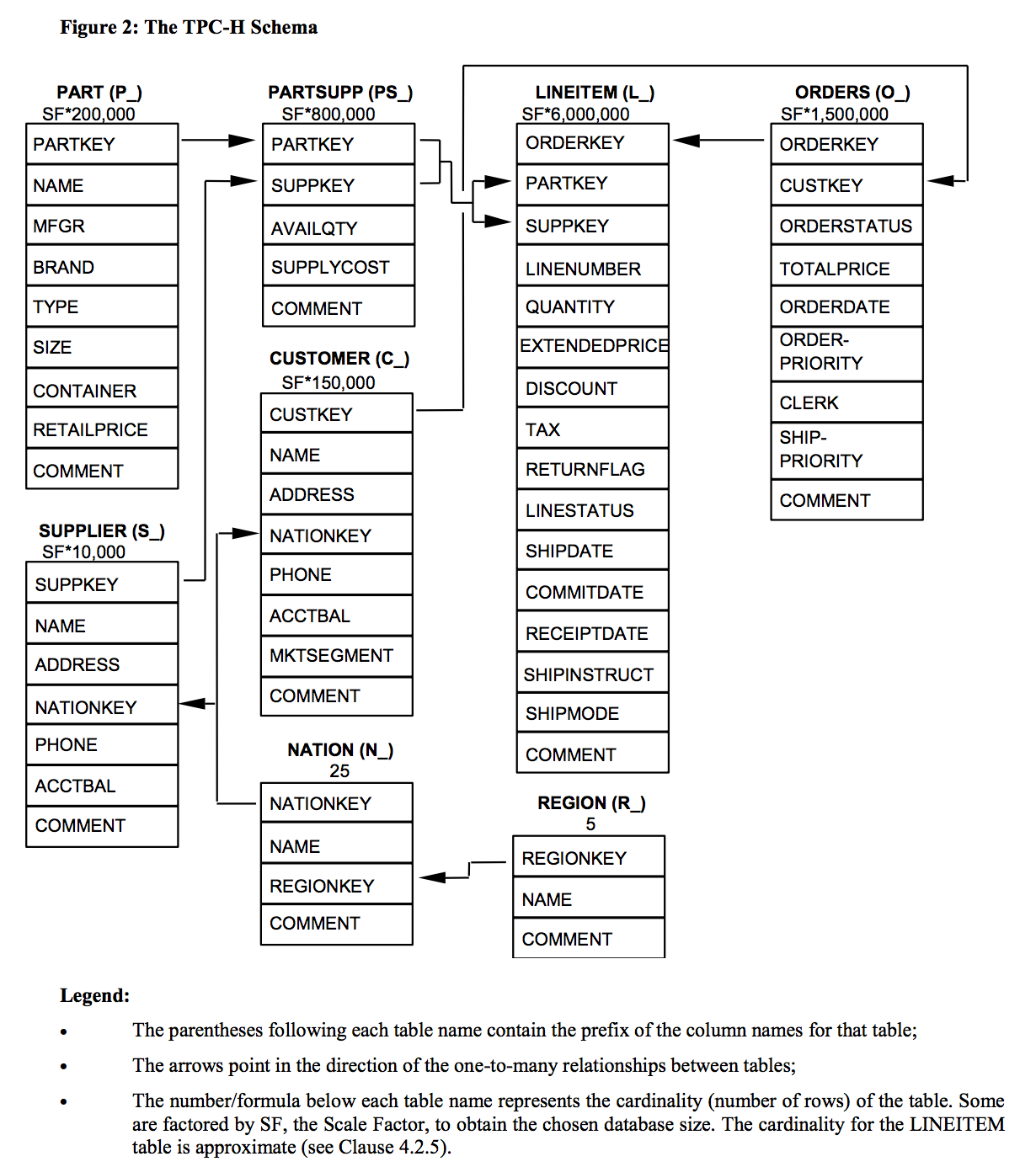
Creating the semantic view
The following statements create the semantic view:
CREATE OR REPLACE SEMANTIC VIEW tpch_analysis
TABLES ( region AS SNOWFLAKE_SAMPLE_DATA.TPCH_SF1.REGION PRIMARY KEY (r_regionkey), nation AS SNOWFLAKE_SAMPLE_DATA.TPCH_SF1.NATION PRIMARY KEY (n_nationkey), customer AS SNOWFLAKE_SAMPLE_DATA.TPCH_SF1.CUSTOMER PRIMARY KEY (c_custkey), orders AS SNOWFLAKE_SAMPLE_DATA.TPCH_SF1.ORDERS PRIMARY KEY (o_orderkey), lineitem AS SNOWFLAKE_SAMPLE_DATA.TPCH_SF1.LINEITEM PRIMARY KEY (l_orderkey, l_linenumber), supplier AS SNOWFLAKE_SAMPLE_DATA.TPCH_SF1.SUPPLIER PRIMARY KEY (s_suppkey) )
RELATIONSHIPS ( nation (n_regionkey) REFERENCES region, customer (c_nationkey) REFERENCES nation, orders (o_custkey) REFERENCES customer, lineitem (l_orderkey) REFERENCES orders, supplier (s_nationkey) REFERENCES nation )
FACTS ( region.r_name AS r_name, nation.n_name AS n_name, orders.o_orderkey AS o_orderkey, customer.c_customer_order_count AS COUNT(orders.o_orderkey), lineitem.line_item_id AS CONCAT(l_orderkey, '-', l_linenumber), orders.count_line_items AS COUNT(lineitem.line_item_id) )
DIMENSIONS ( nation.nation_name AS n_name, customer.customer_name AS c_name, customer.customer_region_name AS region.r_name, customer.customer_nation_name AS nation.n_name, customer.customer_market_segment AS c_mktsegment, customer.customer_country_code AS LEFT(c_phone, 2), orders.order_date AS orders.o_orderdate )
METRICS ( customer.customer_count AS COUNT(c_custkey), customer.customer_order_count AS SUM(c_customer_order_count), orders.order_count AS COUNT(o_orderkey), orders.order_average_value AS AVG(orders.o_totalprice), orders.average_line_items_per_order AS AVG(orders.count_line_items), supplier.supplier_count AS COUNT(s_suppkey) ) ;