SentenceTransformers Documentation — Sentence Transformers documentation (original) (raw)
Sentence Transformers (a.k.a. SBERT) is the go-to Python module for using and training state-of-the-art embedding and reranker models. It can be used to compute embeddings from text, images, audio, or video using Sentence Transformer models (quickstart), to calculate similarity scores using Cross-Encoder (a.k.a. reranker) models (quickstart), or to generate sparse embeddings using Sparse Encoder models (quickstart). This unlocks a wide range of applications, including semantic search, semantic textual similarity, and paraphrase mining.
A wide selection of over 10,000 pre-trained Sentence Transformers models are available for immediate use on 🤗 Hugging Face, including many of the state-of-the-art models from the Massive Text Embeddings Benchmark (MTEB) leaderboard. Additionally, it is easy to train or finetune your own embedding models, reranker models, or sparse encoder models using Sentence Transformers, enabling you to create custom models for your specific use cases.
Sentence Transformers was created by UKP Lab and is being maintained by 🤗 Hugging Face. Don’t hesitate to open an issue on the Sentence Transformers repository if something is broken or if you have further questions.
Usage
See also
See the Quickstart for more quick information on how to use Sentence Transformers.
Working with Sentence Transformer models is straightforward:
Embedding Models
Text
from sentence_transformers import SentenceTransformer
1. Load a pretrained Sentence Transformer model
model = SentenceTransformer("sentence-transformers/all-MiniLM-L6-v2")
The sentences to encode
sentences = [ "The weather is lovely today.", "It's so sunny outside!", "He drove to the stadium.", ]
2. Calculate embeddings by calling model.encode()
embeddings = model.encode(sentences) print(embeddings.shape)
[3, 384]
3. Calculate the embedding similarities
similarities = model.similarity(embeddings, embeddings) print(similarities)
tensor([[1.0000, 0.6660, 0.1046],
[0.6660, 1.0000, 0.1411],
[0.1046, 0.1411, 1.0000]])
Multimodal
from sentence_transformers import SentenceTransformer
1. Load a model that supports both text and images
model = SentenceTransformer("Qwen/Qwen3-VL-Embedding-2B", revision="refs/pr/23")
2. Encode images from URLs
img_embeddings = model.encode([ "https://huggingface.co/datasets/huggingface/documentation-images/resolve/main/transformers/tasks/car.jpg", "https://huggingface.co/datasets/huggingface/documentation-images/resolve/main/bee.jpg", ])

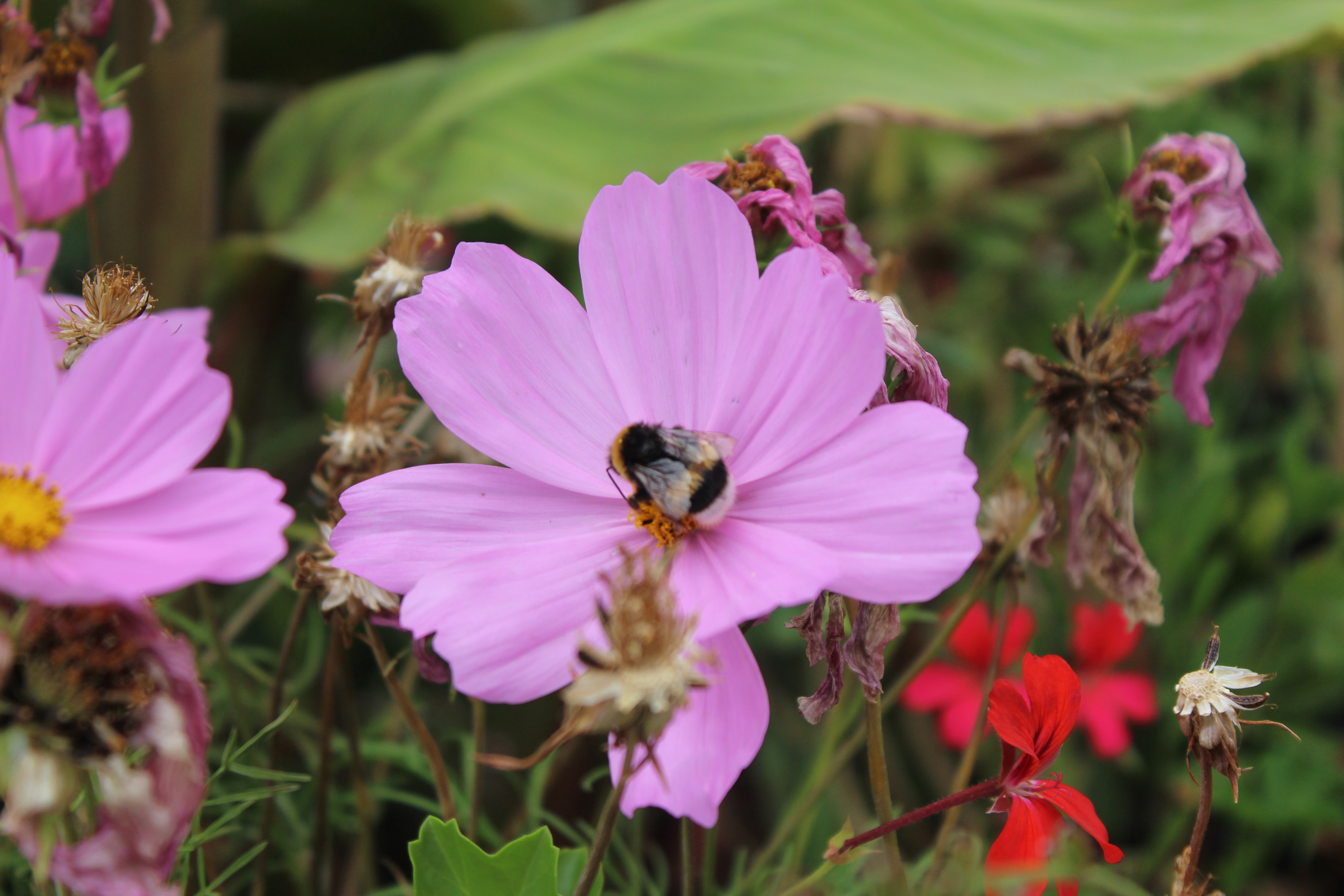
3. Encode text queries (one matching + one hard negative per image)
text_embeddings = model.encode([ "A green car parked in front of a yellow building", "A red car driving on a highway", "A bee on a pink flower", "A wasp on a wooden table", ])
4. Compute cross-modal similarities
similarities = model.similarity(text_embeddings, img_embeddings) print(similarities)
tensor([[0.5115, 0.1078],
[0.1999, 0.1108],
[0.1255, 0.6749],
[0.1283, 0.2704]])
Reranker Models
Text
from sentence_transformers import CrossEncoder
1. Load a pretrained CrossEncoder model
model = CrossEncoder("cross-encoder/ms-marco-MiniLM-L6-v2")
The texts for which to predict similarity scores
query = "How many people live in Berlin?" passages = [ "Berlin had a population of 3,520,031 registered inhabitants in an area of 891.82 square kilometers.", "Berlin has a yearly total of about 135 million day visitors, making it one of the most-visited cities in the European Union.", "In 2013 around 600,000 Berliners were registered in one of the more than 2,300 sport and fitness clubs.", ]
2a. Either predict scores pairs of texts
scores = model.predict([(query, passage) for passage in passages]) print(scores)
=> [8.607139 5.506266 6.352977]
2b. Or rank a list of passages for a query
ranks = model.rank(query, passages, return_documents=True)
print("Query:", query) for rank in ranks: print(f"- #{rank['corpus_id']} ({rank['score']:.2f}): {rank['text']}") """ Query: How many people live in Berlin?
- #0 (8.61): Berlin had a population of 3,520,031 registered inhabitants in an area of 891.82 square kilometers.
- #2 (6.35): In 2013 around 600,000 Berliners were registered in one of the more than 2,300 sport and fitness clubs.
- #1 (5.51): Berlin has a yearly total of about 135 million day visitors, making it one of the most-visited cities in the European Union.
"""
Multimodal
from sentence_transformers import CrossEncoder
1. Load a multimodal CrossEncoder model
model = CrossEncoder("Qwen/Qwen3-VL-Reranker-2B", revision="refs/pr/11")
2. Rank images by relevance to a text query
query = "A green car parked in front of a yellow building" documents = [ # Image documents (URL or local file path) "https://huggingface.co/datasets/huggingface/documentation-images/resolve/main/transformers/tasks/car.jpg", "https://huggingface.co/datasets/huggingface/documentation-images/resolve/main/bee.jpg", # Text document "A vintage Volkswagen Beetle painted in bright green sits in a driveway.", # Combined text + image document { "text": "A car in a European city", "image": "https://huggingface.co/datasets/huggingface/documentation-images/resolve/main/transformers/tasks/car.jpg", }, ]
rankings = model.rank(query, documents) for rank in rankings: print(f"{rank['score']:.4f}\t(document {rank['corpus_id']})") """ 0.9375 (document 0) 0.5000 (document 3) -1.2500 (document 2) -2.4375 (document 1) """
Sparse Encoder Models
from sentence_transformers import SparseEncoder
1. Load a pretrained SparseEncoder model
model = SparseEncoder("naver/splade-cocondenser-ensembledistil")
The sentences to encode
sentences = [ "The weather is lovely today.", "It's so sunny outside!", "He drove to the stadium.", ]
2. Calculate sparse embeddings by calling model.encode()
embeddings = model.encode(sentences) print(embeddings.shape)
[3, 30522] - sparse representation with vocabulary size dimensions
3. Calculate the embedding similarities
similarities = model.similarity(embeddings, embeddings) print(similarities)
tensor([[ 35.629, 9.154, 0.098],
[ 9.154, 27.478, 0.019],
[ 0.098, 0.019, 29.553]])
4. Check sparsity stats
stats = SparseEncoder.sparsity(embeddings) print(f"Sparsity: {stats['sparsity_ratio']:.2%}")
Sparsity: 99.84%
What Next?
Consider reading one of the following sections to answer the related questions:
- Embedding Models:
- How to use Sentence Transformer models? Sentence Transformers > Usage
- What Sentence Transformer models can I use? Sentence Transformers > Pretrained Models
- How do I make Sentence Transformer models faster? Sentence Transformers > Usage > Speeding up Inference
- How do I train/finetune a Sentence Transformer model? Sentence Transformers > Training Overview
- Reranker Models:
- How to use Cross Encoder models? Cross Encoder > Usage
- What Cross Encoder models can I use? Cross Encoder > Pretrained Models
- How do I make Cross Encoder models faster? Cross Encoder > Usage > Speeding up Inference
- How do I train/finetune a Cross Encoder model? Cross Encoder > Training Overview
- Sparse Encoder Models:
- How to use Sparse Encoder models? Sparse Encoder > Usage
- What Sparse Encoder models can I use? Sparse Encoder > Pretrained Models
- How do I make Sparse Encoder models faster? Sparse Encoder > Usage > Speeding up Inference
- How do I train/finetune a Sparse Encoder model? Sparse Encoder > Training Overview
- How do I integrate Sparse Encoder models with search engines? Sparse Encoder > Vector Database Integration
Citing
If you find this repository helpful, feel free to cite our publication Sentence-BERT: Sentence Embeddings using Siamese BERT-Networks:
@inproceedings{reimers-2019-sentence-bert, title = "Sentence-BERT: Sentence Embeddings using Siamese BERT-Networks", author = "Reimers, Nils and Gurevych, Iryna", booktitle = "Proceedings of the 2019 Conference on Empirical Methods in Natural Language Processing", month = "11", year = "2019", publisher = "Association for Computational Linguistics", url = "https://arxiv.org/abs/1908.10084", }
If you use one of the multilingual models, feel free to cite our publication Making Monolingual Sentence Embeddings Multilingual using Knowledge Distillation:
@inproceedings{reimers-2020-multilingual-sentence-bert, title = "Making Monolingual Sentence Embeddings Multilingual using Knowledge Distillation", author = "Reimers, Nils and Gurevych, Iryna", booktitle = "Proceedings of the 2020 Conference on Empirical Methods in Natural Language Processing", month = "11", year = "2020", publisher = "Association for Computational Linguistics", url = "https://arxiv.org/abs/2004.09813", }
If you use the code for data augmentation, feel free to cite our publication Augmented SBERT: Data Augmentation Method for Improving Bi-Encoders for Pairwise Sentence Scoring Tasks:
@inproceedings{thakur-2020-AugSBERT, title = "Augmented {SBERT}: Data Augmentation Method for Improving Bi-Encoders for Pairwise Sentence Scoring Tasks", author = "Thakur, Nandan and Reimers, Nils and Daxenberger, Johannes and Gurevych, Iryna", booktitle = "Proceedings of the 2021 Conference of the North American Chapter of the Association for Computational Linguistics: Human Language Technologies", month = jun, year = "2021", address = "Online", publisher = "Association for Computational Linguistics", url = "https://www.aclweb.org/anthology/2021.naacl-main.28", pages = "296--310", }