Top 11 AI in Fashion Use Cases & Examples (original) (raw)
Faced with creative bottlenecks, inefficient supply chains, and rising consumer expectations, fashion brands are seeking smarter solutions. McKinsey estimates that generative AI could boost operating profits in the fashion, apparel, and luxury sectors by up to $275 billion by 2028.1
Explore the top 11 use cases of AI in fashion to help fashion brands cut costs, increase personalization, and operate more sustainably.
1. AI agents in the fashion industry
AI agents are becoming central to fashion eCommerce as retailers work to reduce returns, improve sizing accuracy, and offer more personal shopping experiences.
Instead of relying on basic filters, these agents learn a shopper’s body shape, preferences, lifestyle, and context to provide tailored styling suggestions, simulate try-ons, and help build a shopper’s wardrobe. Many fashion companies are developing multimodal systems that function more like ongoing style assistants than traditional recommendation engines.
Real-life example: DressX Agent
DressX has introduced DressX Agent, an AI-powered digital fashion platform that lets users create personalized avatars from a selfie, virtually try on outfits, and shop from over 200 luxury brands and more than one million products.
Blending AI styling tools, an interactive marketplace, and LLM-powered search, the platform aims to reduce returns and improve product discovery by enabling instant outfit creation and retailer checkout.
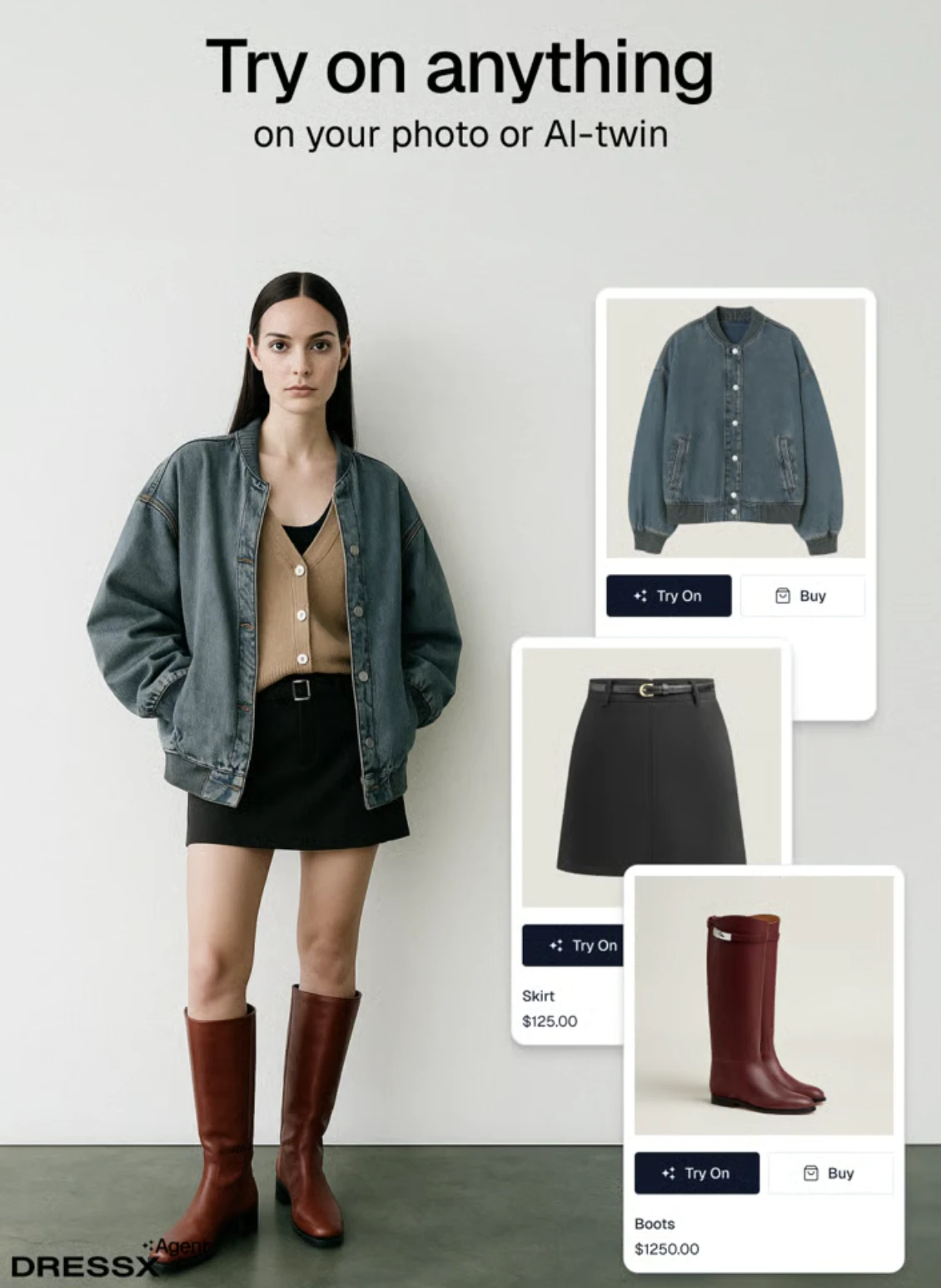
Figure 1: DressX AI twin for fashion example.2
Real-life example: Daydream’s Style Passport
Daydream, a fashion AI shopping startup, aims to overhaul the outdated, impersonal eCommerce experience with an agentic, chat-based shopping interface.
Users enter preferences into a “Style Passport” and interact with AI models specialized in fit, fabric, silhouette, and occasion to receive personalized recommendations across 8,000 brands and 200 retail partners.
Daydream vertically tuned AI guides discovery, refines choices, and evolves with user behavior, while upcoming social features will let shoppers share and remix collections.3
2. AI-powered circular fashion platforms
The circular economy in fashion has received a major boost from AI. Modern resale and secondhand fashion platforms now rely on AI for:
- Garment wear-level detection: Using computer vision and deep learning, platforms can automatically detect signs of wear (e.g., fading, pilling, stains, stretched seams) in uploaded images. This reduces manual quality checks and ensures consistency.
- Automated categorization: AI classifies second-hand items by brand, category, size, style, and even trend relevance, speeding up product listing.
- Dynamic pricing algorithms: Based on demand trends, item condition, and brand value, AI models adjust prices to optimize resale speed and margin.
- Visual enhancements: AI improves photo quality by adjusting lighting, removing backgrounds, and correcting colors, boosting engagement.
Real-life example: The RealReal’s Shield and Vision
The RealReal’s AI tools Shield and Vision are used to identify fake items. Shield prioritizes which items need human review, while Vision uses image recognition to flag potentially fake products.
These tools, trained on the company’s extensive product database, complement human authenticators and have helped identify over 200,000 fakes since 2011. The company is also exploring the use of generative AI for personalized shopping experiences.4
3. AI-generated virtual influencers
AI-generated virtual influencers are now essential tools in fashion marketing and digital storytelling, with brands creating custom avatars to represent niche customer personas.
- Powered by LLMs and 3D modeling: These digital personas are built using generative AI and scripted with language models to engage authentically in comments, captions, and DMs.
- Platform-optimized content: Avatars are A/B tested across TikTok, Instagram, and Snapchat, with AI optimizing facial expressions, poses, and language tone to fit specific audience segments.
- Brand identity alignment: Brands can tailor avatars’ values (e.g., sustainability, edginess, inclusivity) to align with campaign themes and customer expectations.
Real-life example: Lil Miquela
Lil Miquela is a virtual influencer created by the tech startup Brud.
Blending fiction and reality, Lil Miquela has worked with top brands like Prada, starred in ad campaigns, and even released music. Her rise highlights how virtual identities are reshaping celebrity culture and marketing, especially in the context of the metaverse and digital-first engagement.

Figure 2: Lil Miquela attending a fashion event by Prada.5
4. AI for diversity and inclusion auditing
With rising social expectations for equity and representation, brands are using AI to audit inclusivity across visual and written content:
- Image analysis: Computer vision models analyze skin tones, body shapes, ages, and facial features in marketing visuals to quantify demographic representation.
- Bias detection in copy: NLP tools assess product descriptions and ads for gender-coded language or cultural insensitivity, flagging areas for improvement.
- Compliance reports: Some platforms now generate DEI (Diversity, Equity & Inclusion) scores for campaigns and lookbooks, benchmarked against brand goals or industry standards.
Real-life example: Microsoft Advertising with Shutterstock
Microsoft Advertising has expanded its integration with Shutterstock, enabling all advertisers to access over 360 million high-quality, royalty-free images directly within the platform.
A new feature, “people filters,” enables users to quickly find images based on attributes such as gender, ethnicity, age, and group size. These tools are designed to promote authentic representation, which Microsoft research shows increases brand trust, loyalty, and purchase intent.
Advertisers who use inclusive and representative visuals saw higher click-through rates and stronger customer resonance. Microsoft encourages the use of realistic and diverse imagery that reflects the identities of its audiences, ultimately supporting better campaign outcomes and a faster time to market.6
5. Design with AI
The integration of generative AI into fashion presents significant opportunities for brands to innovate and optimize.
Most companies in the fashion sector rely on manually designed clothing. However, creative AI can be an effective way to take over in situations like the pandemic, when people cannot work.
AI-enabled tools can create clothing designs using data such as images of the brand’s previous offerings or other designers’ work, customer preferences (color and style choices), and current fashion trends.
Check out the video below to see how the London College of Fashion is researching to find new ways to use AI for fashion design and production:
London College of Fashion on AI with fashion design.
Here are the recent developments in design:
- Generative AI integration: Tools like Midjourney, DALL·E, and Adobe Firefly are now widely used to co-create mood boards, sketches, and even full outfit designs.
- Human-in-the-loop advancements: AI is now a real-time collaborator in ideation, allowing designers to explore hundreds of variations quickly while maintaining creative control.
- Workflow automation: Automated generation of tech packs, colorways, and 3D prototypes accelerates the journey from sketch to sample.
Real-life example: S.Oliver Group with Fermat
A key challenge for the s.Oliver Group was aligning different stakeholders (design, production, marketing, and consumers). Previously, it was difficult to clearly convey how materials and styles would look in final products. Fermat helps bridge this gap by generating realistic fabric visualizations and experimenting with new ideas.7
With the platform, teams can:
- Create and test designs using fabrics not yet available in their catalog
- Prototype and validate whether new styles fit into collections
- Collaborate more efficiently across departments
Real-life example: Yoona.ai
Yoona.ai functions as an AI-assisted design tool by generating large volumes of design options, including products, prints, and color variations, based on defined briefs or moodboards. Here are some of the tools the platform provides:
- Design extraction from image: Breaks down images into editable shapes, patterns, and graphics.
- Design modification: Enables targeted adjustments to garment features without a full redesign.
- Print creation: Produces original textile prints using generative AI from text or visual inputs.
- Product creation: Generates individual products or full collections based on defined parameters.
- Recolouring: Changes garment colors while preserving texture, lighting, and fabric details.
- Technical drawing creation: Converts photorealistic designs into editable 2D technical sketches.
Figure 3: Yoona.ai helps design products from prompts or sketches.8
AI algorithms and data analytics in design
The design process traditionally relies heavily on human intelligence, intuition, and historical trends. By leveraging AI algorithms, fashion brands can collect and analyze historical data from sources such as social media platforms, fashion blogs, and eCommerce platforms.
For example, machine learning models can process datasets of past collections, customer preferences, and fashion trends to generate actionable insights. Natural language processing (NLP) can also be employed to extract key trends from customer feedback, ad campaigns, and product descriptions published in outlets.
Here are the recent developments in design analytics:
- Multimodal analysis: AI analyzes text, image, and video data simultaneously (e.g., fashion show footage, TikTok content, and customer reviews) to identify trends.
- More granular trend mining: Models extract micro-trends (e.g., rise of specific sleeve shapes or materials) and track their lifecycle across platforms.
- Real-time dashboards: Many fashion brands now utilize AI-powered dashboards that display live customer sentiment and emerging design trends.
Real-life example: Naratix’s Fashion Catalog Intelligence
Fashion Catalog Intelligence from Naratix automates the processing of fashion product data from existing feeds, spreadsheets, PDFs, and images. The system identifies and completes missing information, including sizes, fits, materials, and care instructions.
The aim is to enhance product visuals through image optimization, mood-based imagery, and virtual model rendering, and produce brand-aligned, search-optimized product descriptions without modifying live listings.9
Real-life example: The Muze Project by Zalando and Google
The German fashion platform Zalando and Google created the project Muze, which uses machine learning to create fashion designs. The model gathers data on customers’ favorite textures, colors, and style preferences by asking a series of questions to inform clothing design. The project created 40,424 fashion designs within the first month.
6. Leveraging AI in production lines
Currently, the apparel manufacturing sector mostly relies on manual production processes with questionable working conditions for the workers.10 However, AI-enabled solutions are changing these trends by enabling automation in the apparel production sector.
AI can help workers overcome these ethical challenges by enabling automation. For instance, robotics can help automate tasks that are risky or prone to error in a manufacturing facility, thereby decreasing the workload and improving worker safety.
Computer vision technology is also used in fashion production to enable efficient quality assurance and predictive equipment maintenance, reducing machine downtime and ensuring operational continuity.
Some of the ways AI can support production are:
- Demand forecasting and inventory management: By leveraging predictive analytics on historical data, social media trends, and consumer preferences, AI-powered services enable brands to forecast demand more accurately. This helps minimize overproduction, reduce excess inventory, and align production with real-time market needs.
- Supply chain optimization: Fashion supply chains are complex, as they involve raw material suppliers, manufacturers, logistics, and retailers. AI enhances supply chain management by:
- Tracking materials and inventory in real time to prevent bottlenecks.
- Analyzing logistics data to identify and eliminate inefficiencies.
- Improving supplier collaboration by monitoring compliance with sustainability and quality standards.
Here are the recent developments in fashion production with AI:
- Digital twins: Virtual replicas of manufacturing systems simulate production to test improvements before physical deployment.
- Predictive maintenance: More advanced computer vision systems now predict machine breakdowns, improving uptime and reducing costs.
- Quality control: AI-enhanced visual inspection systems now detect microscopic defects, color mismatches, and even seam misalignments more accurately than human inspectors.
Real-life example: Sewbo
Sewbo is advancing garment manufacturing by automating the sewing process. Their approach involves temporarily stiffening fabrics with a water-soluble polymer to enable standard industrial robots to handle and sew materials.
This method allows off-the-shelf robots to work with various fabrics and sewing machines. The aim is to reduce costs, lead times, and waste in the apparel industry.11
Don’t miss our benchmarks and data-driven insights. The button opens Google; selecting AIMultiple confirms that you wish to see AIMultiple more often in Google search results.
 Add as preferred source
7. Trend forecasting with AI
Fashion trend forecasting is the process of predicting possible future fashion trends. Traditionally, fashion trend forecasters combine their knowledge, intuition, and historical data to predict future trends. However, measuring the accuracy of trend forecasts is difficult, and you can not know how accurate they are.
Trend prediction can also help reduce wastage in the fashion and clothing sector by designing clothes people actually want to wear. More accurate predictions can lead to leaner production and distribution cycles, reducing waste.
Here are the recent improvements to trend forecasting with AI:
- Expanded data sources now include live social video (e.g., TikTok), real-time Google search trends, and localized sentiment data.
- Short- and long-term forecasting: AI models are more accurate at predicting both seasonal and viral trend surges.
- Design feedback loops: Trend data is looped back into design tools, enabling iterative design that aligns with evolving consumer interests.
Real-life example: Heuritech
Heuritech is a Paris-based fashion technology company specializing in AI-driven trend forecasting and demand prediction. The company utilizes advanced artificial intelligence to analyze over 3 million social media images daily, translating real-world visuals into insights for fashion and sportswear brands.
Their platform detects more than 2,000 fashion attributes, including prints, colors, fabrics, and specific product details, to quantify and predict consumer demand. This enables brands to optimize their collections, align products with market trends, and reduce overstock by producing items that resonate with consumers.12
Heuritech’s explanation of the use of AI in fashion.
8. Fashion retail with AI
AI-enabled technologies are widely used in fashion retail. Here are some of the recent developments in fashion retail with AI:
Intelligent automation
Back-office tasks in retail, such as invoice creation, can be automated through intelligent automation. AI-powered systems can process large volumes of financial and transactional data, generating accurate invoices without manual intervention.
This approach saves valuable time for retail staff by allowing them to focus on more strategic activities while also reducing errors and improving operational efficiency. Additionally, automating these repetitive tasks can reduce costs associated with manual processes, thereby supporting retail operations and boosting productivity.
Inventory management and retail operations
Computer vision systems play a key role in automating critical retail operations, including:
- Inventory management: AI systems monitor stock levels in real-time, predict replenishment needs, and prevent overstocking or shortages.
- Cashierless stores: AI-powered checkout solutions enable cashierless shopping, where customers can pick items and leave the store while AI systems automatically bill their purchases.
- Unified retail experience: AI links online and offline behavior, enabling a seamless omnichannel experience that adjusts promotions, layouts, and inventory across stores.
Robotic process automation in retail
RPA enhances retail efficiency by automating repetitive processes and providing smarter customer interactions. Key applications include:
- Customer Relationship Management(CRM): AI chatbots and virtual assistants handle customer queries, process returns, and recommend products based on past interactions.
- Marketing operations: RPA in marketing automates campaign management, such as sending personalized offers, segmenting customer data, and tracking engagement metrics.
Watch how H&M, one of the largest fashion retailers, leverages AI to improve its operations:
H&M’s explanation of how they leverage AI to improve their operations.
Real-life example: Amazon Go’s “Just Walk Out”
Amazon Go’s “Just Walk Out” technology eliminates the traditional checkouts. To shop at an Amazon Go store, customers need an Amazon account and the Amazon Go app installed on a supported smartphone. Upon entering, customers scan a QR code from the app at the entry gate, granting access and initiating the shopping session.
Inside the store, a network of cameras and sensors, combined with computer vision and deep learning algorithms, tracks the items customers pick up and return to the shelves. This system maintains a virtual cart for each shopper, accurately recording their selections without the need to scan individual products.13
9. Personalized fashion marketing
With AI systems analyzing extensive customer data to increase customization, brands can now create experiences that cater to individual preferences while fostering customer engagement and loyalty.
Smart mirrors & fitting rooms: AI-integrated mirrors suggest alternative sizes, colors, and styling tips based on customer interaction.
Personalized marketing is essential to customer-centric strategies in the fashion industry, and AI tools play a pivotal role in its success. By analyzing vast datasets with purchase history, browsing behavior, and demographic information, AI can generate insights to craft highly tailored marketing efforts. Here’s how AI can help with personalized marketing:
Targeted recommendations:
AI algorithms analyze customer behavior to suggest products that align with individual tastes. For example, if a customer frequently browses for summer dresses, the system can recommend similar styles or complementary accessories.
On eCommerce platforms, personalized product suggestions appear on homepages or during checkout, increasing the chances of purchases.
Email campaigns:
AI-driven systems can craft personalized email recommendations based on a customer’s unique style, past purchases, or seasonal preferences. For instance, a brand might send an email highlighting new arrivals in a color that the customer frequently shops for.
Virtual try-ons:
Virtual try-on technology uses augmented reality (AR) to let customers try on clothes, makeup, and other products digitally. It replicates the in-store fitting experience, helping shoppers visualize items, make informed decisions, and experience a more engaging shopping experience.
- Improved customer satisfaction: Customers can see how products will suit them, increasing confidence and enhancing their shopping experience.
- Reduced return rates: By visualizing the right size, style, and color, shoppers make better-informed decisions, lowering the likelihood of returns.
- Increased sales and conversions: These customers are more likely to complete purchases.
- Enhanced brand loyalty: Personalized and interactive product exploration sets brands apart and fosters stronger customer connections.
Watch the video below to learn how The New Black AI Fashion Clothing Design’s AI system interprets fabric texture, body positioning, lighting, shadows, and fit to ensure that new outfits integrate into images. The system enables users to test fashion concepts, present collections, or produce high-quality content, delivering results that appear realistic and ready for production use.
The New Black AI Fashion Clothing Design’s AI system for virtual try-ons.
Real-life example: Ask Ralph by Ralph Lauren
Ralph Lauren has launched Ask Ralph, an AI-powered shopping tool developed with Microsoft on the Azure OpenAI platform. It provides personalized outfit suggestions and styling tips drawn from Polo Ralph Lauren’s men’s and women’s collections.
Customers can ask questions such as “What should I wear to a concert?” and receive complete, shoppable looks that can be refined and purchased directly.
Key features include:
- Offers personalized styling based on user prompts.
- Built to mimic the experience of a store stylist.
- Future expansion planned across more Ralph Lauren brands and markets.
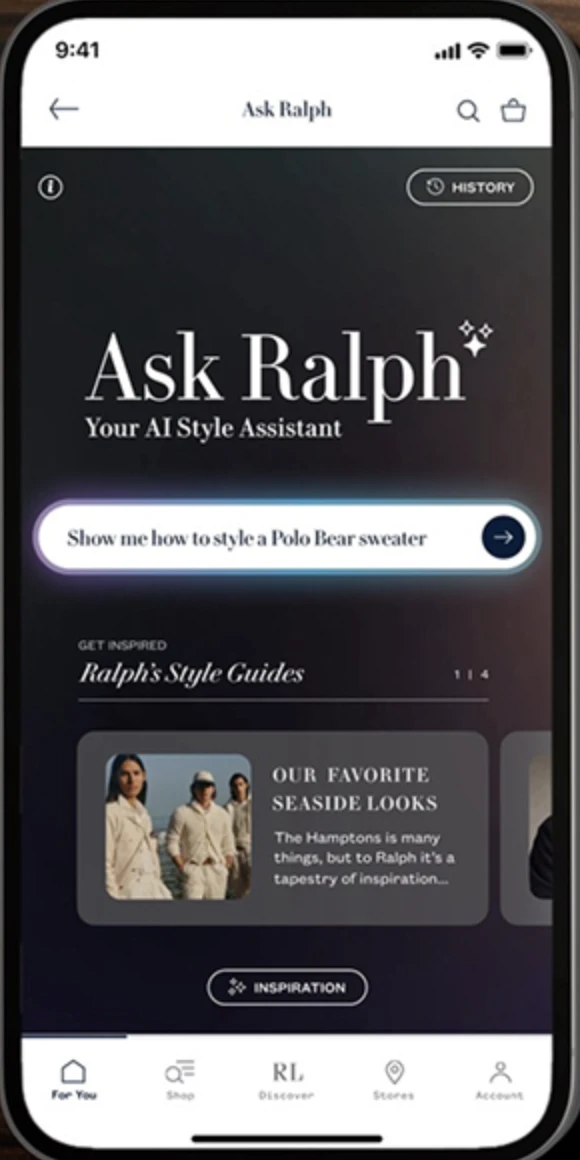
Figure 2: Ask Ralph example dashboard.14
Real-life example: Warby Parker
Warby Parker introduced a virtual try-on technology through its app. Customers can virtually try on different frames, and the website allows them to order up to five frames to try at home with free return shipping.
The app uses computer vision to analyze facial shape and skin tone, offering personalized fit recommendations to enhance the shopping experience.
Figure 3: Virtual try-on with Warby Parker.15
10. Sustainable fashion with AI
By integrating AI into their operations, fashion brands can achieve sustainability through smarter resource use, optimized supply chains, and waste reduction:
Predictive analytics to reduce overproduction
One of the biggest challenges in sustainable fashion is combating overproduction, which leads to excess inventory and textile waste. AI algorithms use predictive analytics to forecast consumer demand by analyzing historical data, social media trends, and market dynamics.
This reduces uncertainty, minimizes human error, and enables brands to produce what is likely to sell. By optimizing production, AI helps brands prevent overstocking, thereby reducing waste and mitigating the environmental impact of unsold inventory.
Sustainable material sourcing
AI-driven systems enable the selection of sustainable materials by evaluating factors such as environmental impact, ethical sourcing, and cost-effectiveness. These systems can assess raw material options and recommend eco-friendly alternatives, such as natural fibers or suppliers with strong compliance records.
This process can ensure that brands align with responsible sourcing practices and meet the expectations of environmentally conscious consumers.
Waste reduction in manufacturing
AI-driven systems can optimize production processes to minimize fabric waste. By analyzing data on production efficiency, material usage, and quality control, AI can identify areas where waste can be reduced.
This approach reduces the environmental impact of textile waste and also enhances cost efficiency for fashion brands. As sustainability becomes a core focus, these waste reduction strategies are crucial for balancing economic and ecological goals.
11. Emotion AI in the fashion
Emotion AI, also known as affective computing, is being applied to enhance emotional personalization in shopping:
- Emotion recognition via Webcam or App: AI detects micro-expressions or voice tone (with consent) to interpret emotional states, such as excitement, confusion, or frustration.
- Style mood matching: Based on detected emotions, AI recommends fashion pieces (e.g., bold colors when happy, cozy styles when anxious) using a trained psychological style mapping.
- Text-based sentiment matching: Some brands use AI to analyze typed or spoken inputs during chatbot conversations to infer mood and style preferences.
Real-life example: VR fashion show research
Researchers developed a virtual reality (VR) fashion show experience integrated with emotion-tracking technology to assess and enhance user engagement. By analyzing participants’ facial expressions and physiological responses during the VR catwalk, the system provided insights into their emotional reactions.
This approach enabled the brand to tailor its virtual presentations, aiming to create more emotionally resonant and personalized experiences for viewers. Such integration of emotion AI in fashion showcases the industry’s move to leverage advanced technologies to deepen customer connections and refine marketing strategies.16
Cite this research
Pick the format that matches where you're publishing. Pasting the link version into your CMS preserves the backlink.
Cem Dilmegani and Sıla Ermut (2026) - "Top 11 AI in Fashion Use Cases & Examples". Published online at AIMultiple.com. Retrieved April 3, 2026, from: https://aimultiple.com/ai-in-fashion [Online Resource]
Dilmegani, C., & Ermut, S. (2026, April 3). Top 11 AI in Fashion Use Cases & Examples. AIMultiple. https://aimultiple.com/ai-in-fashion
@misc{dilmegani2026, author = {Dilmegani, Cem and Ermut, Sıla}, title = {{Top 11 AI in Fashion Use Cases & Examples}}, year = {2026}, month = apr, howpublished = {\url{https://aimultiple.com/ai-in-fashion}}, note = {AIMultiple. Retrieved April 3, 2026} }

Cem Dilmegani
Principal Analyst
Cem has been the principal analyst at AIMultiple since 2017. AIMultiple informs hundreds of thousands of businesses (as per similarWeb) including 55% of Fortune 500 every month.
Cem's work has been cited by leading global publications including Business Insider, Forbes, Washington Post, global firms like Deloitte, HPE and NGOs like World Economic Forum and supranational organizations like European Commission. You can see more reputable companies and resources that referenced AIMultiple.
Throughout his career, Cem served as a tech consultant, tech buyer and tech entrepreneur. He advised enterprises on their technology decisions at McKinsey & Company and Altman Solon for more than a decade. He also published a McKinsey report on digitalization.
He led technology strategy and procurement of a telco while reporting to the CEO. He has also led commercial growth of deep tech company Hypatos that reached a 7 digit annual recurring revenue and a 9 digit valuation from 0 within 2 years. Cem's work in Hypatos was covered by leading technology publications like TechCrunch and Business Insider.
Cem regularly speaks at international technology conferences. He graduated from Bogazici University as a computer engineer and holds an MBA from Columbia Business School.
Researched by

Sıla Ermut
Industry Analyst
Sıla Ermut is an industry analyst at AIMultiple focused on email marketing and sales videos. She previously worked as a recruiter in project management and consulting firms. Sıla holds a Master of Science degree in Social Psychology and a Bachelor of Arts degree in International Relations.