bookstores « The LibraryThing Blog (original) (raw)
Archive for the ‘bookstores’ Category
Interview with Harriet’s Bookshop
LibraryThing is interviewing people in the book industry who are affected by current events. This month, we caught up with Jeannine Cook of Harriet’s Bookshop, which celebrates women authors, artists, and activists.
1) What is Harriet’s Bookshop and how did you get the idea for a bookshop like it?
Our mission is to celebrate women authors, women artists, and women activists. We’re named after Harriet Tubman, a profoundly influential woman abolitionist, activist, and writer. We are located in Fishtown, Philadelphia, and online.
2) What do you think is the purpose of a specific bookstore over a more general one?
Toni Morrison said that if you don’t see the book you want to read, and it hasn’t been written yet, then you have to write it yourself. I had never seen a bookstore full of Black women, Black authors, Black women activists, Black mothers. A bookstore that celebrated these women’s work and histories and passions. So, I made one. People told me not to go this niche—that I would limit my potential audience—but I’m happy to say that hasn’t turned out to be true.
3) How has COVID-19 changed business for Harriet’s Bookshop?
We actually opened our doors on Feb 01, 2020, then closed due to the virus in mid-March: so we were only formally open six weeks. It’s been a lot of continual adjusting. We moved our collection online for orders, and also have pivoted to figuring how to put the furniture of our store outside on the sidewalk for physical sales a few days a week. Also we increased communication with customers online. A lot of pivoting.
4) If you could summarize your bookshop in a few books, what would they be?
First, I would say Bound for the Promised Land: Harriet Tubman: Portrait of an American Hero by Kate Clifford Larson. It’s one of the best biographies of her. Larson’s in-depth research is impeccable.
Next, Toni Morrison’s Beloved. She asks what freedom is, what it really means. Through deep questions and an intense narrative, Morrison asks what freedom is in the context of the choice of slavery or death.
And a more recent book: Brit Bennet’s The Vanishing Half. This book is about the questions we have when creating ourselves, our identities: racial identity, gender identity, political identity, all identities. I think if people come into the bookshop and end up asking more questions than finding answers, that is a good thing.
5) How is your personal library organized?
It’s minimalist and rotating. I’m very much not a book hoarder, which people have questions about because I have a bookshop, but that’s what I like: having just what I’m reading out to view. What you see are the books I’ve rotated to read soon, not the whole collection.
6) What are you personally reading lately?
The book that is really staying with me these days is Colson Whitehead’s The Nickel Boys. In the same way that we now look back at slavery—particularly chattel slavery in this country—and ask how was that allowed to continue, how did people not just stop it, Whitehead’s book asks that of us and our issues right now. When our grandchildren look back at now, they will ask how putting children in jail is still allowed, how it is still happening and no one is stopping it. The Nickel Boys asks that question with this book. It’s easy for people to buy a book, read it, and then move on, but I don’t understand how anyone does that with this one. How do you justmove on to the next book after The Nickel Boys?
Labels: bookstores, interview
Interview with Sistah Scifi

LibraryThing is interviewing people in the book industry who are affected by current events. This month, we caught up with Isis Asare of Sistah Scifi, founded to uplift sci-fi and literature written by Black women.
1. What is the mission of Sistah Scifi and how did it come about?
Sistah Scifi is a cauldron of all things afrofuturism; afro-mysticism; Black sci-fi; and voodoo casting spells to uplift literature written by Black women
2. How would you define afrofuturism as a genre and why do you love it? What are some good books to start with for people unfamiliar with afrofuturism?
I love this definition from Wikipedia:
Afrofuturism is a cultural aesthetic, philosophy of science and philosophy of history that explores the developing intersection of African diaspora culture with technology. It was coined by Mark Dery in 1993[1] and explored in the late 1990s through conversations led by Alondra Nelson.[2] Afrofuturism addresses themes and concerns of the African diaspora through technoculture and science fiction, encompassing a range of media and artists with a shared interest in envisioning black futures that stem from Afrodiasporic experiences.

I enjoy Afrofuturism because I love thinking about technology and the future. Afrofuturism layers core tenants of African diasporic culture – ancient African religions, equality, freedom, family – in a way where I feel seen and valued as a reader.
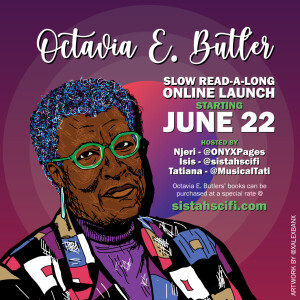
I would recommend Octavia E. Butler’s work as a place to start. Folks unfamiliar with her work can join the Octavia E Butler Read-A-Long. You can find details here.
3. What are some things that the wider sci-fi community could do to better support Black sci-fi literature and authors?
There are two things all readers can do:
1. Read and recommend science fiction books by Black authors – not simply because they are Black or because it is trending now but because these are compelling and highly imaginative stories.
2. Look for independent authors in the space. Sistah Scifi will launch two titles by independent authors Nicole Givens Kurtz and Venus Kalie this week.
4. Tell us about your home library—what’s in it? How is it organized?
My home library is organized in four sections – business strategy books like The Innovators Dilemma; race, gender and political studies such as Women in Tech; self awareness such as Being Black: Zen and the Art of Living With Fearlessness and Grace; African American Literature such as The Bluest Eye; and Afrofuturism such as An Unkindness of Ghosts.
5. What are you reading now?
I am reading Pet by Awaeke Emezi for the SOULar Power Book club.
Thanks, Isis and Sistah Scifi!
Are you affiliated with an organization that you think we might want to feature in our interview series? Reach out to info@librarything.com.
Labels: bookstores, interview
Interview with Tom Holbrook of RiverRun Bookstore
Independent bookstores are struggling right now. We are eager to talk to booksellers about what’s going on, how they are dealing with this ongoing crisis, and ways we can help. We talked with Tom Holbrook of RiverRun Bookstore in Portsmouth, NH.
How has River Run been managing the Coronavirus?
Like all retail in New Hampshire, our sales floor is closed to the public, but we can do curbside pickup. As a result, we are fielding phone calls and emails all day long. In addition to curbside pickup we are delivering books to Portsmouth and Kittery, and mailing books anywhere in the US. It’s a lot of work—a lot!—but at least we have work to do and it is keeping the store in people’s minds.
How can people help you out, or help out their local indie?
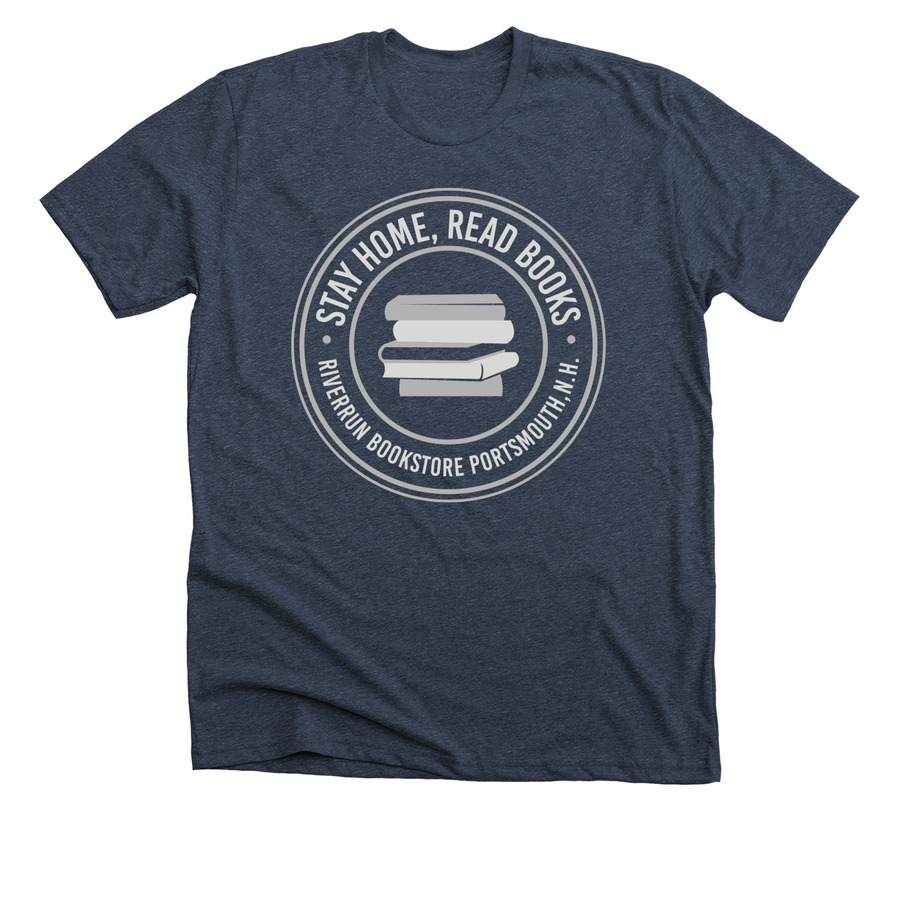
Our customers have been amazing, and our online friends have been great as well. Our online ordering site usually gets a few orders a week. Since this started we’ve been getting 10–12 a day. That’s really the best way for people to help us out – buy a book from our website. It’s good for us, and good for them! It’s my hope that we are winning people away from Amazon during this time, and will be able to keep them as loyal customers. We also launched a great t-shirt online to promote reading and social distancing, and hit our goal of 100 shirts in 4 days. Our offer runs through April 30, so it’s not too late to get one!
Tell us about your home library—what’s in it? How is it organized?
At home, I don’t have as many books as people imagine, because I just borrow them from the store (shh!), but I keep them in a yellow room with bookshelves along the wall. One case is full of my favorite books that I want to keep and share, the other 3 cases are full of books I haven’t got to quite yet!
What are you reading now?
Currently I am reading Night Boat to Tangier (RiverRun | LibraryThing) by Kevin Barry, which has definite Joyce overtones in its dialogue and flow. Rereading Once & Future (RiverRun | LibraryThing) by Cori McCarthy and Amy Rose Capetta. Best YA I read last year, and the sequel just dropped so I need a refresher. My 11yo daughter and I are working our way through the Wells and Wong mystery series (RiverRun | LibraryThing), and we both love it.
Thanks to everyone who supports indie bookstores!
See all bookstore interviews here. Do you run an independent bookstore and would like to be featured in our blog? Please reach out.
Labels: bookstores, interview
Interview with Josh Christie of Print: A Bookstore

Josh Christie of Print: A Bookstore
LibraryThing interviewed Josh Christie, co-owner, with Emily Russo, of Print: A Bookstore, in Portland, Maine about his bookstore and what book lovers can do for bookstores during this crisis.
Q: How has Print handled the Coronavirus?
On March 16th, we closed our doors to the public. We’re anticipating reopening on March 30th, though this could certainly change—our course of action will be determined by advice from state and national authorities.
While our doors are closed, we’ve shifted to online (printbookstore.com) and phone orders. We’re offering free nationwide shipping or local delivery for orders over $20, and curbside pickup for orders of any size. We’re also letting people know about their options for ebooks and audio books from Print, via Papertrell and Libro.fm.
We’re also using the temporary closure to tackle administrative and back-end tasks in the store, like updating our website and point-of-sale system, as well as deep cleaning and organization. There’s no lack of things to do, and we hope to keep our entire staff on for their regularly scheduled hours while we weather this crisis.
Q: How bad is this for indie bookstores like yours?
It’s hard to overstate just how hard this will hit independent bookstores. Most stores—even profitable ones—operate with precious little cash on hand, so any interruption in income makes available funds dry up quickly. With margins on books generally running about 5–10 percent less than other goods (and little opportunity to adjust prices, as they’re printed on the product), an already thin-margin business is about to get much tougher. And, since most don’t warehouse books of their own, any disruption to local or international supply chains could make getting books to customers difficult.
There’s also book signings and author events, which are impossible in a time of social distancing. Events aren’t a huge part of the bottom line for every store, but for many (including ours), they’re significant. We’ve already cancelled everything through the start of April, and if the need to socially distance extends to the summer these will only grow.
Which is to say, I don’t think it will be any easy time for any business of any size, but some of the structural and economic realities of bookselling make it particularly fraught.
We’ve already seen stories about stores laying off or furloughing staff, and we’re undoubtedly at the start of this rather than the end. For the majority of stores, I have to guess the best case scenario is a big impact on income and a reduction of payroll. For many, I fear this will result in closures.
Q: How can LibraryThing members help Print and other indies?
The most direct way to support bookstores like ours is to shop with us. The most significant impact would be made by buying gift certificates, which immediately injects cash into our businesses. However, any purchases are a huge help. It’s also still a great time to preorder books, which don’t provide income now but guarantees future business.
And, while it’s not a form of financial support, following our stores on social media and signing up for our newsletters will help us get the word out about how we’re navigating this crisis. Similarly, even if you aren’t in a position to buy from us, boosting and promoting us to others will get more people through our (virtual) doors.
We always end with two questions.
Q: Tell us about your home library. What’s in it, and how is it organized?
I live alone in a pretty small one-bedroom apartment, but there are multiple bookcases and bookshelves in each room (including a few I added to the walls myself when I ran out of space). I’ve been a buyer for bookstores for almost a decade, so I’ve got a pretty even split of finished books and bound manuscripts/galleys. My tastes tend toward narrative nonfiction, largely contemporary, and most of what I have reflects that. I’ve also written a few books, including one on the history of beer in Maine, so I’ve got a lot of older books about beer, brewing, and Prohibition.
Organizationally, it’s a bit of a mess. 7 or 8 years ago I scanned every book I owned into my library on LibraryThing, but at this point I’ll admit I don’t have a great sense of what I have or where it is. I could lie and say it’s meant to inspire browsing and seeing what strikes my fancy, but it’s really just laziness.
Q: What are you reading now?
As always, I have a few half-finished books scattered around me. There’s You Never Forget Your First (>Print | LibraryThing), the first significant biography of George Washington from a woman, by Alexis Coe. It reminds me quite a bit of Stacy Schiff’s Cleopatra (Print | LibraryThing) and Emily Wilson’s Odyssey (Print | LibraryThing) in how it recontextualizes history we’ve heard a million times. And then there’s Michele Harper’s The Beauty in Breaking (Print | LibraryThing), a memoir from a female African American emergency room physician being published by Riverhead Books this summer. I’m also a person who actually reads cookbooks from front to back (I love food writing, and recipes with a voice), and Alison Roman’s Nothing Fancy (Print | LibraryThing) is on my nightstand. Finally, Homie by Danez Smith (Print | LibraryThing). Smith has been a favorite of mine since his 2015 collection Black Movie (Print | LibraryThing), and I’ve been slowly devouring his new collection over the last few weeks.
Labels: bookstores, interview
Mark the bookstores and libraries you’ve visited
UPDATE: See below for some new privacy controls we’ve added.
LibraryThing has long had a way to mark your favorite bookstores and libraries from LibraryThing Local, LibraryThing’s database of more than 80,000 bookish venues and 60,000 upcoming events.
Today we’ve added a way to mark places you’ve visited—in general or, by a simple “check in” button, the day you visit somewhere. You also get new lists of where you’ve been, and maps.
Here’s what the new visited options look like on a venue page.

By default everything you mark as favorite is also marked “visited.” But you can un-click “visited,” if a place is a favorite but you haven’t visited it.
Update: I’ve changed it so that the default is that favorites do NOT show up “venues visited.” To make them show up there, either mark them as visited or edit your local settings. By popular request on Talk, I’ve also added new settings to allow members to make both venue favorites and venue visited private—visible to themselves only. Here’s what the options look like, with the default state. Understand, venue favorites have ALWAYS been public. So this is an increase in user privacy. (Note that author favorites are still public. We will work to make them optionally private.)

Here’s the “Your visited” page, listing all the venues you’ve visited and the ones you’ve checked into. At present, all check-ins are public. (There will be preference options soon.)

Here’s what the large map of venues you’ve visited looks like:
You can see my list of visited venues and my large map. They’re a work in progress, but it’s liberating to be able to record all venues, not just those I want to mark out as special favorites.
Whether on a venue page, your visited page or in your News Feed page, you can share your status on Facebook and Twitter. When you click “share” it looks like it usually does:

Let us know what you think, report bugs or suggest improvements on Talk at New Features: Mark the bookstores and libraries you’ve visited.
Labels: bookstores, librarything local, new feature, new features
Let’s show our love for Longfellow Books!
 During last weekend’s blizzard, our much-beloved independent bookstore here in Portland, Longfellow Books (see them on LibraryThing Local), suffered significant damage when a water line in the building’s sprinkler system froze and caused torrents of water to pour through the ceiling directly onto the books. Co-owner Chris Bowe told the local paper that as much as half of the stock was damaged by water: much of the rest was saved by the quick actions of the Portland fire department.
I’ve heard from several of you this week asking how we can help. For now, the single best thing we can do to show our love for Longfellow is to buy some books from them. They’re taking orders by phone (207-772-4045) and through their website, and they’ve printed up some limited edition Flood of 2013 Gift Certificates, which you can order online. It’s even International Book Giving Day, so what better time than the present? (Also, it’s Valentine’s Day, and books make great gifts for that special someone!).
The Longfellow staff have been working hard all week to try and get the store open in time for their Pussy Riot Valentine’s Day Benefit event tonight at 7 p.m., and once they get things back up and running they may have other/different ways we can volunteer and help out. We’ll be sure to pass those along to you all. For now, head on over to longfellowbooks.com and buy a book (or six) or a gift card. Let’s help show Longfellow how much we care!
[Update: Just after we posted this the Maine Writers and Publishers Alliance also announced some other ways to help – check those out here].
Labels: bookstores, love, portland
New: Add Events API
The Add Events API adds events to the LibraryThing Local events system using a simple “RESTful” API.
You can also find this on WikiThing: Add Events API
Come Talk about the API here.
The Request
Each Add Events request consists of a single http request, with all parameters specified in the URL. There is no ganging of requests.
There is no separate API to update events. If the system finds an event for the same venue at the same time and added by you, it replaces it with the new one.
Here is a sample request with the parameters broken out onto separate lines.
http://www.librarything.com/api_eventadd.php? title=Spring+Author+Series &description=A+reading+from+Every+Visible+Thing+by+Lisa+Carey. &isbns=0060937424,0380815591 &time=2012-12-1+11:00 &venue=2427 &userid=timspalding &developerkey=[omitted] &addevent=1
You can try out this request [http://www.librarything.com/api/eventadd.php?title=Spring+Author+Series&description=A+reading+from+Every+Visible+Thing+by+Lisa+Carey.&isbns=0060937424,0380815591&time=2012-12-1+11:00&venue=2427&userid=timspalding&developerkey=%5Bomitted%5D&addevent=1 by hitting this URL]. Don’t worry, it won’t add a new event.
Basic parameters
title. The title of the event.
time. The date and time of the event, preferably in the format YYYY-MM-DD HH:MM (eg., 2012-12-01 14:00).
Ideally the HH:MM should be in 24-hour (or “military”) format, although you can also append “AM” or “PM.” All times should be local time; not include timezone data, or it will throw off the time calculation as it attempts to square it with LibraryThing’s timezone.
description. The description of the event. Works and authors should NOT be touchstones in the description.
isbns (optional). A comma-separated list of ISBNs relevant to the entry. LibraryThing uses these to retrieve all potential work titles and author names implicated in the description, and creates touchstones as appropriate.
ISBNs are not only for works, but also for authors. For example, if an author is delivering a talk but not reading from any specific work, referencing one of their ISBNs will still ensure that their name in the description gets turned into a touchstone.
eventurl (optional). URL of the event at the venue’s website.
mediaurl (optional). Archived media of the event (for past events only).
Basic parameters
There are two ways of finding the venue. You must use one or the other.
venue. If you know the LibraryThing venue id, use the venue= parameter.
The LibraryThing venue id is located in venue URLs. For example, [http://www.librarything.com/venue/924/Strand-Bookstore http://www.librarything.com/venue/924/Strand-Bookstore\] has the venue id 924.
venuesearchtype, venuesearchdata and venuesearchexact. Using these two parameters you instruct LibraryThing to search for a venue. If exactly one venue is found, it will go ahead and choose it, and add the event. At present there are four venuesearchtype options.
*phone. Searches the venue’s phone number. All non-numbers are ignored (ie., 207-555-1212 is the same as 207.555.1212, etc.).
*twitter. Searches the venue’s Twitter handle, if they have one.
*email. Searches for the email.
*name. Searches the venue name.
venuesearchdata is the search string.
venuesearchexact is whether to do a match on partial searches (ie., “Strand” matching “Strand Bookstore,” “Strand Book Annex,” “The Strand Bookshop,” etc.).
Your information
userid. Your LibraryThing userid (ie., timspalding).
developerkey. Developer key. This can be found at http://www.librarything.com/services/keys.php . If you are not a registered developer, you can sign up and get your developer key in less than a minute.
Making it happen
addevent. To make it add the event, rather than just test the system and see an XML response, set addevent=1. Constructing http requests without addevent is a good way to test out the system.
The Response
Requests to the Add Events API return an XML response, recapitulating the event, reporting on errors or warning and listing the status of “added,” “replaced” or “not added.” The <touchstones> are lets you see whether your ISBNs were successfully turned into touchstones.
Labels: apis, bookstores, event
Free accounts for bookseller reference libraries!
 A good reference library is a must-have for any bookseller, but having a wide range of useful reference sources at hand is particularly necessary for the booksellers who operate at the used/rare/antiquarian end of the spectrum. If you’ve ever had a chance to browse through a really good bookseller reference library, you’ll know immediately what I’m talking about (and, like me, you’ve probably had to be practically dragged away from the shelves).
Brooke Palmieri, a bookseller at Sokol Books, Ltd. in London (read a profile of Brooke from the Fine Books Blog’s “Bright Young Things” series here, or check out her excellent blog, 8vo), has been cataloging Sokol’s reference library on LibraryThing (Sokol_Books_Ltd), and that got me thinking about ways we might be able to encourage other booksellers to use LibraryThing for their reference collections. A good first step: free accounts for everyone!
So, as of today, we’re offering free lifetime LibraryThing memberships to booksellers who are members of the Antiquarian Booksellers Association (ABA), Antiquarian Booksellers Association of America (ABAA) or the International League of Antiquarian Booksellers (ILAB)!*
Just open an organizational account on LibraryThing and email me (jeremy@librarything.com) with the username you choose, and I’ll upgrade it to lifetime status. You commit to adding your reference library to LibraryThing. It doesn’t have to be immediately, of course; booksellers are some of the busiest people I know! You’ll have a useful catalog of your reference books, and the world will be able to (virtually) browse your shelves. And if you want a hand cataloging, let me know that too – we can almost certainly pull together a merry band of LibraryThing volunteers to come help sometime (and, ahem, do some shopping too!).
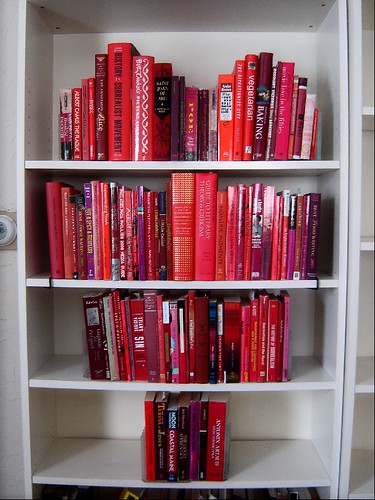
Huge thanks to Brooke for providing the impetus for this, and for the picture (a portion of the Sokol Books collection). She noted on Twitter this morning that the reason she started cataloging on LT was that the library “isn’t consistently organized & I when I first started working I needed to learn its contents FAST. I have heard horror stories of firms owning multiple copies of expensive bibliographies because their libraries are disorganized … so cataloguing a ref library saves 1) time 2) money 3) teaching other employees what you have committed to muscle memory.” If we can help at all with any of that, we’re happy to!
Mmm, bookstores. For more ways to use LT, see our How Bookstores Can Use LibraryThing page.
* If you’re a bookseller and not a member of those assocations, but have a large reference library you want to catalog on LibraryThing, just email me; we’ll make it work.
Labels: booksellers, bookstores, references
LibraryThing Meetup in Boston!
 Are you up for a day of bookish enjoyment, food, and LibraryThing socializing? Join us on Saturday, November 12 for a series of meetups in Boston, centered around the Boston International Antiquarian Book Fair, one of the best book fairs in the country!
We’ll begin the day by meeting for brunch at 10 a.m. at Trident Booksellers and Cafe on Newbury Street and stop in at Raven Used Books’ Newbury Street location before the book fair opens at noon (at the Hynes Convention Center).
Commonwealth Books is providing free passes for the book fair, and offering at 15%-off discount to LTers for Saturday, so after we’ve seen the fair we can head downtown during the afternoon for visits there and to the Brattle Book Shop. In the evening, we’ll go out to Cambridge for dinner and visits to Harvard Bookstore and the Raven location on JFK Street.
Help us plan in the Talk thread, and sign up on the wiki page to let us know what meetups you might attend (feel free to come to as many or as few as you like!). We hope to see you in Boston!
Labels: bookstores, boston, meet up, members
New group: “Books in 2025—The Future of the Book World”
 I’ve started a new discussion group LibraryThing Group, Books in 2025.
The group aims to centralize and restart a site-wide conversation about the future of books and reading. It’s a conversation that’s been going on for years here and there on Talk, especially Book talk and the librarians group, in comments to my Thingology posts about ebooks and my Twitter stream. It needs it’s own group. It will also be refreshing to hear more from LibraryThing members–not technologists or industry people. After all, who better to discuss the future of books than the people who love them most?
Anything about the future of books is welcome, but the focus will be on how ebooks and social reading are and will change things, with 15 years as a proposed timeframe:
- How will ebooks change reading? Has it changed your reading?
- How fast will ebooks rise, and how high will they go? Is the paper book dead?
- Where is social reading going? What’s core and what’s fad?
- Will sites like LibraryThing continue to exist, or will ereaders leverage their advantages to make book discussion a platform-dependent activity?
- Will libraries contract or prosper in an ebook world? What can they do to make sure things turn out right?
- How will ebooks change the world for publishers?
- Will writers see increased opportunities–or be decimated by piracy? How will ebooks change literature?
- Are physical bookstores doomed?
- What about the rest of the book world–small and informal libraries, agents, rare books, small presses, book reviewers, etc.?
- Amazon, B&N, Apple… How many will win, and how will they evolve?
Anyone can post, and start a topic. But we’re going to keep this a LibraryThing project. We’ll be starting some topics ourselves, and bringing in authors and other book people to discuss what they know, and where they think things are going.
So, come check out the group “Books in 2025,” and participate in a first topic, “Welcome to this group / Books in 2025?”
Group image by Javier Candeira, released under CC-Attribution-ShareAlike 2.0 Generic (see on Flickr).
Labels: books, bookstores, ebooks, libraries
Local Book Search: A new way forward for bookselling
 We’ve just released a slew of new features (see overview). We hope members like them all, but Local Book Search is the most important. I won’t mince words: it is intended to change bookselling forever.
The Idea. It’s a simple idea: a location-based search for books. After all, you can ask Google for pizza where you live. But you can’t do it with books, until now.
Just Show Me the Feature! Here are some sample links:
- Alice in Wonderland near London
- Steinbeck, The Moon is Down in San Fransisco
- Freakonomics near Manhattan

Imagine if all the bookstores and libraries in central London were searchable.
The Vision. More and more people look to the web, even for local information. I can’t remember the last time I checked a newspaper for movie times or local music. Bookstores, however, have largely stayed off the “local web.” Those that expose their holdings do it inconveniently. Many don’t at all, either because their systems are old, or on principle. And nobody has ever tried to tie it all together, like Local Book Search attempts to do.
Physical bookstores often complain about online prices, but a lot of the problem is just convenience. If I lived in San Fransisco and wanted a copy of Steinbeck’s The Moon is Down, I probably wouldn’t bother to call up all my local bookstores; Amazon is quick and easy, and will surely have it. Local Book Search find a half dozen copies, new and used, in just seconds.
At a minimum, this is a cool test. Maybe bookstores will prefer to keep their holdings information to themselves and shut us out. A bookstore near me won’t participate because they think the information is “valuable” and, if it were online, “people would know what we don’t have.” I think that sort of thinking is the road to a world without bookstores.
Online bookselling is here to stay. It’s a wonderful thing. Same-day online delivery, as recently offered by Amazon, is something new. But physical book stores are also very important. We hope local book search can be one of the things they need to survive and prosper.
Who are you searching? The list currently stands as follows:
- 800 or so, mostly used, bookstores from Abebooks.com
- 402 Borders (US) stores
- 300 Waterstones (UK) stores
- 250 Indigo, Indigo Spirit, Chapters and Coles stores in Canada
- 40 library systems that use LibraryThing for Libraries. (We hope to convince all 160 to participate.)
- 40 Blackwell (UK) stores
- 4 Shakespeare and Company (NYC) stores
- 4 Powell’s stores (Portland)
- 3 Tattered Covers stores (Colorado)
- The Strand in New York City
- Harvard Books (Cambridge, MA)
- Porter Square Books (Cambridge, MA)
- Foyles (London)
- City Lights in Sylva, NC (they rock)
How are you doing it? We’re doing it in a mix of ways. A number of bookstores, including Powells, Porter Square and City Lights, send us their files. We have special permission from Abebooks too, so we pre-parse the Abebooks sellers.* (Members have helped us connect them to LibraryThing.) Indigo/Chapters gave us their blessing, and a convenient way to do it.
The rest involve just-in-time searches. Every system is different, so we’ve written a special connector for each, but the usual pattern is some sort of multiple-ISBN fetch. In every case, we’ve obeyed a site’s “robots.txt” file–going only where we’re allowed, and hitting a website no faster than once per second. That’s also why we’ve stayed off some biggies, like Barnes and Noble–their store holdings pages are prohibited by robots.txt.
Why aren’t there more indies? We introduced basic bookstore integration back in 2006 (!), taking only indies. It never really took off, because we couldn’t convince IndieBound to offer access to the files, and, I think, asking booksellers to upload their file to IndieBound and then LibraryThing was a hard sell.
Since then, we’ve pushed hard to get indies involves, with no success. We even lost our first participant, when Ann Arbor’s Shaman Drum went out of business. Those who follow our Twitter stream will remember a lot of hand-wringing over the topic. (In fairness, IndieBound has expressed interest, but they are still working on their platform.) So, we went and did it outselves, with whom we could.
The “connectors” all take about the same amount of time, whether we pick up 400 stores in Borders, or a single store in the Strand. So, by time, we’ve spent most of it integrating with indies. We have a decent list of other indies to add, when we get the chance.
The Future. Obviously, we know this is bigger than LibraryThing. If you have an idea about where it should go, chances are we’ve had it too. We’re working on it.
We are, incidentally, aware that we’re weak on the library front. We have 40 libraries now and, if all LibraryThing for Libraries sites agreed, we could get up to 170 systems (more than 1600 buildings). Unfortunately, you can’t really screen-scrape most library systems; they tend to break under the strain. Nobody really has the data necessary, except perhaps for OCLC.
So, OCLC, how about it? Our peanut butter. Your chocolate. Don’t libraries deserve to be part of this? Can we let bygones be bygones?
What we need? Bookstores who want to participate should send me an email (tim@librarything.com) or a Tweet (@LibraryThingTim).
Bookstores concerned about LibraryThing servers hitting them too hard should also write us. We’re keeping close tabs on how often we scrape sites. (We also cache results for 24 hours.) In many cases, we could do it more efficiently, if we were allowed to access search pages, not just product pages. And we can try fewer ISBNs. Or, if you are able, we can parse your files and never hit your site.
All told, we think the traffic is good for you—it will get you sales. But we are conscious of limited technology budgets, and will work with you to increase the benefit, and decrease the potential cost.
Kudos. Thanks are owed to:
- LibraryThing members who are helping us connect Abebooks to LibraryThing.
- Abebooks. In theory, local book search could cut them out of the equation, as people walked into a store, instead of buying online. But they saw it as a valuable service to their members, and an overall win. Abebooks deserves applause for taking a risk.
- Indigo/Chapters. Every time I deal with them, I marvel at how easy they make things. No meetings, just agreement to test it out. Indigo, like Abe, is Canadian. Is there something in the water?
- Powell’s, Porter Square Book and (tiny) City Lights Books in Sylva, NC deserve thanks for being with us from the first. Because their method–sending us files–is so much easier for us, we’re planning to create some special features for them.
- Programemrs Chris and Mike, and non-programmers Dan and Stephanie. The “Get this Book” and “Local Book Search” project took over two months, and involved huge amounts of new code, and also data entry. As Chris remarked, for most companies, “this would be a site.” It is an awesome achievement.
Come talk about it. Come talk about all this on Talk.
*Abebooks.com sellers already total over 1 million books, and we haven’t caught up with all the Abe-to-LibraryThing work members have done. We think they’ll end up around 1.5 million books total.
Labels: abebooks, booksellers, bookstore integration, bookstores, local book search, used bookstores
Ann Arbor’s Shaman Drum closing
Ann Arbor’s legendary Shaman Drum Bookshop (website, LibraryThing Local) just announced they are closing after 29 years—and I’m devastated. They were my refuge in graduate school, and one of my favorite indies.
Links: Ann Arbor Chronicle, LA Times, Galleycat, Shaman Drum Announcement
Labels: bookstores, indiebound