Evidence for complete denitrification in a benthic foraminifer (original) (raw)
- Letter
- Published: 07 September 2006
- Alexandra M. Langezaal2,
- Signe Ingvardsen3,
- Markus C. Schmid4,
- Mike S. M. Jetten4,
- Huub J. M. Op den Camp4,
- Jan W. M. Derksen5,
- Elisa Piña-Ochoa6,
- Susanne P. Eriksson7,
- Lars Peter Nielsen3,
- Niels Peter Revsbech3,
- Tomas Cedhagen3 &
- …
- Gijsbert J. van der Zwaan2
Nature volume 443, pages 93–96 (2006) Cite this article
- 3720 Accesses
- 441 Citations
- 20 Altmetric
- Metrics details
Abstract
Benthic foraminifera are unicellular eukaryotes found abundantly in many types of marine sediments. Many species survive and possibly reproduce in anoxic habitats1, but sustainable anaerobic metabolism has not been previously described. Here we demonstrate that the foraminifer Globobulimina pseudospinescens accumulates intracellular nitrate stores and that these can be respired to dinitrogen gas. The amounts of nitrate detected are estimated to be sufficient to support respiration for over a month. In a Swedish fjord sediment where G. pseudospinescens is the dominant foraminifer, the intracellular nitrate pool in this species accounted for 20% of the large, cell-bound, nitrate pool present in an oxygen-free zone. Similarly high nitrate concentrations were also detected in foraminifera Nonionella cf. stella and a Stainforthia species, the two dominant benthic taxa occurring within the oxygen minimum zone of the continental shelf off Chile. Given the high abundance of foraminifera in anoxic marine environments1,2,3, these new findings suggest that foraminifera may play an important role in global nitrogen cycling and indicate that our understanding of the complexity of the marine nitrogen cycle is far from complete.
This is a preview of subscription content, access via your institution
Access options
Subscribe to this journal
Receive 51 print issues and online access
$199.00 per year
only $3.90 per issue
Buy this article
- Purchase on SpringerLink
- Instant access to the full article PDF.
USD 39.95
Prices may be subject to local taxes which are calculated during checkout
Additional access options:
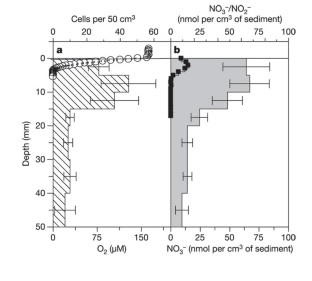
Figure 1: Foraminifera, oxygen and nitrate in sediment.
The alternative text for this image may have been generated using AI.
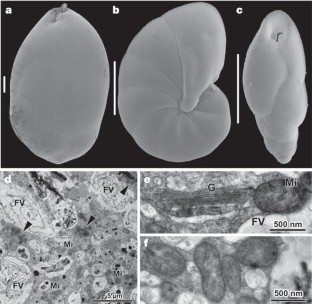
Figure 2: SEM and TEM micrographs of the investigated foraminifer species.
The alternative text for this image may have been generated using AI.
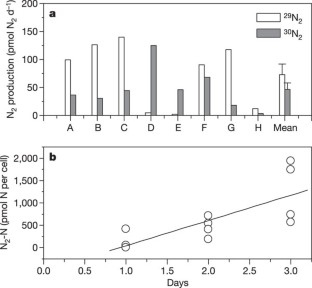
Figure 3: N 2 production in G. pseudospinescens.
The alternative text for this image may have been generated using AI.
References
- Bernhard, J. M. Microaerophilic and facultative anaerobic benthic foraminifera: a review of experimental and ultrastructural evidence. Rev. de Paléobiol 15, 261–275 (1996)
Google Scholar - Gooday, A. J., Bernhard, J. M., Levin, L. A. & Suhr, S. B. Foraminifera in the Arabian Sea oxygen minimum zone and other oxygen-deficient settings: taxonomic composition, diversity, and relation to metazoan faunas. Deep-sea Res. II 47, 25–54 (2000)
Article ADS Google Scholar - Levin, L. et al. Benthic processes on the Peru margin: a transect across the oxygen minimum zone during the 1997–98 El Nino. Prog. Oceanogr. 53, 1–27 (2002)
Article ADS Google Scholar - Fontanier, C. et al. Seasonal and interannual variability of benthic foraminiferal faunas at 550 m depth in the Bay of Biscay. Deep-sea Res. I 50, 457–494 (2003)
Article Google Scholar - Alberts, B., et al. Molecular Biology of the Cell (Garland Science, New York, 2002)
Google Scholar - Bernhard, J. M. & Reimers, C. E. Benthic foraminiferal population fluctuations related to anoxia: Santa Barbara Basin. Biogeochemistry 15, 127–149 (1991)
Article CAS Google Scholar - Dalsgaard, T., Canfield, D. E., Petersen, J., Thamdrup, B. & Acuña-González, J. N2 production by the anammox reaction in the anoxic water column of Golfo Dulce, Costa Rica. Nature 422, 606–608 (2003)
Article ADS CAS Google Scholar - Chen, F., Xia, Q. & Ju, L. K. Aerobic denitrification of Pseudomonas aeruginosa monitored by online NAD(P)H fluorescence. Appl. Environ. Microbiol. 69, 6715–6722 (2003)
Article CAS PubMed PubMed Central Google Scholar - Finlay, B. J., Span, A. S. W. & Harman, J. M. P. Nitrate respiration in primitive eukaryotes. Nature 303, 333–336 (1983)
Article ADS CAS Google Scholar - Tielens, A. G. M., Rotte, C., van Hellemond, J. J. & Martin, W. Mitochondria as we don't know them. Trends Biochem. Sci. 27, 564–572 (2002)
Article CAS Google Scholar - Geslin, E., Heinz, P., Jorissen, F. & Hemleben, C. Migratory responses of deep-sea benthic foraminifera to variable oxygen conditions: laboratory investigations. Mar. Micropaleontol. 53, 227–243 (2004)
Article ADS Google Scholar - Zopfi, J., Kjaer, T., Nielsen, L. P. & Jorgensen, B. B. Ecology of Thioploca spp.: nitrate and sulfur storage in relation to chemical microgradients and influence of Thioploca spp. on the sedimentary nitrogen cycle. Appl. Environ. Microbiol. 67, 5530–5537 (2001)
Article CAS PubMed PubMed Central Google Scholar - Engström, P., Dalsgaard, T., Hulth, S. & Aller, R. C. Anaerobic ammonium oxidation by nitrite (anammox): Implications for N2 production in coastal marine sediments. Geochim. Cosmochim. Acta 69, 2057–2065 (2005)
Article ADS Google Scholar - Huettel, M., Forster, S., Klöser, S. & Fossing, H. Vertical migration in the sediment-dwelling sulfur bacteria Thioploca spp. in overcoming diffusion limitations. Appl. Environ. Microbiol. 62, 1863–1872 (1996)
CAS PubMed PubMed Central Google Scholar - Larsen, L. H., Kjaer, T. & Revsbech, N. P. A microscale NO-3 biosensor for environmental applications. Anal. Chem. 69, 3527–3531 (1997)
Article CAS PubMed Google Scholar - Revsbech, N. P. An oxygen microelectrode with a guard cathode. Limnol. Oceanogr. 34, 474–478 (1989)
Article ADS CAS Google Scholar - Meyer, R. L., Kjaer, T. & Revsbech, N. P. Use of NOx- microsensors to estimate the activity of sediment nitrification and NOx- consumption along an estuarine salinity, nitrate, and light gradient. Aquat. Microb. Ecol. 26, 181–193 (2001)
Article Google Scholar - Sayama, M. Presence of nitrate-accumulating sulfur bacteria and their influence on nitrogen cycling in a shallow coastal marine sediment. Appl. Environ. Microbiol. 67, 3481–3487 (2001)
Article CAS PubMed PubMed Central Google Scholar - Braman, R. S. & Hendrix, S. A. Nanogram nitrite and nitrate determination in environmental and biological-materials by vanadium(III) reduction with chemi-luminescence detection. Anal. Chem. 61, 2715–2718 (1989)
Article CAS PubMed Google Scholar - Kuypers, M. M. M. et al. Anaerobic ammonium oxidation by anammox bacteria in the Black Sea. Nature 422, 608–611 (2003)
Article ADS CAS Google Scholar - Raghoebarsing, A. A. et al. Methanotrophic symbionts provide carbon for photosynthesis in peat bogs. Nature 436, 1153–1156 (2005)
Article ADS CAS Google Scholar - Risgaard-Petersen, N. & Rysgaard, S. in Methods in Applied Soil Microbiology and Biochemistry (eds Alef, K. & Nannipieri, P.) 287–296 (Academic, London, 1995)
Google Scholar - Risgaard-Petersen, N., Rysgaard, S. & Revsbech, N. P. A sensitive assay for determination of 14N/15N isotope distribution in NO3-. J. Microbiol. Meth. 17, 155–164 (1993)
Article CAS Google Scholar - Vester, F. & Ingvorsen, K. Improved most-probable-number method to detect sulfate-reducing bacteria with natural media and a radiotracer. Appl. Environ. Microbiol. 64, 1700–1707 (1998)
CAS PubMed PubMed Central Google Scholar - Bernhard, J. M. Distinguishing live from dead foraminifera: methods review and proper applications. Micropaleontology 46, 38–46 (2000)
Google Scholar - Nielsen, L. P. Denitrification in sediments determined from nitrogen isotope pairing. FEMS Microbiol. Ecol. 86, 357–362 (1992)
Article CAS Google Scholar
Acknowledgements
We thank P. Engström, J. Brandsma, V. A. Gallardo, B. B. Jørgensen, E. Frandsen, G. Ittman, S. Petersen, K. L. Knudsen, G. J. Janssen, P. Sørensen and L. Pierson for their support. The work was supported by the Carlsberg Foundation, Denmark (N.R.-P.); the National Science Research Foundation, Denmark (N.R.-P., T.C. and N.P.R.); the Netherlands Organization for Scientific Research (NWO-ALW biogeosphere; G.J.v.d.Z. and M.S.M.J.) and the Swedish Research Council (S.P.E.). Author Contributions A.M.L., M.C.S., N.R.-P., S.I., L.P.N. and N.P.R. performed the sampling. A.M.L, G.J.v.d.Z and T.C. carried out the foraminifer identification. N.R.-P., N.P.R., E.P.-O., S.I., L.P.N. and A.M.L. performed the nitrate and denitrification rate measurements; J.W.M.D., H.J.M.O.d.C., T.C. and M.C.S. performed the microscopy. The research was conceived by N.R.-P., S.P.E., G.J.v.d.Z., M.S.M.J., H.J.M.O.d.C., A.M.L., N.P.R, L.P.N. and S.I. All authors contributed to interpreting the data and writing the paper.
Author information
Authors and Affiliations
- Department of Marine Ecology, National Environmental Research Institute, Vejlsøvej 25, DK-8600, Silkeborg, Denmark
Nils Risgaard-Petersen - Department of Earth Sciences, Utrecht University, Faculty of Geosciences, Budapestlaan 4, NL-3584 CD, Utrecht, The Netherlands
Alexandra M. Langezaal & Gijsbert J. van der Zwaan - Department of Biological Sciences, University of Aarhus, Ny Munkegade, Building 1540, DK-8000, Aarhus C, Denmark
Signe Ingvardsen, Lars Peter Nielsen, Niels Peter Revsbech & Tomas Cedhagen - Department of Microbiology,
Markus C. Schmid, Mike S. M. Jetten & Huub J. M. Op den Camp - Department of Plant Cell Biology, IWWR, Radboud University Nijmegen, Toernooiveld 1, NL-6525 ED, Nijmegen, The Netherlands
Jan W. M. Derksen - Department of Aquatic Ecology (CSIC), Centre of Environmental Sciences, Serrano 115 dpdo., E-28006, Madrid, Spain
Elisa Piña-Ochoa - Department of Marine Ecology, Kristineberg Marine Research Station, Göteborg University, S-450 34, Fiskebäckskil, Sweden
Susanne P. Eriksson
Authors
- Nils Risgaard-Petersen
- Alexandra M. Langezaal
- Signe Ingvardsen
- Markus C. Schmid
- Mike S. M. Jetten
- Huub J. M. Op den Camp
- Jan W. M. Derksen
- Elisa Piña-Ochoa
- Susanne P. Eriksson
- Lars Peter Nielsen
- Niels Peter Revsbech
- Tomas Cedhagen
- Gijsbert J. van der Zwaan
Corresponding author
Correspondence toNils Risgaard-Petersen.
Ethics declarations
Competing interests
Reprints and permissions information is available at www.nature.com/reprints. The authors declare no competing financial interests.
Supplementary information
Supplementary Methods (download PDF )
This file contains methodology used for measuring denitrification in a foraminifer and the procedure used for calculation of the denitrification activity for a bacterial cell. There is also one figure. (PDF 59 kb)
Rights and permissions
About this article
Cite this article
Risgaard-Petersen, N., Langezaal, A., Ingvardsen, S. et al. Evidence for complete denitrification in a benthic foraminifer.Nature 443, 93–96 (2006). https://doi.org/10.1038/nature05070
- Received: 02 June 2006
- Accepted: 13 July 2006
- Issue date: 07 September 2006
- DOI: https://doi.org/10.1038/nature05070
This article is cited by
Editorial Summary
Living without oxygen
Several foraminiferal protozoa species grow in anoxic zones in marine sediment, but the type of anaerobic respiration that sustains them was not known. These organisms have now been found to accumulate nitrate intracellularly at concentrations more than 500 times the environmental values. The nitrate substitutes for oxygen in these anoxic habitats. The large amounts of nitrate that accumulate may even allow them to 'hold their breath' for more than a month.