Reactive oxygen species prime Drosophila haematopoietic progenitors for differentiation (original) (raw)
- Letter
- Published: 02 September 2009
Nature volume 461, pages 537–541 (2009)Cite this article
- 8891 Accesses
- 677 Citations
- 11 Altmetric
- Metrics details
Abstract
Reactive oxygen species (ROS), produced during various electron transfer reactions in vivo, are generally considered to be deleterious to cells1. In the mammalian haematopoietic system, haematopoietic stem cells contain low levels of ROS. However, unexpectedly, the common myeloid progenitors (CMPs) produce significantly increased levels of ROS2. The functional significance of this difference in ROS level in the two progenitor types remains unresolved2,3. Here we show that Drosophila multipotent haematopoietic progenitors, which are largely akin to the mammalian myeloid progenitors4, display increased levels of ROS under in vivo physiological conditions, which are downregulated on differentiation. Scavenging the ROS from these haematopoietic progenitors by using in vivo genetic tools retards their differentiation into mature blood cells. Conversely, increasing the haematopoietic progenitor ROS beyond their basal level triggers precocious differentiation into all three mature blood cell types found in Drosophila, through a signalling pathway that involves JNK and FoxO activation as well as Polycomb downregulation. We conclude that the developmentally regulated, moderately high ROS level in the progenitor population sensitizes them to differentiation, and establishes a signalling role for ROS in the regulation of haematopoietic cell fate. Our results lead to a model that could be extended to reveal a probable signalling role for ROS in the differentiation of CMPs in mammalian haematopoietic development and oxidative stress response.
This is a preview of subscription content, access via your institution
Access options
Subscribe to this journal
Receive 51 print issues and online access
$199.00 per year
only $3.90 per issue
Buy this article
- Purchase on SpringerLink
- Instant access to the full article PDF.
USD 39.95
Prices may be subject to local taxes which are calculated during checkout
Additional access options:
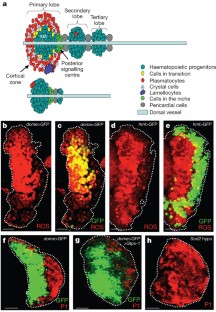
Figure 1: ROS profile of third-instar lymph glands.
The alternative text for this image may have been generated using AI.
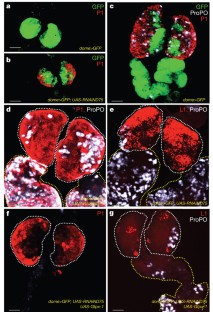
Figure 2: Increased ROS production triggers precocious differentiation of the multipotent progenitors.
The alternative text for this image may have been generated using AI.
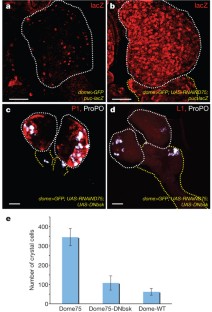
Figure 3: Disrupting JNK signalling suppresses the ROS-dependent differentiation phenotype.
The alternative text for this image may have been generated using AI.
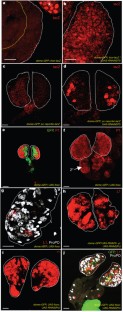
Figure 4: FoxO activation and Polycomb downregulation phenocopy aspects of the ROS-induced differentiation.
The alternative text for this image may have been generated using AI.
References
- Finkel, T. & Holbrook, N. J. Oxidants, oxidative stress and the biology of ageing. Nature 408, 239–247 (2000)
Article ADS CAS Google Scholar - Tothova, Z. et al. FoxOs are critical mediators of hematopoietic stem cell resistance to physiologic oxidative stress. Cell 128, 325–339 (2007)
Article CAS Google Scholar - Coffer, P. J. & Burgering, B. M. Stressed marrow: FoxOs stem tumour growth. Nature Cell Biol. 9, 251–253 (2007)
Article CAS Google Scholar - Evans, C. J., Hartenstein, V. & Banerjee, U. Thicker than blood: conserved mechanisms in Drosophila and vertebrate hematopoiesis. Dev. Cell 5, 673–690 (2003)
Article CAS Google Scholar - Jung, S. H., Evans, C. J., Uemura, C. & Banerjee, U. The Drosophila lymph gland as a developmental model of hematopoiesis. Development 132, 2521–2533 (2005)
Article CAS Google Scholar - Wood, W. & Jacinto, A. Drosophila melanogaster embryonic haemocytes: masters of multitasking. Nature Rev. Mol. Cell Biol. 8, 542–551 (2007)
Article CAS Google Scholar - Lebestky, T., Jung, S. H. & Banerjee, U. A. Serrate-expressing signaling center controls Drosophila hematopoiesis. Genes Dev. 17, 348–353 (2003)
Article CAS Google Scholar - Mandal, L., Martinez-Agosto, J. A., Evans, C. J., Hartenstein, V. & Banerjee, U. A. Hedgehog- and Antennapedia-dependent niche maintains Drosophila haematopoietic precursors. Nature 446, 320–324 (2007)
Article ADS CAS Google Scholar - Krzemien, J. et al. Control of blood cell homeostasis in Drosophila larvae by the posterior signalling centre. Nature 446, 325–328 (2007)
Article ADS CAS Google Scholar - Lebestky, T., Chang, T., Hartenstein, V. & Banerjee, U. Specification of Drosophila hematopoietic lineage by conserved transcription factors. Science 288, 146–149 (2000)
Article ADS CAS Google Scholar - Bruckner, K. et al. The PDGF/VEGF receptor controls blood cell survival in Drosophila . Dev. Cell 7, 73–84 (2004)
Article Google Scholar - Missirlis, F. et al. A putative glutathione peroxidase of Drosophila encodes a thioredoxin peroxidase that provides resistance against oxidative stress but fails to complement a lack of catalase activity. Biol. Chem. 384, 463–472 (2003)
Article CAS Google Scholar - Brand, A. H. & Perrimon, N. Targeted gene expression as a means of altering cell fates and generating dominant phenotypes. Development 118, 401–415 (1993)
CAS Google Scholar - Owusu-Ansah, E., Yavari, A., Mandal, S. & Banerjee, U. Distinct mitochondrial retrograde signals control the G1-S cell cycle checkpoint. Nature Genet. 40, 356–361 (2008)
Article CAS Google Scholar - Owusu-Ansah, E., Yavari, A. . & Banerjee, U. . A protocol for in vivo detection of reactive oxygen species. Nature Protocols 10.1038/nprot.2008.23 (2008)
- Gotoh, Y. & Cooper, J. A. Reactive oxygen species- and dimerization-induced activation of apoptosis signal-regulating kinase 1 in tumor necrosis factor-α signal transduction. J. Biol. Chem. 273, 17477–17482 (1998)
Article CAS Google Scholar - Essers, M. A. et al. FOXO transcription factor activation by oxidative stress mediated by the small GTPase Ral and JNK. EMBO J. 23, 4802–4812 (2004)
Article CAS Google Scholar - Martin-Blanco, E. et al. puckered encodes a phosphatase that mediates a feedback loop regulating JNK activity during dorsal closure in Drosophila . Genes Dev. 12, 557–570 (1998)
Article CAS Google Scholar - Harvey, K. F. et al. FOXO-regulated transcription restricts overgrowth of Tsc mutant organs. J. Cell Biol. 180, 691–696 (2008)
Article CAS Google Scholar - Wang, M. C., Bohmann, D. & Jasper, H. JNK extends life span and limits growth by antagonizing cellular and organism-wide responses to insulin signaling. Cell 121, 115–125 (2005)
Article CAS Google Scholar - Lee, N., Maurange, C., Ringrose, L. & Paro, R. Suppression of Polycomb group proteins by JNK signalling induces transdetermination in Drosophila imaginal discs. Nature 438, 234–237 (2005)
Article ADS CAS Google Scholar - Puig, O., Marr, M. T., Ruhf, M. L. & Tjian, R. Control of cell number by Drosophila FOXO: downstream and feedback regulation of the insulin receptor pathway. Genes Dev. 17, 2006–2020 (2003)
Article CAS Google Scholar - Teleman, A. A., Hietakangas, V., Sayadian, A. C. & Cohen, S. M. Nutritional control of protein biosynthetic capacity by insulin via Myc in Drosophila . Cell Metab. 7, 21–32 (2008)
Article CAS Google Scholar - Junger, M. A. et al. The Drosophila forkhead transcription factor FOXO mediates the reduction in cell number associated with reduced insulin signaling. J. Biol. 2, 20 (2003)
Article Google Scholar - Takeda, S. et al. Local positive feedback regulation determines cell shape in root hair cells. Science 319, 1241–1244 (2008)
Article ADS CAS Google Scholar - Foreman, J. et al. Reactive oxygen species produced by NADPH oxidase regulate plant cell growth. Nature 422, 442–446 (2003)
Article ADS CAS Google Scholar
Acknowledgements
We thank I. Ando and H. Muller for antibodies, and E. Hafen, A. Martinez-Arias, F. Missirlis, S. Noselli, R. Paro, S Sinenko, the National Institute of Genetics Fly Stock Center (Japan) and the Bloomington Stock Center for fly stocks. We acknowledge M. Kulkarni and C. Pitsouli of the Perrimon laboratory for technical assistance. Owing to space limitations, we apologize to our colleagues whose work is not referenced. This study was supported by US National Institutes of Health grant R01HL067395 to U.B. and a T32 institutional postdoctoral fellowship T32-HL069766 to E.O.-A.
Author Contributions U.B. supervised the project. E.O.-A. conceived, designed and performed all experiments. E.O.-A. and U.B. discussed results and wrote the manuscript.
Author information
Author notes
- Edward Owusu-Ansah
Present address: Present address: Department of Genetics, Harvard Medical School, Boston, Massachusetts 02115, USA.,
Authors and Affiliations
- Department of Molecular, Cell and Developmental Biology,
Edward Owusu-Ansah & Utpal Banerjee - Molecular Biology Institute,,
Utpal Banerjee - Department of Biological Chemistry,,
Utpal Banerjee - Eli and Edythe Broad Center of Regenerative Medicine and Stem Cell Research, University of California, Los Angeles, California 90095, USA ,
Utpal Banerjee
Authors
- Edward Owusu-Ansah
- Utpal Banerjee
Corresponding author
Correspondence toUtpal Banerjee.
Supplementary information
PowerPoint slides
Rights and permissions
About this article
Cite this article
Owusu-Ansah, E., Banerjee, U. Reactive oxygen species prime Drosophila haematopoietic progenitors for differentiation.Nature 461, 537–541 (2009). https://doi.org/10.1038/nature08313
- Received: 03 May 2009
- Accepted: 23 July 2009
- Published: 02 September 2009
- Issue date: 24 September 2009
- DOI: https://doi.org/10.1038/nature08313
This article is cited by
Editorial Summary
Reactive oxygen's good side
While largely studied because of their harmful effects in DNA damage, protein/lipid oxidation and apoptosis, there is a growing appreciation that reactive oxygen species (ROS) may have beneficial effects in some tissues. In the mammalian haematopoietic system, haematopoietic stem cells contain low ROS levels, but unexpectedly, the common myeloid progenitors (CMPs), produce significantly elevated levels of ROS. Edward Owusu-Ansah and Utpal Banerjee have discovered the apparent functional significance of this difference in ROS level in the two progenitor types in Drosophila. They show that the developmentally regulated, moderately high ROS level in the progenitor population sensitizes them to differentiation, and establishes a signalling role for ROS in the regulation of haematopoietic cell fate.