Control of blood cell homeostasis in Drosophila larvae by the posterior signalling centre (original) (raw)
- Letter
- Published: 15 March 2007
- Laurence Dubois1,
- Rami Makki1,
- Marie Meister3 nAff4,
- Alain Vincent1 &
- …
- Michèle Crozatier1
Nature volume 446, pages 325–328 (2007)Cite this article
- 3681 Accesses
- 311 Citations
- Metrics details
Abstract
Drosophila haemocytes (blood cells) originate from a specialized haematopoietic organ—the lymph gland. Larval haematopoietic progenitors (prohaemocytes) give rise to three types of circulating haemocytes: plasmatocytes, crystal cells and lamellocytes. Lamellocytes, which are devoted to encapsulation of large foreign bodies, only differentiate in response to specific immune threats, such as parasitization by wasps. Here we show that a small cluster of signalling cells, termed the PSC (posterior signalling centre)1, controls the balance between multipotent prohaemocytes and differentiating haemocytes, and is necessary for the massive differentiation of lamellocytes that follows parasitization. Communication between the PSC and haematopoietic progenitors strictly depends on the PSC-restricted expression of Collier, the Drosophila orthologue of mammalian early B-cell factor. PSC cells act, in a non-cell-autonomous manner, to maintain JAK/STAT signalling activity in prohaemocytes, preventing their premature differentiation. Serrate-mediated Notch signalling from the PSC is required to maintain normal levels of col transcription. The key role of the PSC in controlling blood cell homeostasis is reminiscent of interactions between haematopoietic progenitors and their micro-environment in vertebrates2,3,4, thus further highlighting the interest of Drosophila as a model system for studying the evolution of haematopoiesis and cellular innate immunity.
This is a preview of subscription content, access via your institution
Access options
Subscribe to this journal
Receive 51 print issues and online access
$199.00 per year
only $3.90 per issue
Buy this article
- Purchase on SpringerLink
- Instant access to the full article PDF.
USD 39.95
Prices may be subject to local taxes which are calculated during checkout
Additional access options:
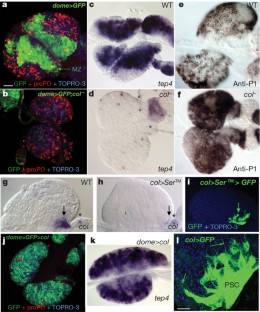
Figure 1: The PSC is required to maintain a pool of haematopoietic progenitors.
The alternative text for this image may have been generated using AI.
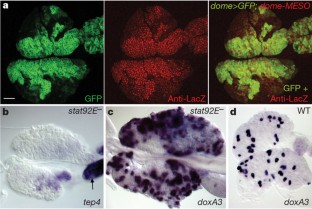
Figure 2: JAK/STAT signalling pathway is required to maintain a pool of prohaemocytes in the lymph gland.
The alternative text for this image may have been generated using AI.
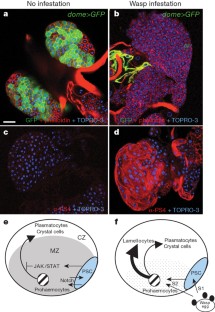
Figure 3: Premature differentiation of prohaemocytes into lamellocytes on wasp infestation.
The alternative text for this image may have been generated using AI.
References
- Lebestky, T., Jung, S. H. & Banerjee, U. A Serrate-expressing signaling center controls Drosophila hematopoiesis. Genes Dev. 17, 348–353 (2003)
Article CAS Google Scholar - Nagasawa, T. Microenvironmental niches in the bone marrow required for B-cell development. Nature Rev. Immunol. 6, 107–116 (2006)
Article CAS Google Scholar - Wilson, A. & Trumpp, A. Bone-marrow haematopoietic-stem-cell niches. Nature Rev. Immunol. 6, 93–106 (2006)
Article CAS Google Scholar - Scadden, D. T. The stem-cell niche as an entity of action. Nature 441, 1075–1079 (2006)
Article ADS CAS Google Scholar - Holz, A., Bossinger, B., Strasser, T., Janning, W. & Klapper, R. The two origins of haemocytes in Drosophila. Development 130, 4955–4962 (2003)
Article CAS Google Scholar - Bataille, L., Auge, B., Ferjoux, G., Haenlin, M. & Waltzer, L. Resolving embryonic blood cell fate choice in Drosophila: interplay of GCM and RUNX factors. Development 132, 4635–4644 (2005)
Article CAS Google Scholar - Rizki, R. M. & Rizki, T. M. Selective destruction of a host blood cell type by a parasitoid wasp. Proc. Natl Acad. Sci. USA 81, 6154–6158 (1984)
Article ADS CAS Google Scholar - Lanot, R., Zachary, D., Holder, F. & Meister, M. Postembryonic hematopoiesis in Drosophila. Dev. Biol. 230, 243–257 (2001)
Article CAS Google Scholar - Evans, C. J., Hartenstein, V. & Banerjee, U. Thicker than blood: conserved mechanisms in Drosophila and vertebrate hematopoiesis. Dev. Cell 5, 673–690 (2003)
Article CAS Google Scholar - Meister, M. & Lagueux, M. Drosophila blood cells. Cell. Microbiol. 5, 573–580 (2003)
Article CAS Google Scholar - Jung, S. H., Evans, C. J., Uemura, C. & Banerjee, U. The Drosophila lymph gland as a developmental model of hematopoiesis. Development 132, 2521–2533 (2005)
Article CAS Google Scholar - Crozatier, M., Ubeda, J. M., Vincent, A. & Meister, M. Cellular immune response to parasitization in Drosophila requires the EBF orthologue Collier. PLoS Biol. 2, E196 (2004)
Article Google Scholar - Irving, P. et al. New insights into Drosophila larval haemocyte functions through genome-wide analysis. Cell. Microbiol. 7, 335–350 (2005)
Article CAS Google Scholar - Sun, X. & Artavanis-Tsakonas, S. The intracellular deletions of Delta and Serrate define dominant negative forms of the Drosophila Notch ligands. Development 122, 2465–2474 (1996)
CAS PubMed Google Scholar - De Joussineau, C. et al. Delta-promoted filopodia mediate long-range lateral inhibition in Drosophila. Nature 426, 555–559 (2003)
Article ADS CAS Google Scholar - Spradling, A., Drummond-Barbosa, D. & Kai, T. Stem cells find their niche. Nature 414, 98–104 (2001)
Article ADS CAS Google Scholar - Hombria, J. C., Brown, S., Hader, S. & Zeidler, M. P. Characterisation of Upd2, a Drosophila JAK/STAT pathway ligand. Dev. Biol. 288, 420–433 (2005)
Article CAS Google Scholar - Arbouzova, N. I. & Zeidler, M. P. JAK/STAT signalling in Drosophila: insights into conserved regulatory and cellular functions. Development 133, 2605–2616 (2006)
Article CAS Google Scholar - Kraaijeveld, A. R. & Godfray, H. C. Trade-off between parasitoid resistance and larval competitive ability in Drosophila melanogaster. Nature 389, 278–280 (1997)
Article ADS CAS Google Scholar - Rolff, J. & Siva-Jothy, M. T. Invertebrate ecological immunology. Science 301, 472–475 (2003)
Article ADS CAS Google Scholar - Decotto, E. & Spradling, A. C. The Drosophila ovarian and testis stem cell niches: similar somatic stem cells and signals. Dev. Cell 9, 501–510 (2005)
Article CAS Google Scholar - Lin, H. The stem-cell niche theory: lessons from flies. Nature Rev. Genet. 3, 931–940 (2002)
Article CAS Google Scholar - Kimble, J. & Crittenden, S. L. Germline proliferation and its control. In WormBook (eds The C. elegans Research Community), doi/10.1895/worm-book.1.13.1 (15 August, 2005)
Google Scholar - Calvi, L. M. et al. Osteoblastic cells regulate the haematopoietic stem cell niche. Nature 425, 841–846 (2003)
Article ADS CAS Google Scholar - Zhang, J. et al. Identification of the haematopoietic stem cell niche and control of the niche size. Nature 425, 836–841 (2003)
Article ADS CAS Google Scholar - Sepp, K. J. & Auld, V. J. Conversion of lacZ enhancer trap lines to GAL4 lines using targeted transposition in Drosophila melanogaster. Genetics 151, 1093–1101 (1999)
CAS PubMed PubMed Central Google Scholar - Bourbon, H. M. et al. A P-insertion screen identifying novel X-linked essential genes in Drosophila. Mech. Dev. 110, 71–83 (2002)
Article CAS Google Scholar - Crozatier, M. & Vincent, A. Requirement for the Drosophila COE transcription factor Collier in formation of an embryonic muscle: transcriptional response to Notch signalling. Development 126, 1495–1504 (1999)
CAS PubMed Google Scholar
Acknowledgements
We thank J. Castelli-Gair Hombria, O. Devergne, M. Milan, S. Noselli, M. Zeidler and the Bloomington Stock Center for fly stocks, I. Ando and H. M. Müller for antibodies, and M. Haenlin, J. Smith, L. Waltzer for critical reading of the manuscript and discussion. We are grateful to platforme Toulouse RIO imaging and B. Ronsin for assistance with confocal microscopy. This work was supported by CNRS, a European Marie Curie PhD Training programme grant and Ministère de la Recherche et de la technologie (ACI Biologie Cellulaire, Moléculaire et Structurale) et Ministère des affaires étrangères (Programme Egide).
Author Contributions J.K., M.M., A.V. and M.C. conceived the experiments, which were essentially performed by J.K. and M.C. L.D. and M.M. provided crucial reagents. R.M. assisted with experiments involving wasp infestation. A.V. and M.C. wrote the manuscript.
Author information
Author notes
- Marie Meister
Present address: Present address: Museum of Zoology, 29 boulevard de la Victoire, 67000 Strasbourg, France.,
Authors and Affiliations
- Centre de Biologie du Développement, UMR 5547 and IFR 109, CNRS and Université Paul Sabatier, Toulouse III, 118 route de Narbonne, 31062 Toulouse cedex 09, France,
Joanna Krzemień, Laurence Dubois, Rami Makki, Alain Vincent & Michèle Crozatier - Jagiellonian University, The Institute of Zoology, 6 Ingardena Street, 30-060 Cracow, Poland,
Joanna Krzemień - UPR 9022 du CNRS, IBMC, 15 rue René Descartes, 67084 Strasbourg, France,
Marie Meister
Authors
- Joanna Krzemień
- Laurence Dubois
- Rami Makki
- Marie Meister
- Alain Vincent
- Michèle Crozatier
Corresponding author
Correspondence toMichèle Crozatier.
Ethics declarations
Competing interests
Reprints and permissions information is available at www.nature.com/reprints. The authors declare no competing financial interests.
Supplementary information
Supplementary Figures (download PDF )
This file contains Supplementary Figures S1- S3 with Legends. Fig. S1 illustrates PSC-specific expression driven by Pcol85-Gal4. Forced expression of the apoptosis inducing gene reaper in the PSC leads to death of the PSC cells. Fig. S2 illustrates PSC cells extend filopodia. Fig.S3 illustrates loss of col activity in the PSC does not affect the formation of the medullary zone in the second instar larvae. (PDF 258 kb)
Rights and permissions
About this article
Cite this article
Krzemień, J., Dubois, L., Makki, R. et al. Control of blood cell homeostasis in Drosophila larvae by the posterior signalling centre.Nature 446, 325–328 (2007). https://doi.org/10.1038/nature05650
- Received: 24 August 2006
- Accepted: 05 February 2007
- Issue date: 15 March 2007
- DOI: https://doi.org/10.1038/nature05650
This article is cited by
Editorial Summary
Signals in the blood
This week, two papers from separate groups define a signalling centre in the _Drosophil_a lymph gland that controls maintenance of blood cell precursors. Signals generated in the posterior signalling centre of the lymph gland control the balance of progenitors and differentiating blood cells through JAK/STAT and Notch signalling pathways. Mandal et al. also show that the signalling centre is specified early in embryonic development by the homeotic gene Antennapedia. And Krzemień et al. show that Notch signalling controls Collier, the Drosophila equivalent of mammalian early B cell factor. This work suggests that the Drosophila model for blood development could be an important tool for genetic manipulation.