Quantum entanglement between an optical photon and a solid-state spin qubit (original) (raw)
- Letter
- Published: 05 August 2010
- Y. Chu1 na1,
- A. S. Trifonov1,
- L. Jiang1,2,3,
- J. Maze1,
- L. Childress1,4,
- M. V. G. Dutt1,5,
- A. S. Sørensen6,
- P. R. Hemmer7,
- A. S. Zibrov1 &
- …
- M. D. Lukin1
Nature volume 466, pages 730–734 (2010)Cite this article
- 26k Accesses
- 1185 Citations
- 33 Altmetric
- Metrics details
Subjects
Abstract
Quantum entanglement is among the most fascinating aspects of quantum theory1. Entangled optical photons are now widely used for fundamental tests of quantum mechanics2 and applications such as quantum cryptography1. Several recent experiments demonstrated entanglement of optical photons with trapped ions3, atoms4,5 and atomic ensembles6,7,8, which are then used to connect remote long-term memory nodes in distributed quantum networks9,10,11. Here we realize quantum entanglement between the polarization of a single optical photon and a solid-state qubit associated with the single electronic spin of a nitrogen vacancy centre in diamond. Our experimental entanglement verification uses the quantum eraser technique5,12, and demonstrates that a high degree of control over interactions between a solid-state qubit and the quantum light field can be achieved. The reported entanglement source can be used in studies of fundamental quantum phenomena and provides a key building block for the solid-state realization of quantum optical networks13,14.
This is a preview of subscription content, access via your institution
Access options
Subscribe to this journal
Receive 51 print issues and online access
$199.00 per year
only $3.90 per issue
Buy this article
- Purchase on SpringerLink
- Instant access to the full article PDF.
USD 39.95
Prices may be subject to local taxes which are calculated during checkout
Additional access options:
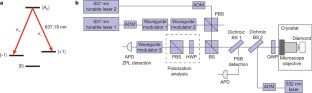
Figure 1: Scheme for spin-photon entanglement.
The alternative text for this image may have been generated using AI.
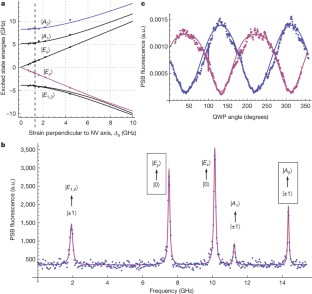
Figure 2: Characterization of NV centres.
The alternative text for this image may have been generated using AI.
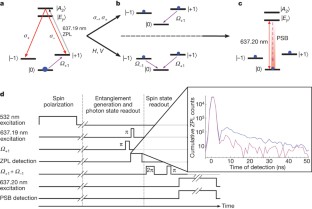
Figure 3: Experimental procedure for entanglement generation.
The alternative text for this image may have been generated using AI.
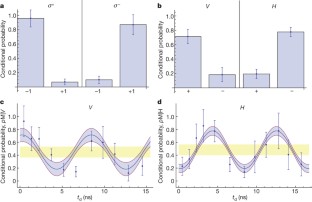
Figure 4: Measurement of spin-photon correlations in two bases.
The alternative text for this image may have been generated using AI.
References
- Nielsen, M. A. & Chuang, I. L. Quantum Computation and Quantum Information (Cambridge Univ. Press, 2000)
MATH Google Scholar - Aspect, A., Grangier, P. & Roger, G. Experimental realization of Einstein-Podolsky-Rosen-Bohm Gedankenexperiment: a new violation of Bell's inequalities. Phys. Rev. Lett. 49, 91–94 (1982)
Article ADS Google Scholar - Blinov, B. B., Moehring, D. L., Duan, L. M. & Monroe, C. Observation of entanglement between a single trapped atom and a single photon. Nature 428, 153–157 (2004)
Article ADS CAS Google Scholar - Volz, J. et al. Observation of entanglement of a single photon with a trapped atom. Phys. Rev. Lett. 96, 030404 (2006)
Article ADS Google Scholar - Wilk, T., Webster, S. C., Kuhn, A. & Rempe, G. Single-atom single-photon quantum interface. Science 317, 488–490 (2007)
Article ADS CAS Google Scholar - Yuan, Z.-S. et al. Experimental demonstration of a BDCZ quantum repeater node. Nature 454, 1098–1101 (2008)
Article ADS CAS Google Scholar - Matsukevich, D. et al. Entanglement of a photon and a collective atomic excitation. Phys. Rev. Lett. 95, 040405 (2005)
Article ADS CAS Google Scholar - Sherson, J. F. et al. Quantum teleportation between light and matter. Nature 443, 557–560 (2006)
Article ADS CAS Google Scholar - Cabrillo, C., Cirac, J. I., Garcia-Fernandez, P. & Zoller, P. Creation of entangled states of distant atoms by interference. Phys. Rev. A 59, 1025–1033 (1999)
Article ADS CAS Google Scholar - Chou, C. W. et al. Measurement-induced entanglement for excitation stored in remote atomic ensembles. Nature 438, 828–832 (2005)
Article ADS CAS Google Scholar - Moehring, D. L. et al. Entanglement of single-atom quantum bits at a distance. Nature 449, 68–71 (2007)
Article ADS CAS Google Scholar - Scully, M. O. & Drühl, K. Quantum eraser: a proposed photon correlation experiment concerning observation and “delayed choice” in quantum mechanics. Phys. Rev. A 25, 2208–2213 (1982)
Article ADS CAS Google Scholar - Kimble, H. J. The quantum internet. Nature 453, 1023–1030 (2008)
Article ADS CAS Google Scholar - Childress, L., Taylor, J. M., Sørensen, A. S. & Lukin, M. D. Fault-tolerant quantum communication based on solid-state photon emitters. Phys. Rev. Lett. 96, 070504 (2006)
Article ADS CAS Google Scholar - Duan, L.-M. & Monroe, C. Robust quantum information processing with atoms, photons, and atomic ensembles. Adv. At. Mol. Opt. Phys. 55, 419–464 (2008)
Article ADS CAS Google Scholar - Neumann, P. et al. Multipartite entanglement among single spins in diamond. Science 320, 1326–1329 (2008)
Article ADS CAS Google Scholar - Ansmann, M. et al. Violation of Bell's inequality in Josephson phase qubits. Nature 461, 504–506 (2009)
Article ADS CAS Google Scholar - DiCarlo, L. et al. Demonstration of two-qubit algorithms with a superconducting quantum processor. Nature 460, 240–244 (2009)
Article ADS CAS Google Scholar - de Riedmatten, H., Afzelius, M., Staudt, M. U., Simon, C. & Gisin, N. A solid-state light-matter interface at the single-photon level. Nature 456, 773 (2008)
Article ADS CAS Google Scholar - Balasubramanian, G. et al. Ultralong spin coherence time in isotopically engineered diamond. Nature Mater. 8, 383–387 (2009)
Article ADS CAS Google Scholar - Fuchs, G. D., Dobrovitski, V. V., Toyli, D. M., Heremans, F. J. & Awschalom, D. D. Gigahertz dynamics of a strongly driven single quantum spin. Science 326, 1520–1522 (2009)
Article ADS CAS Google Scholar - Dutt, M. V. G. et al. Quantum register based on individual electronic and nuclear spin qubits in diamond. Science 316, 1312–1316 (2007)
Article Google Scholar - Tamarat, P. et al. Spin-flip and spin-conserving optical transitions of the nitrogen-vacancy centre in diamond. N. J. Phys. 10, 045004 (2008)
Article Google Scholar - Manson, N., Harrison, J. & Sellars, M. Nitrogen-vacancy center in diamond: model of the electronic structure and associated dynamics. Phys. Rev. B 74, 104303 (2006)
Article ADS Google Scholar - Santori, C. et al. Coherent population trapping of single spins in diamond under optical excitation. Phys. Rev. Lett. 97, 247401 (2006)
Article ADS Google Scholar - Kaiser, F. et al. Polarization properties of single photons emitted by nitrogen-vacancy defect in diamond at low temperature. 〈http://arXiv.org/abs/0906.3426〉 (2009)
- Englund, D., Faraon, A., Fushman, I., Stoltz, N. & Petroff, P. Controlling cavity reflectivity with a single quantum dot. Nature 450, 857–861 (2007)
Article ADS CAS Google Scholar - Schietinger, S., Schröder, T. & Benson, O. One-by-one coupling of single defect centers in nanodiamonds to high-Q modes of an optical microresonator. Nano Lett. 8, 3911–3915 (2008)
Article ADS CAS Google Scholar - Wang, C. F. et al. Fabrication and characterization of two-dimensional photonic crystal microcavities in nanocrystalline diamond. Appl. Phys. Lett. 91, 201112 (2007)
Article ADS Google Scholar - Fleischhauer, M., Imamoğlu, A. & Marangos, J. P. Electromagnetically induced transparency: optics in coherent media. Rev. Mod. Phys. 77, 633–673 (2005)
Article ADS CAS Google Scholar
Acknowledgements
We thank F. Jelezko, J. Wrachtrup, V. Jacques, N. Manson, J. Taylor and J. MacArthur for discussions and experimental help. This work was supported by the Defense Advanced Research Projects Agency, NSF, Harvard-MIT CUA, the NDSEG Fellowship and the Packard Foundation. The content of the information does not necessarily reflect the position or the policy of the US Government, and no official endorsements should be inferred.
Author information
Author notes
- E. Togan and Y. Chu: These authors contributed equally to this work.
Authors and Affiliations
- Department of Physics, Harvard University, Cambridge, 02138, Massachusetts, USA
E. Togan, Y. Chu, A. S. Trifonov, L. Jiang, J. Maze, L. Childress, M. V. G. Dutt, A. S. Zibrov & M. D. Lukin - Department of Physics, California Institute of Technology, Pasadena, 91125, California, USA
L. Jiang - Institute for Quantum Information, California Institute of Technology, Pasadena, 91125, California, USA
L. Jiang - Department of Physics and Astronomy, Bates College, Lewiston, 04240, Maine, USA
L. Childress - Department of Physics and Astronomy, University of Pittsburgh, Pittsburgh, 15260, Pennsylvania, USA
M. V. G. Dutt - QUANTOP, The Niels Bohr Institute, University of Copenhagen, Copenhagen, DK2100, Denmark
A. S. Sørensen - Department of Electrical and Computer Engineering, Texas A&M University, College Station, 77843, Texas, USA
P. R. Hemmer
Authors
- E. Togan
- Y. Chu
- A. S. Trifonov
- L. Jiang
- J. Maze
- L. Childress
- M. V. G. Dutt
- A. S. Sørensen
- P. R. Hemmer
- A. S. Zibrov
- M. D. Lukin
Contributions
All authors contributed extensively to the work presented in this paper.
Corresponding author
Correspondence toM. D. Lukin.
Ethics declarations
Competing interests
The authors declare no competing financial interests.
Supplementary information
Supplementary Information (download PDF )
This file contains 1 Supplementary Methods, 2 Level structure and polarization properties of the NV centre, 3 Spin readout, 4 Verification of polarization selection rules for A2 state, 5 Effects of magnetic environment, detunings, and echo, 6 Fidelity estimates, Supplementary Figures S1-S7 with legends and References. (PDF 1003 kb)
PowerPoint slides
Rights and permissions
About this article
Cite this article
Togan, E., Chu, Y., Trifonov, A. et al. Quantum entanglement between an optical photon and a solid-state spin qubit.Nature 466, 730–734 (2010). https://doi.org/10.1038/nature09256
- Received: 08 February 2010
- Accepted: 08 June 2010
- Issue date: 05 August 2010
- DOI: https://doi.org/10.1038/nature09256
This article is cited by
Editorial Summary
Solid entanglement
Quantum entanglement is widely used for fundamental tests of quantum mechanics and applications such as quantum cryptography. Previous experiments have demonstrated entanglement of optical photons with trapped atoms or ions and atomic ensembles. Here the authors realize quantum entanglement between the polarization of a single optical photon and a solid-state qubit associated with the single electronic spin of a nitrogen vacancy centre in diamond. This may provide a key building block for the solid-state realization of quantum optical networks.