Scalable gene synthesis by selective amplification of DNA pools from high-fidelity microchips (original) (raw)
- Letter
- Published: 28 November 2010
- Nikolai Eroshenko1,3 na1,
- Emily M LeProust4,
- Michael Super1,
- Jeffrey Way1,
- Jin Billy Li2 nAff5 &
- …
- George M Church1,2
Nature Biotechnology volume 28, pages 1295–1299 (2010) Cite this article
- 9899 Accesses
- 258 Citations
- 27 Altmetric
- Metrics details
Subjects
Abstract
Development of cheap, high-throughput and reliable gene synthesis methods will broadly stimulate progress in biology and biotechnology1. Currently, the reliance on column-synthesized oligonucleotides as a source of DNA limits further cost reductions in gene synthesis2. Oligonucleotides from DNA microchips can reduce costs by at least an order of magnitude3,4,5, yet efforts to scale their use have been largely unsuccessful owing to the high error rates and complexity of the oligonucleotide mixtures. Here we use high-fidelity DNA microchips, selective oligonucleotide pool amplification, optimized gene assembly protocols and enzymatic error correction to develop a method for highly parallel gene synthesis. We tested our approach by assembling 47 genes, including 42 challenging therapeutic antibody sequences, encoding a total of ∼35 kilobase pairs of DNA. These assemblies were performed from a complex background containing 13,000 oligonucleotides encoding ∼2.5 megabases of DNA, which is at least 50 times larger than in previously published attempts.
This is a preview of subscription content, access via your institution
Access options
Subscribe to this journal
Receive 12 print issues and online access
$259.00 per year
only $21.58 per issue
Buy this article
- Purchase on SpringerLink
- Instant access to the full article PDF.
USD 39.95
Prices may be subject to local taxes which are calculated during checkout
Additional access options:
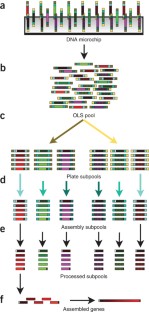
Figure 1: Schematic for scalable gene synthesis from OLS pool 2.
The alternative text for this image may have been generated using AI.
Figure 2: Gene synthesis products.

The alternative text for this image may have been generated using AI.
Figure 3: Characterization of products from OLS pools 1 and 2.

The alternative text for this image may have been generated using AI.
References
- Carr, P.A. & Church, G.M. Genome engineering. Nat. Biotechnol. 27, 1151–1162 (2009).
Article CAS Google Scholar - Tian, J., Ma, K. & Saaem, I. Advancing high-throughput gene synthesis technology. Mol. Biosyst. 5, 714–722 (2009).
Article CAS Google Scholar - Tian, J. et al. Accurate multiplex gene synthesis from programmable DNA microchips. Nature 432, 1050–1054 (2004).
Article CAS Google Scholar - Richmond, K.E. et al. Amplification and assembly of chip-eluted DNA (AACED): a method for high-throughput gene synthesis. Nucleic Acids Res. 32, 5011–5018 (2004).
Article CAS Google Scholar - Zhou, X. et al. Microfluidic PicoArray synthesis of oligodeoxynucleotides and simultaneous assembling of multiple DNA sequences. Nucleic Acids Res. 32, 5409–5417 (2004).
Article CAS Google Scholar - Nirenberg, M.W. & Matthaei, J.H. The dependence of cell-free protein synthesis in E. coli upon naturally occurring or synthetic polyribonucleotides. Proc. Natl. Acad. Sci. USA 47, 1588–1602 (1961).
Article CAS Google Scholar - Söll, D. et al. Studies on polynucleotides, XLIX. Stimulation of the binding of aminoacyl-sRNA's to ribosomes by ribotrinucleotides and a survey of codon assignments for 20 amino acids. Proc. Natl. Acad. Sci. USA 54, 1378–1385 (1965).
Article Google Scholar - Gibson, D.G. et al. Creation of a bacterial cell controlled by a chemically synthesized genome. Science 329, 52–56 (2010).
Article CAS Google Scholar - Gibson, D.G. Synthesis of DNA fragments in yeast by one-step assembly of overlapping oligonucleotides. Nucleic Acids Res. 37, 6984–6990 (2009).
Article CAS Google Scholar - Li, M.Z. & Elledge, S.J. Harnessing homologous recombination in vitro to generate recombinant DNA via SLIC. Nat. Methods 4, 251–256 (2007).
Article CAS Google Scholar - Bang, D. & Church, G.M. Gene synthesis by circular assembly amplification. Nat. Methods 5, 37–39 (2008).
Article CAS Google Scholar - Shao, Z., Zhao, H. & Zhao, H. DNA assembler, an in vivo genetic method for rapid construction of biochemical pathways. Nucleic Acids Res. 37, e16 (2009).
Article Google Scholar - Lee, C.-C., Snyder, T.M. & Quake, S.R. A microfluidic oligonucleotide synthesizer. Nucleic Acids Res. 38, 2514–2521 (2010).
Article CAS Google Scholar - Kim, C. et al. Progress in gene assembly from a MAS-driven DNA microarray. Microelectron. Eng. 83, 1613–1616 (2006).
Article CAS Google Scholar - LeProust, E.M. et al. Synthesis of high-quality libraries of long (150mer) oligonucleotides by a novel depurination controlled process. Nucleic Acids Res. 38, 2522–2540 (2010).
Article CAS Google Scholar - Patwardhan, R.P. et al. High-resolution analysis of DNA regulatory elements by synthetic saturation mutagenesis. Nat. Biotechnol. 27, 1173–1175 (2009).
Article CAS Google Scholar - Schlabach, M.R. et al. Synthetic design of strong promoters. Proc. Natl. Acad. Sci. USA 107, 2538–2543 (2010).
Article CAS Google Scholar - Li, J.B. et al. Multiplex padlock targeted sequencing reveals human hypermutable CpG variations. Genome Res. 19, 1606–1615 (2009).
Article Google Scholar - Li, J.B. et al. Genome-wide identification of human RNA editing sites by parallel DNA capturing and sequencing. Science 324, 1210–1213 (2009).
Article CAS Google Scholar - Porreca, G.J. et al. Multiplex amplification of large sets of human exons. Nat. Methods 4, 931–936 (2007).
Article CAS Google Scholar - Xu, Q. et al. Design of 240,000 orthogonal 25mer DNA barcode probes. Proc. Natl. Acad. Sci. USA 106, 2289–2294 (2009).
Article CAS Google Scholar - Huston, J.S. et al. Medical applications of single-chain antibodies. Int. Rev. Immunol. 10, 195–217 (1993).
Article CAS Google Scholar - Carr, P.A. et al. Protein-mediated error correction for de novo DNA synthesis. Nucleic Acids Res. 32, e162 (2004).
Article Google Scholar - Slater, G.S. & Birney, E. Automated generation of heuristics for biological sequence comparison. BMC Bioinformatics 6, 31 (2005).
Article Google Scholar - Li, H. Maq: mapping and assembly with qualities. Welcome Trust Sanger Institute (2010). Available at: <http://maq.sourceforge.net>.
- Cormack, B.P., Valdivia, R.H. & Falkow, S. FACS-optimized mutants of the green fluorescent protein (GFP). Gene 173, 33–38 (1996).
Article CAS Google Scholar
Acknowledgements
This work was supported by the US Office of Naval Research (N000141010144), National Human Genome Research Institute Center for Excellence in Genomics Science (P50 HG003170), Department of Energy Genomes to Life (DE-FG02-02ER63445), Defense Advanced Research Projects Agency (W911NF-08-1-0254) and the Wyss Institute for Biologically Inspired Engineering (all to G.M.C.). We thank H. Padgett for providing ErrASE and expertise during optimization and J. Boeke for advice on gene assembly protocols. We also thank S. Raman, F. Vigneault and F. Zhang for critical readings of the manuscript, G. Dantas for pZE21 (Washington University), F. Isaacs (Yale University) for pZE21G and J.S. Workman (Wyss Institute) for pSecTag2A.
Author information
Author notes
- Jin Billy Li
Present address: Present address: Department of Genetics, Stanford University, Stanford, California, USA., - Sriram Kosuri and Nikolai Eroshenko: These authors contributed equally to this work.
Authors and Affiliations
- Wyss Institute for Biologically Inspired Engineering, Boston, Massachusetts, USA
Sriram Kosuri, Nikolai Eroshenko, Michael Super, Jeffrey Way & George M Church - Department of Genetics, Harvard Medical School, Boston, Massachusetts, USA
Sriram Kosuri, Jin Billy Li & George M Church - Harvard School of Engineering and Applied Sciences, Cambridge, Massachusetts, USA
Nikolai Eroshenko - Agilent Technologies, Santa Clara, California, USA
Emily M LeProust
Authors
- Sriram Kosuri
- Nikolai Eroshenko
- Emily M LeProust
- Michael Super
- Jeffrey Way
- Jin Billy Li
- George M Church
Contributions
S.K. and N.E. wrote the paper with contributions from all authors; S.K. and G.M.C. conceived the study; S.K. wrote all algorithms and designed all sequences; S.K. and N.E. designed and performed all experiments; E.L. provided the oligonucleotides libraries; M.S. and J.F. designed the single-chained versions of commercial antibodies; J.B.L. performed the OLS high-throughput sequencing experiment and provided critical advice on the processing of subpools.
Corresponding authors
Correspondence toSriram Kosuri or Nikolai Eroshenko.
Ethics declarations
Competing interests
E.M.L. is an employee of Agilent Technologies, the commercial provider of OLS pools. G.M.C. is a co-founder of an early-stage startup company involved in gene synthesis. S.K., N.E. and G.M.C. are named inventors on a patent application on technologies described in this article. S.K. is a post-doctoral fellow whose future employment prospects depend upon refereed publications.
Supplementary information
Rights and permissions
About this article
Cite this article
Kosuri, S., Eroshenko, N., LeProust, E. et al. Scalable gene synthesis by selective amplification of DNA pools from high-fidelity microchips.Nat Biotechnol 28, 1295–1299 (2010). https://doi.org/10.1038/nbt.1716
- Received: 03 August 2010
- Accepted: 25 October 2010
- Published: 28 November 2010
- Issue date: December 2010
- DOI: https://doi.org/10.1038/nbt.1716