Human-induced greening of the northern extratropical land surface (original) (raw)
- Letter
- Published: 27 June 2016
- Aurélien Ribes2,
- Binyan Yan3,
- Xiaoying Shi1,
- Peter E. Thornton ORCID: orcid.org/0000-0002-4759-51581,
- Roland Séférian2,
- Philippe Ciais4,
- Ranga B. Myneni5,
- Hervé Douville2,
- Shilong Piao6,7,8,
- Zaichun Zhu6,
- Robert E. Dickinson3,
- Yongjiu Dai ORCID: orcid.org/0000-0002-3588-66449,
- Daniel M. Ricciuto ORCID: orcid.org/0000-0002-3668-30211,
- Mingzhou Jin10,
- Forrest M. Hoffman11,
- Bin Wang12,13,
- Mengtian Huang6 &
- …
- Xu Lian6
Nature Climate Change volume 6, pages 959–963 (2016) Cite this article
- 6101 Accesses
- 167 Citations
- 280 Altmetric
- Metrics details
Subjects
Abstract
Significant land greening in the northern extratropical latitudes (NEL) has been documented through satellite observations during the past three decades1,2,3,4,5. This enhanced vegetation growth has broad implications for surface energy, water and carbon budgets, and ecosystem services across multiple scales6,7,8. Discernible human impacts on the Earth’s climate system have been revealed by using statistical frameworks of detection–attribution9,10,11. These impacts, however, were not previously identified on the NEL greening signal, owing to the lack of long-term observational records, possible bias of satellite data, different algorithms used to calculate vegetation greenness, and the lack of suitable simulations from coupled Earth system models (ESMs). Here we have overcome these challenges to attribute recent changes in NEL vegetation activity. We used two 30-year-long remote-sensing-based leaf area index (LAI) data sets12,13, simulations from 19 coupled ESMs with interactive vegetation, and a formal detection and attribution algorithm14,15. Our findings reveal that the observed greening record is consistent with an assumption of anthropogenic forcings, where greenhouse gases play a dominant role, but is not consistent with simulations that include only natural forcings and internal climate variability. These results provide the first clear evidence of a discernible human fingerprint on physiological vegetation changes other than phenology and range shifts11.
This is a preview of subscription content, access via your institution
Access options
Subscribe to this journal
Receive 12 print issues and online access
$259.00 per year
only $21.58 per issue
Buy this article
- Purchase on SpringerLink
- Instant access to the full article PDF.
USD 39.95
Prices may be subject to local taxes which are calculated during checkout
Additional access options:
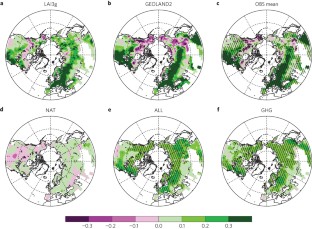
Figure 1: Spatial distribution of LAI trends for 1982–2011.
The alternative text for this image may have been generated using AI.
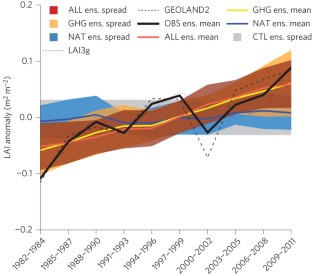
Figure 2: Observed and simulated 1982–2011 time series of LAI anomalies.
The alternative text for this image may have been generated using AI.
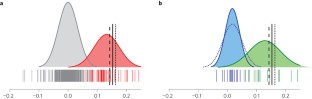
Figure 3: Parameterized frequency distributions of LAI 1982–2011 30-year-long trends.
The alternative text for this image may have been generated using AI.
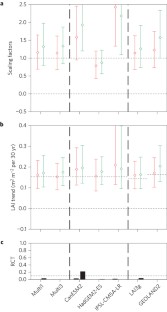
Figure 4: Results from optimal D&A for 1982–2011 time series of LAI anomalies.
The alternative text for this image may have been generated using AI.
References
- Myneni, R. B., Keeling, C., Tucker, C., Asrar, G. & Nemani, R. Increased plant growth in the northern high latitudes from 1981 to 1991. Nature 386, 698–702 (1997).
Article CAS Google Scholar - Zhou, L. et al. Variations in northern vegetation activity inferred from satellite data of vegetation index during 1981 to 1999. J. Geophys. Res. 106, 20069–20083 (2001).
Article Google Scholar - Lucht, W. et al. Climatic control of the high-latitude vegetation greening trend and Pinatubo effect. Science 296, 1687–1689 (2002).
Article CAS Google Scholar - Mao, J. et al. Global latitudinal-asymmetric vegetation growth trends and their driving mechanisms: 1982–2009. Remote Sens. 5, 1484–1497 (2013).
Article Google Scholar - Buitenwerf, R., Rose, L. & Higgins, S. I. Three decades of multi-dimensional change in global leaf phenology. Nature Clim. Change 5, 364–368 (2015).
Article Google Scholar - Pan, Y. et al. A large and persistent carbon sink in the world’s forests. Science 333, 988–993 (2011).
Article CAS Google Scholar - Liu, Y. Y. et al. Recent reversal in loss of global terrestrial biomass. Nature Clim. Change 5, 470–474 (2015).
Article Google Scholar - Ukkola, A. M. et al. Reduced streamflow in water-stressed climates consistent with CO2 effects on vegetation. Nature Clim. Change 6, 75–78 (2015).
Article Google Scholar - Hegerl, G. C. et al. in Climate Change 2007: The Physical Science Basis (eds Solomon, S. et al.) 667–732 (IPCC, Cambridge Univ. Press, 2007).
Google Scholar - Bindoff, N. L. et al. in Climate Change 2013: The Physical Science Basis (eds Stocker, T. F. et al.) 867–931 (IPCC, Cambridge Univ. Press, 2013).
Google Scholar - Cramer, W. et al. in Climate Change 2014: Impacts, Adaptation, and Vulnerability (eds Field, C. B. et al.) 979–1037 (IPCC, Cambridge Univ. Press, 2014).
Google Scholar - Zhu, Z. et al. Global data sets of vegetation leaf area index (LAI) 3g and fraction of photosynthetically active radiation (FPAR) 3g derived from global inventory modeling and mapping studies (GIMMS) normalized difference vegetation index (NDVI3g) for the period 1981 to 2011. Remote Sens. 5, 927–948 (2013).
Article Google Scholar - Baret, F. et al. GEOV1: LAI and FAPAR essential climate variables and FCOVER global time series capitalizing over existing products. Part 1: Principles of development and production. Remote Sens. Environ. 137, 299–309 (2013).
Article Google Scholar - Allen, M. & Stott, P. Estimating signal amplitudes in optimal fingerprinting, part I: theory. Clim. Dynam. 21, 477–491 (2003).
Article Google Scholar - Ribes, A., Planton, S. & Terray, L. Application of regularised optimal fingerprinting to attribution. part I: method, properties and idealised analysis. Clim. Dynam. 41, 2817–2836 (2013).
Article Google Scholar - Lamarque, J. F. et al. Multi-model mean nitrogen and sulfur deposition from the Atmospheric Chemistry and Climate Model Intercomparison Project (ACCMIP): evaluation of historical and projected future changes. Atmos. Chem. Phys. 13, 7997–8018 (2013).
Article Google Scholar - Anav, A. et al. Evaluation of land surface models in reproducing satellite derived leaf area index over the high-latitude northern hemisphere. part II: Earth system models. Remote Sens. 5, 3637–3661 (2013).
Article Google Scholar - Mahowald, N. et al. Projections of leaf area index in Earth system models. Earth Syst. Dynam. 7, 211–229 (2016).
Article Google Scholar - Menzel, A. et al. European phenological response to climate change matches the warming pattern. Glob. Change Biol. 12, 1969–1976 (2006).
Article Google Scholar - Zeng, F., Collatz, G., Pinzon, J. & Ivanoff, A. Evaluating and quantifying the climate-driven interannual variability in Global Inventory Modeling and Mapping Studies (GIMMS) Normalized Difference Vegetation Index (NDVI3g) at global scales. Remote Sens. 5, 3918–3950 (2013).
Article Google Scholar - Piao, S. et al. Evidence for a weakening relationship between interannual temperature variability and northern vegetation activity. Nature Commun. 5, 5018 (2014).
Article CAS Google Scholar - Anav, A. et al. Spatio-temporal patterns of terrestrial gross primary production: a review. Rev. Geophys. 53, 785–818 (2015).
Article Google Scholar - McDowell, N. G. et al. Multi-scale predictions of massive conifer mortality due to chronic temperature rise. Nature Clim. Change 6, 295–300 (2016).
Article Google Scholar - Di Vittorio, A. V. et al. From land use to land cover: restoring the afforestation signal in a coupled integrated assessment–Earth system model and the implications for CMIP5 RCP simulations. Biogeosciences 11, 6435–6450 (2014).
Article Google Scholar - Kunstler, G. et al. Plant functional traits have globally consistent effects on competition. Nature 529, 204–207 (2016).
Article CAS Google Scholar - Zhang, X. et al. Detection of human influence on twentieth-century precipitation trends. Nature 448, 461–465 (2007).
Article CAS Google Scholar - Wu, P., Christidis, N. & Stott, P. Anthropogenic impact on Earth’s hydrological cycle. Nature Clim. Change 3, 807–810 (2013).
Article Google Scholar - Keenan, T. F. et al. Net carbon uptake has increased through warming-induced changes in temperate forest phenology. Nature Clim. Change 4, 598–604 (2014).
Article CAS Google Scholar - Eyring, V. et al. Overview of the Coupled Model Intercomparison Project Phase 6 (CMIP6) experimental design and organization. Geosci. Model. Dev. Discuss. 8, 10539–10583 (2015).
Article Google Scholar - Pinzon, J. E. & Tucker, C. J. A non-stationary 1981–2012 AVHRR NDVI3g time series. Remote Sens. 6, 6929–6960 (2014).
Article Google Scholar - Allen, M. R. & Tett, S. F. Checking for model consistency in optimal fingerprinting. Clim. Dynam. 15, 419–434 (1999).
Article Google Scholar - Stott, P. A. et al. Observational constraints on past attributable warming and predictions of future global warming. J. Clim. 19, 3055–3069 (2006).
Article Google Scholar
Acknowledgements
This work is supported by the Biogeochemistry-Climate Feedbacks Scientific Focus Area project funded through the Regional and Global Climate Modeling Program, and the Terrestrial Ecosystem Science Scientific Focus Area project funded through the Terrestrial Ecosystem Science Program, with additional support from the Accelerated Climate Modeling for Energy project, in the Climate and Environmental Sciences Division (CESD) of the Biological and Environmental Research (BER) Program in the US Department of Energy Office of Science. Oak Ridge National Laboratory is managed by UT-BATTELLE for DOE under contract DE-AC05-00OR22725. This work is supported in part by the Fondation STAE, via the project Chavana. R.S. thanks the H2020 project CRESCENDO ‘Coordinated Research in Earth Systems and Climate: Experiments, kNowledge, Dissemination and Outreach’, which received funding from the European Union’s Horizon 2020 research and innovation programme under grant agreement no. 641816. R.B.M. is supported by NASA Earth Science Division through MODIS and VIIRS grants. B.W. is supported by the National Basic Research Program of China (Grant no. 2014CB441302). P.C. thanks the ERC SyG project IMBALANCE-P Effects of phosphorus limitations on Life, Earth system and Society Grant agreement no. 610028.
Author information
Authors and Affiliations
- Environmental Sciences Division and Climate Change Science Institute, Oak Ridge National Laboratory, Oak Ridge, Tennessee 37831-6301, USA
Jiafu Mao, Xiaoying Shi, Peter E. Thornton & Daniel M. Ricciuto - Centre National de Recherches Météorologiques, Météo-France/CNRS, 42 Avenue Gaspard Coriolis, 31057 Toulouse, France
Aurélien Ribes, Roland Séférian & Hervé Douville - Jackson School of Geosciences, the University of Texas, Austin, Texas 78712-1692, USA
Binyan Yan & Robert E. Dickinson - Laboratoire des Sciences du Climat et de l’Environnement, LSCE, 91191 Gif sur Yvette, France
Philippe Ciais - Department of Earth and Environment, Boston University, Boston, Massachusetts 02215, USA
Ranga B. Myneni - Sino-French Institute for Earth System Science, College of Urban and Environmental Sciences, Peking University, Beijing 100871, China
Shilong Piao, Zaichun Zhu, Mengtian Huang & Xu Lian - Key Laboratory of Alpine Ecology and Biodiversity, Institute of Tibetan Plateau Research, Chinese Academy of Sciences, Beijing 100085, China
Shilong Piao - CAS Center for Excellence in Tibetan Plateau Earth Science, Beijing 100085, China
Shilong Piao - College of Global Change and Earth System Science, Beijing Normal University, Beijing 100875, China
Yongjiu Dai - Department of Industrial and Systems Engineering, University of Tennessee, Knoxville, Tennessee 37996-2315, USA
Mingzhou Jin - Computer Science and Mathematics Division and Climate Change Science Institute, Oak Ridge National Laboratory, Oak Ridge, Tennessee 37831, USA
Forrest M. Hoffman - State Key Laboratory of Numerical Modeling for Atmospheric Sciences and Geophysical Fluid Dynamics, Institute of Atmospheric Physics, Beijing 100029, China
Bin Wang - Center for Earth System Science, Tsinghua University, Beijing 100084, China
Bin Wang
Authors
- Jiafu Mao
- Aurélien Ribes
- Binyan Yan
- Xiaoying Shi
- Peter E. Thornton
- Roland Séférian
- Philippe Ciais
- Ranga B. Myneni
- Hervé Douville
- Shilong Piao
- Zaichun Zhu
- Robert E. Dickinson
- Yongjiu Dai
- Daniel M. Ricciuto
- Mingzhou Jin
- Forrest M. Hoffman
- Bin Wang
- Mengtian Huang
- Xu Lian
Contributions
J.M. conceived the study. J.M., A.R., B.Y., X.S., P.E.T. and R.S. performed diagnostics and wrote the text, with comments and edits from all authors.
Corresponding author
Correspondence toJiafu Mao.
Ethics declarations
Competing interests
The authors declare no competing financial interests.
Supplementary information
Rights and permissions
About this article
Cite this article
Mao, J., Ribes, A., Yan, B. et al. Human-induced greening of the northern extratropical land surface.Nature Clim Change 6, 959–963 (2016). https://doi.org/10.1038/nclimate3056
- Received: 13 August 2015
- Accepted: 16 May 2016
- Published: 27 June 2016
- Issue date: October 2016
- DOI: https://doi.org/10.1038/nclimate3056
This article is cited by
Associated content
Humans did it
- Robert Buitenwerf
Nature Climate Change News & Views 27 Jun 2016