High nitrous oxide production from thawing permafrost (original) (raw)
- Letter
- Published: 04 April 2010
Nature Geoscience volume 3, pages 332–335 (2010) Cite this article
- 3192 Accesses
- 168 Citations
- 33 Altmetric
- Metrics details
Subjects
A Corrigendum to this article was published on 01 July 2010
This article has been updated
Abstract
Permafrost soils contain nearly twice as much carbon as the atmosphere1. When these soils thaw, large quantities of carbon are lost, mainly in the form of methane and carbon dioxide1,2,3,4,5,6,7,8,9. In contrast, thawing is thought to have little impact on nitrous oxide emissions, which remain minimal following the summer thaw4. Here, we examined the impact of thawing on nitrous oxide production in permafrost cores collected from a heath site and a wetland site in Zackenberg, Greenland. Rates of nitrous oxide production in the heath soil were minimal, regardless of the hydrological conditions. Although rates of nitrous oxide production in the wetland soil were low following thawing, averaging 1.37 μg N h−1 kg−1, they were 18 μg N h−1 kg−1 for permafrost samples following thawing, drainage and rewetting with the original meltwater. We show that 31% of the nitrous oxide produced after thawing and rewetting a 10-cm permafrost core—equivalent to 34 mg N m−2 d−1—was released to the atmosphere; this is equivalent to daily nitrous oxide emissions from tropical forests on a mean annual basis 10. Measurements of nitrous oxide production in permafrost samples from five additional wetland sites in the high Arctic indicate that the rates of nitrous oxide production observed in the Zackenberg soils may be in the low range.
This is a preview of subscription content, access via your institution
Access options
Subscribe to this journal
Receive 12 print issues and online access
$259.00 per year
only $21.58 per issue
Buy this article
- Purchase on SpringerLink
- Instant access to the full article PDF.
USD 39.95
Prices may be subject to local taxes which are calculated during checkout
Additional access options:
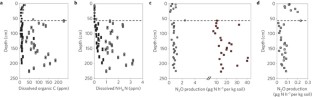
Figure 1: Active layer and permafrost characteristics in two contrasting soils under different vegetation (heath and wetland) in Zackenberg, northeast Greenland.
The alternative text for this image may have been generated using AI.
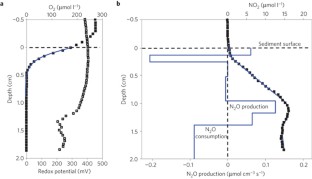
Figure 2: Observed steady-state microprofiles in a thawed permafrost core from the wetland site (depth of 63–65 cm) in Zackenberg, northeast Greenland.
The alternative text for this image may have been generated using AI.
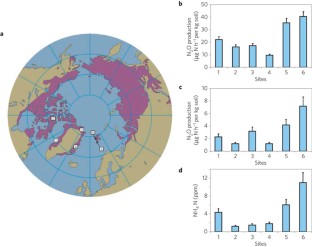
Figure 3: Top permafrost characteristics (0–20 cm) from six Arctic grass-dominated wetlands.
The alternative text for this image may have been generated using AI.
Change history
26 May 2010
In the version of this Letter originally published, Fig. 2b was incorrect and should have been as shown here. This error has been corrected in the HTML and PDF versions of the Letter.
References
- Schuur, E. A. G. et al. The effect of permafrost thaw on old carbon release and net carbon exchange from tundra. Nature 459, 556–559 (2009).
Article Google Scholar - Zimov, S. A., Schuur, E. A. G. & Chapin, F. S. III, Permafrost and the global carbon budget. Science 312, 1612–1613 (2006).
Article Google Scholar - Dutta, K., Schuur, E. A. G., Neff, J. C. & Zimov, S. A. Potential carbon release from permafrost soils of Northeastern Siberia. Glob. Change Biol. 12, 2336–2351 (2006).
Article Google Scholar - Rodionow, A., Flessa, H., Kazansky, O. & Guggenberger, G. Organic matter composition and potential trace gas production of permafrost soils in the forest tundra in northern Siberia. Geoderma 135, 49–62 (2006).
Article Google Scholar - Uhlı´řová, E., Šantrůčková, H. & Davidov, S. P. Quality and potential biodegradability of soil organic matter preserved in permafrost of Siberian tussock tundra. Soil Biol. Biochem. 39, 1978–1989 (2007).
Article Google Scholar - Shur, Y. L., Hinkel, K. M. & Nelson, F. E. The transient layer: Implications for geocryology and climate-change science. Permafr. Periglac. Process. 16, 5–17 (2005).
Article Google Scholar - Shur, Y. L. & Jorgenson, M. T. Patterns of permafrost formation and degradation in relation to climate and ecosystems. Permafr. Periglac. Process. 18, 7–19 (2007).
Article Google Scholar - Schuur, E. A. G. et al. Vulnerability of permafrost carbon to climate change: Implications for the global carbon cycle. Bioscience 58, 701–714 (2008).
Article Google Scholar - French, H. M. The Periglacial Environment 3rd edn (John Wiley, 2007).
Book Google Scholar - Werner, C., Butterbach-Bahl, K., Haas, E., Hickler, T. & Kiese, R. A global inventory of N2O emissions from tropical rainforest soils using a detailed biogeochemical model. Glob. Biogeochem. Cycles 21, GB3010 (2007).
Article Google Scholar - Baggs, E. M. A review of stable isotopes techniques for N2O source partitioning in soils: Recent progress, remaining challenges and future considerations. Rapid Commun. Mass Spectrom. 22, 1664–1672 (2008).
Article Google Scholar - Jetten, M. S. M. The microbial nitrogen cycle. Environ. Microbiol. 10, 2903–2909 (2008).
Article Google Scholar - Firestone, M. K. & Davidson, E. A. in Exchange of Trace Gases Between Terrestrial Ecosystems and the Atmosphere (eds Andreae, M. O. & Schimel, D. S.) (John Wiley, 1989).
Google Scholar - Struwe, Yu. K., Kjøller, S. & Chen, A. Nitrous oxide production and consumption potential in an agricultural and a forest soil. Commun. Soil Sci. Plant Anal. 39, 2205–2220 (2008).
Article Google Scholar - Martikainen, P. J., Nykänen, H., Crill, P. & Silvola, J. Effect of a lowered water table on nitrous oxide fluxes from northern peatlands. Nature 366, 51–53 (1993).
Article Google Scholar - Bollmann, A. & Conrad, R. Influence of O2 availability on NO and N2O release by nitrification and denitrification in soils. Glob. Change Biol. 4, 387–396 (1998).
Article Google Scholar - Gillam, K. M., Zebarth, B. J. & Burton, D. L. Nitrous oxide emissions from denitrification and the partitioning of gaseous losses as affected by nitrate and carbon addition and soil aeration. Can. J. Soil Sci. 88, 133–143 (2008).
Article Google Scholar - Priemé, A. & Christensen, S. Natural perturbations, drying–wetting and freezing—thawing cycles, and the emission of nitrous oxide, carbon dioxide and methane from farmed organic soils. Soil Biol. Biochem. 33, 2083–2091 (2001).
Article Google Scholar - Elberling, B. et al. Soil and plant community-characteristics and dynamics at Zackenberg. Adv. Ecol. Res. 40, 223–248 (2008).
Article Google Scholar - Christiansen, H. H. Meteorological control on interannual spatial and temporal variations in snow cover and ground thawing in two Northeast Greenlandic circumpolar-active-layer-monitoring (CALM) sites. Permafr. Periglac. Process. 15, 155–169 (2004).
Article Google Scholar - Stendel, M., Christensen, J. H. & Petersen, D. Arctic climate and climate change with a focus on Greenland. Adv. Ecol. Res. 40, 13–43 (2008).
Article Google Scholar - Hansen, B. U. et al. Present-day climate at Zackenberg. Adv. Ecol. Res. 40, 111–149 (2008).
Article Google Scholar - Zhang, Y., Chen, W. & Riseborough, D. W. Transient projections of permafrost distribution in Canada during the 21st century under scenarios of climate change. Glob. Planet. Change 60, 443–456 (2008).
Article Google Scholar - Repo, M. E. et al. Large N2O emissions from cryoturbated peat soil in tundra. Nature Geosci. 2, 189–192 (2009).
Article Google Scholar - Hasholt, B. et al. Hydrology and transport of sediment and solutes at Zackenberg. Adv. Ecol. Res. 40, 197–221 (2008).
Article Google Scholar - Andersen, K., Kjær, T. & Revsbech, N. P. An oxygen insensitive microsensor for nitrous oxide. Sens. Actuat. B 81, 42–48 (2001).
Article Google Scholar - Revsbech, N. P. An oxygen microelectrode with a guard cathode. Linmol. Oceanogr. 34, 474–478 (1989).
Google Scholar - Revsbech, N. P. & Jørgensen, B. B. in Advances in Microbial Ecology Vol. 9 (ed. Marshall, K. C.) (Plenum Press, 1986).
Google Scholar - Revsbech, N. P., Nielsen, L. P. & Ramsing, N. B. A novel microsensor for determination of apparent diffusivity in sediments. Linmol. Oceanogr. 43, 986–992 (1998).
Article Google Scholar - Berg, P., Risgaard-Petersen, N. & Rysgaard, S. Interpretation of measured concentration profiles in sediment pore water. Linmol. Oceanogr. 43, 1500–1510 (1998).
Article Google Scholar
Acknowledgements
This study was funded by the Norden Arctic Co-Operation Programme 2006–2008 (80142), the Norwegian Research Council (TSP Norway grant no 176033/S30), The Danish Natural Science Research Council, The University Centre in Svalbard, UNIS and the Zackenberg Research Station. Special thanks to the UNIS course AG-333 students for assisting with the permafrost coring, to L. Berg for laboratory assistance, to A. Michelsen, S. Struwe and K. Vestberg from the University of Copenhagen and L. H. Larsen from Unisense for help with analyses and advice.
Author information
Authors and Affiliations
- Department of Geography and Geology, University of Copenhagen, DK-1350 Copenhagen, Denmark
Bo Elberling & Birger U. Hansen - Department of Biology, The University Centre in Svalbard, UNIS, N-9171 Longyearbyen, Norway
Bo Elberling - Department of Geology, The University Centre in Svalbard, UNIS, N-9171 Longyearbyen, Norway
Bo Elberling & Hanne H. Christiansen
Authors
- Bo Elberling
- Hanne H. Christiansen
- Birger U. Hansen
Contributions
B.E. and H.H.C. designed and carried out the field work, permafrost modelling was done by B.U.H., and B.E. was responsible for all analysis and experiments, data interpretation and paper writing. All authors commented on the manuscript.
Corresponding author
Correspondence toBo Elberling.
Ethics declarations
Competing interests
The authors declare no competing financial interests.
Supplementary information
Rights and permissions
About this article
Cite this article
Elberling, B., Christiansen, H. & Hansen, B. High nitrous oxide production from thawing permafrost.Nature Geosci 3, 332–335 (2010). https://doi.org/10.1038/ngeo803
- Received: 02 December 2009
- Accepted: 29 January 2010
- Published: 04 April 2010
- Issue date: May 2010
- DOI: https://doi.org/10.1038/ngeo803
This article is cited by
Associated content
Arctic thaw
- Hermann F. Jungkunst
Nature Geoscience News & Views 01 May 2010