DNA-assisted dispersion and separation of carbon nanotubes (original) (raw)
- Article
- Published: 06 April 2003
- Anand Jagota1,
- Ellen D. Semke1,
- Bruce A. Diner1,
- Robert S. Mclean1,
- Steve R. Lustig1,
- Raymond E. Richardson1 &
- …
- Nancy G. Tassi1
Nature Materials volume 2, pages 338–342 (2003) Cite this article
- 15k Accesses
- 2587 Citations
- 19 Altmetric
- Metrics details
Abstract
Carbon nanotubes are man-made one-dimensional carbon crystals with different diameters and chiralities. Owing to their superb mechanical and electrical properties, many potential applications have been proposed for them. However, polydispersity and poor solubility in both aqueous and non-aqueous solution impose a considerable challenge for their separation and assembly, which is required for many applications. Here we report our finding of DNA-assisted dispersion and separation of carbon nanotubes. Bundled single-walled carbon nanotubes are effectively dispersed in water by their sonication in the presence of single-stranded DNA (ssDNA). Optical absorption and fluorescence spectroscopy and atomic force microscopy measurements provide evidence for individually dispersed carbon nanotubes. Molecular modelling suggests that ssDNA can bind to carbon nanotubes through π-stacking, resulting in helical wrapping to the surface. The binding free energy of ssDNA to carbon nanotubes rivals that of two nanotubes for each other. We also demonstrate that DNA-coated carbon nanotubes can be separated into fractions with different electronic structures by ion-exchange chromatography. This finding links one of the central molecules in biology to a technologically very important nanomaterial, and opens the door to carbon-nanotube-based applications in biotechnology.
This is a preview of subscription content, access via your institution
Access options
Subscribe to this journal
Receive 12 print issues and online access
$259.00 per year
only $21.58 per issue
Buy this article
- Purchase on SpringerLink
- Instant access to the full article PDF.
USD 39.95
Prices may be subject to local taxes which are calculated during checkout
Additional access options:
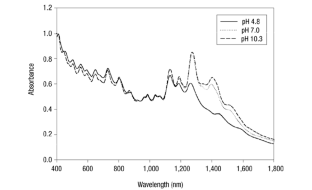
Figure 1: Electronic absorption spectra of DNA-CNT: in 0.05 M sodium acetate/0.1 M sodium chloride (pH 4.8), 0.05 M sodium phosphate/0.1 M sodium chloride (pH 7), and 0.05 M sodium bicarbonate/0.1 M sodium chloride (pH 10.3), respectively.
The alternative text for this image may have been generated using AI.
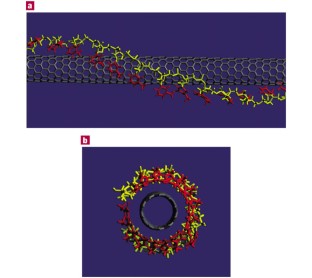
Figure 2: Binding model of a (10,0) carbon nanotube wrapped by a poly(T) sequence.
The alternative text for this image may have been generated using AI.
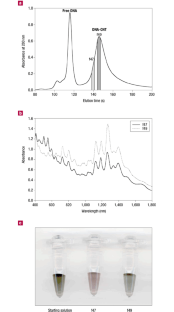
Figure 3: Separation of DNA-CNT by anion exchange chromatography.
The alternative text for this image may have been generated using AI.
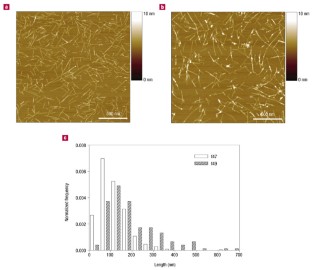
Figure 4: Analysis of DNA-CNT fractions by atomic force microscopy (AFM).
The alternative text for this image may have been generated using AI.
References
- Seeman, N.C. DNA engineering and its application to nanotechnology. Trends Biotech. 17, 437–443 (1999).
Article CAS Google Scholar - Mirkin, C.A., Letsinger, R.L., Mucic, R.C. & Storhoff, J.J. A DNA-based method for rationally assembling nanoparticles into macroscopic materials. Nature 382, 607–609 (1996).
Article CAS Google Scholar - Alivisatos, A.P. et al. Organization of 'nanocrystal groups' using DNA. Nature 382, 609–611 (1996).
Article CAS Google Scholar - Arkin, M.R. et al. Rates of DNA-mediated electron transfer between metallointercalators. Science 273, 475–480 (1996).
Article CAS Google Scholar - Whaley, S.R., English, D.S., Hu, E.L., Barbara, P.F. & Belcher, A.M. Selection of peptides with semiconductor binding specificity for directed nanocrystal assembly. Nature 405, 665–668 (2000).
Article CAS Google Scholar - Wang, S. et al. Peptides with selective affinity for carbon nanotubes. Nature Mater. 2, 196–200 (2003).
Article Google Scholar - Dresselhaus, M.S., Dresselhaus, G. & Eklund, P.C. Science of Fullerenes and Carbon Nanotubes (Academic, San Diego, 1996).
Google Scholar - Saito, R., Dresselhaus, G. & Dresselhaus, M.S. Physical Properties of Carbon Nanotubes (Imperial College Press, London, 1998).
Book Google Scholar - Baughman, R.H., Zakhidov, A.A. & de Heer, W.A. Carbon nanotubes—the route toward applications. Science 297, 787–792 (2002).
Article CAS Google Scholar - Wilson, D.S. & Szostak, J.W. In vitro selection of functional nucleic acids. Annu. Rev. Biochem. 68, 611–647 (1999).
Article CAS Google Scholar - Bronikowski, M.J., Willis, P.A., Colbert, D.T., Smith, K.A. & Smalley, R.E. Gas-phase production of carbon single-walled nanotubes from carbon monoxide via the HiPco process: A parametric study. J. Vacuum Sci. Technol. A 19, 1800–1805 (2001).
Article CAS Google Scholar - O'Connell, M.J. et al. Band gap fluorescence from individual single-walled carbon nanotubes. Science 297, 593–596 (2002).
Article CAS Google Scholar - Zhou, W. et al. Structural characterization and diameter-dependent oxidative stability of single wall carbon nanotubes synthesized by the catalytic decomposition of CO. Chem. Phys. Lett. 350, 6–14 (2001).
Article CAS Google Scholar - Saenger, W. Principles of Nucleic Acid Structure (Springer, New York, 1984).
Book Google Scholar - Thess, A. et al. Crystalline ropes of metallic carbon nanotubes. Science 273, 483–487 (1996).
Article CAS Google Scholar - Girifalco, L.A., Hodak, M. & Lee, R.S. Carbon nanotubes, buckyballs, ropes, and a universal graphitic potential. Phys. Rev. B 62, 13104–13110 (2000).
Article CAS Google Scholar - O'Connell, M.J. et al. Reversible water-solubilization of single-walled carbon nanotubes by polymer wrapping. Chem. Phys. Lett. 342, 265–271 (2001).
Article CAS Google Scholar - Bandyopadhyaya, R., Nativ-Roth, E., Regev, O. & Yerushalmi-Rozen, R. Stabilization of individual carbon nanotubes in aqueous solutions. Nano Lett. 2, 25–28 (2002).
Article CAS Google Scholar - Brown, S.D.M. et al. Origin of the Breit-Wigner-Fano lineshape of the tangential G-band feature of metallic carbon nanotubes. Phys. Rev. B 63, 155414 (2001).
Article Google Scholar
Acknowledgements
We would like to thank Nancy Rizzo, Debby Preston, Bruce Chase and Dennis Walls for microscopy and spectroscopy measurements, Xueying Huang, Bibiana Onoa and Hong Wang for technical support and helpful discussions.
Author information
Authors and Affiliations
- DuPont Central Research and Development, Experimental Station, Wilmington, 19880, Delaware, USA
Ming Zheng, Anand Jagota, Ellen D. Semke, Bruce A. Diner, Robert S. Mclean, Steve R. Lustig, Raymond E. Richardson & Nancy G. Tassi
Authors
- Ming Zheng
- Anand Jagota
- Ellen D. Semke
- Bruce A. Diner
- Robert S. Mclean
- Steve R. Lustig
- Raymond E. Richardson
- Nancy G. Tassi
Corresponding author
Correspondence toMing Zheng.
Ethics declarations
Competing interests
The authors declare no competing financial interests.
Rights and permissions
About this article
Cite this article
Zheng, M., Jagota, A., Semke, E. et al. DNA-assisted dispersion and separation of carbon nanotubes.Nature Mater 2, 338–342 (2003). https://doi.org/10.1038/nmat877
- Received: 28 January 2003
- Accepted: 17 March 2003
- Published: 06 April 2003
- Issue date: 01 May 2003
- DOI: https://doi.org/10.1038/nmat877