Physiological adaptation - Definition and Examples - Biology Online Dictionary (original) (raw)
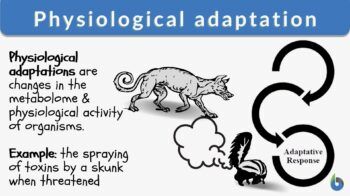
Physiological adaptation
n., plural: physiological adaptations
Definition: metabolic or physiologic adjustment in response to an environmental stimulus resulting in the improved ability to cope with the changing environment
Table of Contents
Toggle
- Physiological Adaptation Definition
- Types of Adaptations
- Nature of Physiological Adaptations
- Functions of Physiological Adaptations
- Physiological Adaptation Examples
- Quiz
- References
If we look over evolutionary history, we find that it’s neither the most genius and intelligent nor the strongest and the sturdiest that survives the challenges posed by nature. Rather, nature selects the most adaptable species to take the biological journey forward on the evolutionary time scale. Adaptation is a biological process that makes a species highly fit (both genotypically and phenotypically) for all the changes that take place in its environment. Charles Darwin also pointed out the same fact that only those species which have a high “biological fitness”, i.e. the ability to adapt to changes in one’s environment, will be selected by nature to pass on their genes to the next generation. So, adaptations are basically the results of natural selection.
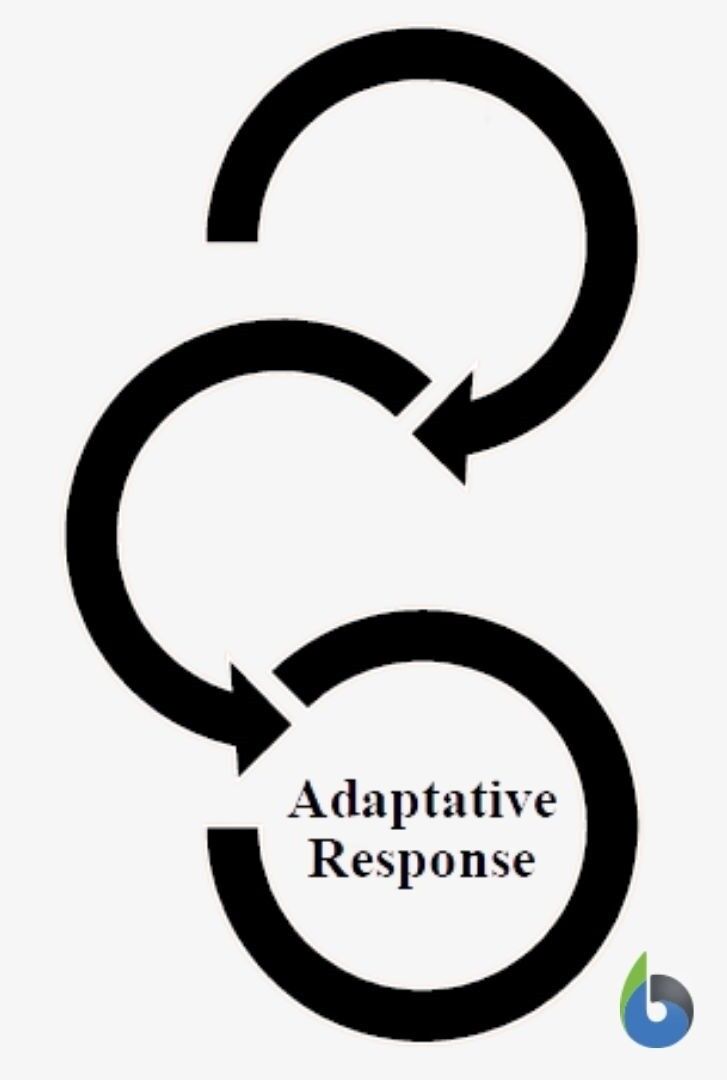
Figure 1: Flowchart explaining how adaptations take place. Source: Akanksha Saxena of Biology Online.
Out of all the different types of adaptations, physiological adaptations display a wealth of diversity, functions, and significance in almost all forms of life on this planet. So, when asked what is physiological adaptation, it can be defined as _“a set of ongoing types of intracellular, biochemical and metabolic adjustments inside an organism’s body in order to maintain it in equilibrium under any kind of environmental condition_”. This form of adaptation keeps evolving over time taking different forms as per the organismal requirement; hence it’s dynamic in nature. For sustenance and reproductive advantage, plant and animal adaptation to their environment is the primary driving force for species continuation, no matter how extreme the environmental, climatic, resource, or niche competition prevails.
How do adaptations take place? Nature poses a plethora of challenges to each species from time to time. It could be a search for:
- Suitable place to live
- Availability of resources (food, water, sunlight, nutrients, etc.)
- Fight for a mate (to produce progeny and pass on genes)
So, we understand that all these challenges come as varying stimuli to an organism or species. Challenges along with them bring in a lot of pressure and stress. In order to counter these stresses, species over millions of years develop a set of “adaptive responses”.
Physiological adaptation (biology definition): a metabolic or physiologic adjustment within the cell, or tissues, of an organism in response to an environmental stimulus resulting in the improved ability of that organism to cope with its changing environment. It may also be the response of the organism to a specific external stimulus in order to maintain homeostasis.
Examples of physiological adaptations: tanning of skin when exposed to the sun over long periods, the formation of calluses on hands in response to repeated contact or pressure, and the ability of certain organisms to absorb nutrients under low oxygen tensions.
Types of Adaptations
There are basically 3 types of adaptations namely structural adaptations, behavioral adaptations, and physiological adaptations.
A. Structural adaptations
Role: Bring changes in the physical structure of a species over time to make it physically equipped.
Examples: Changes in body sizes, coloration, the shape of organs, and appendages.
Nature of adaptations: Usually inheritable and pertain to transgenerational adjustments.
- In the plant kingdom, the heat-coping mechanism is such that desert plants develop thick stems and reduced leaves called spines. These changes in physical features help them to adapt well to extreme heat.
- In the animal kingdom, camouflage is the perfect example. Chameleons are able to evade their predators as they change their physical appearance i.e. color and become undetectable to the eyes.
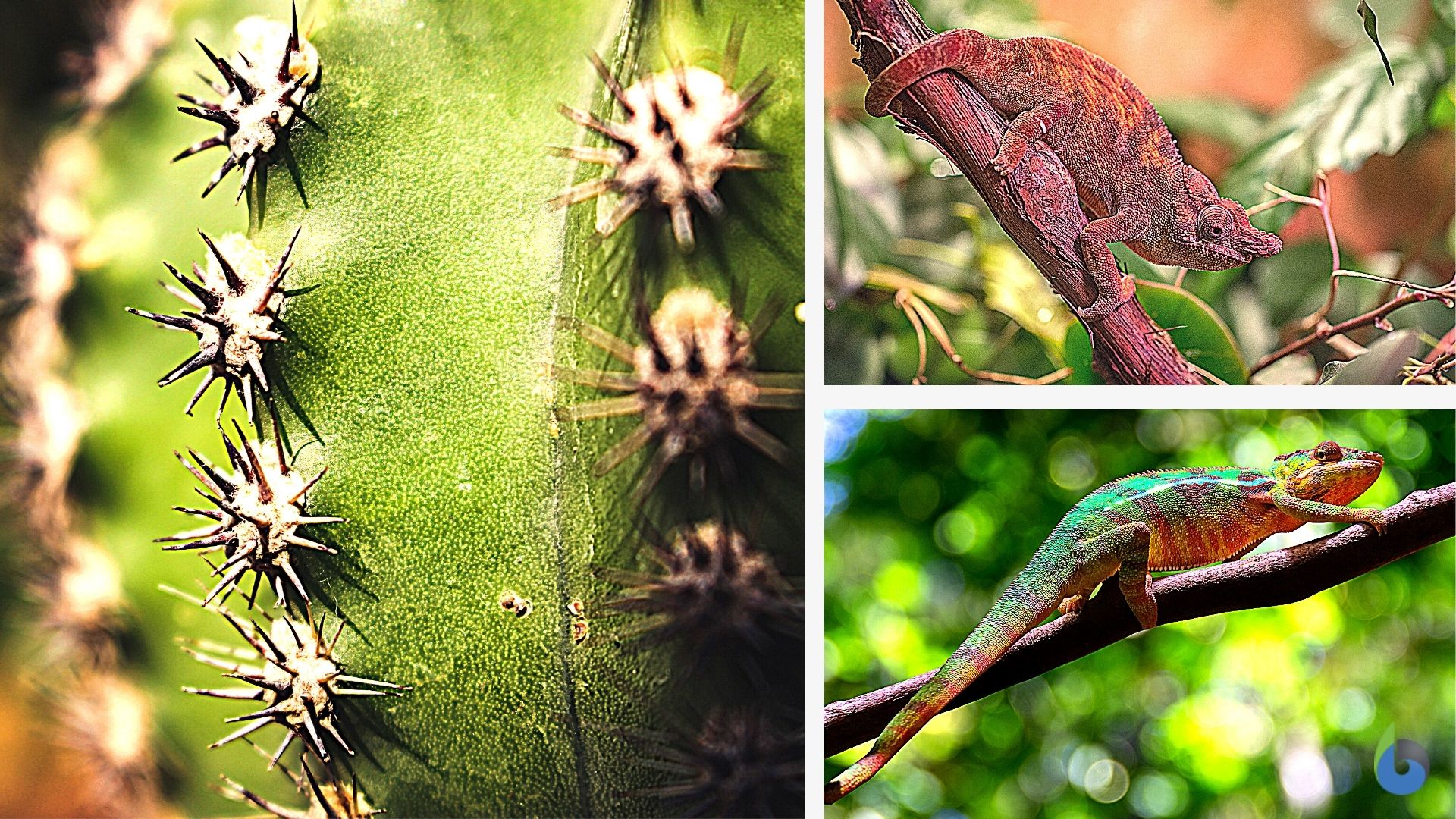
Figure 2: Structural adaptations in plants: reduced leaves called spines in desert plants (left). Structural adaptations in animals: chameleons can change body-color (left).
B. Behavioural adaptations
Role: Responsible for the changes in behaviors and the way in which members of a species act.
Examples: Migratory skills, hibernation, insect trapping ability in insectivorous plants, and mating behaviors in birds and animals.
Nature of adaptation: Usually not inherited from one generation to another, rather they are learned by each organism of the species over its lifetime.
- In the plant kingdom, various types of tropisms like phototropism, thigmotropism, gravitropism, etc. are behavioral adaptations. Plants grow their shoots towards the source of light to maximize their photosynthetic yields.
- In the animal kingdom, the migratory behavior of birds is important to survive the hardships of one habitat they primarily live in. They move from one habitat to another in search of food, a place to live and reproduce.
Figure 3: Gravitropism and phototropism: plant responses to light and gravity. Source: Maria Victoria Gonzaga of Biology Online.
Migratory behaviors of birds are perfect examples of behavioral adaptations in animals.
C. Physiological adaptations
These adaptations are the physiological responses of an organism to the changes in its _micro_– and macro-environment. They confer improved ability to an organism to adapt to the changing environmental conditions by acting at cellular, physiological, metabolic, and biochemical levels. In biology, the definition of physiological adaptation goes like “changes in the basic metabolome of an organism to maintain homeostasis under the worst of environmental circumstances and trends”. Here, it becomes important for us to understand two basic terms: metabolome and homeostasis.
- Metabolome is the collection of all the metabolites produced by all the cells of an organism’s body in the due course of metabolic activities that it carries out to sustain life and basic functioning. Metabolome thus gives us a clear measurement and readout of the physiological characteristics and status of an organism. In order to adapt to extreme conditions, the cells of the body have to behave differently, thus producing a whole new or modified spectrum of metabolites that can aid easy acclimatization to the new conditions.
- Homeostasis is the mechanism of the body to maintain a fairly stable equilibrium. Whether the body will remain in this natural physiological equilibrium or not, is determined by the balance between 2 primary factors: new environmental conditions and the organism’s ability to respond. Look at the figure below in order to understand the concept of homeostasis maintenance and what essential role is physiological adaptation playing in it.
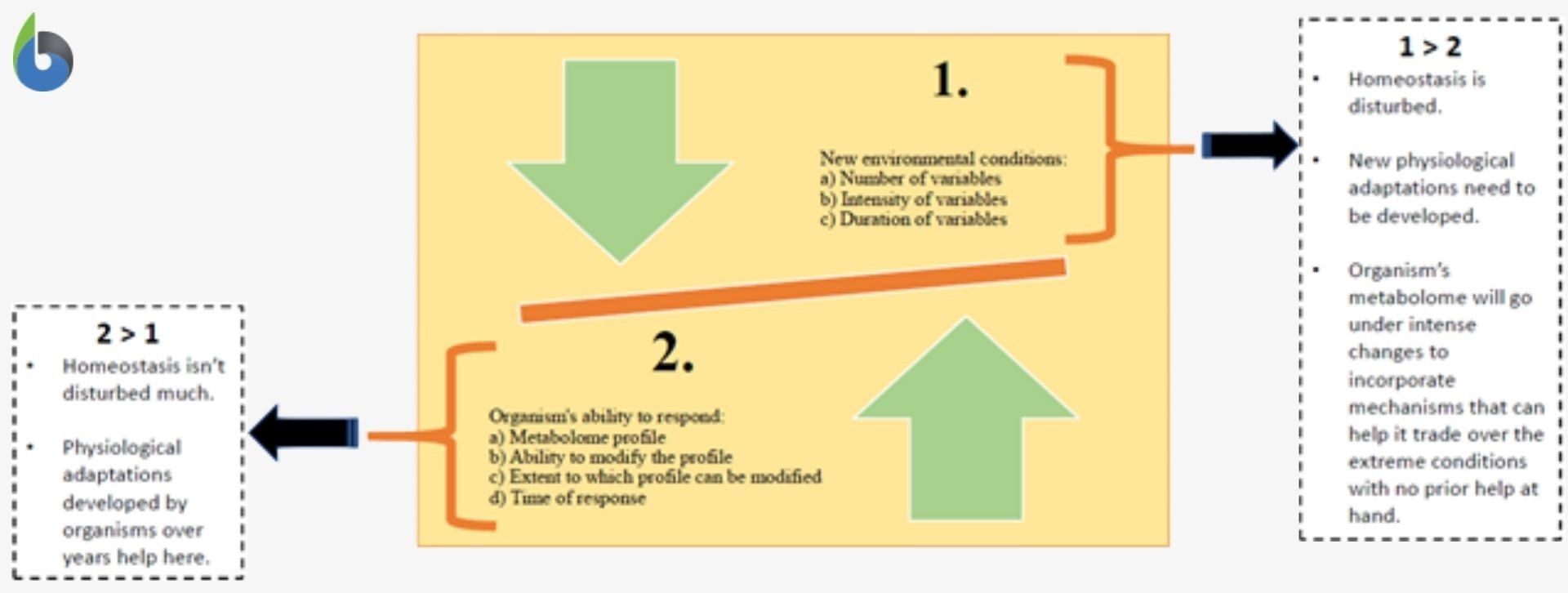
Figure 4: Schematic representation of how homeostasis has a multi-factorial dependence and how the physiological adaptations help an organism to deal with adverse environmental conditions. If some physiological adaptations already exist, homeostasis isn’t disturbed a lot; even if it’s disturbed, it’s readily dealt with. But if some novel extremities arise, the metabolome acts quickly to acquire some physiological characters in order to save the organism from any fatality. Source: Akanksha Saxena of Biology Online.
READ: Physiological Homeostasis – Biology Tutorial
Now as we know how to define physiological adaptation in a broader aspect, let’s move next to understand its nature.
Nature of Physiological Adaptations
There are many conflicts of opinions on its nature if it’s inheritable or not. Any ability of an organism that is at a cellular level is meant to be guided by the genetic make-up of the organism. Now since physiological adaptation is a display of cellular and metabolic changes, it should be genetically defined and hence inheritable from one generation to another.
On the contrary, since an organism is highly capable to acquire internal changes within its lifetime in response to altered external conditions (like tanning), physiological adaptations don’t seem to be inheritable or genetically defined rather acquirable in one’s own lifetime.
In biology, adaptation refers to the adjustment or changes in behavior, physiology, and structure of an organism to become more suited or fit to an environment. According to Charles Darwin’s theory of evolution by natural selection, the organisms adapt to their environment to become better fitted to survive and pass their genes on to the next generation. However, unlike evolutionary adaptation that involves transgenerational adjustment, physiological adaptation is generally narrow in scope and involves the response of an individual to a particular, usually narrow, range of stimuli.
Functions of Physiological Adaptations
What is the role of physiological adaptations in organisms and in the environment? Some of them are as follows:
- Physiological adaptations aid the survival of organisms in their ecological niches.
- Physiological adaptations aid normal growth and development.
- Physiological adaptations aid the regulation of body temperature, pressure, ionic balances, and metabolic rates.
- Physiological adaptationsaid in resource conservation (water/nutrients) or resource maximization (sunlight/ions)
Physiological Adaptation Examples
Examples of physiological adaptations in different kingdoms:
Fungi and bacteria
- Development of antibiotic and antifungal resistance: Bacteria and fungi are very fast-evolving and have a huge range of variability in their populations. When exposed to these anti-growth agents, the stressful conditions force rapid, spontaneous mutations to happen. And when the resistant ones multiply, they develop a strong ability to spread even under antibiotic use.
- Heavy metal resistance: R-plasmids (resistance plasmids) confer various types of resistance to bacteria including heavy metal resistance; for example resistance of mercury which is quite lethal if not dealt with.
- Antifreeze proteins: The presence of antifreeze proteins was first reported in animals and later on in plants. These proteins prevent the ice crystal formation and enlargement extracellularly and thereby save the cells from a lot of cell membrane damage by the crystal structure.
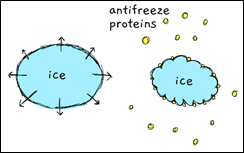
Figure 5: Antifreeze proteins bind to the enlarging ice crystals and prevent their recrystallization and further growth in plants. Image Credit: Plants and Pipettes.
Plants
- CAM Mechanism: This is a temporal separation mechanism for carbon concentration and fixation. Plants of arid areas concentrate CO2 only during the night to reduce evapotranspiration and fix carbon in the daytime. This is a physiological adaptation in pineapple, jade, cacti, etc.
- Production of poison: In order to defend themselves against herbivores, many plants develop venom-producing mechanisms; like in stinging nettle plants and many plants of the nightshade family.
- Seed dormancy in plants of coastal areas: Due to extremely saline conditions, seeds of plants in coastal areas have adapted to become dormant and germinate when the conditions become suitable. Example- mangroves.
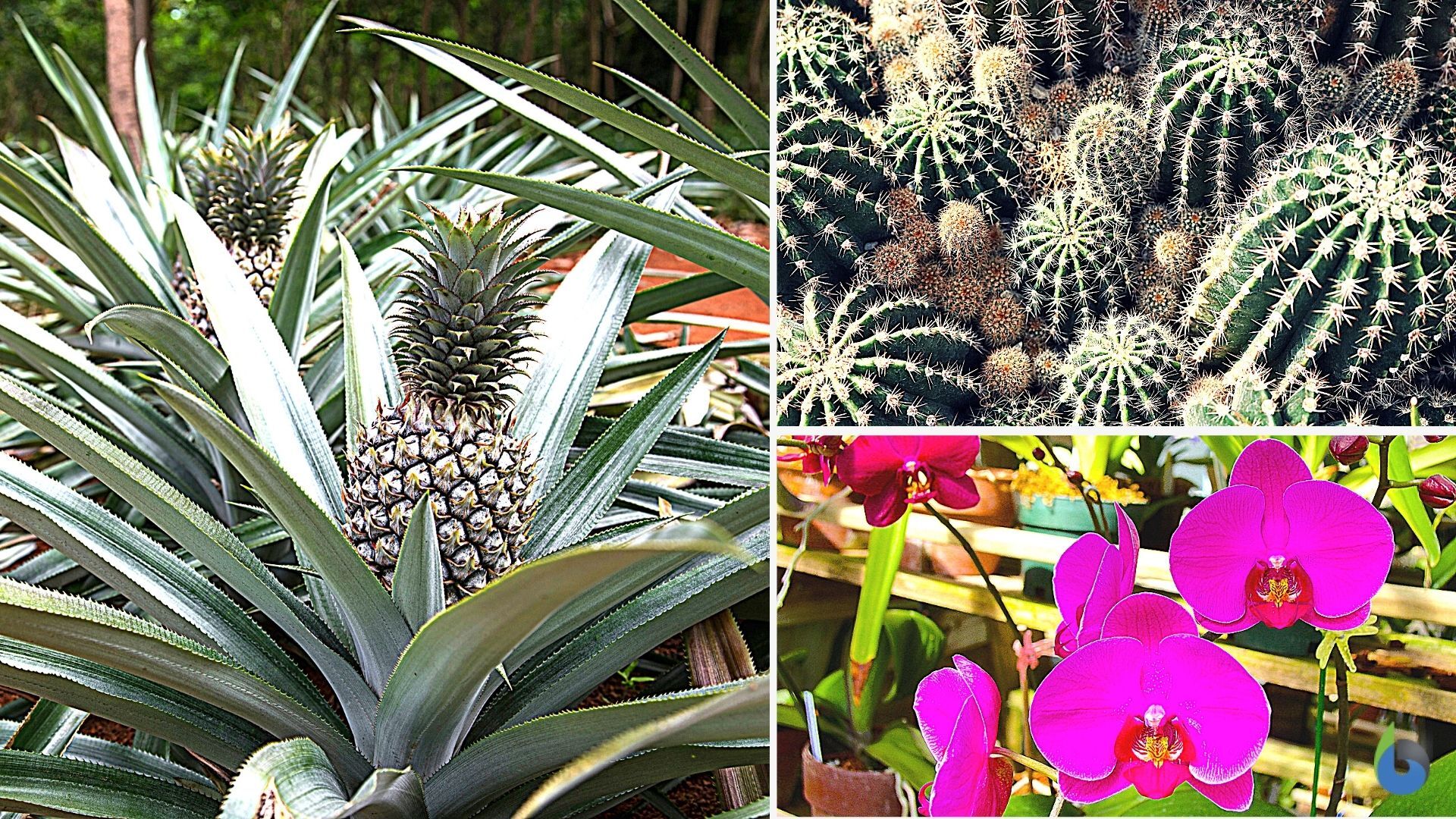
Figure 6: Examples of plants with CAM mechanism. Left: pineapple. Right: cacti (top) and many orchids (below).
More Examples: Plant Water Regulation
Animals and humans
For animals to function effectively in any given environment, adaptation to their environment is a prerequisite. Few examples of adaptations in animals are:
- Production of venom: This is a physicochemical adaptation that helps the animals to ward off predators and capture their prey more easily. Examples: snakes, bees, spiders.
- Concentration of urine: Desert animals live in dry, arid, and extreme conditions and require an animal adaptation that can grant them suitability to survive even in acute scarcity of water. For this, there is a modified urine concentration mechanism in their kidneys. Examples- fennec fox, camels, etc.
- Offensive odor production: In order to keep away all potential predators or competitors, skunk produces a distinctive, disgusting chemical and sprays it.
- Tanning (in humans): This adaptation is the most important one for the human populations living in the temperature range of 23-46 ºC as this zone has varying levels and intensities of UVB depending on the season.
- HIIT (in humans): Many recent studies show that high-intensity interval training (HIIT) confers very high endurance to humans and helps in evading most of the chronic health issues associated with modern lifestyles. It acts at the cell’s physiological level and increases the mitochondrial biogenesis in human body cells, thereby empowering it.
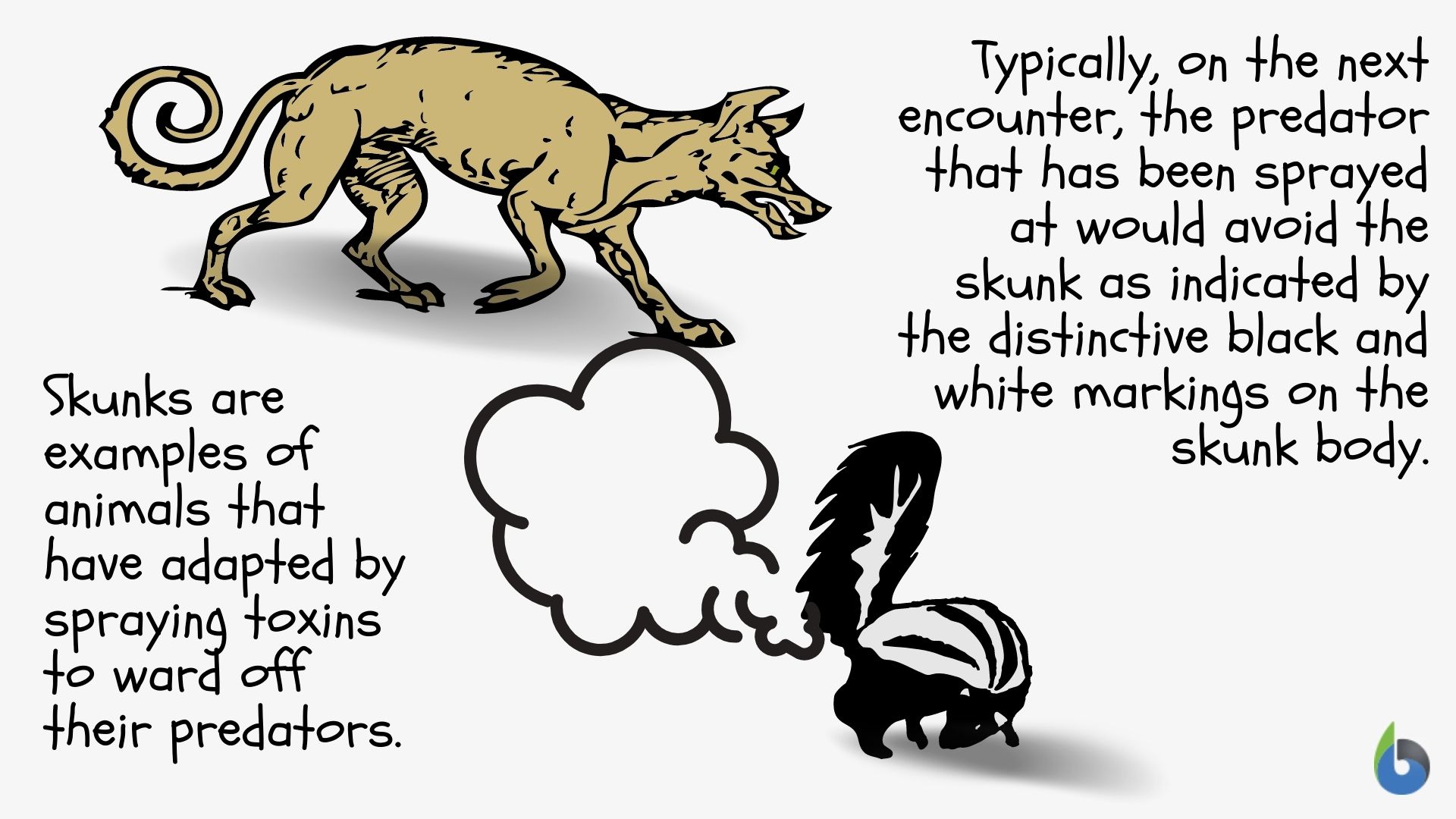
Figure 7: When threatened, skunks produce an offensive odor to ward off predators. Source: Maria Victoria Gonzaga of Biology Online.
More Examples: Animal Water Regulation
Interesting Fact: An interesting example where an amalgamation of structural, behavioral, and physiological adaptation helps an organism!!
Venus flytrap
Structural: The structure of this insectivorous plant is the structural adaptation evolved over millions of years. The basic structural framework is such that when an insect lands and the mechanosensors conceive the signal of touch, they spontaneously close the trap.
Behavioural: The behavioral aspect is the closing mechanism that works by the transmission of electrical charge. Only when a certain potential is set, that the trap closes.
Physiological: And the final physiological aspect of adaptation here is the secretion of nectar across the leaves’ brims to attract the prey and the presence of digestive enzymes inside the plant to metabolize and digest the insects.
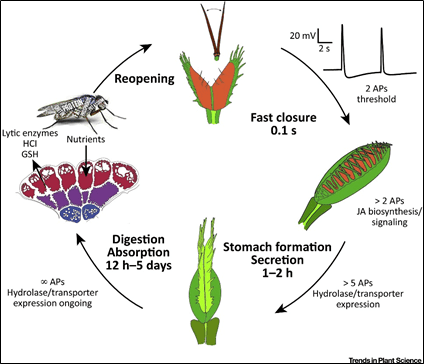
Figure 8: Venus flytrap’s insect catching mechanism. Source: Hedrich R., 2018
Try to answer the quiz below to check what you have learned so far about physiological adaptation.
References
- Hedrich R., Neher E. (2018) Venus Flytrap: How an Excitable, Carnivorous Plant Works. Trends in Plant Science, 23(3): 220-234 DOI:https://doi.org/10.1016/j.tplants.2017.12.004
- Griffith M., Ala P., Yang D.S.C., Hon W.C., Moffatt B.A. (1992) Antifreeze Protein Produced Endogenously in Winter Rye Leaves. Plant Physiology, 100(2): 593–596. doi: 10.1104/pp.100.2.593
- Ievinsh G. (2006) Biological basis of biological diversity: physiological adaptations of plants to heterogeneous habitats along a sea coast. Biology 710: 53–79 Corpus ID: 54748771
- Zheng R., Wu S., Ma N.,Sun C. (2018) Genetic and Physiological Adaptations of Marine Bacterium Pseudomonas stutzeri 273 to Mercury Stress. Frontiers in Microbiology, 9(682) doi: 10.3389/fmicb.2018.00682
- Jablonski N.G., Chaplin G. (2010) Human Skin Pigmentation as an Adaptation to UV Radiation. In the Light of Evolution, 4(9)
- Gibala M.J., Little J.P., MacDonald M.J., Hawley J.A. (2012) Physiological adaptations to low-volume, high-intensity interval training in health and disease. The Journal of Physiology, 590: 1077–1084 DOI: 10.1113/jphysiol.2011.224725
©BiologyOnline.com. Content provided and moderated by Biology Online Editors.