Kingdom Definition and Examples - Biology Online Dictionary (original) (raw)
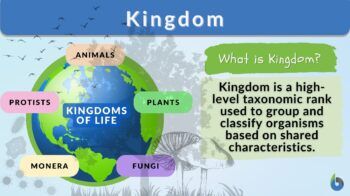
Kingdom
n., plural: kingdoms
[ˈkɪŋ.dəm/]
Definition: A high-level taxonomic rank for grouping organisms with similar characteristics, consisting of phyla
Table of Contents
Toggle
- Kingdom Definition
- History
- Beyond Traditional Kingdoms
- Viruses
- IS BIOLUMINESCENCE KINGDOM-SPECIFIC???
- Quiz
- Further Reading
- References
Kingdom is a taxonomic rank used in biological classification systems to simplify the understanding of the biological world. It occupies the highest position in most taxonomic classification systems, lower to domain or empire in some other. While it’s composed of many phyla in animals, it is composed of many plants.
When we are constructing a well-organized city, we must emphasize the importance of distinct neighborhoods, clear street signs, and logical zoning. Not only does this simple activity make the city more manageable but also makes it easier for the citizens to locate and navigate their way through it; from one place to another. On a similar note, when we study biological organisms on the planet, a robust and dependable classification system can prove highly efficient in navigating our way through the rich biodiversity!
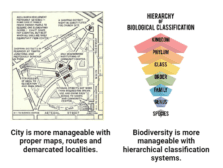
Figure 1: Kingdom occupies the highest taxonomic rank in most biological classification systems. Image Credit: Akanksha Saxena of Biology Online
When we look at the different classification systems, we often notice different hierarchical ranks that follow a certain order. Concurrently, we have observed that these ranks are occupied by different taxa (plural of taxon) that fit the underlying requirements of the rank. A similar rank is “kingdom”; commonly known for animal and plant kingdoms. We must note that these ranks like kingdoms exist because we have associated some characteristic features with them and all the descendants are expected to share those features.
When on the type of classification system, we will see different numbers of taxa identifying themselves as biological kingdoms. While most of us are only familiar with plant kingdom and animal kingdom in general, this article will reflect a lot of new information for readers. You’ll also understand how many kingdoms are studied under different classification systems and their respective rationales.
Keep reading to learn more about the idea of a kingdom and its particular biological significance!
In Biology, the definition of the kingdom goes by “the historically highest taxonomic rank in the kingdom system of taxonomy” or “the second numbered rank in the in domain system of taxonomy”. Kingdom encompasses units or smaller groups called phyla (plural of phylum) in animal groups and divisions in plant groups.
Before the introduction of the current highest rank called domain in 1990 by Carl Woese, Otto Kandler, and Mark Wheelis, kingdom occupied the highest rank in all the taxonomic classification systems; applying ubiquitously for all types of organisms like plants, animals, fungi, bacteria, archaea, or protists.
Rank-based system for nomenclature and classification was established as an idea by Carl Linnaeus in 1735 where he assigned the kingdom as the highest rank in biological classification.
This idea continued to prevail across different classification systems from 2-kingdom, 3-kingdom, 4-kingdom, 5-kingdom, 6-kingdom, 7-kingdom to 8-kingdom systems.
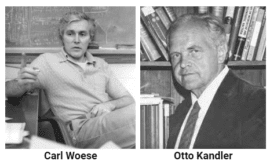
Figure 2: Carl Woese, Otto Kandler, and Mark Wheelis (photo not included) together introduced the idea of the domain as the highest taxonomic rank in 1990. This relegated the position of the kingdom. Image Credit: Akanksha Saxena of Biology Online
5 Kingdom Classification – GCSE Biology (9-1):
Biology definition:
A kingdom is a taxonomic rank composed of smaller groups called phyla (or divisions, in plants). It serves as one of the primary ranks for organizing and grouping living organisms based on their shared characteristics and evolutionary history. The currently recognized kingdoms include Animalia (animals), Plantae (plants), Fungi (fungi), Protista (protists), and Monera (bacteria). This hierarchical approach helps biologists study the relationships and diversity among all living things on Earth.
Overview:
The classification begins with the highest rank, the domain, and progresses through kingdoms » phyla » classes » orders » families » genera » species. Kingdoms represent a level of classification that encompasses a broad range of organisms with significant similarities, and they are further divided into more specific categories as we move down the taxonomic hierarchy.
Etymology: The term “kingdom” derives from the Old English term “cyningdōm,” which combines “cyning” (king) and “dōm” (domain), reflecting the concept of a ruler’s dominion and authority over a specific territory. See also: taxonomy. classification system, Domain
History
The scientific journey of the idea of a kingdom is a long one. Let’s have a quick look at how it has evolved.
Two kingdoms of life
Though there were many ancient philosophers like Aristotle and Theophrastus who comprehensively dealt with plants and animals, the rational classification of living beings was the novel idea of a Swedish naturalist named Carl Linnaeus (Latin Carolus Linnaeus), also popularly known as the “father of modern taxonomy”. He is renowned for formally introducing:
- The binomial nomenclature (which we study under Nomenclature Codes); the binomial nomenclature consists of the first “generic name” and the second “species name”.
- The traditional two-kingdom system (2-kingdom classification system); is the first attempt to formally study kingdoms of living things where the hierarchy follows the sequence: Kingdom, phylum or division, class, order, family, genus, and species (formal taxonomic ranks)
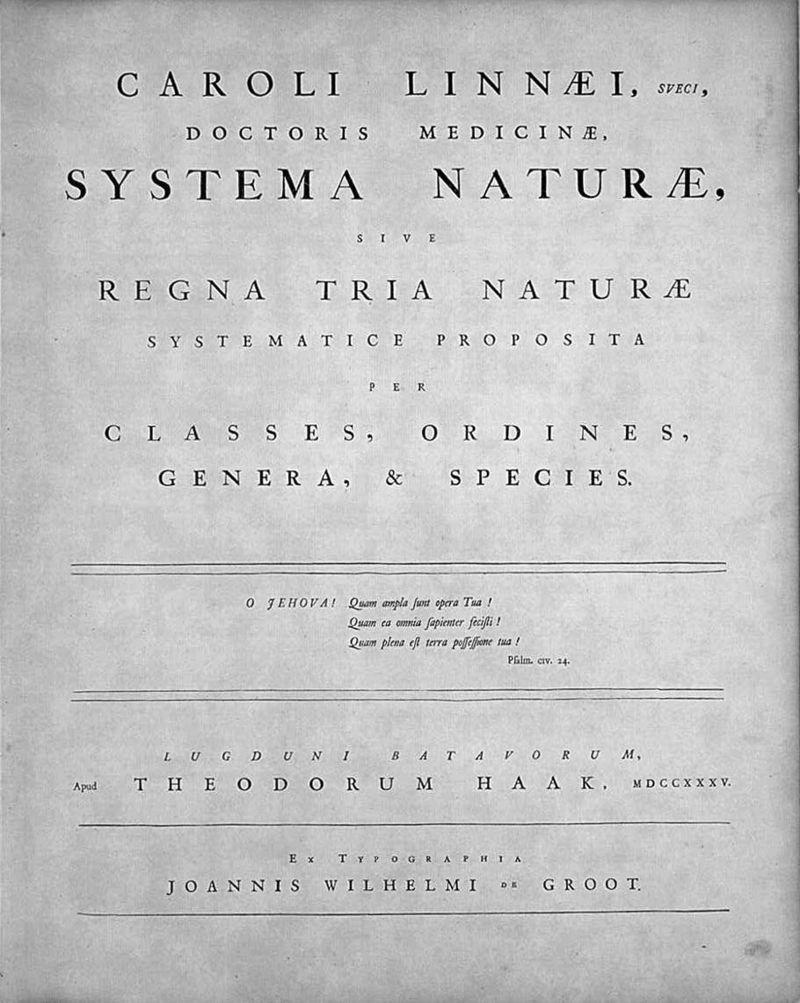
Figure 3: The idea of biological classification where kingdom occupied the highest taxonomic position was proposed by Carl Linnaeus in his work Systema Naturae in 1735. Image Credit: Carl Linnaeus

Some important pointers to this first classification system are:
- The two kingdoms were identified as Regnum Vegetabile and Regnum Animale (vegetable kingdom/plant and animal kingdoms respectively)
- The introduction of this 2 kingdom taxonomic rank system marked a pivotal moment in the field of biology as it laid the groundwork for how we categorize and comprehend the intricate diversity of living organisms.
- This system bore clarity and consistency in scientific communication as it categorized organisms based on more concrete and fundamental characteristics. Its departure from subjective criteria and reliance on observable traits formed the basis of a more objective and systematic approach to understanding the natural world. It emphasized the importance of considering shared characteristics and evolutionary relationships when classifying organisms moving away from arbitrary groupings. The kingdoms offered a starting point for further subdivisions, ultimately leading to more specific categories such as species, genera, families, and beyond.
- An important point to note is that “plants and animals continue to have their own kingdoms” starting from the first 2-kingdom system to the most advanced and new systems of classification (till empire and domain systems). The animal kingdom classified animal species and other protist species at that time.
- Linnaeus, later chose to include minerals in the system by placing them in a 3rd additional kingdom called Regnum Lapideum.
Three kingdoms of life
The discovery of the microscope and the idea of such microscopic organisms invisible to the naked eye brought another dimension to the classification systems and ranking. In the 1880s, 2 scientific investigators proposed the idea of a third kingdom to accommodate the microscopic single-celled organisms. The remaining two kingdoms were the same as the 2-kingdom system; Regnum Vegetabile and Regnum Animale.
The new kingdom Protista (protist kingdom/ protista kingdom) was proposed by two different scientists at nearly the same time for the primary organic beings.
- John Hogg proposed the 3rd kingdom Protoctista (consisting of all the lower creatures) in 1860.
- Ernst Haeckel proposed the 3rd kingdom Protista in 1866.
NOTE: While Regnum Lapideum (Lapideum kingdom) remains in Hogg’s classification scheme, it wasn’t included in Haeckel’s classification system.
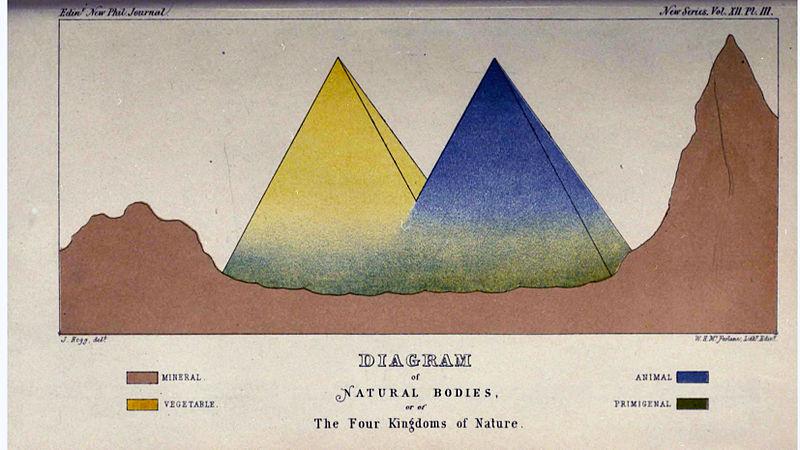
Figure 4: Illustration by John Hogg showing the introduction of the Kingdom Primigenum (or Kingdom Protoctista which consisted of protozoa and protophyta). Image Credit: John Hogg

Four kingdoms
The advancement in microscopy led to the revelation of distinct and important ultrastructures in the cells of living organisms. This led to the recognition of the distinguished presence of cell nuclei in the eukaryotic cells and the contrasting absence in the prokaryotic cells.
Herbert Faulkner Copeland, an American biologist, proposed a four kingdoms classification in 1938. He added a fourth kingdom called kingdom Monera which comprised of simple cellular colonies of bacteria as well as archaea, leading to the establishment of a four kingdom classification system.
Five kingdoms
The advancing knowledge about the distinguishing features of fungi from the Plantae Kingdom led to their separation into separate kingdoms, the one for fungi was called Kingdom Fungi. It was proposed by Robert Whittaker.
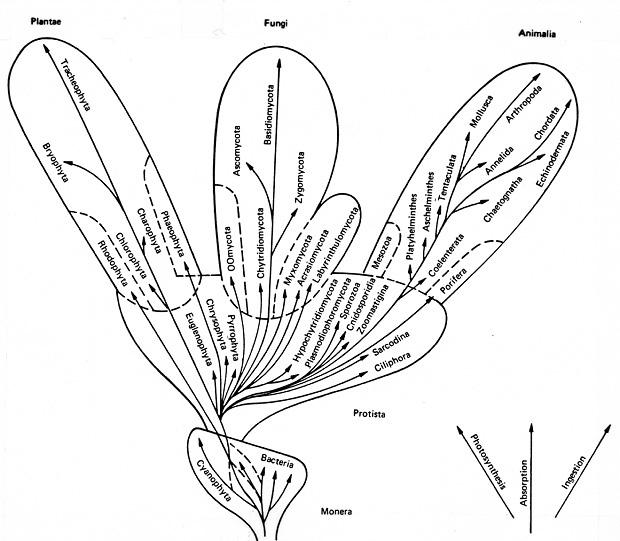
Figure 5: Five kingdom classification by Robert Whittaker has been popularly known and taught in schools across the world. Image Credit: Ships Education

This five-kingdom system became quite popular and is used with refinement in different multi-kingdom systems.
- Monera: It acknowledges the fundamental differences between prokaryotic and eukaryotic organisms by placing bacteria and archaea in the Monera kingdom.
- Protista serves as a flexible category for various unicellular eukaryotes that don’t fit neatly into other kingdoms.
- The Fungi kingdom emphasizes the unique cell wall composition and heterotrophic mode of nutrition in fungi which distinguish them from plants.
- Plantae recognizes the importance of photosynthesis in green plants which forms the foundation of most terrestrial food chains.
- Animalia, the most familiar kingdom to humans, encompasses an incredible diversity of animals from tiny insects to massive whales. Their heterotrophic nature and complex body structures make them a distinctive group within this classification system.
The resulting five-kingdom system delimits the boundaries of the distinct groups.
Six kingdoms
The introduction of the concept of empires led to the formation of six kingdoms, two empire systems where Carl Woese and his colleagues proposed the division of organisms into Empire Prokaryota and Empire Eukaryota.
- Within the Empire Prokaryota, they placed both Kingdom Archaebacteria (archaea) and Kingdom Eubacteria (bacteria) which were distinguished based on the ribosomal RNA structure.
- While within the Empire Eukaryota, they placed Kingdom Fungi, Kingdom Plantae, Kingdom Protista, and Kingdom Animalia.
Eight kingdoms
The Establishment of a separate kingdom for the protists that lacked mitochondria led to the 8-kingdom classification system. Their separation from the Kingdom Protista and placement under a separate Superkingdom Archezoa led to its recognition as a distinct Kingdom Archezoa.
At this point, the classification transitioned from 2 empires to 3 superkingdoms.
- Superkingdom Prokaryota (Kingdom Archaebacteria, Kingdom Eubacteria)
- Superkingdom Archezoa (Kingdom Archezoa)
- Superkingdom Eukaryota (Kingdom Plantae, Kingdom Fungi, Kingdom Protista, and Kingdom Animalia)
Six Kingdoms (1998)
_Cavalier-Smith_’s 6-kingdom classification system was unique in the sense that:
- There were 2 major empires and 6 major kingdoms in this classification.
- It relegated the position of Archaebacteria from a Kingdom to a Subkingdom.
- Both eubacteria and archaebacteria were placed under the same and sole kingdom, i.e. kingdoms Bacteria. They were further placed under the Empire Prokaryota.
- Kingdom Plantae, Kingdom Fungi, Kingdom Protozoa, Kingdom Chromista, and Kingdom Animalia were placed under Empire Eukaryota.
- This classification system rejected the idea of 3 major empires that were popular and evident from research studies at that time.
- Another important note to take was that Smith also rejected the idea of strict monophyly for taxa.
- Smith’s paraphyletic kingdom Protozoa includes a common ancestor of
* Plantae
* Animalia
* Fungi
* Chromista
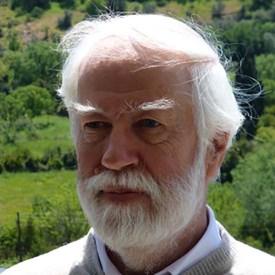
Figure 6: Thomas Cavalier-Smith has been credited with bringing a lot of clarity to the classification systems. Image Credit: Royal Society

Seven kingdoms
The 6-kingdom classification by Cavalier-Smith was revised by him and his collaborators in 2015 where they introduced the idea of 2 superkingdoms called Superkingdom Prokaryota and Superkingdom Eukaryota that included seven kingdoms in total (two prokaryotic kingdoms and five other eukaryotic kingdoms)
- Superkingdom Prokaryota (Kingdom Kingdom Archaea and Kingdom Bacteria)
- Superkingdom Eukaryota (Kingdom Plantae, Kingdom Fungi, Kingdoms Protozoa, Kingdom Chromista, and Kingdom Animalia are the eukaryotic kingdoms)
Beyond Traditional Kingdoms
Although some taxonomists still employ the concept of traditional kingdoms (traditional two kingdoms, three kingdoms, etc.) there has been a shift away from traditional kingdom-based classifications to newer multi-kingdom systems (new multi-kingdom systems) or empire/domain systems because there are no longer considered to offer a cladistic approach which prioritizes organizing other organisms into truly natural groupings.
Three domains of life
The idea of three domains of life became popular as the genetic data (genetic similarity) started getting more attention.
Also, eukarya, bacteria, and archaea have quite distinct cell structures. This approach emphasized the comparison of similarities and differences at the genetic (DNA/RNA) level rather than just the morphological level. The emphasis was to study as much genetic difference as possible to conclude.
This approach also highlighted the fact that eubacteria, archaebacteria, and eukaryotes are the major groups that are highly diverse from each other.
This approach also explained how plants, animals, protists, and fungi might appear very distinct but are more closely related to each other than either eubacteria or archaebacteria. They had an ancient divergence from both eubacteria and archaebacteria
This approach also underscored the fact that eukaryotes have more similar and shared characteristics with archaebacteria rather than eubacteria.
The term “dominion” was introduced in 1974 by Moore, following which the highest rank in the classification system called “domain” was introduced by Carl Woese in 1990. But Woese didn’t recommend the usage of any Latin term for this rank, which in a way contradicts his introduction of the term domain against an already coined and accurately introduced term dominion.
Carl Woese is majorly credited for this division of organisms into 3 major domains of life.
- Domain Bacteria (the eubacteria)
- Domain Archaea (the archaebacteria)
- Domain Eukarya (the eukaryota including plants, animals, fungi, protists, etc.)
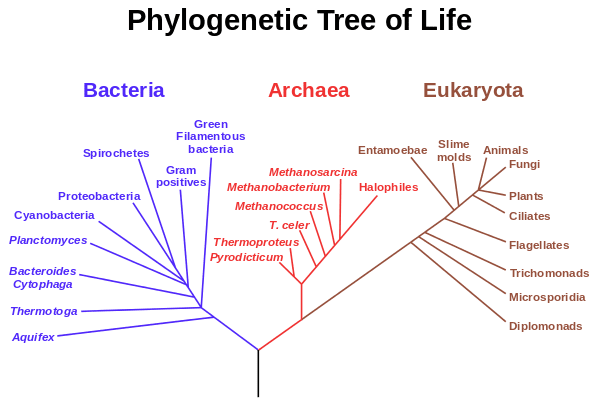
Figure 7: 3 domains of life. Image Credit: BioLibreText

Eukaryotic supergroups
The 6 supergroups proposed in the study of Simpson and Roger were based on the idea of monophyly.
They stressed the fact that formally accepted ranks must be occupied by only monophyletic groups.
Their classification system did not deliberately use any formal taxonomic ranks, let alone kingdom.
The 6 eukaryotic supergroups proposed were:
- Excavata (including all flagellate protozoa)
- Amoebozoa (molds and amoeboids)
- Opisthokonta (animals, fungi)
- Rhizaria (Radiolaria, Foraminifera, and some other amoeboid protozoa)
- Chromalveolata (Diatoms, brown algae, haptophyta, alveolata, cryptophyta)
- Archaeplastida/ Primoplantae (Glaucophytes, just the land plants, green and red algae)
Comparison of top-level classification
The inclusion of non-cellular life in the classification systems of some scientists has led to the establishment of superdomains:
- Superdomain Acytota (non-cellular life)
- Superdomain Cytota (cellular life)
Viruses
The idea of the inclusion of viruses in the tree of life is still speculated and highly debated.
NOTE IT!
IS BIOLUMINESCENCE KINGDOM-SPECIFIC???
The idea of bioluminescence has always fascinated mankind. The mere mention of the phenomenon takes one to a magical neon world where all plants, animals, insects, and birds are glittering and sparkling. Science fiction and cartoons have been designed in such a way that we like to believe in the ubiquitous existence of this phenomenon across all kingdoms.
But, do we witness the phenomenon of bioluminescence across “all kingdoms of life”?
While taxa belonging to Kingdom Animalia (including insects, bugs, and marine animals), Kingdom Fungi (mushrooms), Kingdom Protista (dinoflagellates), Kingdom Bacteria/Archaea (several autogenic bioluminescent species) have been observed and scientifically proven to display autogenic bioluminescence, there are yet “no evidence” of the same from the Kingdom Plantae.
There have been several attempts to artificially induce the phenomenon in plants. Varied approaches have been tried to do so:
- Addition of exogenous substrate/s that can diffuse into the plant body and lead to bioluminescence
- Transformation approaches with full bacterial lux operon
- Introduction of luciferase as silica nanoparticle
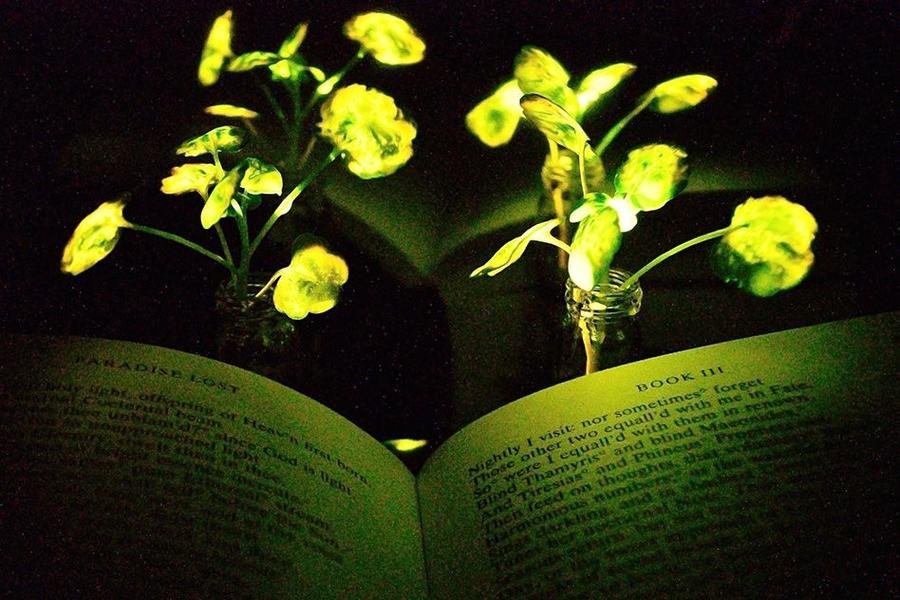
Figure 8: An MIT group has successfully developed a nanobionic light-emitting plant (using watercress plants). Image Credit: Seon-Yeong Kwak

Take the Kingdom – Biology Quiz!
Further Reading
References
- Linnaeus, C. (1758). Systema naturae (Vol. 1, p. 824). Laurentii Salvii: Stockholm.
- Woese, C. R., Kandler, O., & Wheelis, M. L. (1990). Towards a natural system of organisms: proposal for the domains Archaea, Bacteria, and Eucarya. Proceedings of the National Academy of Sciences, 87(12), 4576-4579.
- Woese, C. (1998). The universal ancestor. Proceedings of the National Academy of Sciences, 95(12), 6854-6859.
- Kunz, W. (2013). Do species exist?: Principles of taxonomic classification. John Wiley & Sons.
- Dutilh, B. E., Varsani, A., Tong, Y., Simmonds, P., Sabanadzovic, S., Rubino, L., … & Sullivan, M. B. (2021). Perspective on taxonomic classification of uncultivated viruses. Current opinion in virology, 51, 207-215.
- Tena, G. Let there be light. Nat. Plants 5, 1103 (2019). https://doi.org/10.1038/s41477-019-0558-x
- Krichevsky, A., Meyers, B., Vainstein, A., Maliga, P., & Citovsky, V. (2010). Autoluminescent plants. PloS one, 5(11), e15461. https://doi.org/10.1371/journal.pone.0015461
- Bioluminescent Plants Comprising Bacterial Lux Operon and Methods of Making Same.
- Patent ID- US20100192262A1 (United States) Link: https://patents.google.com/patent/US20100192262A1/en
- Seon-Yeong Kwak, Juan Pablo Giraldo, Min Hao Wong, Volodymyr B. Koman, Tedrick Thomas Salim Lew, Jon Ell, Mark C. Weidman, Rosalie M. Sinclair, Markita P. Landry, William A. Tisdale, and Michael S. Strano Nano Letters 2017 17 (12), 7951-7961 DOI: 10.1021/acs.nanolett.7b04369
©BiologyOnline.com. Content provided and moderated by Biology Online Editors.