Process Definition and Examples - Biology Online Dictionary (original) (raw)
Process
n., plural: processes
[ˈpɹəʊsɛs]
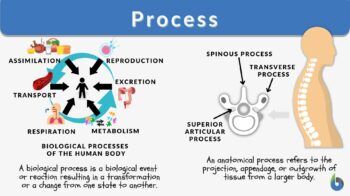
Definition: (biology) any of the biological reactions or other events that result in a transformation or a change of state; (anatomy) a projection
Table of Contents
Toggle
What is a process? In biology, a process (plural: processes) means any of the various biological activities occurring within an organism. These processes are essential for survival and the interactions between organisms and their environment. Biological processes are composed of a variety of biochemical reactions and other activities that contribute to the survival and modification of living organisms.
Biological processes are frequently described by their outcome or ending state. For example, the biological process of cell division results in the formation of two daughter cells from a single parent cell. A biological process is completed by a specific collection of molecular activities carried out by specific gene products (or macromolecular complexes), frequently in a highly controlled manner and a specified temporal sequence. Another word for the process or the synonym of the process is “procedure”.
In anatomy, the term “process” has another meaning. An anatomical process means a projection, an appendage, or an outgrowth from the main body.
In other sciences, such as chemistry and physics, a process refers to a series of reactions that bring about an end, such as changing the state from one form to another. Examples of chemical processes are oxidation, reduction, hydrogenation, hydrolysis, halogenation, esterification, alkylation, sulfonation, nitrification, polymerization, catalysis, etc. Examples of physical processes are melting, evaporation, condensation, etc. In essence, a process that brings about chemical change is a chemical process whereas a process that brings about physical change is a physical process. Processes that bring about both physical and chemical changes are referred together as physicochemical processes.
Biological Processes
All living things share many biological processes in common, which when taken collectively distinguish them from non-living things. Each living thing can move, reproduce itself, and be sensitive to the environment in which it lives. Each individual may also grow, breathe, excrete, and get or produce food through a process known as assimilation. Let’s take a look at the different biological processes of the human body:
- Assimilation is a biological process wherein living things integrate nutrients from external sources into their body. For autotrophs, they assimilate by using inorganic sources to make their own food. Photoautotrophs, in particular, assimilate via the biological process of photosynthesis. For heterotrophs, they assimilate by ingesting or consuming organic material.
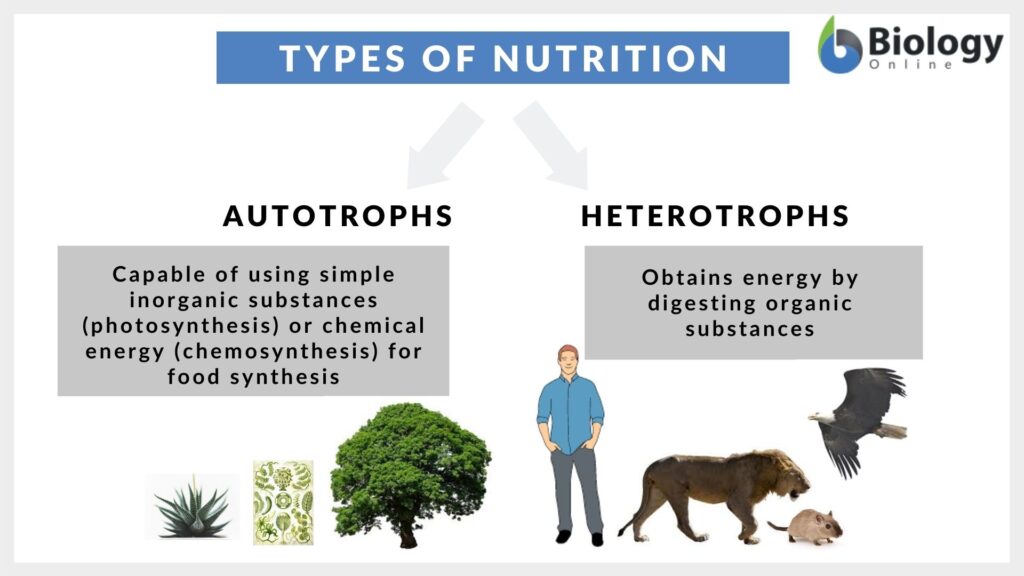
Figure 1: Modes of Nutrition in Various Organisms. - Transport is a biological process of moving substances from one location to another. So for instance, biomolecules, such as newly created proteins may be transported within the cell or outside the cell. Another example is glucose molecules that come from digesting complex sugars are transported from the intestine to other body cells, e.g., to the liver for storage, via the bloodstream.
- Respiration is a biological process that enables the exchange of respiratory gases. In humans, oxygen is breathed in while carbon dioxide is breathed out via the lungs.
- Metabolism is a biological process that consists of catabolic (breakdown) and anabolic (synthesis) reactions.
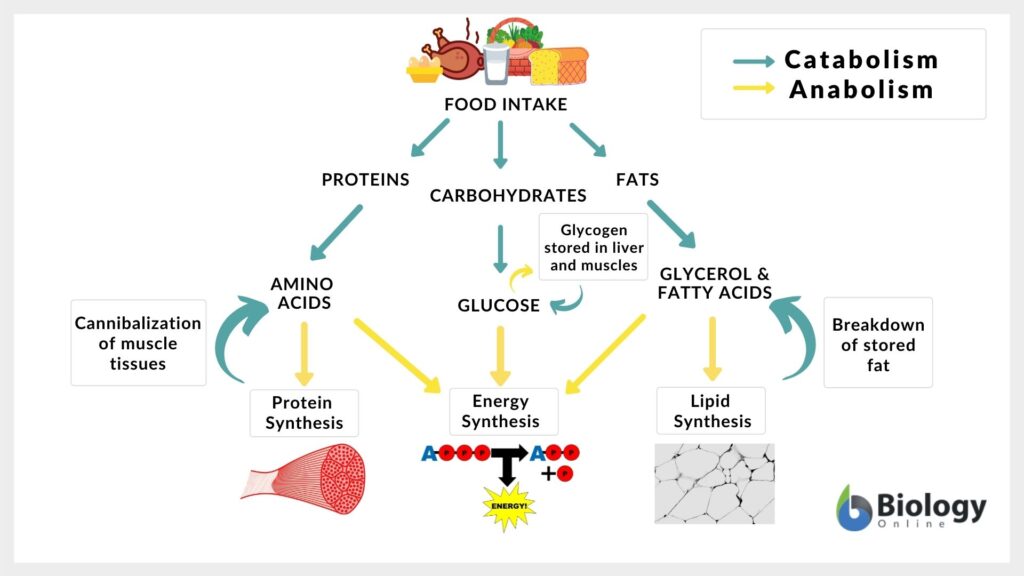
Figure 2: Figurative representation of anabolic and catabolic processes. Source: Maria Victoria Gonzaga of Biology Online. - Excretion is a biological process of releasing metabolic waste products. The human body, in particular, as a multicellular organism, would excrete these wastes via urination, perspiration, expiration, etc. Another related process is egestion wherein undigested food in the form of feces is discharged through the anus.
- Reproduction is a biological process wherein offspring is produced. Humans procreate through sexual reproduction as opposed to other life forms that reproduce by asexual means.
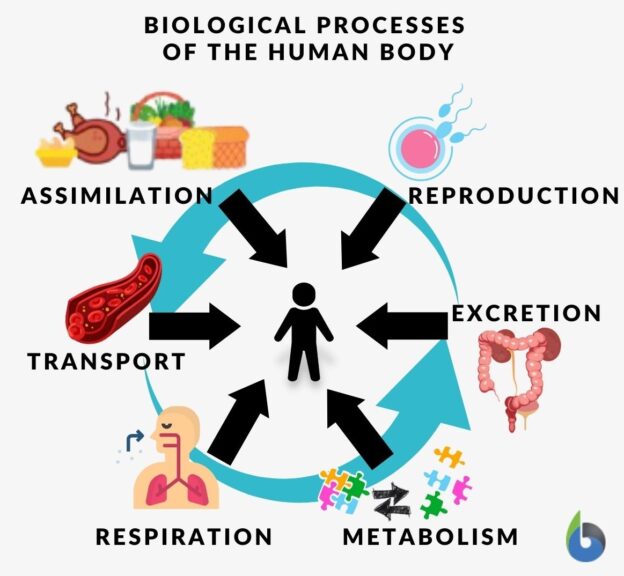
Figure1: Life processes. Image Source: Maria Victoria Gonzaga of Biology Online.
| Table 1: Biological processes in animals and plant | ||
|---|---|---|
| Biological Process | Animals | Plants |
| All living organisms can move without the assistance of external force | A hare flees from danger to survive. | A sunflower moves to turn its face towards the sun. |
| Respiration is a chemical reaction that occurs in every cell of a living organism and it is necessary for survival. | The mouth and nose are the primary means of breathing for mammals. | Using their leaves, plants can take in and release gasses. |
| Each living thing can perceive stimuli and respond to the conditions in its environment. | The senses of sight, taste, hearing, touch, and smell are among the most vital for animals. | Plants are capable of detecting and growing upwards in the direction of sunlight. |
| All living things grow in size, height, and weight as time progresses. Living organisms develop by producing new components and by altering existing ones. | After reaching adulthood vertebrates develop at a rather constant rate. Invertebrates, on the other hand, tend to continue developing throughout their lifetimes. | Plants usually do not stop growth. If they have adequate nourishment and nutrition, they will typically continue to grow for the rest of their lives. |
| All living creatures can reproduce and produce offspring. Methods of reproduction may be divided into two categories: asexual reproduction, and sexual reproduction. | Reproduction in animals is carried out by: 1. Giving birth 2. hatching eggs 3. asexual reproduction (for example, Hydra jellyfish sprout kids like buds sprouting from their parent’s body) | Reproduction in plants is carried out by: 1. Spores 2. Seeds 3. Asexual reproduction (rhizomes, runners, and tubers) |
| Waste products are produced and excreted by all living organisms. If this waste was to stay in the bodies of living beings, it would easily cause sickness or death. | Animals excrete carbon dioxide, water, and highly hazardous nitrogenous compounds from their bodies through the excretory system. | Plants decompose waste materials at a far slower rate than mammals. Stomata are used by plants to expel waste gasses produced during respiration and photosynthesis. |
| Energy is required by all living things to maintain their existence. The energy is acquired from nutrition which is then broken down to release energy and chemicals. The chemicals are used to make building blocks of the body. | Animals get their nutrition from an external source (eating other plants and animals) | Plants make their food through photosynthesis. |
Numerous mechanisms govern biological processes; examples include gene expression regulation, protein modification, and contact with a protein or substrate molecule. Regulation of biological processes happens when the frequency, rate, or extent of any process is controlled.
Scientific Process
The scientific process (or the process of science) is one in which conclusions are derived from an organized, methodological strategy, which entails observations, adequate records, logical and mathematical reasoning, experimentation, and submission of results to peer review. Science necessitates a great deal of planning and execution; a well-designed experiment is sometimes regarded as elegant, or even beautiful.
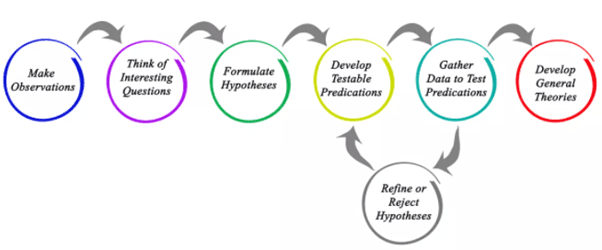
Figure 2: The process of science. Credit: Hazen, R.M, and Mason, G. (2021) (TheGreatCoursesDaily.com)
Process Examples
- Biological Processes
- Anatomical Processes
Biological processes examples
The processes of metabolism and homeostasis, cell development and maintenance, signal transduction, pyrimidine metabolism, and cAMP production are just a few of the multifarious biological processes.
- Homeostasis: It is the maintenance of the internal environment from the harms and fluctuations of the external environment.
- Metabolism: The process of metabolism is divided into two parts. Anabolism is the process of transforming chemicals and energy into cellular components whereas catabolism is the process of breaking down and decomposing organic matter. Energy is required by living beings to sustain internal organization (homeostasis) and to create the numerous phenomena that are linked with their existence.
- Cell development and maintenance: Maintaining a higher rate of anabolism than catabolism is important. Rather than merely accumulating substance, a developing organism grows in all of its components, rather than simply increasing in size.
- Signal transduction: Signal transduction (cell signaling) is the process by which chemical messages are sent from the outside of a cell to its inside. It is essential that signals received by cells be transported efficiently inside the cell.
- Pyrimidine metabolism: After being catabolized (degraded), pyrimidines are eventually converted to carbon dioxide, water, and urea. It is possible to break down cytosine to uracil, which can then be broken down further to N-carbamoyl-alanine.
- cAMP production: Cyclic adenosine monophosphate (cAMP) is a second messenger that is involved in the induction of intracellular signals.
Anatomical processes examples
Here are some of the most common examples of anatomical processes:
- Vertebrae have various processes or projections: transverse process, spinous process, and articular processes. Watch this video to identify the parts of a typical vertebra.
- The xiphoid process of the sternum, the olecranon process and the coronoid process of the ulna, and the trochlear process of the heel.
- The human skull has also several processes. Some of them are mastoid, styloid, and zygomatic processes of the temporal bone, zygomatic process of the frontal bone, the uncinate process of the ethmoid bone, the jugular process of the occipital bone, the coronoid and condyloid processes of the mandible.
Biology definition:
A process is a naturally occurring or designed sequence of changes of properties or attributes of an object or system. In biology, it refers to any of the biological reactions or other events that result in a transformation or change from one state to another. In anatomy, it is a projection, appendage, or outgrowth of tissue from a larger body. Etymology: from Old French proces: journey, from Latin processus (past participle of procedure).
Try to answer the quiz below to check what you have learned so far about processes.
References
- Signal Transduction. (2021). Retrieved 29 Dec, 2021, from https://www.tocris.com/cell-biology/signal-transduction
- The Process of Science. (2021). Retrieved 29 Dec, 2021, from https://courses.lumenlearning.com/suny-biology1/chapter/the-process-of-science/
- Gust, D. (1996). Why Study Photosynthesis? Center for Bioenergy & Photosynthesis. https://live-bioenergy. ws. asu. edu/content/why-study-photosynthesis.
- Hazen Robert M., George Mason (2021). Understanding the Natural World Through Scientific Method. Retrieved 29 dec, 2021 from https://www.thegreatcoursesdaily.com/understanding-the-natural-world-through-scientific-method/
- Living Things. (2021). Retrieved 29 Dec, 2021, from https://www.dkfindout.com/us/animals-and-nature/what-is-living-thing/
- Lisbdent.com. (2021). Physical Processes. Retrieved 29 Dec, 2021, from https://lisbdnet.com/what-are-physical-processes/
- McKay, D. B., & Steitz, T. A. (1981). Structure of catabolite gene activator protein at 2.9 Å resolution suggests binding to left-handed B-DNA. Nature, 290(5809), 744-749.
- Stanford University. (2021). Gene Ontology: Biological Process. Retrieved 29 Dec, 2021, from https://www.yeastgenome.org/ontology/go/biological\_process
©BiologyOnline.com. Content provided and moderated by Biology Online Editors.